
That hollow crunch when you slice through a fresh bell pepper is almost irreplaceable-almost. The right bell pepper substitute keeps your dish colorful, sweet, and textured without turning it into a soggy disappointment.
Most swaps fail because people ignore two things: moisture content and sweetness level. Get both right, and your dish won't miss the bell pepper at all.
When you need a bell pepper substitute, match the role first: roasted red pepper for softness and sweet smoke, poblano for cooked-pepper texture, zucchini or carrot for neutral volume and color, frozen bell pepper for a direct swap, and kohlrabi for raw-crunch situations.
5 Best Bell Pepper Substitutes You Can Trust
Every substitute below is rated by texture, flavor match, and how it holds up to heat. Knowing how long bell pepper keeps (check how long bell pepper keeps before you decide to swap) can also tell you whether your fridge pepper is still usable.
| # | Substitute | Best For | Ratio | Key Note |
|---|---|---|---|---|
| 1 | Roasted Red Pepper | Cooked dishes | 1:1 | Drain well before adding |
| 2 | Poblano Pepper | Sautéed, roasted | 1:1 | Remove seeds for mild heat |
| 3 | Zucchini | Baking, stir-fry | 1:1 | Salt and pat dry first |
| 4 | Carrot | Soups, sautés | 1:1 | Fine dice cooks evenly |
| 5 | Frozen Bell Pepper | Stir-fry, sauces | 1:1 | Cook from frozen for texture |
Watery substitutes are the biggest pitfall in baking. If your recipe uses bell pepper in a batter or dough, stick to zucchini or carrot diced small-they hold structure far better than wetter swaps like canned roasted pepper.
1. Roasted Red Pepper
Jarred roasted red peppers are the closest thing to a cooked bell pepper you can pull from your pantry without any prep. They are already soft, lightly sweet, and have a gentle smokiness that actually improves most braises, sauces, and pasta dishes.
Roasted Red Pepper
Works for: soups, sauces, pasta, egg dishes, dips, and any recipe where bell pepper is cooked until soft
Skip if: your recipe needs raw bell pepper crunch-roasted peppers are too soft for slaws or fresh salads
If you want to see how roasted pepper performs in a real recipe, the roasted red pepper hummus dip is a good test case for flavor balance.
- Drain first: Press jarred peppers in a paper towel to remove brine before measuring your 1:1 amount.
- Add late: Since they're already cooked, add them in the final 5 minutes to avoid mushiness.
- Color check: Red peppers will shift your dish toward a deeper red-orange tone-fine for most sauces, worth noting for green-based dishes.
- Moisture control: If your sauce is already liquid-forward, reduce another wet ingredient by 2 tablespoon to compensate.
2. Poblano Pepper
Poblano is the pepper-world substitute that actually behaves like a pepper. It has the same fibrous, slightly chewy texture when cooked and holds its shape in stir-fries and fajitas without turning to mush.
Understanding the full poblano pepper blend of flavor is worth a moment before you commit-it is earthier and less sweet than bell pepper, with a mild heat that varies by individual fruit.
- Seed control matters: Remove seeds and membranes to keep heat close to zero; leave some in if you want a gentle warm edge.
- Skin option: For sauces, char and peel the skin; for stir-fries and fajitas, skip peeling and cook skin-on.
- Size match: Cut poblano to the same dice or strip size your recipe calls for with bell pepper.
- Sweetness gap: Add a small pinch of sugar or a squeeze of lemon to nudge it closer to bell pepper's brightness.
Skip this if you want zero heat or a perfectly sweet flavor. Poblano is mild but not neutral, and some heat-sensitive recipes will notice the difference.
Also worth knowing: if you ever need seasoning with poblano pepper and run out of that too, there are solid swaps for it as well.
3. Zucchini
Zucchini is the most neutral vegetable on this list, which is exactly why it works so well as a bell pepper substitute in baking and stir-fries. It has no strong flavor of its own, a mild color, and a soft-yet-intact texture when diced fine and cooked quickly.
If you ever need to go further afield, zucchini alternatives cover a different set of situations where even zucchini isn't available.
- Salt and dry: Toss diced zucchini with ¼ teaspoon salt, rest 10 minutes, then pat dry to pull excess water before cooking.
- Add late in stir-fry: Toss it in during the final 3-4 minutes so it stays slightly firm rather than collapsing.
- Baking use: Squeeze shredded or diced zucchini in a clean towel to remove as much moisture as possible before adding to batter.
- Flavor boost: A pinch of sugar or a small splash of rice vinegar brings zucchini closer to bell pepper's sweet-bright profile.
Skip this if your recipe depends on bell pepper flavor specifically. Zucchini is a blank slate-it adds volume and color, not pepper character.
4. Carrot
Carrot is underrated as a bell pepper alternative because it handles heat well, holds its shape, and adds natural sweetness that is surprisingly close to red bell pepper's sugar notes. It is firmer than bell pepper, so cooking time matters more here than with other swaps.
If you're curious how carrot stacks up in other swapping situations, the full carrot substitute guide covers its limits well.
- Dice fine: Cut to ¼-inch dice or matchsticks so carrot softens in the same window as other vegetables in your recipe.
- Sauté first: Give carrot a 2-3 minute head start in the pan before adding other ingredients-it takes longer to cook than bell pepper.
- Color match: Orange carrot works well in red-pepper applications; yellow carrot mimics yellow bell pepper visually.
- Flavor note: Carrot is sweeter and earthier than bell pepper, so reduce any added sugar by half if your recipe already leans sweet.
Skip this if you need bell pepper's grassy, slightly bitter edge. Carrot is sweet and earthy but won't replicate that fresh-pepper aroma.
5. Frozen Bell Pepper
Frozen bell pepper is the only swap on this list that is still actually bell pepper-same flavor, same color, just with one trade-off: the cell walls break down in the freezer, so texture softens after cooking. It is still the fastest and most direct 1:1 swap when you have it.
For dishes like stir fry where timing and texture matter, frozen bell pepper performs best when it goes straight from the freezer into a hot pan.
| Use | Ratio | Notes |
|---|---|---|
| Stir-fry | 1:1 | Add frozen, no thaw; high heat preserves some bite |
| Sauté / fajitas | 1:1 | Cook from frozen over medium-high; expect slightly softer strips |
| Soups and sauces | 1:1 | Add frozen directly; texture loss doesn't matter when blended |
| Raw or salads | Not recommended | Frozen peppers are too soft once thawed for fresh applications |
- No thaw needed: For cooked applications, add frozen bell pepper directly to the pan for better texture retention.
- Thaw for baking: If using in a batter or stuffed pepper situation, thaw fully and squeeze out excess moisture first.
- Drain the liquid: If you do thaw, discard the liquid that collects-it will water down sauces if added.
Skip this for any recipe that needs raw bell pepper crunch. Once frozen and thawed, the texture is noticeably softer.
Making a Bell Pepper Substitute Work
Moisture and sweetness are the two dials you adjust when any substitute goes in. Wetter swaps like roasted red pepper or thawed frozen pepper release liquid as they cook, and that extra water can thin a sauce or dampen a crust.
A useful starting habit with most substitutes is the same approach used when handling kohlrabi substitutes-control moisture first, then taste and adjust sweetness after.
- Sweetness gap: Add a pinch of sugar or a small splash of acid (lemon juice or sherry vinegar) to any neutral swap to mimic bell pepper's brightness.
- Moisture control: Salt and pat dry zucchini and carrot before they go in; drain jarred roasted peppers through a paper towel.
- Timing adjustment: Bell pepper is a mid-cook vegetable-firmer swaps like carrot go in earlier, softer ones like roasted pepper go in later.
Frequently Asked Questions
Yes, but drain it well first-jarred roasted peppers carry brine that dilutes sauces. Use a 1:1 ratio by weight and add them late in cooking since they're already soft.
Poblano pepper or frozen bell pepper cooked straight from frozen are both strong choices. Both hold partial firmness in a hot wok and match the visual strip-cut presentation.
Carrot or zucchini diced small and patted dry are the safest baking swaps. Salt zucchini first and squeeze out moisture; fine-diced carrot releases very little liquid on its own.
Add a pinch of sugar or a small splash of lemon juice or vinegar to the dish. This mimics the sweet-bright contrast that bell pepper brings to savory recipes.
Yes, for cooked dishes-it has the same flavor and color. Texture softens after freezing, so use it in sautés, soups, and stir-fries rather than raw applications.
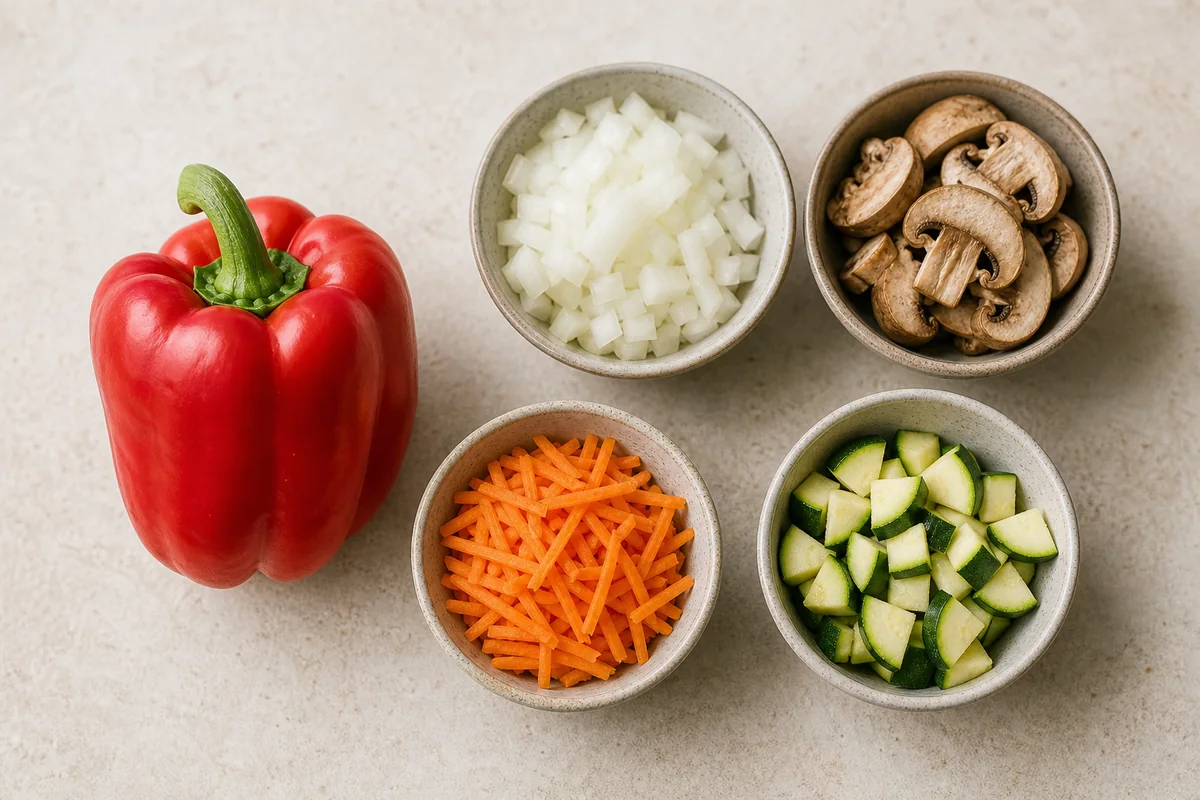
5 Best Bell Pepper Substitutes You Can Trust
Ingredients
Equipment
Method
- Identify how your recipe uses bell pepper: crunch (raw/quick sauté), sweetness (roasted/braised), or sauce body (blended).
- Pick the closest match from the table: roasted red pepper for sweet/smoky softness, zucchini/carrot for quick color, poblano for cooked pepper texture.
- Use the 1:1 ratio by weight for even results; for zucchini or carrot, keep pieces smaller to avoid watery or mushy texture.
- If your substitute is softer or wetter than bell pepper, reduce added liquid and cook a bit longer to evaporate moisture.
- Taste and adjust: add a pinch of sugar for sweetness, or a splash of acid (lemon/vinegar) to brighten the swap.
Notes
- Choose substitutes that match your dish's texture goal: crunch vs soft vs blendable.
- Drain jarred roasted peppers to prevent sauces from thinning.
Tried this recipe?
Let us know how it was!
Carrie is a food writer and editor with more than 15 years of experience. She has worked for some of the biggest names in the food industry, including Bon Appétit, Food & Wine, and Martha Stewart Living.
As the Editor in Chief of EpicureDelight, Carrie oversees all of the content on the site. She also manages the team of contributing writers and editors, who help to create delicious recipes, helpful tips, and informative articles that you’ll find on the site.
A native of the Chicago area, Carrie is passionate about all things food. She loves trying new restaurants and experimenting with new recipes in her kitchen. She’s also a graduate of the Culinary Institute of America, so she knows a thing or two about food!



