
Plums do a specific job in recipes. They bring that sweet-tart punch and melt into thick, jammy pockets when heat hits them.
Finding the best plum substitute means matching what plums actually do in your dish, not just swapping any fruit.
If your recipe needs chunky, hold-their-shape pieces, you want a firm fruit. If it needs a soft, spreadable filling, you need something that breaks down fast.
Tart balance is the third axis: some swaps are sweeter, some are more sour, and only a few land in plum's exact middle.
The right plum substitute depends on your recipe's role. Use prunes for jammy, sweet-dark fillings. Use cherry plums or damsons for the closest flavor match. Use rhubarb when tartness is the goal, and blueberries when you need a berry that holds up in the oven.
5 Best Plum Substitutes for Baking & Cooking
Every swap below works on two levels: flavor and bake behavior. The bright acidic lift that plums carry is easy to lose if you pick a substitute that's too mild, so read the ratio notes carefully.
| # | Substitute | Best For | Ratio | Key Note |
|---|---|---|---|---|
| 1 | Prunes (softened, chopped) | * Both | 1:1 | Soak 10 min first |
| 2 | Cherry plums / damsons | * Both | 1:1 | Stew 2-3 min |
| 3 | Rhubarb + sugar | Baking | ¾:1 | Add sugar to taste |
| 4 | Apple butter | Baking | ¾:1 | Reduce liquid by 2 tbsp |
| 5 | Blueberries + lemon juice | * Both | 1:1 | Add 1 teaspoon lemon per cup |
1. Prunes (Softened and Chopped)
Prunes are dried plums, so they carry the same sweet-dark base flavor. When soaked and chopped, they bake into a thick, jammy filling that reads almost identical to stewed plums.
The dried plum flavor profile is concentrated, which means you get more depth per spoonful than fresh plums usually deliver.
Prunes (Softened and Chopped)
Works for: pie fillings, hand pies, muffin centers, jam-layered bars, fruit crumbles
Skip if: your recipe calls for fresh-fruit brightness or visible plum skin texture
- Soaking: Cover prunes with warm water for 10 minutes, then drain before chopping to avoid adding extra liquid to your batter.
- Sugar: Start with 10-15% less sugar than the recipe calls for, since prunes are sweeter than fresh plums.
- Chop size: Rough chop gives texture; finer chop blends into the filling for a smoother result.
- Ratio: Use 1:1 by weight or volume as a direct swap.
2. Cherry Plums (or Damsons), Stewed
Cherry plums and damsons sit in the same botanical family as plums, so the flavor gap is small. Both offer that tart-sweet balance with a slight floral edge that fresh plums carry.
A quick stovetop stew pulls out their juice and softens the skin into something that behaves exactly like baked plum filling.
- Stew time: Simmer with 2 tablespoon water for 2-3 minutes over medium heat until skins start to split.
- Tartness: Damsons are sharper than cherry plums; add a pinch of sugar if your recipe skews sweet.
- Pie and muffin use: Let the stewed fruit cool fully before adding to batter to avoid premature thickening.
- Ratio: Use 1:1; the stewed volume is close to the fresh plum volume after cooking down.
Skip if: you can't source them locally or you need a no-cook shortcut. In that case, prunes or apple butter are faster.
3. Rhubarb with Added Sugar
Rhubarb is the go-to when your recipe leans on plums for their sour punch. It's very tart on its own, which means you control the sweetness rather than inheriting it.
Think of storing rhubarb correctly so it stays firm enough to hold up in crumbles and sauces.
- Sugar ratio: Add 2-3 tablespoon sugar per cup of rhubarb to reach plum-level sweetness, tasting as you go.
- Best formats: Sauces, crumbles, tarts, and galettes where the tart-sweet contrast is the point.
- Liquid management: Rhubarb releases water quickly. Pre-cook it for 3-4 minutes before adding to any pastry crust.
- Ratio: Use ¾ cup rhubarb per 1 cup plums since rhubarb is more intense.
Skip if: your recipe depends on plum sweetness and you can't adjust the sugar level separately.
4. Apple Butter (or Thick Applesauce)
Apple butter is the pantry swap when you need jammy filling body and don't care much about visible fruit chunks. It thickens on its own, so it mimics the way stewed plums set in a pie or bar.
For anyone who keeps spreadable fruit alternatives on hand, this is a genuinely fast option.
- Liquid reduction: Cut other liquid in the recipe by 1-2 tablespoon per cup of apple butter used.
- Tartness fix: Add a small squeeze of lemon juice to push back toward plum's tangy edge.
- Best uses: Hand pies, filled cookies, layer bars, and streusel-topped pastries.
- Thick applesauce note: It works here too, but reduce it on the stovetop first if it looks watery.
Apple Butter vs Thick Applesauce
Works for: anywhere you need a smooth, set filling with zero stovetop fruit prep
Skip if: you want real plum flavor - apple butter reads as apple-caramel, not plum
5. Blueberries with Lemon Juice
Blueberries hold their shape better than most soft fruits in the oven, which makes them a solid berry swap for plums. They're less tart on their own, but this bright citrus note from added lemon juice brings them into plum territory quickly.
If you're working through other berry swaps, the best berry alternatives page covers the full range.
- Lemon amount: Add 1 teaspoon fresh lemon juice per cup of blueberries before mixing into your batter.
- Thickening: Blueberries can run wet; add 1 teaspoon cornstarch per cup of fruit for cleaner pie slices.
- Best uses: Muffins, cobblers, and open-faced tarts where berry shape is an asset.
| Use | Ratio | Notes |
|---|---|---|
| Muffins | 1:1 | Blueberries + 1 teaspoon lemon juice per cup; no liquid cut needed |
| Pie filling | 1:1 | Add 1 teaspoon cornstarch per cup to prevent watery slices |
| Cobbler topping | 1:1 | Use as-is; the topping absorbs extra juice naturally |
Skip if: your recipe needs a dark plum-colored result. Blueberries read blue-purple, not deep red-plum.
Making Plum Substitutes Work (No-Bake Surprises)
The most common failure is texture mismatch, and it happens before the oven even turns on. If you're curious about what goes wrong with similar sauce-based swaps, choosing a plum sauce replacement involves the same liquid-balance logic.
Fix texture, sweetness, and liquid in that order and most substitutes land correctly.
- Texture first: Decide if your recipe needs chunks or jam. For chunks, use cherry plums or blueberries. For jam, use prunes or apple butter. Mixing these up is the root of most failed swaps.
- Sweetness and tartness: Taste the raw substitute before it hits the batter. Add sugar 1 teaspoon at a time for sweetness, or a small squeeze of lemon for tartness. Plums sit at a moderate level of both.
- Liquid check: Wet substitutes (blueberries, rhubarb) need a 1-2 tablespoon liquid reduction elsewhere. Thick substitutes (apple butter, prunes) may need 1 tablespoon water added to loosen the fill before spreading.
Frequently Asked Questions
Prunes (softened and chopped) give the thickest, most plum-like filling. Cherry plums or damsons, lightly stewed, are the closest in flavor and hold a similar texture when baked.
Yes, use a 1:1 ratio by volume after soaking and chopping. Reduce the recipe's sugar by about 10-15% since prunes are sweeter than fresh plums.
Rhubarb is significantly more tart. Blueberries are mild and need added lemon juice to approach plum's tartness level.
Add 1 teaspoon of cornstarch per cup of blueberries before mixing into your filling. This absorbs excess juice and helps the filling set like a plum-based pie.
It likely will. Apple butter reads as apple-caramel in the final bake. A squeeze of lemon helps, but it won't fully mask the apple base flavor.
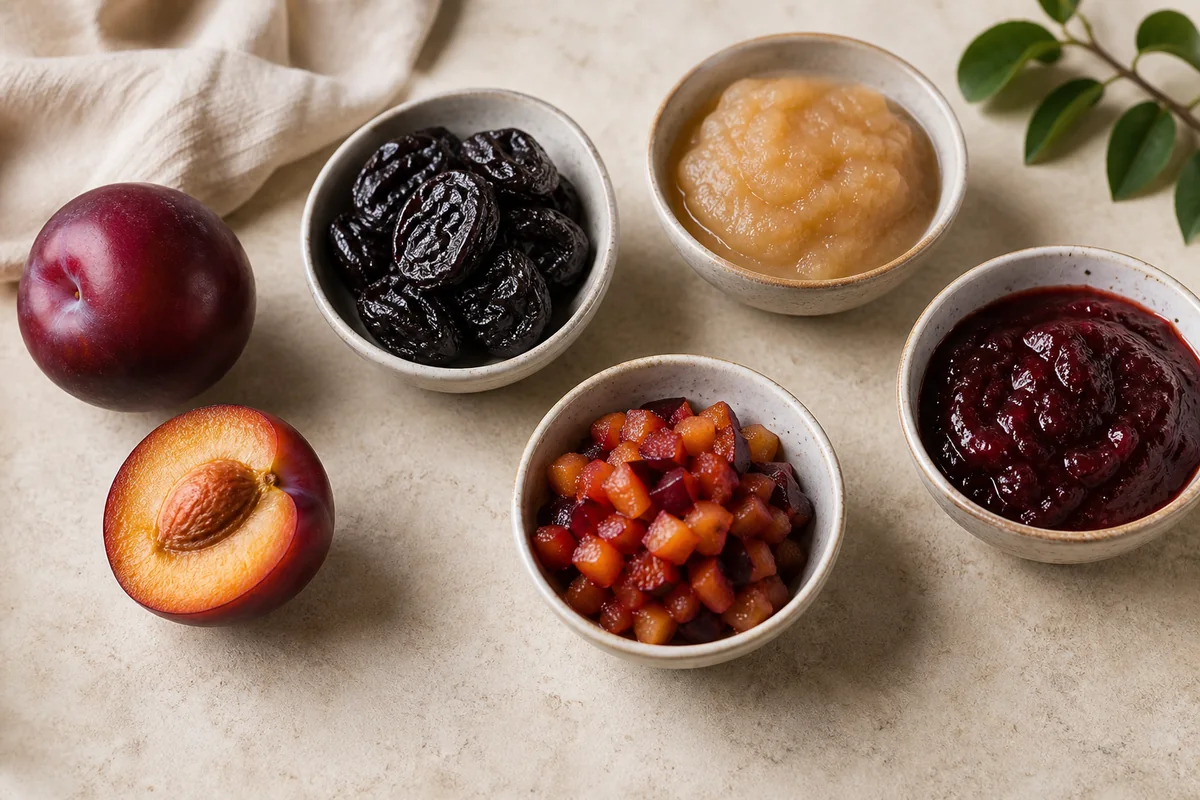
5 Best Plum Substitutes (Pantry Swaps)
Ingredients
Equipment
Method
- Decide what plum does in your recipe (chunks for texture, or jammy fruit for filling).
- Choose the closest match from the table: prunes/cherry plums for plum-like sweetness; rhubarb for tartness; apple butter for jam layers; blueberries for a sturdy bake fruit.
- Use the listed ratio. If your substitute is thicker (apple butter), thin it with 1-2 tablespoon water per cup fruit; if it’s wetter (blueberries), reduce added liquid.
- Taste-test the mixture for balance (sweet vs tart). Adjust with a small amount of sugar or lemon juice before baking.
- Bake as directed, but check 5-8 minutes early for fillings—some substitutes set faster than fresh plums.
Notes
- Best results come from matching texture (chunks vs jam) and adjusting tartness with lemon juice or sugar.
Tried this recipe?
Let us know how it was!
Carrie is a food writer and editor with more than 15 years of experience. She has worked for some of the biggest names in the food industry, including Bon Appétit, Food & Wine, and Martha Stewart Living.
As the Editor in Chief of EpicureDelight, Carrie oversees all of the content on the site. She also manages the team of contributing writers and editors, who help to create delicious recipes, helpful tips, and informative articles that you’ll find on the site.
A native of the Chicago area, Carrie is passionate about all things food. She loves trying new restaurants and experimenting with new recipes in her kitchen. She’s also a graduate of the Culinary Institute of America, so she knows a thing or two about food!



