
Ponzu tastes sharp and a little salty, with a citrus lift that plain soy sauce never has. That combination, ponzu sauce blending soy's umami depth with bright citrus and a whisper of sweetness, is exactly what a substitute needs to copy.
Get both elements right and your swap will behave correctly in dipping sauces, marinades, and stir-fries.
The good news is that most pantries already stock what you need. Soy sauce handles the salt and body.
A citrus source, vinegar, lemon, lime, or orange, handles the brightness. A pinch of sugar or a splash of water fine-tunes the rest.
The best ponzu sauce substitute copies two things: soy-based salt and umami plus citrus brightness. A blend of soy sauce and rice vinegar is the closest all-purpose swap. For dipping, soy plus fresh lemon works better. Teriyaki, orange juice concentrate, and white wine vinegar are solid backup options with small adjustments.
5 Best Ponzu Sauce Substitutes Ranked by Function
Every swap below is chosen to match ponzu's behavior, not just its color. Pick based on whether your dish needs tang, umami, sweetness, or some mix of all three. citrus swap options can also expand your choices if you're missing fresh lemon.
| # | Substitute | Best For | Ratio | Key Note |
|---|---|---|---|---|
| 1 | Soy + Rice Vinegar | Both | 1:1 | Closest overall swap |
| 2 | Soy + Lemon/Lime + Water | Dipping | 1:1 + splash | Add at end of cooking |
| 3 | Teriyaki (adjusted) | Marinades | ¾:1 | Thin and add acid |
| 4 | Soy + OJ Concentrate | Glazes | 1:1 | Add vinegar to balance |
| 5 | Soy + White Wine Vinegar | Cooking | 1:1 | Use less vinegar first |
1. Soy Sauce + Rice Vinegar
This is the swap we reach for first. Soy handles the salt and umami; picking the right vinegar matters here because rice vinegar is milder than distilled white, and that gentleness is what makes the blend read like ponzu instead of a salad dressing.
It works well in stir-fries, noodle sauces, and marinades, anywhere ponzu would normally go. If the blend tastes sharp after mixing, add just a pinch of sugar and it rounds out quickly.
- Flavor match: Salty, tangy, and faintly acidic, closely mirrors ponzu's base profile
- How to mix: Combine 1 tablespoon soy sauce with 1 tablespoon rice vinegar; taste before adding to the dish
- Best use: Stir-fries, noodle sauces, and quick marinades where ponzu is cooked in
- Sweetness fix: Add a pinch of sugar only if it tastes too sharp for your dish
Skip if: you're making a delicate finishing dip where yuzu-style citrus is the point. Rice vinegar reads as tangy, not floral, so it won't replicate that aromatic quality.
2. Soy Sauce + Lemon (or Lime) Juice + Water
This swap shines brightest when the sauce stays cold or gets added at the finish. The fresh citrus gives it a clean, sharp note that plain vinegar can't quite copy, and for picking your best citrus option, lime reads slightly more tropical while lemon stays cleaner.
- Ratio guide: Mix 1 tablespoon soy sauce, 1 tablespoon fresh lemon or lime juice, and 1 teaspoon water
- When to add: Stir in after removing the pan from heat, or serve as a cold dipping sauce
- Taste adjustment: If it tastes too concentrated, add water in small amounts, half a teaspoon at a time
Skip if: the dish cooks at high heat for more than a few minutes. Fresh citrus can turn sharper and slightly bitter under prolonged heat.
3. Teriyaki Sauce (Adjusted)
Teriyaki already has soy and sweetness, so it gets you halfway there. The problem is it's thicker and sweeter than ponzu, and without acid, it won't behave the same way in the pan.
Teriyaki Sauce (Adjusted)
Works for: marinades, quick stir-fry glazes, dishes where a little extra sweetness is fine
Skip if: you need a low-sugar, savory-tang profile for sashimi-style dipping or light cold sauces
Teriyaki also caramelizes faster than ponzu in a hot pan, so it can scorch if you're not watching. Thin it out before adding to high-heat dishes, and stir in your acid right before serving.
- What to adjust: Add 1 teaspoon lemon juice or rice vinegar per 1 tablespoon teriyaki to restore missing tang
- When it works best: Chicken or salmon marinades, noodle glazes, and anything that benefits from sweetness
- How much to dilute: Mix 3 parts teriyaki with 1 part water if it's syrupy; taste before using
4. Orange Juice Concentrate + Soy Sauce
This one leans sweeter and more citrusy than ponzu, but it works well for glazes and quick marinades where a fruit note is welcome. Skip if fruit sweetness bothers you in savory food, because the orange flavor is forward and unmissable.
- Ratio: Mix 1 tablespoon soy sauce with 1 tablespoon orange juice concentrate, then taste
- Reduce/tone steps: If it's too thin, simmer for 1-2 minutes to concentrate; add 1 teaspoon vinegar to sharpen
- Best dishes: Chicken or tofu glazes, quick cold-weather marinades, and stir-fry finishing sauces
5. Soy Sauce + White Wine Vinegar
This is the true pantry emergency option. It works because white wine vinegar is sharp enough to mirror ponzu's acid kick, though it reads more "vinegar" than "citrus" on the palate.
The main risk is overshooting. White wine vinegar is more assertive than rice vinegar, so start with less.
For tips on keeping your base ingredient fresh, storing soy sauce correctly helps avoid any off-flavors creeping into your blend.
- Ratio guidance: Start with 2 parts soy sauce to 1 part white wine vinegar, then adjust to taste
- When to use: Add at the end of cooking for the least harsh bite; works in stir-fries and simple dipping
- Quick fix if too sharp: Add a pinch of sugar and a splash of water, then stir well before tasting again
Skip if: you're making a cold dipping sauce and have any other option available. The vinegar-forward edge is more noticeable when served uncooked.
Making Ponzu Sauce Substitutes Taste Right
Every good substitute targets three things in order: soy depth first, citrus or acid brightness second, and mild sweetness last if needed. Nail that sequence and the swap will behave like ponzu even if it doesn't taste identical.
For the full breakdown of what makes this bright soy sauce distinct, the flavor profile is worth knowing before you adjust.
The timing of when you add acid is also important. A fresh mild acid added at the end keeps the brightness intact, while the same amount cooked in from the start can fade and taste flat.
- Balance salty first: Taste your soy base before adding acid. If it's already too salty, dilute with 1 teaspoon water before adjusting anything else.
- Add acid late: Stir in vinegar, lemon, or lime after the heat is off. This preserves the citrus sharpness that makes ponzu-style sauces pop.
- Sweeten only at the end: Add sugar in small increments, half a pinch at a time, because even a little too much sweetness can make the sauce taste like teriyaki instead of ponzu.
Frequently Asked Questions
A 1:1 ratio is the standard starting point. Taste after mixing and add a small pinch of sugar if the vinegar tastes too sharp for your dish.
Yes, but stir it in at the very end. Lemon juice cooked over high heat for too long can turn bitter and sharper than ponzu.
It can. Add 1 teaspoon lemon juice or rice vinegar per tablespoon of teriyaki, and thin with a small splash of water if the texture is syrupy.
Stir in a teaspoon of rice vinegar or white wine vinegar after mixing. Taste and repeat in small amounts until the tang balances the fruit sweetness.
Adding too much acid too early. Citrus and vinegar lose their brightness when cooked long, leaving a flat, sharp taste without the fresh lift that ponzu has.
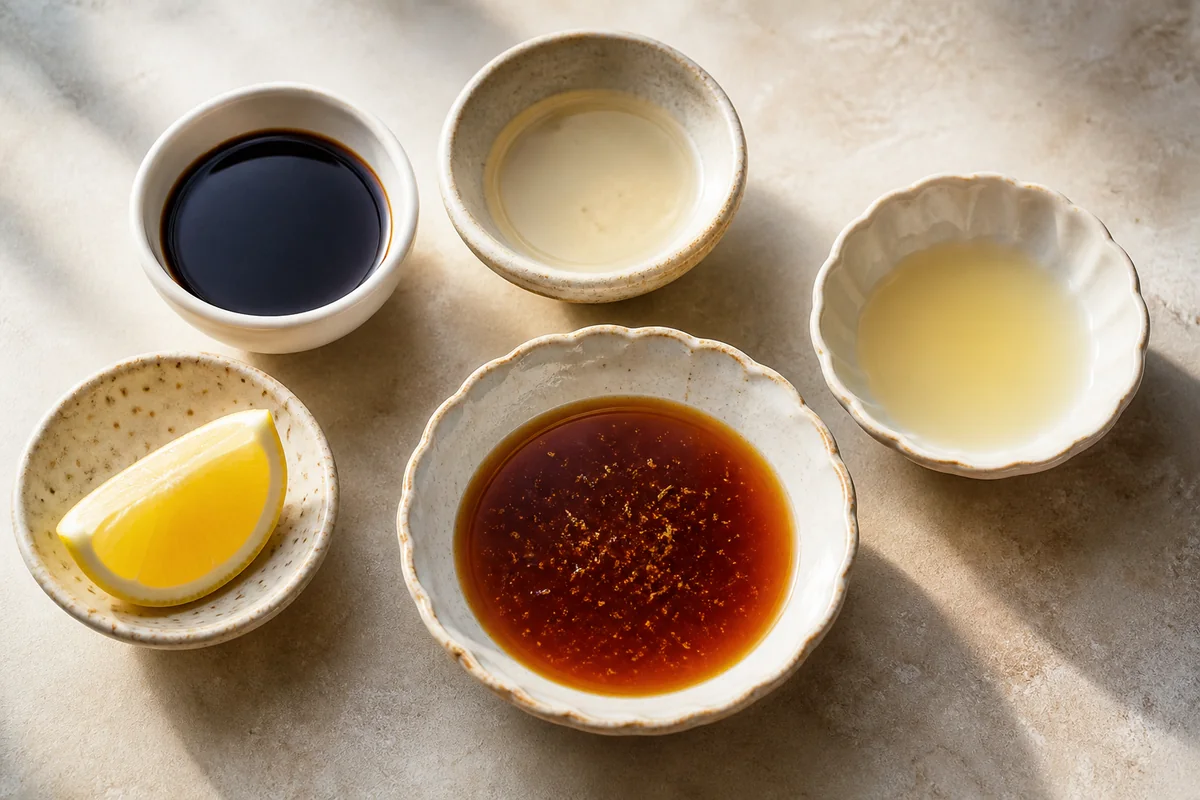
5 Best Ponzu Sauce Substitutes (Easy Swaps)
Ingredients
Equipment
Method
- Decide your use case: dipping sauce (need bright tang), marinade (need balance that won’t taste harsh), or cooking/stir-fry (can tolerate a slightly sweeter swap).
- Choose the closest option from the table: a soy + vinegar/lemon blend is usually the most ‘ponzu-like’ for flavor behavior.
- Measure using the listed ratio, then taste and adjust: add a few drops more citrus/vinegar for brightness, or add a pinch of sugar for ponzu-style softness.
- If your substitute is sweeter or thicker (like teriyaki), dilute with water first so it doesn’t turn glossy-sticky in hot dishes.
- Use immediately for best brightness, or stir into warm food at the end to keep the citrus notes from fading.
Notes
- When ponzu matters most (dips and finishing), prioritize citrus brightness (lemon/lime/orange + vinegar).
- When ponzu is mostly functional (stir-fry seasoning), a slightly sweeter teriyaki-style swap can work with added acidity.
Tried this recipe?
Let us know how it was!
Carrie is a food writer and editor with more than 15 years of experience. She has worked for some of the biggest names in the food industry, including Bon Appétit, Food & Wine, and Martha Stewart Living.
As the Editor in Chief of EpicureDelight, Carrie oversees all of the content on the site. She also manages the team of contributing writers and editors, who help to create delicious recipes, helpful tips, and informative articles that you’ll find on the site.
A native of the Chicago area, Carrie is passionate about all things food. She loves trying new restaurants and experimenting with new recipes in her kitchen. She’s also a graduate of the Culinary Institute of America, so she knows a thing or two about food!



