
That smooth, almost buttery pull when Fontina melts into a gratin or sandwich is hard to replicate exactly. But a good fontina cheese substitute gets close enough that most people won't notice, especially if you match the melt behavior first and worry about flavor second.
This guide ranks five solid swaps with exact ratios and melt/texture notes for both stovetop and oven use. Most are 1:1 by weight.
One needs a small reduction.
The best fontina cheese substitutes are Gouda, Provolone, Asiago, Edam, and Mozzarella. Most swap at 1:1 by weight. Shred before using for the smoothest melt. Match your pick to the dish: creamy stovetop melt vs. baked browning matters most.
5 Best Fontina Cheese Substitutes, Ranked by Melt
Start with the table for a fast ratio scan, then read the sections below for dish-specific guidance.
| # | Substitute | Best For | Ratio | Key Note |
|---|---|---|---|---|
| 1 | Gouda (young) | Both | 1:1 | Creamiest everyday melter |
| 2 | Provolone (mild) | Both | 1:1 | Smooth stretch, slight tang |
| 3 | Asiago (mild) | Baking | 1:1 | Browns well in oven |
| 4 | Edam | Cooking | 1:1 | Mild, dependable topping |
| 5 | Mozzarella | Both | 1:1 | Add Parmesan for depth |
1. Gouda (Young, Whole-Milk)
Young, whole-milk Gouda is the closest everyday melter to Fontina. It softens into a creamy, cohesive layer rather than separating, and the flavor is mild with a faint butterscotch note that sits very close to Fontina's profile.
Use it at 1:1 by weight, shredded. If you're curious about swapping away from Gouda itself, that context is worth knowing before you commit.
Gouda vs. Fontina
Works for: casseroles, grilled cheese, baked pasta, stovetop sauces
Skip if: your dish needs a very delicate, barely-tangy base - Gouda reads slightly more pronounced in subtle cream sauces
- Shred it: Block Gouda shredded fresh melts far more evenly than pre-shredded
- Oven dishes: It browns lightly at edges - pull the dish 2-3 minutes earlier if you want a pale finish
- Blending: Mix with a small amount of mozzarella if you want a milder flavor in a delicate sauce
2. Provolone (Mild)
Mild provolone is a smooth, reliable melter with a light stretch that makes it ideal for sandwiches and bake-melt toppings. It's slightly tangier than Fontina, but that difference mostly disappears once it's melted into a dish.
Use at 1:1 by weight. When swapping out provolone in a recipe, the same logic about melt behavior applies in reverse.
- Stovetop: Melts cleanly at medium-low heat without breaking or turning grainy
- Sandwiches: Slice thin for even coverage; thick slices can leave a rubbery center patch
- Reheating: It holds texture on a second heat better than many softer cheeses
- Skip if: your dish depends on Fontina's specific mild buttery aroma - provolone reads noticeably tangier in very lightly seasoned recipes
3. Asiago (Mild, Fresh)
Fresh Asiago is the pick when baked browning matters. It melts into a creamy interior while the top edges caramelize just enough to add texture, which is exactly what gratins and baked pasta need.
Before choosing this one, a quick look at nutty-flavored cheese options can help you decide if Asiago's edge fits your recipe.
- Ratio: 1:1 by weight, shredded or thinly sliced
- Oven temp: Works well between 375°F and 425°F - above that, browning turns sharp quickly
- Coverage: Spread in an even layer; clumped patches over-brown while thin spots stay pale
- Skip if: you want no flavor shift - Asiago leans nutty and slightly stronger than Fontina in delicate dishes
4. Edam
Edam is the safe, mild option when you need a fontina cheese substitute in cooking and don't want any flavor surprises. It melts adequately on toppings and in baked dishes, though it won't give you the same silky pull that Fontina does in a cream sauce.
Use it at 1:1 by weight. It works best as a topping where you're primarily after a mild, even melt rather than a creamy stretch.
Knowing how this buttery alpine cheese ages also helps you gauge freshness when shopping for Edam at the same counter, since both are semi-firm wheels that deteriorate at a similar rate once cut.
Edam's wax coating means it can run slightly firmer when cold, so shred it straight from the fridge and let it sit 5 minutes before adding it to a hot dish. Skip it if you're aiming for Fontina's uniquely smooth, creamy finish - Edam melts a touch less silky.
5. Mozzarella (Whole Milk or Part-Skim)
Mozzarella is the most widely available swap and melts without fuss in pizza-style builds, casseroles, and layered bakes. The tradeoff is flavor: it's much more neutral than Fontina, so the dish can taste flat without a small seasoning adjustment.
Storing mozzarella correctly affects how it melts, and keeping fresh mozzarella in good condition means it won't release excess water into your dish.
- Ratio: 1:1 by weight
- Moisture: Pat whole-milk mozzarella dry before layering - excess water makes sauces thin
- Flavor fix: Stir in a small amount of cream cheese or Parmesan to add the buttery depth Fontina carries naturally
- Skip if: your recipe relies on Fontina's complexity - mozzarella alone will taste noticeably flatter
Making Fontina Substitutes Work (Melt, Flavor, and Ratios)
The single biggest variable across all these swaps is how you prepare the cheese before it hits heat. Shredding is faster and more even than cubing, and it gives you more control over browning.
Understanding this creamy alpine cheese's baseline flavor also helps you calibrate whether your substitute needs a seasoning boost or a blending partner.
- Select by dish type: Creamy stovetop sauces need Gouda or Provolone; baked browning calls for Asiago or Edam
- Prep for even melt: Always shred fresh from the block - pre-shredded blends contain anti-caking agents that reduce browning and cause clumping
- Balance flavor last: If the swap tastes flat, add salt in small pinches; if it's too sharp, stir in a splash of cream or a neutral béchamel to smooth the edge
Frequently Asked Questions
Young Gouda is the closest match for a creamy, smooth melt. Use it at 1:1 by weight, shredded fresh from the block for the best result.
Yes, at a 1:1 ratio. Add 2 tablespoon of grated Parmesan per cup to compensate for mozzarella's milder, less buttery flavor.
Use mild cheddar at a ¾:1 ratio - 25% less than the Fontina amount. Blending it with mozzarella gives a smoother, less sharp result.
Yes. Asiago browns faster at edges; Gouda and Provolone brown more slowly and evenly. Watch the dish 3-4 minutes before the listed bake time ends.
Shred the cheese fresh from the block and let it rest 5 minutes at room temperature before adding it to heat. Avoid pre-shredded blends with anti-caking agents.
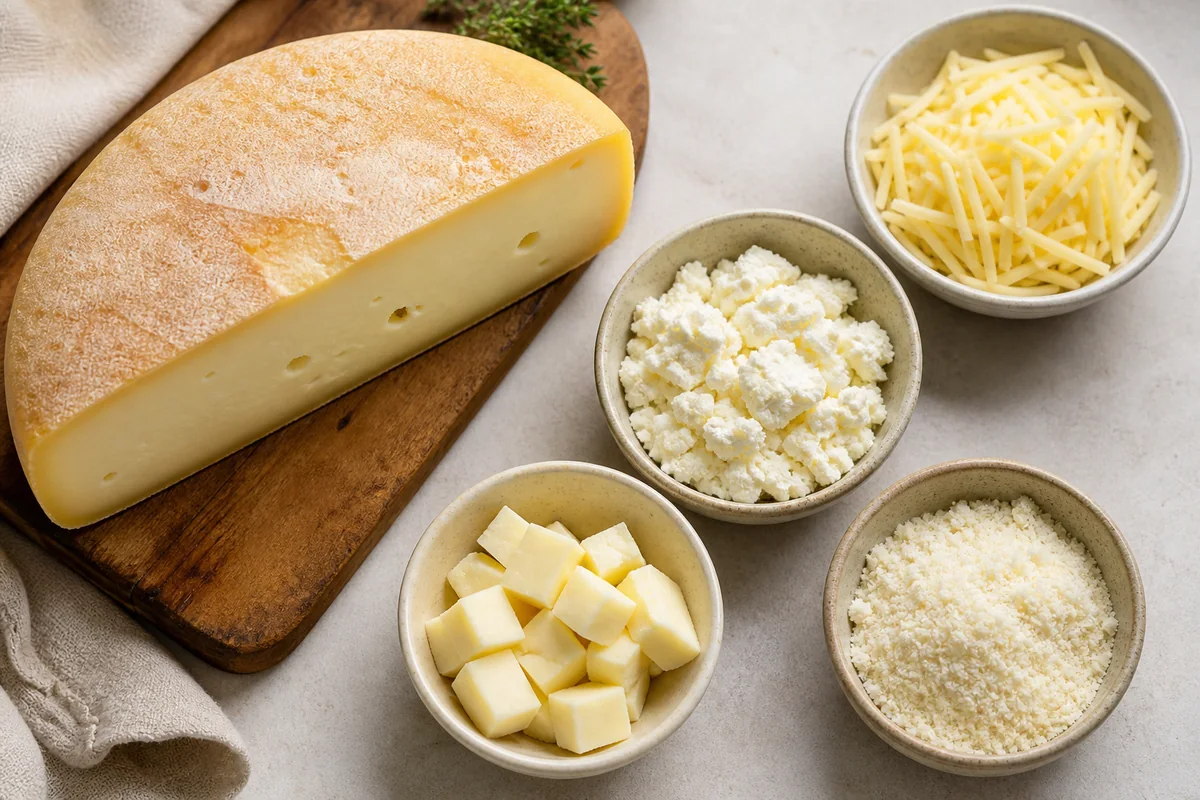
5 Best Fontina Cheese Substitutes (with Ratios)
Ingredients
Equipment
Method
- Match your dish goal: for a smooth, creamy melt, start with Gouda or Provolone; for baked browning, try Asiago.
- Use the ratio from the list (most swaps are 1:1). If using cheddar, start at ¾ because it’s bolder and can overwhelm the mild base notes.
- For watery or very soft results, shred and let the cheese sit 5 minutes so it melts more evenly; for stronger flavor, pair with a neutral melter like mozzarella.
- Taste the finished dish: if the flavor is flat, add salt in small pinches; if it’s too sharp, balance with a bit of cream, béchamel, or olive-oil-rich sauce.
Notes
- Ratios are based on weight equivalence for straightforward swaps.
- Melt quality depends on moisture level and shred size; shredding improves consistency.
Tried this recipe?
Let us know how it was!
Carrie is a food writer and editor with more than 15 years of experience. She has worked for some of the biggest names in the food industry, including Bon Appétit, Food & Wine, and Martha Stewart Living.
As the Editor in Chief of EpicureDelight, Carrie oversees all of the content on the site. She also manages the team of contributing writers and editors, who help to create delicious recipes, helpful tips, and informative articles that you’ll find on the site.
A native of the Chicago area, Carrie is passionate about all things food. She loves trying new restaurants and experimenting with new recipes in her kitchen. She’s also a graduate of the Culinary Institute of America, so she knows a thing or two about food!



