
Quark is one of those ingredients that looks simple until you need to replace it. It sits somewhere between yogurt and cream cheese: thick enough to spoon, tangy enough to notice, and dry enough to keep batters from going slack.
Finding a good quark cheese substitute means matching all three of those qualities, not just grabbing the nearest white dairy tub.
The good news is that several common ingredients get close. The bad news is that most of them need at least one small prep step - usually draining or straining - before they behave like quark.
Skip that step, and you'll get a watery filling or a batter that never quite sets.
The best quark cheese substitutes are strained Greek yogurt, labneh, cream cheese, drained ricotta, and blended cottage cheese. Use a 1:1 ratio for all. Match thickness first, then adjust tang with a small squeeze of lemon if your swap tastes flat.
Quark Cheese Substitute Options (Quick Reference Table)
Every substitute below works at a 1:1 ratio as a starting point. The key variable is moisture: some options are looser than quark and need a quick drain before they go into your recipe.
If you're working with a heat-sensitive bake and can't afford extra prep time, choose a naturally thick option like labneh or skyr.
| # | Substitute | Best For | Ratio | Key Note |
|---|---|---|---|---|
| 1 | Greek Yogurt (strained) | Both | 1:1 | Strain 20-30 min first |
| 2 | Labneh | Both | 1:1 | Stir smooth; no drain needed |
| 3 | Cream Cheese (softened) | Both | 1:1 | Beat smooth; add lemon tang |
| 4 | Ricotta (drained, blended) | Baking | 1:1 | Drain + blend before using |
| 5 | Cottage Cheese (blended) | Savory | 1:1 | Blend fully; curds ruin texture |
Understanding quark cheese and its flavor helps clarify why the tang and moisture variables matter so much when choosing a swap.
5 Substitutes That Match Quark's Texture and Tang
1. Greek Yogurt (Strained)
Strained Greek yogurt is the most accessible quark substitute and the easiest to calibrate. Full-fat is the only version worth using here - low-fat runs too loose and won't set the same way in a batter.
The key prep step is straining it through a fine-mesh sieve or cheesecloth for 20 to 30 minutes before use. That single step drops the excess whey and takes it from "thick yogurt" to something genuinely close to quark's spoonable body.
If you've been reading about swapping out Greek yogurt in other recipes, the same straining logic applies here.
- When to use it: Cheesecakes, baked fillings, savory dips, and anywhere a spoonable dairy is called for
- Tang adjustment: Add a small squeeze of lemon juice if the recipe needs quark's sharper edge
- Moisture check: If the strained yogurt still looks shiny and wet, give it another 10 minutes
- Ratio: 1:1, measured after straining
Skip if: The recipe is a no-bake topping where spoonable texture doesn't matter and you just need a creamy layer.
2. Labneh
Labneh is already strained yogurt, so there's no extra draining step. Its texture is thick and slightly stretchy, which behaves predictably in baked goods and holds shape in cold fillings.
The tang is pronounced - noticeably sharper than cream cheese and close to quark's own acidity.
If you're ever short on labneh itself, checking alternatives to labneh cheese can fill that gap too.
- Before using: Stir well to smooth out any surface separation
- Thickness check: It should hold a spoon trail; if it seems stiff, fold in 1 teaspoon of water
- Tang note: In delicate sweet bakes, the tang can come through - taste first and adjust sugar if needed
Skip if: The recipe needs a very mild, neutral base - labneh's tang will stand out in subtle desserts.
3. Cream Cheese (Softened)
Cream cheese is richer and less tangy than quark, and you'll notice both differences in the final dish. The texture when beaten smooth is actually excellent for fillings - dense but spreadable, without any curd separation.
When using cream cheese for creaminess in baked recipes, the fat content helps hold structure even when tang is lower.
The tang gap is the real issue. Quark has a clean dairy acidity that cream cheese just doesn't have naturally.
Beat in 1 teaspoon of lemon juice per 100g of cream cheese and you'll close most of that gap. For readers who use cream cheese often in baking, a deeper look at cream cheese swaps that work is worth bookmarking.
- Texture prep: Soften to room temperature, then beat with a hand mixer until completely smooth
- Tang fix: Add 1 teaspoon lemon juice per 100g, plus a small pinch of salt
- Ratio: 1:1 by weight
- Best uses: Cheesecake fillings, savory spreads, pastry fillings
Skip if: The recipe depends entirely on quark's tang to balance a very sweet batter - cream cheese reads flat even with lemon added.
4. Ricotta (Drained, Blended)
Ricotta is mild and slightly grainy, which makes it a less obvious quark substitute - until you drain and blend it. Those two steps transform its texture from lumpy and wet to smooth and cohesive. Even tubs labeled "whole milk ricotta" hold more whey than they look like, so always drain regardless.
Check ricotta's shelf life before starting - ricotta close to its use-by date releases more liquid and needs longer draining.
| Drain Time | Result Texture | Best Use |
|---|---|---|
| 15 minutes | Still slightly loose | Sauce bases, savory fillings |
| 30 minutes | Firm, spoonable | Baked goods, cheesecake bases |
| 45-60 minutes | Very thick, dense | Stuffed pasta, cold fillings |
After draining, blend ricotta in a food processor for about 30 seconds. The difference in smoothness is immediate and matters for bake consistency.
Skip if: You want a shortcut - ricotta without both draining and blending will give a grainy, wet result instead of quark's smooth finish.
5. Cottage Cheese (Blended)
Cottage cheese is underrated here, especially for savory bakes and stuffed dishes. Its flavor is mild and slightly tangy - a bit like a looser quark - and it takes on a genuinely smooth texture once properly blended.
The curds are the enemy; left whole, they create pockets of moisture and an uneven bite. Understanding the full range of alternatives to cottage cheese shows just how versatile the curd-to-smooth transformation can be across dairy swaps.
- Do: Drain in a sieve for 20 minutes before blending
- Do: Blend in a food processor for at least 45 seconds, stopping to scrape down the sides once
- Don't: Skip blending even if the tub looks smooth - visual smoothness and actual smoothness aren't the same
- Don't: Use low-fat cottage cheese; it separates badly when baked
Curdy (Unblended) Cottage Cheese
Works for: rustic savory bakes where texture variation is fine
Skip if: recipe needs a smooth, quark-like consistency
Blended + Drained Cottage Cheese
Works for: cheesecakes, stuffed vegetables, creamy dips, savory pastries
Skip if: you don't have a food processor or blender available
Making Quark Substitutes Work (Texture + Tang Checklist)
The rule that holds across every swap is: match thickness first, then fix tang. A substitute that's too loose will ruin a batter before you ever get to flavor.
Once texture is right - the spoon holds a brief trail when you lift it - a small squeeze of lemon or a pinch of citric acid handles the rest. Using greek yogurt in cooking as a reference point helps clarify what "right thickness" looks like, since strained yogurt is the clearest visual benchmark for quark's body.
- Drain or strain looser substitutes first: 20-30 minutes through a sieve for yogurt, 30 minutes for ricotta and cottage cheese
- Taste for tang before adding to the recipe: If flat, add lemon juice in 1 teaspoon increments until the acidity matches
- Do a spoon-trail check: Scoop a spoonful and let it fall - quark holds a short trail; a substitute that runs immediately needs more draining
Frequently Asked Questions
Strained Greek yogurt is the closest for most baked recipes. Drain it 20-30 minutes before use and it matches quark's thickness and tang closely enough that most bakes won't read as different.
Yes to both. Skipping this step leaves excess moisture that can make batters runny or fillings fail to set properly in the oven.
Yes, at a 1:1 ratio. Beat the cream cheese fully smooth and add 1 teaspoon lemon juice per 100g to approximate quark's tang, or the filling may taste noticeably richer and flatter.
Add lemon juice in 1 teaspoon increments and stir between additions. A tiny pinch of citric acid also works if you want tang without extra liquid.
Blended cottage cheese is the best pick for savory applications. Drain it first, blend until completely smooth, and it holds its body well in dips, stuffed vegetables, and baked savory fillings.
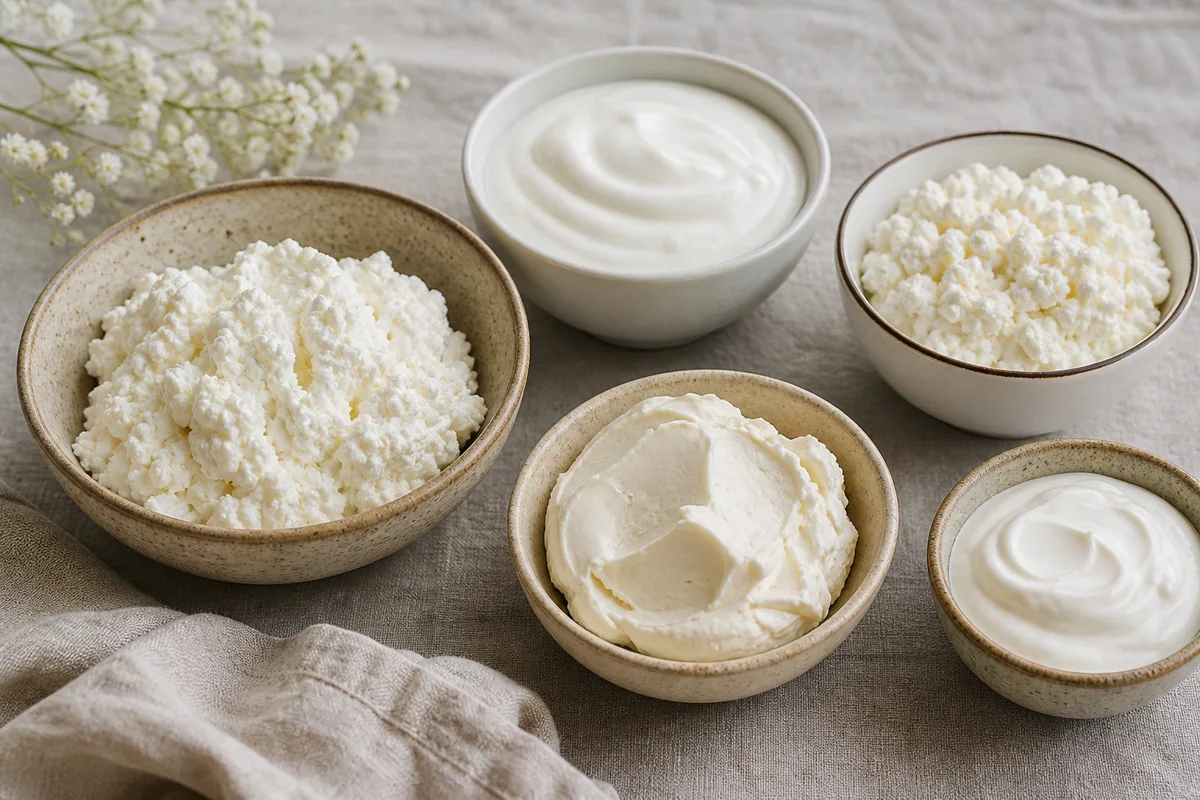
5 Best Quark Cheese Substitutes (Tested Swaps)
Ingredients
Equipment
Method
- Decide your goal: thick spoonable texture (baking/fillings) or spreadable creaminess (toppings).
- Use the listed ratio (typically 1:1) and stir/beat until smooth.
- If the substitute is looser than quark, strain (yogurt) or drain (ricotta/cottage cheese) 20–30 minutes before mixing.
- If the substitute tastes less tangy than quark, add a small squeeze of lemon juice and re-check flavor.
- Taste-test the batter/filling consistency before baking: it should hold a spoon trail and not look watery.
Notes
- Quark is thick and tangy; the best substitutes mimic thickness first, then adjust tang.
- Curd cheeses (ricotta/cottage) often need draining and blending to avoid grainy results.
- For looser substitutes, manage moisture early—your bake will show it.
Tried this recipe?
Let us know how it was!
Carrie is a food writer and editor with more than 15 years of experience. She has worked for some of the biggest names in the food industry, including Bon Appétit, Food & Wine, and Martha Stewart Living.
As the Editor in Chief of EpicureDelight, Carrie oversees all of the content on the site. She also manages the team of contributing writers and editors, who help to create delicious recipes, helpful tips, and informative articles that you’ll find on the site.
A native of the Chicago area, Carrie is passionate about all things food. She loves trying new restaurants and experimenting with new recipes in her kitchen. She’s also a graduate of the Culinary Institute of America, so she knows a thing or two about food!



