
Red Leicester has a specific personality: nutty and mellow up front, with a firm body that melts steadily rather than going greasy. Finding a good red leicester cheese substitute means matching at least two of its three key traits-flavor, melt, and that distinctive orange color.
Get two right and most dishes won't know the difference.
The cheese sits in the cheddar family, so cheddar-style swaps usually land closest. If your recipe is heat-based, prioritize melt behavior first, then flavor intensity.
Red cheddar is the nearest match for flavor and color. Colby melts smoothly with a milder finish. Gouda adds caramel-nut depth. Tilsit brings nuttiness for casseroles. A cheddar blend works in emergencies. Edam suits lighter dishes where deep nuttiness isn't the point.
5 Best Red Leicester Cheese Substitutes Ranked
Use this table to scan options fast, then read the detail sections below for swap tips by dish type. Cheddar-style cheeses score highest when melt matters; milder picks like edam work better in sandwiches and cold applications.
| # | Substitute | Best For | Ratio | Key Note |
|---|---|---|---|---|
| 1 | Red Cheddar | Both | 1:1 | Closest flavor + color |
| 2 | Colby | Both | 1:1 | Milder, melts smoothly |
| 3 | Gouda (medium) | Both | 1:1 | Caramel-nut depth |
| 4 | Tilsit | Cooked | 1:1 | Nutty, grate for melt |
| 5 | Cheddar Blend | Cooked | ¾:1 | Check salt level first |
1. Red Cheddar
Red cheddar is the straightest swap you'll find. It shares cheddar-family nuttiness with red leicester, holds a similar orange hue, and behaves almost identically when grated over heat.
Medium red cheddar keeps things mellow; sharp adds more bite, so if your dish is already bold, consider swapping in a medium variety and tasting before you add seasoning. If you're exploring pale-colored options too, pale cheddar swaps cover the same territory-see mild cheese options for comparison.
- Cheese sauces: Grate finely and add off the heat to avoid graininess.
- Cheese on toast or gratins: Use 1:1; it bubbles and browns at the same rate.
- Sandwiches and boards: Slice thin-the flavor difference is barely noticeable.
- Sharp vs. medium: Start with medium if the original recipe is mild or cream-based.
Skip if: Your recipe is a very delicate butter sauce where any assertive cheese flavor would dominate.
2. Colby
Colby is softer in flavor than red leicester but melts cleanly, making it one of the most reliable swaps for hot applications. Its naturally orange body keeps the color right in gratins and toasted dishes.
For a fuller picture of how colby-style cheeses behave, the orange cheddar varieties page breaks down the flavor differences well.
- Burgers and toasties: Colby melts flat and even-no clumping or oiling out.
- Baked pasta: Use 1:1; the mild flavor lets other ingredients carry the dish.
- Quesadillas or wraps: A natural fit-smooth melt, pleasant color.
- Flavor gap: Add a pinch of dry mustard powder if you miss the nutty edge.
Skip if: You need the punchy, slightly sharp finish that red leicester brings to strong-flavored dishes.
3. Gouda (medium or aged)
Medium gouda has a caramel-nut quality that sits close enough to red leicester's flavor profile without going in a completely different direction. It melts reliably, especially when grated rather than sliced.
You can read more about gouda flavor notes before deciding whether medium or aged suits your recipe better.
Medium Gouda
Works for: cheese sauces, mac and cheese, gratins, sandwiches
Skip if: your dish is already sweet or caramel-forward
Aged Gouda
Works for: cheese boards, strong baked toppings, hearty stews
Skip if: you need a gentle background cheese rather than a star note
- Mac and cheese: Medium gouda blends well; use 1:1 and add a little sharp cheddar for tang.
- Gratins: Grate it coarsely-aged gouda can go slightly grainy when very finely grated.
- Flavor shift: Expect a sweeter, rounder profile rather than the clean savory note of red leicester.
Skip if: Your recipe depends on classic cheddar tang-gouda steers the flavor in a noticeably different direction.
4. Tilsit
Tilsit is a semi-firm cheese with a nutty, slightly tangy flavor that works well as a stand-in when red leicester is used mainly for melting and mild depth. It is less widely available than cheddar or gouda, but worth keeping in mind for casseroles and baked dishes where its melt behavior is at its best.
If you're also comparing it against other melty options, checking how people use gouda in baked cooking gives useful context for heat behavior.
- Casseroles and gratins: Grate finely-this helps it melt evenly without pockets of unmelted cheese.
- Cheese sauces: Use 1:1, but whisk constantly; tilsit can separate if overheated.
- Flavor note: Slightly tangier than red leicester-reduce any added acid in the recipe by a small amount.
- Sourcing: Check the specialty or European cheese section; not every supermarket carries it.
Skip if: You need an exact cheddar-family flavor match for a dish where the cheese is front and center.
5. Cheddar Blend
A sharp supermarket cheddar blend is the easiest emergency swap when nothing else is on hand. These blends are formulated to melt, so they behave predictably in bakes and sauces.
The problem is salt-many blends are noticeably saltier than red leicester, so use about three-quarters of the stated amount and taste before adding any more seasoning. For a deeper dive into using cheddar-type cheeses as a base, swapping cheddar-style cheeses covers the key ratios.
- Ratio: Start at ¾ of the quantity called for, then add more after tasting.
- Best uses: Cheese on toast, nachos, baked potatoes, quick pasta bakes.
- Color: Most sharp blends are pale-use an orange-colored blend if appearance matters.
- Seasoning reset: Hold all added salt until the dish is fully heated and you can taste it properly.
Skip if: Your recipe is salt-sensitive or you are cooking for someone on a low-sodium diet.
Making Red Leicester Cheese Substitutes Work
Getting a substitute to perform like red leicester mostly comes down to preparation before it hits the heat. Grate the cheese rather than slicing or cubing it-grated cheese has more surface area and melts faster and more evenly, which matters in sauces and gratins. For dishes like our best-choice mac and cheese, add the grated substitute off the direct heat and stir constantly to keep the sauce smooth.
Always taste for salt after the cheese is fully melted, not before.
- Grate first: Coarse or medium grate works for most bakes; fine grate for smooth sauces and soups.
- Add at the right moment: Pull the pan off direct heat before stirring in grated cheese-this prevents graininess from overheating proteins.
- Adjust seasoning last: Different substitutes have different salt levels; a final taste after melting is the only reliable check.
Frequently Asked Questions
Red cheddar (medium or sharp) is the closest match for melting. It shares the same cheddar-family structure, melts at a similar rate, and keeps the orange color intact.
Yes, a 1:1 swap works well for most recipes. Just taste after melting-cheddar can be saltier, so hold back added salt until you've tried the dish hot.
Medium gouda adds a mild caramel note, not an outright sweetness. It works fine in most savory dishes, but aged gouda can taste distinctly sweeter and may shift the flavor.
Remove the pan from direct heat before adding the cheese, then stir constantly. Overheating breaks the proteins and causes graininess regardless of which substitute you use.
Edam works at a 1:1 ratio for sandwiches and light bakes. Add a pinch of dry mustard or a small amount of Worcestershire to compensate for its milder, less nutty flavor.
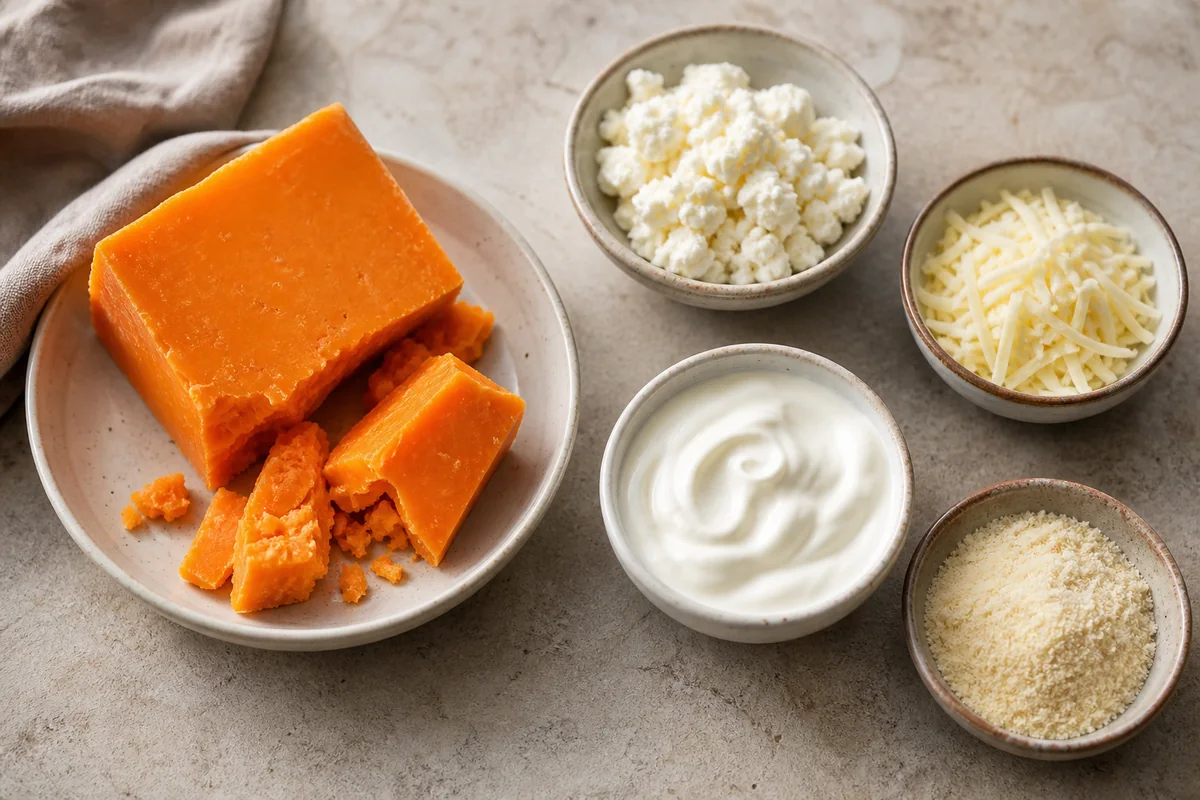
5 Best Red Leicester Cheese Substitutes for Any Recipe
Ingredients
Equipment
Method
- Decide how you’ll use it (grated melt vs. sliced/crumbled); this determines whether you prioritize melt or flavor.
- Pick the closest match from the list: red cheddar for flavor/color, colby for smooth melting, or gouda/tilsit for nutty melt.
- Substitute using the listed ratio; for wetter dishes (soups, sauces), grate the cheese to help it melt evenly.
- Taste and adjust seasoning: if the swap is saltier (many blends/cheddars), hold back salt until the dish is hot.
- For bakes and toast, watch for bubbling and slight browning—this is when the substitute’s melt behavior matches red leicester.
Notes
- For the closest result, use a cheddar-style cheese in a similar sharpness level and grate it for even melt.
- If your recipe depends on orange color (sandwiches, mac-style dishes), choose an orange cheddar/gouda/edam.
Tried this recipe?
Let us know how it was!
Carrie is a food writer and editor with more than 15 years of experience. She has worked for some of the biggest names in the food industry, including Bon Appétit, Food & Wine, and Martha Stewart Living.
As the Editor in Chief of EpicureDelight, Carrie oversees all of the content on the site. She also manages the team of contributing writers and editors, who help to create delicious recipes, helpful tips, and informative articles that you’ll find on the site.
A native of the Chicago area, Carrie is passionate about all things food. She loves trying new restaurants and experimenting with new recipes in her kitchen. She’s also a graduate of the Culinary Institute of America, so she knows a thing or two about food!



