
Red snapper sits in a sweet spot most white fish don't. It's mild without being bland, flaky without falling apart, and it absorbs seasoning without disappearing into it.
When your fishmonger is out, the right red snapper substitute keeps all of that intact.
The key traits to match are moisture retention, a clean (not briny) flavor, and flakes that hold up through baking or pan-searing. Pick the wrong fish and you get dry, rubbery, or overpowering results.
Grouper and sea bass are the closest swaps for baked or broiled red snapper. Halibut holds up best under high heat. Cod and tilapia work well when seasoning carries the dish. All five sub 1:1 by weight with minor cook time tweaks.
5 Best Red Snapper Substitutes Ranked by Cooking Method
The five fish below all share red snapper's mild, clean flavor and a flaky enough texture to work across baking, broiling, and pan-searing. Scan the table first, then read whichever entry matches your recipe.
| # | Substitute | Best For | Ratio | Key Note |
|---|---|---|---|---|
| 1 | Grouper | Both | 1:1 | Closest flaky bite |
| 2 | Sea Bass | Both | 1:1 | Add lemon for brightness |
| 3 | Halibut | Baking/Broil | 1:1 | Firmer; watch doneness |
| 4 | Cod | Both | 1:1 | Avoid thin fillets |
| 5 | Tilapia | Pan/Bake | 1:1 | Needs bold seasoning |
1. Grouper
Grouper is the most reliable swap here. Its moisture content is close to red snapper's, and the flake structure holds together under both dry heat (broiling) and moist heat (baking with sauce).
You won't notice a difference in most recipes once it's plated.
If you want to know more about swapping grouper out yourself, the logic runs in both directions.
Grouper vs. Red Snapper
Works for: baking, broiling, pan-searing-virtually any method; flavor is nearly identical when lightly seasoned
Skip if: your recipe uses very thin fillets and you want the lightest, most delicate bite possible-grouper runs slightly firmer
- Best method: Broiling or oven-baking at 400°F for 12-15 minutes per inch of thickness
- Texture note: Flakes are a touch meatier than red snapper but still pull apart cleanly
- Seasoning: Responds well to garlic, citrus, and light olive oil-same profile as snapper
2. Sea Bass
Sea bass has a flavor that's about as neutral as white fish gets. It stays moist in the oven and sears to a clean golden crust in a hot pan.
The flavor is so mild that your sauce or spice rub does most of the work, which is exactly what you want in a snapper swap.
For broader mild-fillet options, there are a few other fish that perform similarly in a pan.
- Best method: Pan-searing over medium-high heat or gentle oven bake at 375°F
- Moisture behavior: Stays juicy with a 2-minute rest off heat before serving
- Flavor booster: A quick squeeze of lemon and fresh thyme mirrors red snapper's natural brightness
Skip if: you're using a heavily spiced crust and want a fish that contributes some flavor of its own.
3. Halibut
Halibut is leaner and denser than red snapper, so it holds its shape under high heat better than most white fish. It's the one to reach for when your recipe calls for broiling or a long bake.
The meaty white flesh can handle direct flame without going rubbery, as long as you don't push it past 145°F internal.
- Doneness cue: Pull it at 140°F internal; carryover heat finishes the last 5 degrees
- Thickness guidance: Use center-cut fillets at least 1 inch thick-thinner pieces dry out fast
- Flavor lift: A pat of herb butter at the end adds back the richness snapper carries naturally
Skip if: you want the softest, lightest flake. Halibut is noticeably firmer than red snapper.
4. Cod
Cod is easy to find, inexpensive, and genuinely flaky. It matches red snapper's mild flavor well in baked dishes, and it pairs with nearly every sauce that works on snapper.
The main risk is dryness, and thickness is the variable that controls that.
| Fillet Thickness | Method | Notes |
|---|---|---|
| ¾ inch | Bake 375°F / 10 min | Watch closely; thin cod dries fast |
| 1 inch | Bake 400°F / 12-14 min | Best match for snapper timing |
| 1¼ inch+ | Bake 400°F / 16-18 min | Baste halfway through with olive oil |
Cod's mild flavor means it reads as "generic white fish" without enough fat or acid. A drizzle of fresh white fish kept properly-and cooked promptly-makes a real difference in final flavor.
- Method fit: Baking or gentle pan-searing; avoid high direct broil on thinner cuts
- Dryness prevention: Brush with olive oil or butter before and once during cooking
- Sauce suggestion: Lemon-caper or tomato-herb sauces carry the dish the way snapper's flavor does naturally
Skip if: your fillet is thinner than ¾ inch. Cod overcooks faster than snapper at that thickness.
5. Tilapia
Tilapia is lighter and thinner than red snapper, so it needs more help from seasoning to feel satisfying. That's not a flaw.
It just means your prep matters more. A hot pan with good oil and a generous herb rub turns tilapia into a perfectly decent snapper stand-in.
If you're looking into swapping tilapia itself in other recipes, that angle works in reverse too.
- Best method: Fast pan-sear (3-4 minutes per side) or a short bake at 400°F for 10-12 minutes
- Seasoning profile: Use paprika, garlic, lemon zest, and a pinch of cayenne to bring enough flavor forward
- Handling tip: Flip only once-tilapia is more fragile than snapper and breaks apart with extra handling
Skip if: you want a buttery, slightly richer fish. Tilapia is neutral and needs assertive seasoning or sauce to shine.
Making Red Snapper Substitutes Work Every Time
The swap itself is the easy part. Matching thickness and adjusting your heat is what keeps the dish from going sideways.
Most of these fish cook within 1-2 minutes of red snapper's timing, but leaner fish like pale, flaky fillets can go dry fast if your pan is too hot. And if you're curious about the mild ocean flavor you're trying to replicate, that profile should guide how aggressively you season the swap.
- Match thickness first: Use the same weight and cut thickness as your original recipe-this keeps timing reliable across all five substitutes
- Adjust for leaner fish: For tilapia or pollock, reduce cook time by 1-2 minutes per side and pull off heat a touch early
- Finish with acid or butter: A squeeze of lemon or a small knob of herb butter at the end closes the flavor gap between any substitute and red snapper
Frequently Asked Questions
Grouper is the closest match. It holds moisture well in the oven and produces a similar flaky texture without changing your seasoning or sauce.
Halibut stays close to snapper's timing at 1:1 thickness. Cod may need 1-2 fewer minutes on thinner cuts to avoid drying out.
Sea bass is ideal-it sears to a clean golden crust and stays moist inside. Grouper is a close second for the same technique.
Yes, but thaw fully in the fridge and pat very dry before cooking. Extra surface moisture causes steaming instead of searing.
Season assertively with lemon zest, garlic, and paprika, then finish with a squeeze of fresh lemon. A light herb butter also adds the richness tilapia lacks on its own.
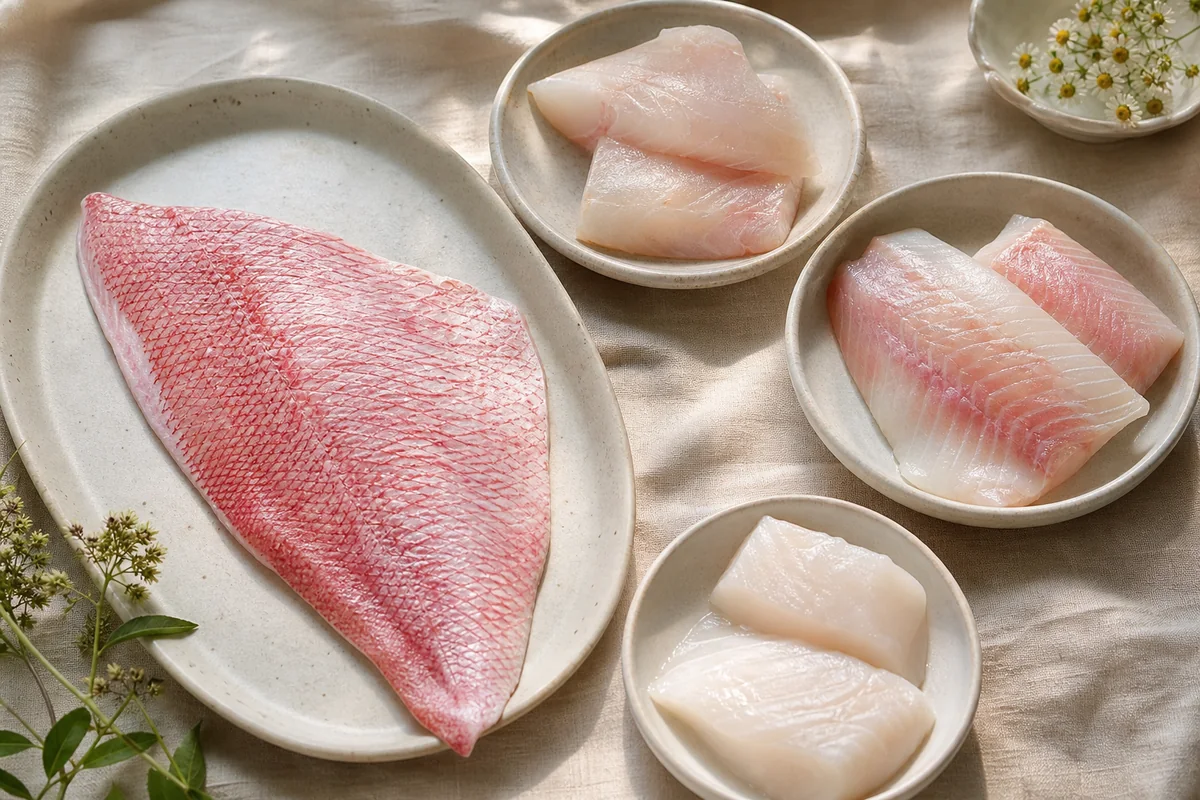
5 Best Red Snapper Substitutes in Every Recipe
Ingredients
Equipment
Method
- Match the swap to your cooking method: choose a firmer fillet (grouper/halibut) for broiling or pan-searing, and a flakier mild fish (sea bass/cod) for gentle baking.
- Use the same weight and similar thickness as your red snapper so doneness timing stays close.
- If your substitute is leaner or softer (tilapia/pollock), lower the heat slightly or reduce cook time by 1–2 minutes per side to prevent dryness.
- Boost flavor with lemon juice or a light herb-butter finish, especially for emergency swaps that can taste blander.
- Check doneness by flake-test: the fish should separate into moist flakes and look opaque throughout.
Notes
- For best results, thaw frozen fillets in the fridge overnight and pat dry before seasoning.
- Aim for similar thickness so the substitute reaches the same internal doneness without overcooking.
Tried this recipe?
Let us know how it was!
Carrie is a food writer and editor with more than 15 years of experience. She has worked for some of the biggest names in the food industry, including Bon Appétit, Food & Wine, and Martha Stewart Living.
As the Editor in Chief of EpicureDelight, Carrie oversees all of the content on the site. She also manages the team of contributing writers and editors, who help to create delicious recipes, helpful tips, and informative articles that you’ll find on the site.
A native of the Chicago area, Carrie is passionate about all things food. She loves trying new restaurants and experimenting with new recipes in her kitchen. She’s also a graduate of the Culinary Institute of America, so she knows a thing or two about food!



