
That clean, mild finish you get from a well-seared sea bass fillet is harder to replace than it sounds. The texture matters just as much as the taste. Sea bass is tender without being fragile, flakes without falling apart, and stays moist under high heat.
Finding a good sea bass substitute means matching those qualities first, then worrying about flavor second.
Most mild white fish lands close enough to work. The key is knowing which ones hold up to a hot pan, and which ones need gentle handling.
Sea bass is mild, tender, and flakes cleanly under heat. The best sea bass substitute is halibut for all-purpose cooking, striped bass for roasting, cod for mild flavor on a budget, sole for gentle methods, and mahi-mahi when you want a heartier sear with bright sauces.
5 Best Sea Bass Substitutes Ranked by Cookability
Every swap below works at a 1:1 fillet ratio. The differences come down to firmness, moisture, and how each fish responds to your cooking method.
Understanding this mild ocean fish helps you set the right baseline before you swap.
| # | Substitute | Best For | Ratio | Key Note |
|---|---|---|---|---|
| 1 | Halibut | Both | 1:1 | Firm, clean flake |
| 2 | Striped Bass | Roast/Bake | 1:1 | Buttery, holds moisture |
| 3 | Cod | Both | 1:1 | Drier-add moisture |
| 4 | Sole | Gentle Cook | 1:1 | Very delicate, fast |
| 5 | Mahi-Mahi | Sear/Grill | 1:1 | Bolder-use citrus |
1. Halibut
Halibut is the most reliable all-purpose swap. It is mild, flakes cleanly, and handles searing, baking, and roasting without losing structure.
The firm white flesh responds to high heat much like sea bass does, so you won't need to rethink your method.
Sea Bass vs. Halibut
Works for: pan searing, oven roasting, whole fillets, skin-on cooking
Skip if: you need an ultra-thin, very delicate flake-halibut runs slightly firmer under long heat
- Cook time: Match the same time as sea bass; halibut is forgiving but still pulls early at the first sign of flaking.
- Skin-on tip: Press the fillet gently for the first 30 seconds in a hot pan to prevent curling.
- Seasoning: Halibut takes the same salt, butter, and herb treatments as sea bass with no changes needed.
2. Striped Bass
Striped bass roasts beautifully. It is naturally a little richer than sea bass, with a buttery quality that keeps fillets moist even at higher oven temperatures.
For quick swaps in baked dishes, it may actually outperform the original. If you want to explore other options beyond striped bass, similar roasting fish are worth checking before you shop.
- Oven temp: Use the same temperature as your sea bass recipe-400°F works well for both.
- Flake size: Striped bass flakes in larger pieces, which looks good on the plate and holds up to chunky sauces.
- Flavor note: It tastes slightly richer than sea bass. A squeeze of lemon at the end keeps it balanced.
Skip if: you need the most neutral fish flavor possible-the richer taste of striped bass can show through lighter preparations.
3. Cod
Cod matches sea bass on mildness almost exactly. The main difference is moisture: cod is drier by nature and will turn chalky if you overcook it even slightly.
That said, it is one of the easiest fish to find and the price is usually lower.
The fix for dryness is simple. Cover the pan with foil, add a splash of stock or white wine, or finish with a butter pan sauce.
When storing white fish before cooking, keep cod well-wrapped to prevent moisture loss before it even hits the pan.
- Thickness matters: Use thick-cut cod loins, not thin tail pieces, to get closer to sea bass texture.
- Moisture fix: Add 2 tablespoon of stock or wine to a covered pan during the last 2 minutes of cooking.
- Temperature: Pull at 125°F internal-it will carry over to 130°F off the heat.
Skip if: you can't add moisture support. Dry-heat methods without a sauce will expose cod's tendency to flake apart into dry chunks.
4. Sole
Sole is the most delicate option on this list. It is very tender, flakes almost immediately under heat, and has a flavor that is genuinely mild.
If your sea bass recipe uses gentle poaching, light pan-frying, or a steamed preparation, sole is an excellent match.
The main thing to watch is timing. Sole cooks fast-often in 2 to 3 minutes per side over medium heat.
Handle the fillets carefully with a wide spatula and avoid moving them around the pan. Season simply with salt, white pepper, and a small amount of butter.
Anything heavier will overpower it.
Skip if: your recipe needs more than 5 minutes of total cook time. Sole will overcook quickly and turn mushy before a long braise or slow roast is done.
5. Mahi-Mahi
Mahi-mahi has more personality than sea bass. It is not fishy, but it does have a slightly tropical, meaty flavor that comes through even under mild seasoning.
For a quick sear or a grilled preparation, that boldness is actually an advantage-it stands up to strong herbs and acids without disappearing. For a full picture of its flavor profile, the bolder taste notes of mahi-mahi are worth reading before you commit.
Sea Bass vs. Mahi-Mahi
Works for: quick sears, grill marks, citrus marinades, herb-heavy sauces
Skip if: your dish needs a near-neutral fish flavor-mahi-mahi reads noticeably in simple preparations
- Sauce pairing: Use lemon-garlic butter, a light salsa verde, or a mango-lime relish to balance its stronger flavor.
- Cook time: Mahi-mahi sears quickly-3 to 4 minutes per side over medium-high heat for a 1-inch fillet.
- Don't skip the acid: A squeeze of citrus right before plating cuts the meatiness and makes it taste lighter.
Making Sea Bass Substitutes Work (Cook-Time + Texture Tips)
The most common mistake when swapping fish is keeping the same cook time regardless of thickness and firmness. Match texture first: firm swaps like halibut can handle your original timing, while softer swaps like sole and tilapia need shorter windows.
When swapping thin mild fillets, the same principle applies-thinner always means faster.
- Pat dry before cooking: Surface moisture prevents a proper sear. Pat each fillet with paper towels and let it sit uncovered for 5 minutes before it hits the pan.
- Adjust heat by firmness: For firm swaps (halibut, mahi-mahi), keep medium-high heat. For delicate swaps (sole, cod), drop to medium and reduce total cook time by 20 to 25%.
- Protect moisture with seasoning timing: Salt draws out moisture. Season firm fillets 10 minutes ahead; season delicate fillets right before cooking to keep the surface from weeping.
Frequently Asked Questions
Yes, but use thick-cut cod loins and pull them about 30 seconds early. Cod dries out faster than sea bass under direct heat, so a butter baste in the last minute helps.
Striped bass holds moisture the best during long oven cooking. Its natural fat content keeps it from drying out, even at 400°F for 15 to 18 minutes.
Reduce total cook time by about 25% and check for flaking sooner. A thinner fillet at ½ inch may be done in 2 minutes per side over medium heat.
Halibut gives the cleanest, most intact flake of all the options. It holds together well even when handled after cooking, making it ideal for plated dishes.
No-lemon-garlic sauce is actually one of the best matches for mahi-mahi. The acid and brightness balance its meatier flavor without overpowering it.
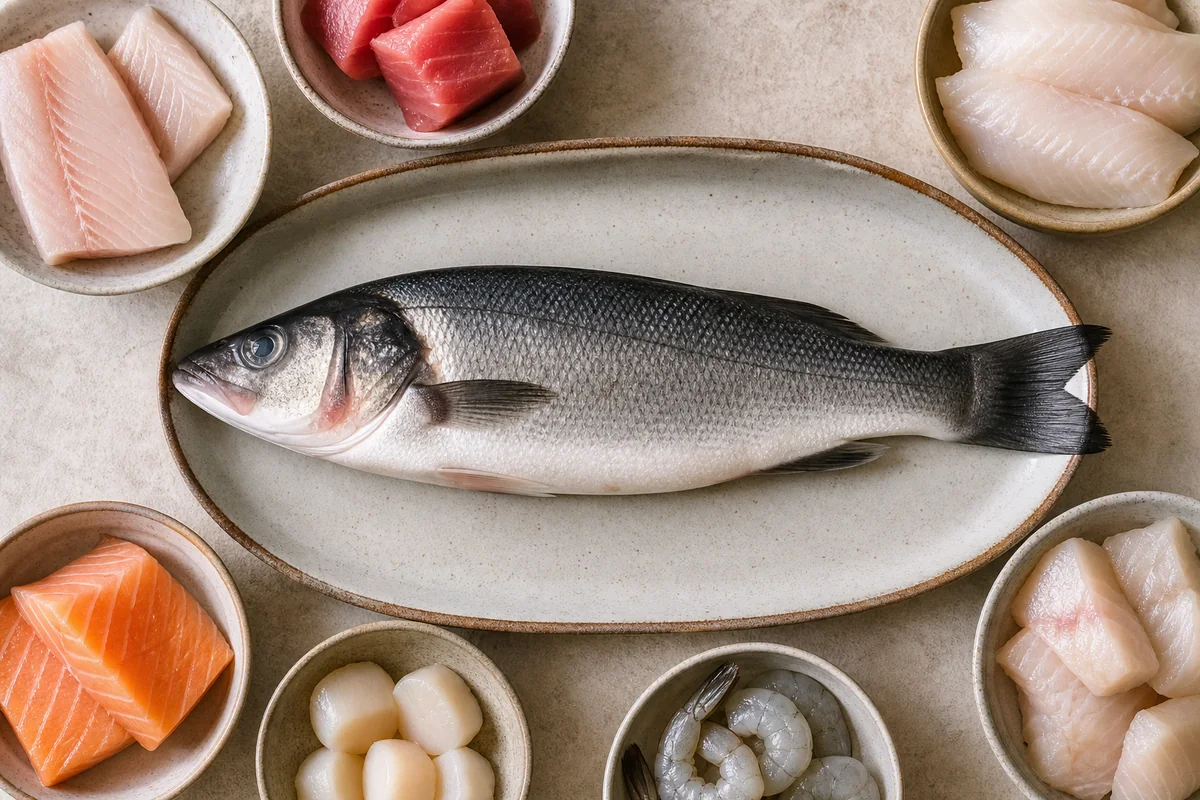
5 Best Sea Bass Substitutes (Pantry Swaps)
Ingredients
Equipment
Method
- Identify your cook method: pan-sear (needs firm flakes), bake/roast (needs steady tenderness), or gentle steam (needs delicate flake).
- Pick the closest texture in the guide, then swap at a 1:1 fillet amount.
- If your substitute is softer (tilapia/sole), reduce total cook time by about 10–25% and check for flaking sooner.
- If your substitute is drier (cod), increase moisture support (foil, a splash of stock, or a pan sauce) and pull earlier.
- Season to the fish: add salt to balance mildness; if it tastes stronger, brighten with lemon and a small pinch of sugar.
Notes
- Sea bass is prized for mild flavor and tender, clean flaking—match texture more than exact flavor.
- Thicker fillets tolerate heat better; for thin fillets, use gentler methods and shorter cook times.
Tried this recipe?
Let us know how it was!
Carrie is a food writer and editor with more than 15 years of experience. She has worked for some of the biggest names in the food industry, including Bon Appétit, Food & Wine, and Martha Stewart Living.
As the Editor in Chief of EpicureDelight, Carrie oversees all of the content on the site. She also manages the team of contributing writers and editors, who help to create delicious recipes, helpful tips, and informative articles that you’ll find on the site.
A native of the Chicago area, Carrie is passionate about all things food. She loves trying new restaurants and experimenting with new recipes in her kitchen. She’s also a graduate of the Culinary Institute of America, so she knows a thing or two about food!



