
Robiola has a way of making every dish feel effortless. It spreads like butter, melts gently into warm pasta, and carries just enough tang to keep things interesting without shouting.
Finding a robiola cheese substitute that does all three at once is rare, so the best approach is to match the single quality your recipe actually needs: creaminess for spreads, tang for sauces, or melt behavior for baked dishes.
The cheese sits in a soft middle ground. It is not as sharp as aged goat cheese, not as dense as cream cheese, and not as neutral as ricotta.
Any swap you pick will trade something, and knowing that trade-up front saves you from a disappointing result.
A good robiola cheese replacement matches the original's soft, spreadable texture and mild tang. For cold spreads, use Brie-style soft cheese or cream cheese. For warm sauces, reach for crème fraîche. For a tang-forward result, try goat cheese blended smooth. Drain Greek yogurt or ricotta when moisture control matters.
5 Best Robiola Cheese Substitutes (Texture-Matched)
The five options below are ordered by how closely they match robiola's soft, spoonable texture. Cold-dish cooks should start at the top of the list.
Warm and baked applications can go further down, but always check the ratio column first.
| # | Substitute | Best For | Ratio | Key Note |
|---|---|---|---|---|
| 1 | Brie-style soft cheese (rindless) | Both | 1:1 | Closest creamy mouthfeel |
| 2 | Crème fraîche (full-fat) | Both | 1:1 | Don't boil; stir in off-heat |
| 3 | Cream cheese (softened) | Both | ¾:1 | Loosen with milk or yogurt |
| 4 | Neufchâtel or soft goat cheese | Both | 1:1 | Blend smooth before using |
| 5 | Greek yogurt (strained) | Cold | 1:1 | Strain 20-30 min first |
1. Brie-Style Soft Cheese
Rindless, triple-cream Brie is the closest swap for robiola's texture. Both are soft, buttery, and just barely tangy, so they behave nearly the same on a cheese board or as a baked topping.
The one adjustment worth making is richness. Brie leans richer than robiola, so if a spread feels heavy, use creamy cheese options to thin it out rather than adding more fat.
Remove the rind completely before using.
- Best use: Cold spreads on bread or crostini, warm baked toppings on pizza or flatbread
- Texture note: Slightly more elastic when chilled; let it sit at room temperature for 15 minutes before spreading
- Too rich? Blend in 1 teaspoon of plain full-fat yogurt per 2 tablespoons of Brie to bring it closer to robiola's lighter feel
Skip if: your recipe needs a pronounced sour tang. Brie-style cheese is milder than robiola and won't deliver that sharp note.
2. Crème Fraîche (Full-Fat)
Crème fraîche carries the same tangy cream character that makes robiola work so well in warm dishes. It holds at moderate heat without splitting, which makes it a reliable stir-in for pasta sauces and warm grain bowls.
The cultured cream flavor is close enough that most tasters won't notice a difference.
- Where to use: Warm sauces, risotto finishes, and soft-topped flatbreads pulled from a low-heat oven
- What can go wrong: Boiling loosens the fat and makes it watery; always stir in off-heat or over very low flame
- Quick fix: If it thins too much, whisk in a second teaspoon of crème fraîche and remove the pan from heat immediately
Skip if: your dish requires a cheese that slices, holds a shape, or browns under a broiler. Crème fraîche is creamy but not sliceable.
3. Cream Cheese (Softened)
Cream cheese is thicker than robiola and noticeably milder. It fills the same creamy role, but you may need to loosen it before the textures align.
We use about ¾ the amount of cream cheese for every 1 part robiola called for, then thin with a teaspoon of milk or plain yogurt.
When storing softened cream cheese between uses, keep it sealed tightly so it doesn't absorb fridge odors that will affect the final flavor. For baked dishes, softened cream cheese melts smoothly as long as it's at room temperature before it goes into the pan.
Cream Cheese vs. Robiola
Works for: baked fillings, creamy sauces, cold spreads where a firmer texture is acceptable
Skip if: you need tang-forward flavor. Cream cheese is mild unless you add a squeeze of lemon or a pinch of extra salt.
- Best use: Baked pasta fillings, creamy dips, and any spread that benefits from a slightly denser body
- How to loosen: Add 1-2 teaspoons of whole milk or plain yogurt and stir until the texture softens to a spoonable consistency
- Taste adjustment: Add a few drops of lemon juice to mimic robiola's mild tang
Skip if: tang is the whole point of the dish. Cream cheese without adjustment reads as flat next to robiola.
4. Neufchâtel or Soft Goat Cheese
Blended smooth, soft fresh goat cheese sits closer to robiola's tang than almost any other option. Neufchâtel is lower in fat and slightly softer, while fresh goat cheese brings more of that characteristic earthiness.
The distinctly tangy soft cheese quality is the appeal here. Blend either option in a small bowl with a fork until completely lump-free before using.
- Best use: Cheese boards, mixed vegetable bowls, and spreads where a mild goat note is welcome
- Flavor risk: Pure goat cheese can overpower delicate dishes. The earthiness grows louder when heated.
- Mitigation: Mix half goat cheese with half Neufchâtel to soften the goat edge, or add a small pinch of fine salt to balance the tang
Skip if: your recipe has floral or sweet elements (think fruit-forward salads or honey-drizzled desserts). Goat's tang clashes with those profiles.
5. Greek Yogurt (Full-Fat, Strained)
Full-fat Greek yogurt is the freshest-tasting swap on this list, and it works well for any cold or spoonable application where robiola's lightness is the goal.
| Use | Ratio | Notes |
|---|---|---|
| Cold spread | 1:1 | Strain 30 min; add a pinch of salt |
| Soft dip | 1:1 | Strain 20 min; stir before serving |
| Warm topping | ¾:1 | Spoon on after heat off; don't cook it |
Before substituting, read about yogurt flavor profiles so you know what the lactic tang will contribute. Straining is non-negotiable for matching robiola's body.
- How to strain: Set yogurt in a cheesecloth-lined colander over a bowl and refrigerate for 20-30 minutes
- Best use: Cold spreads, dips, or spoonable toppings on warm dishes after the pan leaves heat
- Moisture control: Discard all liquid from the straining process; even a tablespoon left in causes pooling
Skip if: the recipe needs the substitute to melt. Strained Greek yogurt breaks and weeps when exposed to direct heat.
Making Robiola Cheese Substitutes Work
The core principle is simple: match moisture first, then adjust tang. Robiola sits at a specific midpoint, wetter than cream cheese and drier than crème fraîche, so any swap needs a small correction before it behaves correctly in the dish.
For cold uses, strain wetter options and soften denser ones. For warm or baked dishes, always stir in off-heat or at the very end of cooking to prevent the fat from separating.
If you're working with this silky cultured cream or a soft goat blend, a single taste before plating will tell you if a pinch of salt or a drop of lemon is needed.
- Step 1 - Set the texture: Strain wetter swaps or loosen denser ones with 1-2 teaspoons of milk before measuring
- Step 2 - Dial the tang: Taste and add a few drops of lemon juice or a small pinch of salt if the flavor is flat
- Step 3 - Control heat: Add soft substitutes at the end of cooking, never into a hard boil, to keep them smooth
Frequently Asked Questions
Rindless Brie-style soft cheese at a 1:1 ratio is the closest match for cold spreads. Remove the rind fully and let it sit at room temperature before spreading.
Yes, but keep the oven below 375°F and add it near the end of baking. Boiling or high direct heat breaks the fat and causes separation.
Spoon full-fat Greek yogurt into a cheesecloth-lined strainer over a bowl and refrigerate for 20-30 minutes. Discard all drained liquid before measuring.
Gumminess happens when cold cream cheese hits high heat too fast. Always bring it to room temperature first, then stir it in over low heat.
Drain whole-milk ricotta well and blend it smooth before using. Unblended ricotta does turn slightly grainy in baked dishes, especially at high temperatures.
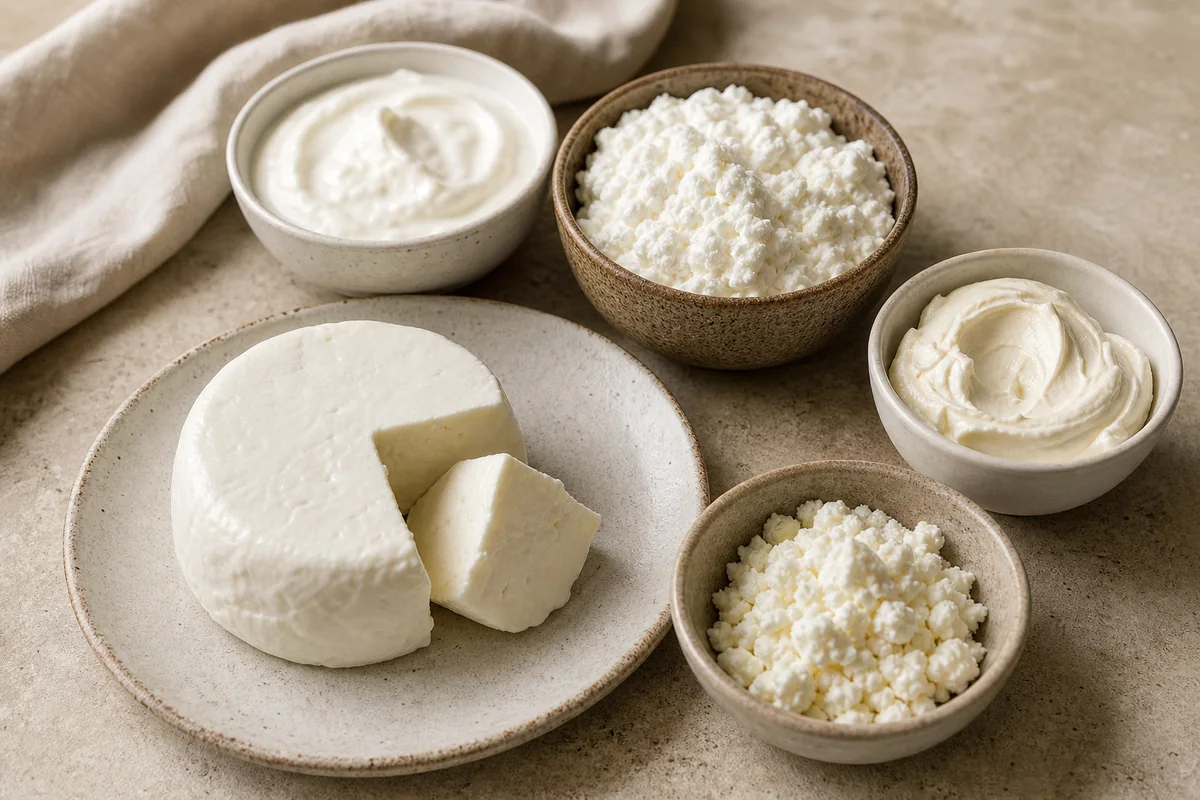
5 Best Robiola Cheese Substitutes for Better Results
Ingredients
Equipment
Method
- Identify your use: cold spread, hot topping, or baked filling—this determines whether you need a softer or meltier substitute.
- Pick the closest option from the reference table and apply the labeled substitution ratio.
- If your substitute is thicker than robiola (cream cheese, ricotta), loosen with 1–2 teaspoons of milk or stir longer before using.
- If your substitute is wetter (Greek yogurt), strain 20–30 minutes to prevent pooling.
- Taste and adjust tang and salt: add a small pinch of salt or a squeeze of lemon only if your dish needs more bite.
Notes
- For baked uses, choose options that stay creamy (brie-style soft cheese, crème fraîche).
- For cold spreads, prioritize thickness and tang (strained Greek yogurt, soft goat cheese blended smooth).
Tried this recipe?
Let us know how it was!
Carrie is a food writer and editor with more than 15 years of experience. She has worked for some of the biggest names in the food industry, including Bon Appétit, Food & Wine, and Martha Stewart Living.
As the Editor in Chief of EpicureDelight, Carrie oversees all of the content on the site. She also manages the team of contributing writers and editors, who help to create delicious recipes, helpful tips, and informative articles that you’ll find on the site.
A native of the Chicago area, Carrie is passionate about all things food. She loves trying new restaurants and experimenting with new recipes in her kitchen. She’s also a graduate of the Culinary Institute of America, so she knows a thing or two about food!



