
Grating Romano cheese over a bowl of pasta or into a pot of minestrone adds a sharp, saline punch that few other cheeses match straight out of the bag.
Most home cooks reach for it without thinking, until the store is out, the price jumps, or a dairy-free guest shows up.
Pecorino Romano, the sheep's-milk variety most commonly sold simply as "Romano" in the U.S., is notably saltier and tangier than Parmigiano-Reggiano, with a crystalline, hard-grating texture built through 5-8 months of ageing.
Below you'll find the 5 best substitutes with exact ratios, salt adjustments, and the specific cooking situations where each one holds up.
Quick Summary
Pecorino Romano is the closest swap you'll find for romano cheese, matching both the salt level and the sheep's-milk tang at a straight 1:1 ratio.
Pecorino Romano is the best romano cheese substitute, swapping in at 1:1 by weight with the same salt level and sheep's-milk sharpness. For melting, choose young Asiago. For a budget-friendly option, reach for Grana Padano and adjust salt slightly.
5 Best Substitutes for Romano Cheese to Try
Here are the five substitutes that cover every scenario, from grating over pasta to melting into a cream sauce.
| # | Substitute | Best For | Ratio | Key Note |
|---|---|---|---|---|
| 1 | Pecorino Romano | ✨ Both | 1:1 | Sheep's milk; very salty |
| 2 | Parmigiano-Reggiano | 🍳 Cooking | 1:1 | Less salty; nuttier |
| 3 | Asiago (young) | 🍳 Cooking | 1:1 | Milder; melts better |
| 4 | Grana Padano | ✨ Both | 1:1 | Budget pick; less sharp |
| 5 | Manchego (aged) | 🍳 Cooking | 1:1 | Nuttier; less salty |
Why Romano Cheese is Hard to Replace
Romano's sheep's-milk fat profile intensifies savory aromatics in a way cow's-milk cheeses simply don't replicate on their own.
Add in the protein crystals that form during ageing and give it that crumbly, grainy mouthfeel, and you have a cheese doing at least three jobs at once.
Recipes calling for a full cup of grated Romano often add almost no other salt, because the cheese handles it.
Understanding romano cheese's character in cooking helps set realistic expectations before you swap.
1 - Pecorino Romano
Pecorino Romano is technically the same cheese in its traditional form, a sheep's-milk hard cheese aged 5-8 months for culinary use. If your store sells generic "Romano," it may actually be a cow's-milk version; look for the DOP label to confirm the real thing.
Swap it in at 1:1 by weight for grating over pasta, finishing soups, or pressing into a crust.
The one limitation: Pecorino Romano runs roughly 15-25% saltier than Parmigiano-Reggiano in direct comparisons, so pull back on any added salt when the recipe already leans salty.
Pecorino Romano
Works for: grating over pasta, finishing broths, sharp flavor impact, any recipe requiring sheep's-milk intensity
Skip if: the dish already has high sodium, or you need a milder melt for sauces
Parmigiano-Reggiano
Works for: nuanced flavor in risotto, soups, and cream-based sauces where a bracing edge isn't needed
Skip if: the recipe depends on Romano's salt for seasoning - compensate with ~¼ teaspoon salt per cup
2 - Parmigiano-Reggiano (Parmesan)
Parmigiano-Reggiano is a cow's-milk cheese aged a minimum of 12 months, and the versions most commonly sold in the U.S. range from 18 to 36 months. That extended ageing builds a nutty, umami-forward flavor, but the sheep's-milk tang and bracing salt of Romano are largely absent.
Use it at 1:1, and add roughly ¼ teaspoon of salt per cup of grated cheese whenever the recipe relies on Romano for seasoning.
For help sorting out common parmesan swaps and how they compare to Parmigiano-Reggiano itself, that guide covers the full range.
- Best uses: risotto, minestrone, pasta salads, gratins where a softer flavor is welcome
- Melt behavior: less grainy than Romano; integrates more smoothly into cream sauces
- Salt note: always taste before finishing - the gap is noticeable in simple dishes like cacio e pepe
3 - Asiago (young)
Young Asiago is a cow's-milk cheese aged roughly 3 months, which keeps its moisture content higher and its texture noticeably softer than Romano. That softer structure is what makes it the go-to pick for melting.
At a 1:1 ratio, young Asiago works well in mac and cheese, baked pasta, and cream sauces. The limitation is clear: it's noticeably milder and less salty than Romano, so season the dish more assertively than you normally would.
4 - Grana Padano
Grana Padano has a legal minimum ageing of 9 months and is commonly sold anywhere from 9 to 20 months old. It's a cow's-milk hard cheese that sits in texture closer to Parmigiano-Reggiano than to Romano, with a flavor that runs about 10-20% milder.
If you're comparing options on cost, Grana Padano typically runs 20-40% lower in price than Parmigiano-Reggiano at retail, which makes it a practical choice for large-batch grating over salads or pasta.
When grana padano runs out, that article covers what to use in its place.
Swap it at 1:1 by weight. Add a small salt adjustment, and the result is close enough for most casual cooking.
Grana Padano
Works for: large-batch grating, everyday pasta, salads, budget-conscious cooking
Skip if: you need Romano's sharp edge - the flavor is noticeably softer and won't replicate the bite
Parmigiano-Reggiano
Works for: premium finishing, risotto, dishes where nuanced aging matters
Skip if: cost is a factor - Grana Padano delivers similar texture at a lower price point
5 - Manchego (aged)
Aged Manchego is a Spanish sheep's-milk cheese sold at ageing windows that range from 6 months to 2 years.
The sheep's-milk base gives it a recognizable tang that bridges the gap toward Romano better than any cow's-milk cheese can.
However, it's nuttier and butterier in finish rather than bracing, and the surface salt runs roughly 10-30% lower than Romano's.
Swap it at 1:1 by weight in rustic pasta dishes, vegetable gratins, or anywhere you want sheep's-milk character without demanding Romano's sharp, saline edge.
If you're already cooking with Manchego and need a backup for that, working without manchego cheese covers that angle.
Skip it for recipes where salt is load-bearing - the milder seasoning will be noticeable.
Picking the Right Romano Swap
Your choice comes down to what the recipe actually needs from Romano.
Need salt + sheep's-milk tang → Pecorino Romano (1:1)
Works for: pasta finishes, soups, gratins needing full Romano character
Skip if: sodium is already high in the dish
Need smooth melting → Young Asiago (1:1)
Works for: mac and cheese, cream sauces, baked pasta at ~180-190°F
Skip if: sharp flavor matters more than melt - Asiago is notably milder
Need budget grating → Grana Padano (1:1)
Works for: large batches, everyday pasta, salads
Skip if: you need that sharp Romano bite in a prominent finishing role
Need cow's-milk umami → Parmigiano-Reggiano (1:1 + ¼ teaspoon salt per cup)
Works for: risotto, cream sauces, recipes where milder, nuttier flavor is a good fit
Skip if: you forget the salt adjustment - the gap will show
Need sheep's-milk nuance → Aged Manchego (1:1)
Works for: rustic pasta, vegetable gratins, dishes where buttery sheep-milk finish works
Skip if: the recipe is salt-dependent - Manchego has noticeably less surface salinity
If you're curious about how parmesan vs parmigiano reggiano differ when subbing for Romano, that comparison breaks down the ageing and flavor gaps in detail.
And for anyone storing a wedge of romano long-term, romano cheese storage methods covers how to keep it from drying out or blooming mold.
Frequently Asked Questions
Frequently Asked Questions
Not always. In Italy, "Pecorino Romano" refers specifically to DOP sheep's-milk cheese aged at least 5 months. In the U.S., products labeled "Romano" are often made with cow's milk and have a milder, less salty flavor. Check the label for sheep's milk if you want the traditional version.
Yes. Use a 1:1 swap and add a pinch of salt to compensate for Romano's higher salinity. Parmigiano-Reggiano melts with a slightly less grainy texture, which many cooks actually prefer in carbonara. The flavor will be nuttier and less sharp.
Add approximately ¼ teaspoon of kosher salt per cup of grated Parmigiano-Reggiano when the recipe relies on Romano for seasoning. Taste before adding more - the right amount depends on other salty ingredients in the dish.
Yes, noticeably. Romano's protein crystals and low moisture content make it melt grainier than most substitutes. Young Asiago and finely grated Parmigiano-Reggiano both melt smoother and integrate more cleanly into a cream sauce at medium-low heat.
Nutritional yeast is the most common plant-based option. It provides an umami, slightly nutty flavor but lacks Romano's salt and hard-grating texture. For a closer result, blend nutritional yeast with fine sea salt and a small amount of cashew-based hard cheese if available.
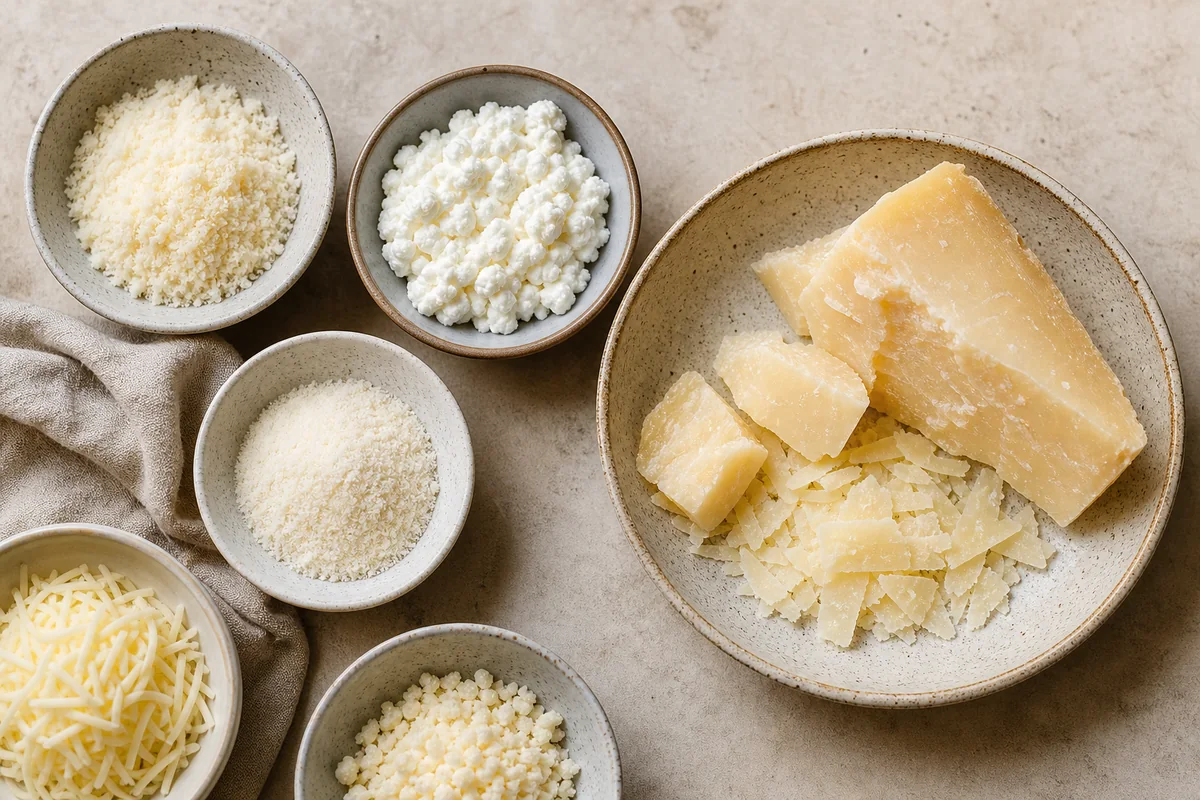
5 Best Romano Cheese Substitutes (with Ratios)
Ingredients
Equipment
Method
- Choose the substitute by function: if you need salt and sheep-milk tang pick Pecorino; for meltability pick young Asiago; for budget pick Grana Padano; for nuttier sheep-milk character pick Manchego.
- Measure substitute by weight where possible (1:1). If using volume, grate finely and weigh for accuracy because hard cheeses vary in density.
- Adjust seasoning: when using Parmigiano-Reggiano or Grana Padano, add ~¼ teaspoon salt per cup of grated cheese in recipes that rely on Romano for seasoning.
- For melting applications, melt gently over medium-low (target sauce ~180-190°F) to avoid separation; young Asiago integrates more smoothly than aged Romano.
Notes
- When in doubt, prioritize weight-based swaps and taste for salt before finishing the dish.
Tried this recipe?
Let us know how it was!
Carrie is a food writer and editor with more than 15 years of experience. She has worked for some of the biggest names in the food industry, including Bon Appétit, Food & Wine, and Martha Stewart Living.
As the Editor in Chief of EpicureDelight, Carrie oversees all of the content on the site. She also manages the team of contributing writers and editors, who help to create delicious recipes, helpful tips, and informative articles that you’ll find on the site.
A native of the Chicago area, Carrie is passionate about all things food. She loves trying new restaurants and experimenting with new recipes in her kitchen. She’s also a graduate of the Culinary Institute of America, so she knows a thing or two about food!



