
Rye flour has a personality. It's dense, slightly sour, and drinks more water than most flours in your pantry.
When you swap it out, knowing which rye flour substitute works for your specific recipe saves you from a flat loaf or a crumbly cookie.
Rye's behavior in dough comes from its high pentosan content, a fiber type that traps water. That's why density and hydration both shift when you change flours.
Most swaps below are 1:1 by weight, but the dough will tell you if it needs more liquid.
Whole wheat flour is the closest everyday swap at 1:1. Buckwheat flour nails the dark, earthy tone. Spelt flour is gentler but still grainy. All-purpose flour plus wheat germ replicates nutty depth. Oat flour works for cookies and quick breads at a ¾:1 ratio.
5 Best Rye Flour Substitutes Ranked by Use
Each substitute below is ranked by how closely it matches rye flour's flavor, weight, and water behavior. Check the table first, then read the details for the swap that fits your recipe.
| # | Substitute | Best For | Ratio | Key Note |
|---|---|---|---|---|
| 1 | Whole Wheat Flour | Both | 1:1 | Closest structure and color |
| 2 | Buckwheat Flour | Both | 1:1 | Earthy, dark, dense crumb |
| 3 | Spelt Flour | Both | 1:1 | Milder grain, tender crumb |
| 4 | AP Flour + Wheat Germ | Baking | ⅞:1 | Adds nutty depth, browns well |
| 5 | Oat Flour | Baking | ¾:1 | Soft crumb, skip yeast bread |
1. Whole Wheat Flour
Whole wheat flour is the most reliable swap because it's also milled from the entire grain. The bran and germ keep density close to rye, and the color stays darker than all-purpose, which matters for loaves.
The flavor difference is real, though. Whole wheat is nuttier and less tangy than rye.
If your recipe leans on that sour note, this swap alone won't fully replicate it, but for sandwich bread or hearty cookies, it's nearly undetectable. Knowing how this grainy flour behaves helps you predict the crumb before you even preheat the oven.
Whole Wheat vs. Rye
Works for: sandwich bread, dense cookies, rustic quick breads, thickening
Skip if: recipe depends on rye's malty, sour tang or you need very dark color
- Swap ratio: 1:1 by weight or volume
- Hydration: Start with the same liquid; add 1 tablespoon more if dough feels tight
- Color: Darker than all-purpose but lighter than dark rye flour
- Best for: Bread, muffins, and thick cookie batters
2. Buckwheat Flour
Buckwheat flour is the swap to reach for when color and depth are the point. It produces a dark, dense crumb with an earthy flavor that reads closer to rye than almost anything else.
Despite the name, buckwheat has no wheat at all, so it's also naturally gluten-free.
That darkness comes at a cost in lighter recipes. Buckwheat can read slightly bitter in pale or delicate bakes.
- Swap ratio: 1:1, but blend with all-purpose (50/50) for lighter structure
- Crumb: Heavier and denser than whole wheat; expect a tighter slice
- Hydration: If batter feels loose, reduce liquid by 1-2 tbsp
- Best for: Rustic breads, pancakes, dense cookies, and dark-crumb quick breads
To see how rye's own toasted grain notes compare against buckwheat, it's worth a side-by-side before committing to a full batch.
Skip if: you're making a light-colored pastry or vanilla-forward cookie where buckwheat's gray-brown hue will stand out visibly.
3. Spelt Flour
Spelt is the quiet middle option. It has a mild grain flavor and produces a sturdy but tender crumb without the sharp tang rye can bring.
For bakers who find rye a bit aggressive, swapping to spelt often lands exactly where they want to be.
- Swap ratio: 1:1 by weight
- Texture: Slightly lighter than rye; crumb is tender but not crumbly
- Hydration: Spelt absorbs liquid quickly; reduce mixing time and don't over-hydrate
- Best for: Quick breads, muffins, thick cookie batters, and flatbreads
Skip if: you need rye's tang or a dark, dramatic color. Spelt is milder in both and will produce a noticeably lighter loaf.
4. All-Purpose Flour + Wheat Germ
All-purpose flour alone is too neutral for rye. But when you fold in wheat germ, the nutty, slightly toasted quality comes back.
The nutty grain character of wheat germ closes a lot of the gap between plain white flour and rye's more complex profile.
This combo is good for cookies, bars, and batters where you want some rye-like depth without committing to a fully whole-grain flour. The neutral base flour keeps the texture light while wheat germ adds fiber and browning.
| Use | Ratio | Notes |
|---|---|---|
| Cookies / Bars | ⅞ cup AP + 1-2 tablespoon wheat germ per 1 cup rye | Adds nutty depth; browns slightly faster |
| Quick Bread | ¾ cup AP + 3 tablespoon wheat germ per 1 cup rye | Denser crumb; check for doneness early |
| Thickening | 1:1 AP only (skip wheat germ) | Flavor swap not needed for sauces |
- Hydration: Wheat germ absorbs moisture; add 1 tablespoon extra liquid per 3 tablespoon germ used
- Browning: This blend browns faster than plain AP flour; check 5 minutes early
- Best for: Cookies, quick breads, granola bars, and thick pancake batters
Skip if: you need a whole-grain-only flour for dietary reasons, or wheat germ isn't available.
5. Oat Flour
Oat flour is softer and more absorbent than rye. It reduces chew and produces a more tender crumb, which is great for cookies but works against you in yeast breads that need rye's structural density.
It also clumps if not mixed thoroughly, so whisk it well before adding to your batter.
- Swap ratio: ¾ cup oat flour per 1 cup rye flour
- Hydration: Oat flour absorbs differently; add liquid in 1-tbsp steps to avoid gumminess
- Texture: Softer, less chewy crumb; best for tender cookies and quick breads
- Best for: Drop cookies, banana bread, muffins, and pancake batter
- Avoid: Yeast breads where rye's gluten behavior and fermentation structure matter
Skip if: your recipe is a yeasted loaf or any bake where a dense, chewy crumb is the whole point.
Making Rye Flour Substitutes Work
Every swap above performs better when you treat the dough the way rye dough actually behaves: slightly tacky, a little dense, and more forgiving of extra liquid than most wheat doughs. Watch the consistency more than the clock.
The bread-specific notes in the classic loaf profile are a good reference point for what the finished texture should feel like.
- Check hydration first: If the dough is tight or won't come together, add water 1 tablespoon at a time until it feels slightly sticky but not wet.
- Watch browning: Darker swaps like buckwheat and the AP-plus-wheat-germ blend brown faster than rye; check your bake 5-8 minutes before the stated time.
- Weight over volume: For bread, weigh your substitute flour. Volume measurements vary by flour type and can throw off your ratio by 10-15%.
Frequently Asked Questions
Yes, whole wheat flour swaps at 1:1 and keeps density close. The flavor is nuttier and less tangy than rye, but the texture holds well in most breads and cookies.
Usually yes. Rye absorbs more liquid than most substitutes, so your dough may feel wetter with a swap. Add liquid gradually in 1-tbsp increments until consistency matches.
Whole wheat flour is the closest match for structure and density. For darker loaves, blend whole wheat with a small amount of buckwheat flour to get closer to rye's color.
Yes, at a 1:1 ratio. Expect a darker cookie with an earthy flavor. Skip it for light-colored or vanilla-forward recipes where the gray-brown color will be visible.
Add wheat germ to your substitute flour for a nuttier, toasted note. A small amount of apple cider vinegar in the batter can also bring back some of rye's tang.
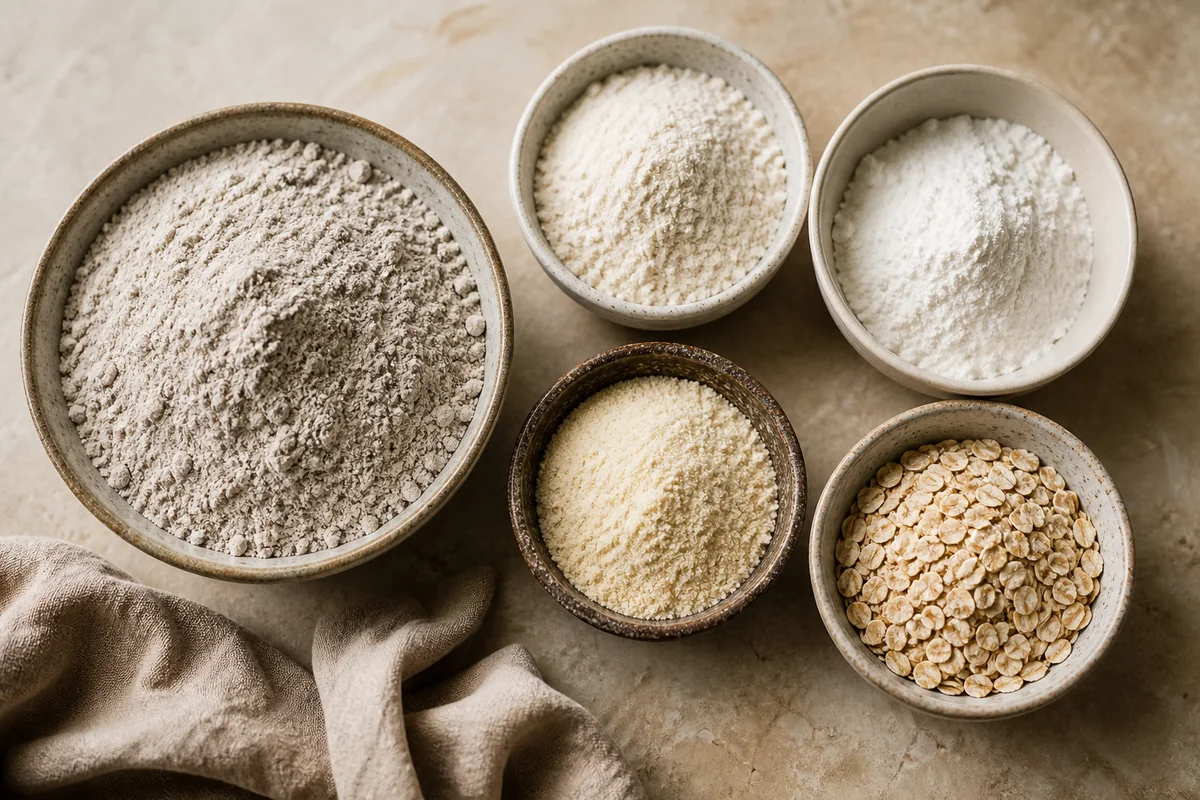
5 Best Rye Flour Substitutes (Easy Swaps)
Ingredients
Equipment
Method
- Choose the closest substitute for your goal (structure, tang/darkness, or tenderness) from the list below.
- Measure using the ratio shown for that substitute; for baking, weigh flour for the most consistent results.
- Adjust hydration: if your dough/batter is tight or dry, add water 1–2 tablespoon at a time until it feels like the target consistency.
- Do a quick texture check: rye-style dough should feel slightly sticky and dense, not dry and elastic like some wheat doughs.
- Bake as directed, then note color and chew—darker swaps usually brown faster, so watch near the end.
Notes
- Rye flour often requires more water than wheat flour; start with the recipe’s liquid, then adjust in small increments.
- If you want rye-like darkness, prefer darker flours (buckwheat, whole wheat) and watch browning time.
Tried this recipe?
Let us know how it was!
Carrie is a food writer and editor with more than 15 years of experience. She has worked for some of the biggest names in the food industry, including Bon Appétit, Food & Wine, and Martha Stewart Living.
As the Editor in Chief of EpicureDelight, Carrie oversees all of the content on the site. She also manages the team of contributing writers and editors, who help to create delicious recipes, helpful tips, and informative articles that you’ll find on the site.
A native of the Chicago area, Carrie is passionate about all things food. She loves trying new restaurants and experimenting with new recipes in her kitchen. She’s also a graduate of the Culinary Institute of America, so she knows a thing or two about food!



