
Spelt flour has a particular quality that's hard to replace exactly - a mild nuttiness, a slightly open crumb, and gluten that's stronger than you'd expect from an ancient grain but still gentler than bread flour. When your bag runs out mid-recipe, the right swap depends on what the flour is actually doing: building structure in a loaf, tenderizing a cookie, or just thickening a sauce.
The spelt flour substitute you reach for should match the job first, the flavor second.
Most replacements start at a 1:1 ratio by weight. Adjust liquid in small amounts after mixing - spelt absorbs differently than all-purpose or rye, so the dough will tell you what it needs.
For most baking, whole wheat flour is the closest spelt swap at a 1:1 ratio. All-purpose works for a lighter crumb. Kamut and einkorn are good alternatives with different flavor strength. Use rye at ¾:1 and add extra liquid. Gluten-free blends need xanthan gum and a 10-minute batter rest.
Best Spelt Flour Replacement Table (Pick Your Swap)
Knowing the ratio is only half the work. Each substitute shifts absorption, protein level, or flavor in a way that changes how the dough handles and how the final bake tastes.
The table below covers all five options at a glance so you can make a decision before you start mixing.
| # | Substitute | Best For | Ratio | Key Note |
|---|---|---|---|---|
| 1 | Whole Wheat Flour | Both | 1:1 | Add liquid 1-2 teaspoon at a time |
| 2 | All-Purpose Flour | Both | 1:1 | Lighter crumb, less nutty |
| 3 | Kamut Flour | Baking | 1:1 | Stop mixing when dough coheres |
| 4 | Einkorn Flour | Baking | 1:1 | Add flour gradually if sticky |
| 5 | Rye Flour (Light) | Cooking | ¾:1 | More absorbent, earthier flavor |
If your recipe uses spelt specifically for its whole-grain character, you'll want to understand spelt flour and its flavor before choosing a more neutral swap like all-purpose.
5 Spelt Flour Substitutes That Actually Perform
1. Whole Wheat Flour
Whole wheat flour is the most direct replacement for spelt because both are wheat-family flours with similar gluten behavior. You get comparable structure in a loaf and a recognizable whole-grain character, though the flavor lands slightly more robust and less sweet than spelt.
For most loaves and quick breads, start at 1:1 by weight and check the dough before adding extra flour. Knowing about spelt flour in grain dishes can also help you decide if an older bag of spelt is the reason your bake is off, before you switch flours entirely.
Whole Wheat Flour
Works for: Sandwich loaves, muffins, pancakes, flatbreads - any recipe that calls on whole-grain structure.
Skip if: You want a light, delicate crumb, or your recipe already specifies whole wheat and you're trying to make it milder.
- Ratio: 1:1 by weight or volume - no calculation needed.
- Liquid cue: If the dough feels stiffer than expected, add water or milk 1 teaspoon at a time until it relaxes.
- Flavor cue: Expect a slightly more bitter, earthier note - a small addition of honey (about 1 teaspoon per cup of flour) balances this in sweet bakes.
2. All-Purpose Flour
All-purpose is the easiest swap when convenience matters more than whole-grain character. It produces a lighter, more tender crumb than spelt and behaves predictably in yeast doughs and quick breads alike.
The tradeoff is flavor - all-purpose is neutral, so the mild nuttiness spelt brings is simply gone. For detailed notes on how this flour handles heat and moisture, the guide on cooking all purpose flour perfectly is worth a look before you adapt a delicate recipe.
- Ratio: 1:1 - straightforward swap with no adjustment to dry ingredients.
- Crumb note: The texture will be noticeably lighter and less chewy; that's expected and often welcome in cakes and cookies.
- Rest tip: Let batter rest 10-15 minutes after mixing so the flour fully hydrates - this reduces a slightly raw, floury taste in quick breads.
- Skip if: The nutty whole-grain flavor is the whole point of the recipe (choose whole wheat or kamut instead).
3. Kamut Flour
Kamut (Khorasan wheat) is a good fit for recipes where a richer, slightly buttery flavor is welcome. It has more protein than spelt, which means dough can tighten up if you overmix - stop as soon as everything comes together.
For bread and cookies, kamut flour in grain dishes shows how the flour performs across different applications, which is useful if you're adapting a spelt recipe that uses longer fermentation or a high-hydration dough.
- Ratio: 1:1 by weight - no scaling needed.
- Mixing cue: Kamut toughens with overworking; mix until just cohesive and stop, especially for cookies and quick breads.
- Flavor note: Expect a more pronounced buttery, nutty taste than spelt - reduce added butter by 1 teaspoon per cup of flour if you want to stay balanced.
- Skip if: You're after the closest possible flavor match to spelt (kamut runs richer and more assertive).
4. Einkorn Flour
Einkorn produces a noticeably stickier, softer dough than spelt because its gluten structure is weaker. It works beautifully for cookies, waffles, and tender loaves - but it needs careful handling so the dough doesn't spread into a puddle.
For recipes that rely on a defined gluten stretch (like a bagel or baguette), the guide on alternatives to all purpose flour can help you find a better structural match.
- Ratio: Start at 1:1, then adjust gradually as needed.
- Stickiness fix: Add flour 1 tablespoon at a time until dough is manageable - don't rely on the original recipe's liquid amount.
- Rest cue: After mixing, rest the dough 20 minutes uncovered before shaping; this tightens the structure significantly.
- Skip if: Your recipe depends on high gluten extension - einkorn will not hold that structure reliably.
5. Rye Flour (Light Rye)
Rye absorbs more liquid than spelt and carries an earthier, slightly sour flavor that can take over a delicate bake. Light rye is the better choice here over dark or whole rye - the flavor is more restrained and blends more readily into mixed-flour recipes.
Start at ¾ the amount called for, then build back toward the original volume with liquid. The guide on replacements for rye flour is also useful if you find rye too assertive and want to go in the other direction.
| Use | Ratio | Notes |
|---|---|---|
| Bread / Loaves | ¾:1 | Light rye + add 1-2 teaspoon extra water per cup; expect denser crumb |
| Pancakes / Waffles | ¾:1 | Batter thickens fast; thin with milk 1 tablespoon at a time |
| Cookies / Bars | ¾:1 | Earthy flavor amplified; pair with molasses or dark sugar |
- Ratio: ¾ cup rye per 1 cup spelt - the most important rule here.
- Flavor adjustment: Rye's sour, earthy note is stronger in sweet recipes; add 1-2 teaspoon honey or maple syrup per cup to counteract it.
- Bake-time note: Dense rye-based doughs may need 3-5 extra minutes in the oven - check doneness with a toothpick or instant thermometer.
- Skip if: The recipe is flavor-sensitive and delicate; rye can easily become the dominant taste.
Making the Spelt Substitute Work (Consistency + Bake Tips)
Before you mix anything, confirm what your recipe is doing. Yeast breads need time to develop structure after substitution, so rest the dough longer than usual; quick breads and batters are more forgiving and only need a short rest.
If you're working with a sauce or thickener, precision matters far less - add the substitute flour until you hit the right consistency and move on. For more complex bake types, reading about cooking whole wheat flour perfectly can help you understand how protein levels affect the final texture when you switch between grain flours.
- Check dough consistency first: After mixing, the dough or batter should look and feel close to what the recipe describes (shaggy, smooth, pourable) - if it doesn't, add liquid or flour in 1-tsp increments before going further.
- Rest before baking: Give any substituted dough or batter at least 10-20 minutes to hydrate fully; this reduces gumminess and helps the flour absorb evenly.
- Expect flavor shifts and adjust: Rye and whole wheat carry stronger flavors than spelt - taste the raw batter (when safe) and add a pinch of salt or a small amount of sweetener to rebalance.
Frequently Asked Questions
Yes, all-purpose swaps in at 1:1 with no adjustments to dry ingredients. Expect a lighter, less nutty result - rest the batter 10 minutes to improve texture.
Yes. Rye absorbs more liquid than spelt, so start at ¾ the amount and add extra water or milk 1-2 teaspoon at a time until dough reaches normal consistency.
It works well for tender cookies but the dough will be stickier. Add flour 1 tablespoon at a time and chill the dough before baking to prevent spreading.
Whole wheat flour is the closest flavor match - earthy, slightly sweet, and structurally similar to spelt. Einkorn is a good second choice with a milder, more delicate taste.
Use a blend that already contains xanthan gum, then rest the batter 10 minutes before baking. This improves binding and reduces the gummy texture common in gluten-free bakes.
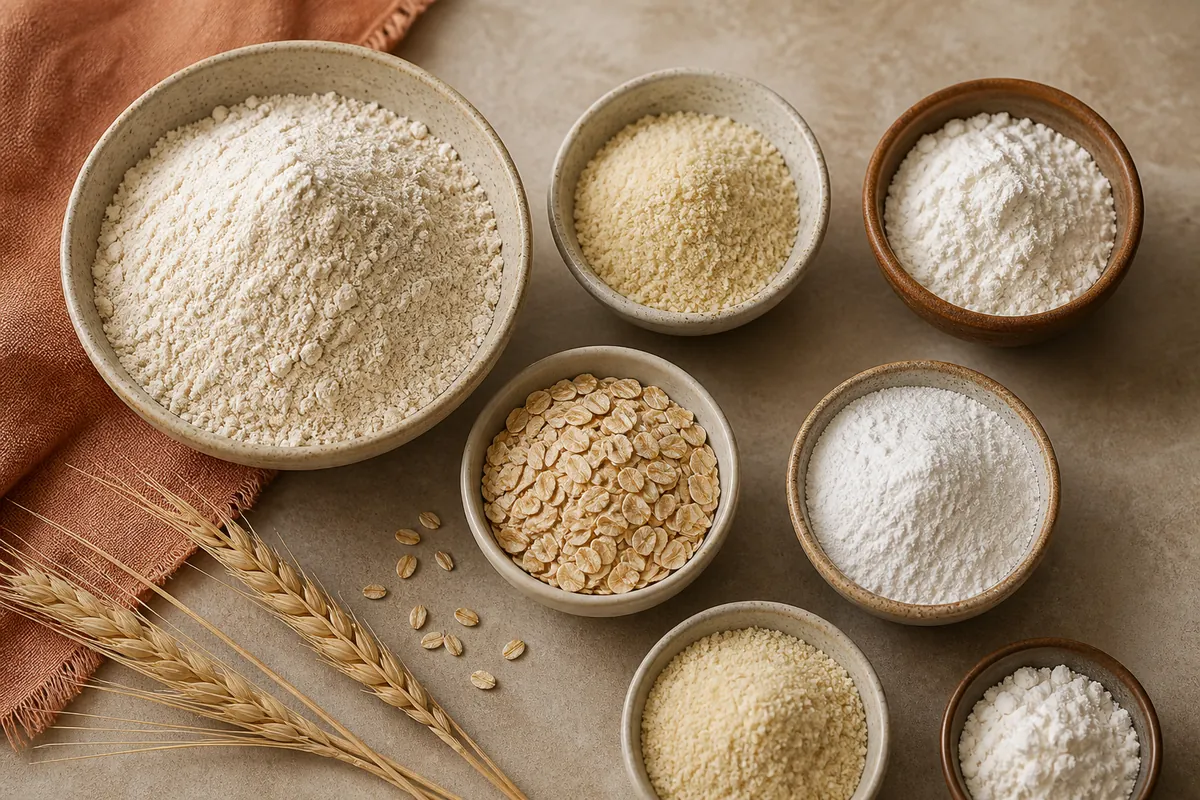
5 Best Spelt Flour Substitutes (Closest Match)
Ingredients
Equipment
Method
- Choose the substitute based on your goal: closest wheat performance (whole wheat or all-purpose) vs. flavor/crumb differences (kamut, einkorn, rye, or gluten-free).
- Replace spelt flour using the listed ratio (most are 1:1; rye is ¾:1; gluten-free is 1:1 with xanthan).
- Mix and check consistency: if dough/batter seems dry, add liquid 1–2 teaspoon at a time; if it’s wet/sticky, add flour 1 tablespoon at a time.
- If baking, let the dough/batter rest (10–20 minutes) before shaping or baking to improve hydration and texture.
- Bake as directed, then taste-test one small portion next time to fine-tune water absorption and bake time for your chosen flour.
Notes
- Protein/absorption differences mean the best swap is still adjusted by feel—don’t rely only on the ratio.
- For breads/yeast doughs, rest the dough longer when using all-purpose or rye because hydration can lag.
Tried this recipe?
Let us know how it was!
Carrie is a food writer and editor with more than 15 years of experience. She has worked for some of the biggest names in the food industry, including Bon Appétit, Food & Wine, and Martha Stewart Living.
As the Editor in Chief of EpicureDelight, Carrie oversees all of the content on the site. She also manages the team of contributing writers and editors, who help to create delicious recipes, helpful tips, and informative articles that you’ll find on the site.
A native of the Chicago area, Carrie is passionate about all things food. She loves trying new restaurants and experimenting with new recipes in her kitchen. She’s also a graduate of the Culinary Institute of America, so she knows a thing or two about food!



