
That faint tingle on the tip of your tongue, combined with the clean burst of citrus-sansho pepper is doing two jobs at once. Finding a sansho pepper substitute means deciding which job matters more for your dish right now.
Some swaps nail the numbing sensation but miss the brightness. Others deliver the citrusy top note without any tingle at all.
A few amounts will need small adjustments depending on whether you're finishing a bowl of noodles or folding spice into a bake.
No single substitute perfectly reproduces the whole profile. But the five options below get you close, and each is matched to a specific need so you pick the right one fast.
A good sansho pepper substitute targets either the tongue-tingle or the citrus aroma-rarely both. For tingle, use toasted Szechuan pepper. For citrus lift, try black pepper plus orange zest. In baking, ground coriander plus lemon zest is the steadiest option. Adjust amounts after tasting warm.
5 Best Sansho Pepper Substitutes Ranked by What They Nail
Each substitute below targets a specific trait of sansho pepper. Use the table to scan your best match fast, then read the full entry for ratio guidance.
| # | Substitute | Best For | Ratio | Key Note |
|---|---|---|---|---|
| 1 | Black pepper + orange zest | ★ Both | ¾:1 | Best everyday citrus swap |
| 2 | Toasted Szechuan pepper | Tingle | 1:1 | Closest numbing effect |
| 3 | Yuza kosho | Sauces | ½:1 | Paste-adds salt, citrus |
| 4 | Ground coriander + lemon zest | Baking | 1:1 | No tingle, great aroma |
| 5 | White pepper + lemon zest | ★ Both | 1:1 | Pantry-friendly, mild |
1. Black Pepper + Orange Zest
This is the most practical everyday sansho pepper substitute, and it works because black pepper covers the heat while finely grated orange zest replaces the bright, floral citrus lift. Start at ¾ of the sansho amount, then taste and nudge upward if the dish feels flat.
- Finishing noodles or grilled protein: Add the mix right before serving so the zest stays bright and sharp.
- In a spice rub: Mix zest into dry ingredients first, press evenly into the meat, and coat right before cooking.
- In baking: Grate zest finely-coarse pieces can pool and turn bitter in the oven. Fold into dry ingredients.
The dried vs. fresh choice matters here. Fresh zest is more aromatic but fades fast; for shelf-stable rubs, check the dried vs. fresh tradeoff before deciding.
Skip this if you need the actual tongue-tingle. This swap is aroma-forward, not sensation-forward.
2. Toasted Szechuan Pepper
Szechuan pepper is the most direct path to sansho's tingle. It has the same peppery-numbing oils, though it leans a little more floral and misses sansho's sharp citrus top note.
Toast it briefly in a dry pan, then grind right before using-this wakes up the tingling compounds significantly.
- Finishing a hot bowl: Sprinkle ground Szechuan pepper over the dish just before eating for the strongest tingle effect.
- Stir-fry timing: Add in the final 30 seconds of cooking so the oils bloom without burning off.
- In spice rubs: Mix into rubs after toasting and cooling; heat before grinding keeps the bite cleaner.
- Ratio check: Start 1:1, then reduce by a small pinch if the tingling overwhelms lighter ingredients.
If your dish already has heavy aromatics-lots of garlic, ginger, or fresh chili-the Szechuan tingle can get buried. Skip this if the base is already loud and you want a subtler finish.
3. Yuza Kosho
Yuza kosho is a paste, not a powder, so it behaves differently from the moment it hits the pan. It brings citrus brightness, a gentle tingle, and salt all at once, making it a solid sansho pepper substitute in cooking where you're building a sauce or marinade base.
Start at half the amount you'd use for dry sansho, then adjust from there.
Yuza Kosho
Works for: sauces, marinades, dipping bases, early-simmer flavor builds
Skip if: recipe needs a dry, even sprinkle finish-paste can clump and alter texture
- Early simmer: Stir into the sauce during cooking to let the chili heat and citrus mellow into the base.
- Late addition: Whisk in off the heat for sharper, brighter citrus impact-add in tiny amounts and taste as you go.
- Salt adjustment: Yuza kosho is salted, so reduce any added salt in the recipe by a small amount when using it.
This substitute shines most in Japanese-leaning dishes. For a broader look at paste versus ground spice decisions, that comparison covers the key tradeoffs.
4. Ground Coriander + Lemon Zest
This combination is built for baking. Ground coriander has a faint citrusy warmth that pairs well with lemon zest, and together they approximate sansho's spiced-citrus note without any tingle.
It's the right swap when sansho pepper appears in cookie dough, quick bread, or a spice crust.
- Cookie dough or quick bread: Use a 1:1 ratio total, splitting roughly equal parts coriander and zest. Mix into dry ingredients before combining wet.
- Spice crust: Press onto the surface of proteins before roasting. The coriander holds up to oven heat better than zest alone.
- Zest bitterness control: If the baked result tastes sharp, reduce zest by ¼ teaspoon in the next batch-do not add more coriander to compensate.
For a sense of how coriander behaves alongside other warm spices, the coriander-cumin comparison is a useful reference. Skip this if your recipe needs tingling rather than aromatic spice-coriander adds zero numbing effect.
5. White Pepper + Lemon Zest
White pepper is milder and less pungent than black pepper, which makes this combo ideal for light-colored sauces, cream soups, and pale finishing blends where black pepper would leave dark specks. Lemon zest picks up the brightness white pepper alone can't provide.
Start at 1:1 with sansho.
- Light sauces and cream soups: Whisk in near the end of cooking; white pepper blooms gently in hot liquid without turning bitter.
- Pale finishing blends: Combine with finely grated lemon zest and apply as a dry finish over fish or tofu.
- Timing note: Add zest last-extended cooking dulls the lemon aroma quickly.
For days when white pepper itself is missing, the mild pepper swap options are worth a look. Skip this if you're serving the dish cold-both white pepper and zest read much flatter at room temperature.
Making Sansho Pepper Substitutes Work
The main decision is always the same: are you replacing the tingle or the aroma? Szechuan pepper targets the first; zest-based blends target the second.
Understanding that split keeps you from stacking two tingle-free swaps and wondering why the dish feels dull. For dishes where this numbing citrus spice is the star flavor, a single substitute rarely covers everything-combining a small amount of Szechuan pepper with a little zest often works better than either alone.
- Start low: Use ¾ of the listed ratio first, taste warm, then add more. Zest especially intensifies as a dish sits.
- Apply heat carefully: Toast dry spices before using, but add zest off the heat or at the last moment to preserve aroma.
- Combine when needed: Mix a tingle swap with a citrus swap in equal small parts to cover both traits at once without overdoing either.
Frequently Asked Questions
Toasted ground Szechuan pepper is the closest match for the numbing tingle. Start at a 1:1 ratio and reduce slightly if the sensation overpowers lighter ingredients.
Yes, but grate the zest very finely and mix it into dry ingredients before combining wet. Coarse zest clumps and can taste bitter once baked.
Use a microplane for the finest possible grate and avoid the white pith entirely. Add zest near the end of cooking or off the heat to preserve brightness.
No-yuza kosho is a wet paste and clumps in a dry rub, creating uneven seasoning. Use a dry substitute like Szechuan pepper or black pepper plus zest instead.
Yes-toasting wakes up the hydroxy-alpha sanshool oils responsible for the tingle. A dry pan over medium heat for 60 to 90 seconds is enough before grinding.
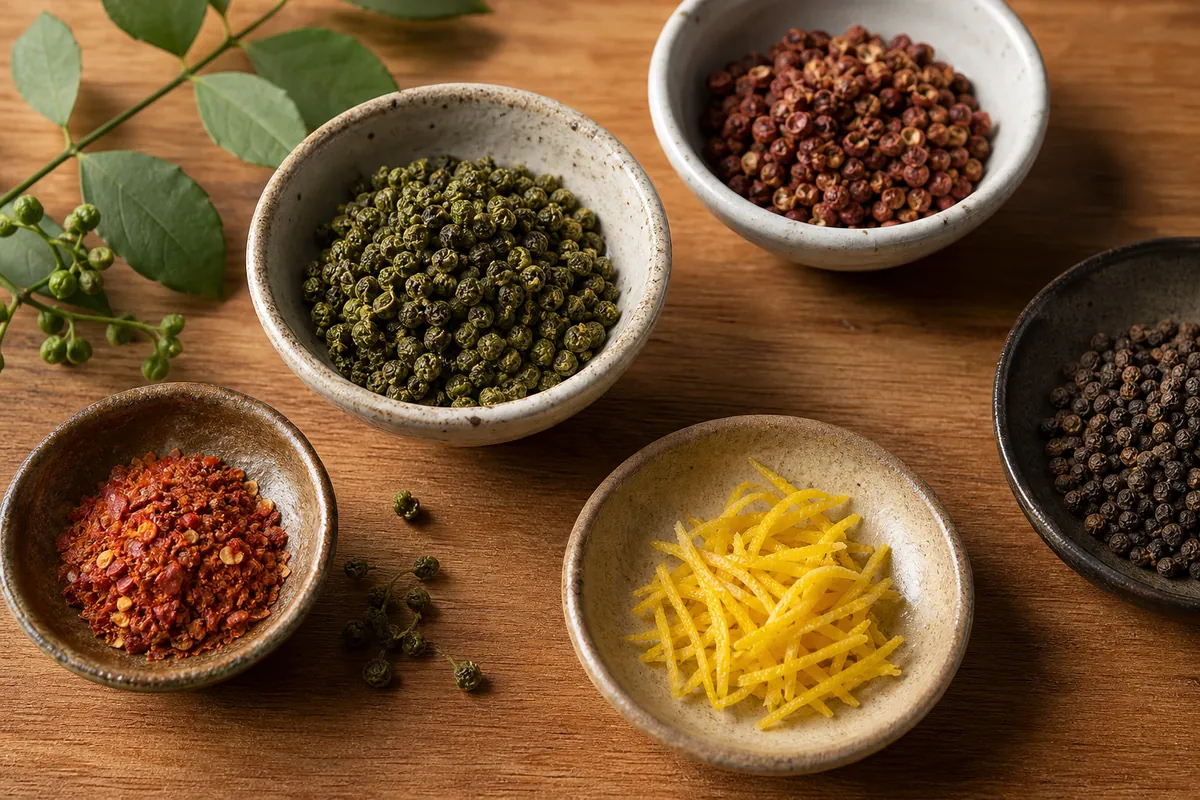
5 Best Sansho Pepper Substitutes (That Actually Work)
Ingredients
Equipment
Method
- Choose your goal: for closest citrus-lift, go with black pepper + orange zest; for the tingling effect, use toasted ground Szechuan pepper.
- Start with the listed ratio, then scale down if your substitute is paste-like (yuza kosho) or extra fragrant (zest-heavy blends).
- If using zest-based swaps, keep zest finely grated and distribute evenly; clumps taste sharper and can turn bitter.
- Taste once the dish is warm (not cold) and adjust in small increments—tongue-tingle and citrus read best after heat.
- For baking rubs, mix the substitute into dry ingredients so the flavor disperses; for finishing, sprinkle at the end.
Notes
- Sansho pepper is prized for both aroma and a gentle numb/tingle; most substitutes match one better than the other.
- Zest-based swaps work best when finely grated and evenly distributed.
Tried this recipe?
Let us know how it was!
Carrie is a food writer and editor with more than 15 years of experience. She has worked for some of the biggest names in the food industry, including Bon Appétit, Food & Wine, and Martha Stewart Living.
As the Editor in Chief of EpicureDelight, Carrie oversees all of the content on the site. She also manages the team of contributing writers and editors, who help to create delicious recipes, helpful tips, and informative articles that you’ll find on the site.
A native of the Chicago area, Carrie is passionate about all things food. She loves trying new restaurants and experimenting with new recipes in her kitchen. She’s also a graduate of the Culinary Institute of America, so she knows a thing or two about food!



