
That bright, mild bite you get from a handful of scallions over a bowl of soup or scattered across fried rice is easy to take for granted. Until you reach for them and they're not there.
A good scallion substitute saves the dish without a trip to the store.
The right swap depends on one thing: where in the recipe scallions appear. Raw, they add a crisp, green-onion snap at the end.
Cooked, they melt into the dish and add mild allium depth. Those are two different jobs, and not every substitute handles both.
Chives are the closest match for raw garnish. Leek greens or yellow onion work best when scallions are cooked into a dish. For a fast emergency swap, a small mix of minced garlic and parsley covers both the bite and the green finish.
5 Best Scallion Substitutes Ranked by Flavor Closeness
| # | Substitute | Best For | Ratio | Key Note |
|---|---|---|---|---|
| 1 | Chives | Raw Garnish | 1:1 | Closest green-onion flavor |
| 2 | Garlic Scapes | Both | 1:1 | Mild garlic edge, slice thin |
| 3 | Leek Greens | Cooked | 1:1 | Softer, slightly sweeter |
| 4 | Red Onion | Raw Finish | ¾:1 | Sharp; slice paper-thin |
| 5 | Yellow Onion | Cooked | 1:1 | Sauté briefly, tiny dice |
The five substitutes below are ranked by how close they get to scallion's actual flavor and texture. Each entry covers prep, the best dish stage to use it, and when to skip it.
1. Chives
Chives are the single best scallion substitute for raw use. They deliver a mild allium punch that reads almost identically to scallion greens in salads, grain bowls, and noodle toppings.
The main difference is texture. Chives are thinner and more delicate, so they wilt fast.
Snip them just before serving for the best result.
- Best use: Raw garnish, cold noodles, dips, egg dishes, soup finish
- Prep: Snip with scissors very thin; avoid chopping, which bruises them
- Ratio: 1:1 by volume
- Flavor note: Milder than scallions, no white-end sharpness
- Texture note: Softer than scallion greens; they don't add crunch
If you want to read more about what makes them distinct, the flavor profile of chives covers that difference well.
Skip if: You need the mild sweetness that cooked scallions add to a stir-fry. Chives are a raw-only swap.
2. Garlic Scapes
Garlic scapes are the curly green shoots cut from hardneck garlic. They taste like a cross between scallion greens and mild garlic, without the raw garlic sharpness.
If your dish needs a fresh, grassy bite rather than plain herb flavor, these get closest.
For context on how the two compare directly, the greener garlic option breaks down the differences clearly.
- Flavor: Green, oniony, with a soft garlic edge
- Prep: Slice thin crosswise, just like scallion greens
- When to add: Last 2 minutes of cooking, or raw as a garnish
- Ratio: 1:1 by volume
Skip if: Your dish can't handle any garlic note at all. In that case, chives are a cleaner choice.
3. Leek Greens
Leek is softer and a little sweeter than scallion, but it fills the allium gap in cooked dishes without standing out. The dark green tops are closest to scallion greens in appearance.
The white and pale green parts add a more pronounced, almost buttery sweetness when cooked.
Chop leek very fine so it integrates rather than chunks up. A brief sauté of 1 to 2 minutes is enough; longer cooking pushes it toward sweet and soft in a way that changes the dish noticeably.
For cooked rice dishes, soups, and egg scrambles, mild allium swaps like leek or yellow onion are often interchangeable.
- Best for: Soups, fried rice, frittatas, braised dishes
- Prep: Chop to ¼-inch pieces or smaller; rinse well before using
- Sauté time: 1-2 minutes max to keep brightness
- Ratio: 1:1 by volume in cooked applications
Skip if: You're relying on scallions as a raw, crunchy garnish. Leek greens go limp quickly and won't match that texture.
4. Red Onion
Red onion is sharper than scallions, so going in with a full 1:1 swap will overwhelm a dish. Used correctly though, very thin slices add a satisfying finishing bite with a purple-pink color that works as garnish on tacos, grain bowls, and salads.
Raw Finishing
Works for: Tacos, salads, grain bowls, cold noodles where scallions sit on top
Skip if: You need a delicate, mild garnish - red onion will dominate
Cooked Into Dish
Works for: Stir-fries and sautés if added in the last 60 seconds only
Skip if: Scallions are meant to cook down slowly - red onion turns sweet and loses the point
The sharp, purple-hued bite of red onion softens significantly when sliced paper-thin, which helps it land closer to scallion's register.
- Prep: Slice as thin as possible; soak in cold water 5 minutes to reduce sharpness
- Ratio: Use ¾ of what the recipe calls for in scallions
- Best added: At the very end, or as a raw topping
5. Yellow Onion
| Use | Ratio | Notes |
|---|---|---|
| Soups and stews | 1:1 | Yellow onion; tiny dice, add early and sauté 1-2 min |
| Fried rice | 1:1 | Yellow onion; add before rice, sauté just until soft |
| Egg dishes | ¾:1 | Yellow onion; use less, it's more pungent than scallion |
Yellow onion handles the cooked-allium role that scallions play in hot dishes. It's more intense, so a tiny dice is key.
You want pieces small enough to melt into the background of the dish rather than announce themselves. Sauté for 1 to 2 minutes over medium heat, and that's enough for a gentle, round allium note without sweetness taking over.
For dishes where you want to go further with this swap, savory allium depth from garlic alongside yellow onion can help bridge the gap when scallion flavor is missing.
- Prep: Dice to ¼ inch or smaller for the best texture integration
- Sauté time: 1-2 minutes only; stop before it turns golden
- Ratio: 1:1 for soups and rice; drop to ¾ for egg dishes
- Flavor balancing: Add a squeeze of lemon at the end if the dish tastes flat
Skip if: You need scallion's fresh green finish on top. Yellow onion is a cooked-only swap.
Making a Scallion Substitute Taste Right
The single most common mistake with these swaps is mismatching the substitute to the job. A raw garnish swap added early gets lost.
A cooked onion swap scattered on top tastes harsh. Match the role first, then worry about the ratio.
When using a sharper substitute like red onion, the cold-water soak trick works well. When swapping in something softer like leek, cut the pieces smaller than you think you need to.
If you need a quick herb-based option, choosing fresh green herbs alongside a pinch of garlic is a reliable direction.
- For raw garnish swaps: Add at the very end to preserve brightness and avoid wilting
- For cooked swaps: Sauté briefly (1-2 minutes max) so the substitute integrates without going sweet or mushy
- Adjust quantity: Start at ¾ of what the recipe calls for if using a sharper onion, then taste and add more
Frequently Asked Questions
Chives are the best raw garnish swap. Snip them thin and use them 1:1 by volume. They have the same mild green-onion flavor without any sharpness.
Yes. Chop leek very fine and sauté it for 1 to 2 minutes before adding the rice. It turns slightly sweet but integrates well into cooked dishes.
Start at 1:1 for mild swaps like chives or leek. Use ¾ of the called-for amount if you're substituting a sharper allium like red or yellow onion.
Yellow onion, diced small and sautéed briefly, is the safest onion-only swap for cooked dishes. For raw use, slice red onion paper-thin and soak it in cold water first.
Soak sliced raw onion in cold water for 5 minutes to reduce harshness. For cooked swaps, keep the sauté time under 2 minutes and use a smaller dice.
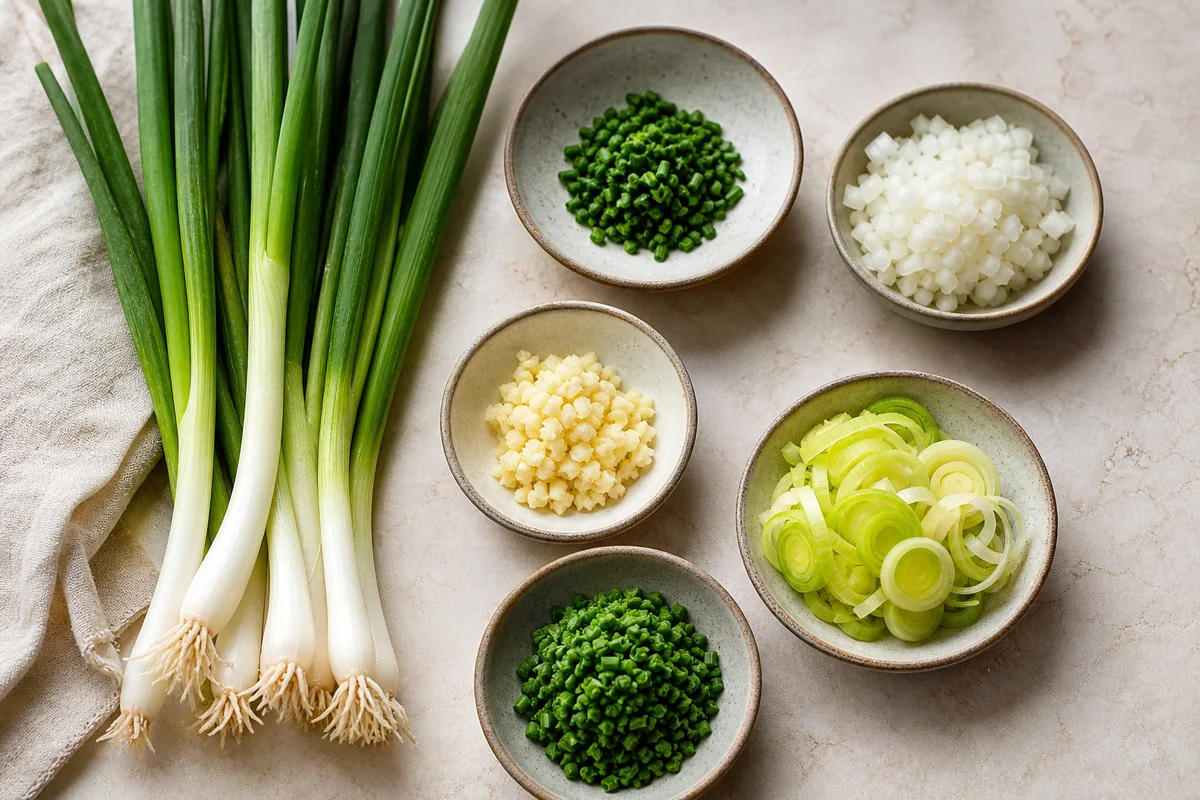
5 Best Scallion Substitutes (Honest Picks)
Ingredients
Equipment
Method
- Match the job: use chives/garlic scapes for raw garnish; use leek/onion swaps for cooked dishes.
- Start with the listed ratio, then prep for texture (thin slice for crunch; fine chop for cooking).
- If the substitute is sharper (onion/garlic), use a little less and add after cooking or at the very end.
- If the substitute is softer (leek), chop finer and sauté 1-2 minutes only so it stays bright.
- Taste and adjust: add salt if the substitute tastes flat, or add a squeeze of lemon/vinegar for brightness.
Notes
- Use thinner cuts for raw applications to avoid a “raw onion” bite.
- For cooked dishes, prioritize finely chopped leek or lightly sautéed onion so the swap blends in.
Tried this recipe?
Let us know how it was!
Carrie is a food writer and editor with more than 15 years of experience. She has worked for some of the biggest names in the food industry, including Bon Appétit, Food & Wine, and Martha Stewart Living.
As the Editor in Chief of EpicureDelight, Carrie oversees all of the content on the site. She also manages the team of contributing writers and editors, who help to create delicious recipes, helpful tips, and informative articles that you’ll find on the site.
A native of the Chicago area, Carrie is passionate about all things food. She loves trying new restaurants and experimenting with new recipes in her kitchen. She’s also a graduate of the Culinary Institute of America, so she knows a thing or two about food!



