
That papery brown skin. The faint sulfur smell.
Yellow onion is so common that most cooks never think twice about it until the pantry is empty. When that happens mid-recipe, knowing which swap actually works saves the dish.
A yellow onion substitute has to match two things: sweetness level and how it behaves under heat. Raw onion crunch is a completely different need than a soft, caramelized base.
Pick the wrong swap and the flavor balance shifts in ways that are hard to fix later.
White onion is the closest match at a 1:1 ratio for most cooked dishes. Sweet onion (Vidalia or Walla Walla) works well when you want milder, softer results. Leeks and red onion are solid ¾:1 swaps. Scallions and onion powder paste cover last-resort situations.
5 Best Yellow Onion Substitutes That Taste Right
Before the detail: if your yellow onion went soft or sprouted, knowing proper allium storage prevents the scramble next time. And if you need onion flavor but have no fresh alliums, choosing dried powder options is worth a look.
| # | Substitute | Best For | Ratio | Key Note |
|---|---|---|---|---|
| 1 | White Onion | Both | 1:1 | Closest savory bite |
| 2 | Sweet Onion | Cooked | 1:1 | Milder, less sharp |
| 3 | Leeks | Cooked | ¾:1 | Gentle, needs longer cook |
| 4 | Red Onion | Both | ¾:1 | Sharper, color impact |
| 5 | Scallions | Raw | ½:1 | Light body, last resort |
1. White Onion
White onion is the cleanest swap for yellow onion in nearly every cooked application. The flavor is sharper when raw but softens quickly in a hot pan, landing close to what pungent allium layers contribute in soups, stir-fries, and braises.
- Ratio: 1:1, no adjustment needed
- Best method: Sauté, braise, or roast - it softens and sweetens similarly under heat
- Texture tip: Dice slightly smaller than usual so it softens at the same rate as yellow onion would
- Raw use: It works raw, but expect a sharper, more peppery edge than yellow onion delivers
Skip if your recipe needs a sweeter, more mellow onion flavor. Choose sweet onion instead.
2. Sweet Onion
Sweet onion (Vidalia or Walla Walla) is milder and a little wetter than yellow onion. It leans toward sugar rather than sulfur, which changes the flavor direction slightly but not in a way that hurts most dishes.
- Ratio: 1:1 in any recipe that uses heat
- Where it shines: Caramelization, slow sautés, French onion-style bases - the higher sugar content browns beautifully
- Watch the moisture: Sweet onions release more water; cook a minute longer to drive off extra liquid before adding other ingredients
- Less bite: If your dish needs a sharp onion edge, add a small pinch of white pepper to compensate
Skip if you need raw onion sharpness or a quick-pickle punch. Red onion is a better fit for that job.
3. Leeks
Leeks work because they carry a gentle, grass-forward onion character that blends into sauces and soups without asserting itself the way a full onion does. Use the white and pale green parts only; the dark green tops are fibrous and taste more like cooked spinach than onion.
Leeks vs Yellow Onion
Works for: cream sauces, potato dishes, egg dishes, slow braises where mild allium flavor is enough
Skip if: bold onion flavor is the backbone of the dish - leeks are noticeably quieter
If you have leeks on hand but are unsure how long they keep, storing them properly extends their fridge life by nearly a week.
- Ratio: ¾ cup leeks for every 1 cup yellow onion called for
- Cook time: Add 2-3 extra minutes of sauté time - leeks need more heat to fully soften
- Prevent wateriness: Cook over medium-high heat at first, let the moisture evaporate before reducing to a simmer
Skip if your dish relies on bold onion flavor. White onion or sweet onion will get you closer.
4. Red Onion
Red onion is sharper and slightly more astringent than yellow onion, but it still has underlying sweetness that works in many recipes. The color is the real wildcard.
A purple tint appears in light-colored sauces or egg dishes, which can look off even when the flavor is fine.
| Use | Ratio | Notes |
|---|---|---|
| Raw (salads, toppings) | ¾:1 | Soak in cold water 5 min to mellow sharpness |
| Quick sauté (5-8 min) | ¾:1 | Loses color fast; flavor softens well |
| Slow braise or stew | 1:1 | Long cook time neutralizes bite and color |
Understanding how long sharply-flavored bulbs last helps you know whether your red onion is still at peak bite or past it.
- Ratio: ¾:1 for raw or quick-cooked uses; 1:1 in slow-cooked dishes
- Acid and salt: A squeeze of lemon or a splash of vinegar mellows the sharper edge fast
- Texture: Stays firmer longer than yellow onion; chop finer if you want it to melt into the dish
Skip if color transfer is a problem. White onion or sweet onion keeps sauces and eggs looking clean.
5. Green Onion/Scallion
Scallions are the least powerful swap on this list. They have far less body than yellow onion and no real caramelizing capacity, so they are best used as a finishing move rather than a base.
The mild allium swaps page covers more options if you want to stay in this territory.
- Ratio: ½ cup scallions for every 1 cup yellow onion the recipe needs
- Best uses: Toppings, garnish, quick stir-fry finishes, fried rice, cold noodle dishes
- Reinforce flavor: Add ¼ teaspoon onion powder alongside the scallions to push the depth closer to yellow onion's baseline
- Use white parts mostly: The white base carries more flavor than the green tops
Skip if you need a fully soft, caramelized onion base. Scallions don't melt down and won't build the same flavor foundation.
Making Yellow Onion Substitutes Taste Right
The core decision is simple: raw use or cooked use. For raw dishes, red onion and white onion hold their own.
For cooked bases, sweet onion and white onion are the most reliable. Leeks and scallions fill gaps but need seasoning support.
When you understand the flavor profile of sharp-edged varieties, it's easier to judge how much acid or salt to add after the swap goes in.
- Too sharp: Add a small pinch of sugar or a splash of apple cider vinegar - both round out aggressive bite without masking onion flavor
- Too sweet: A pinch of white pepper or a drop of Worcestershire sauce pulls sweetness back toward savory
- Too watery: Cook 2-3 minutes longer uncovered to evaporate moisture before adding the next ingredient
Taste after each substitution before adjusting salt. Every onion variety releases different amounts of liquid, and that changes how seasoning lands.
Frequently Asked Questions
White onion is the closest 1:1 swap for most cooked dishes. It has a similar savory bite and softens at roughly the same rate under heat.
Yes, but use a ¾:1 ratio and expect a sharper flavor. Long sautés mellow red onion well; short ones may leave a stronger bite.
Use ¾ cup of chopped leeks (white and pale green parts only) per 1 cup of yellow onion. Add 2-3 extra minutes of cook time.
Mix ¼ teaspoon onion powder with ½ teaspoon water to make a quick paste. Stir it into batters or doughs where onion flavor matters but texture does not.
For too sharp, add a pinch of sugar or a small splash of vinegar. For too sweet, a drop of Worcestershire or white pepper pulls the flavor back.
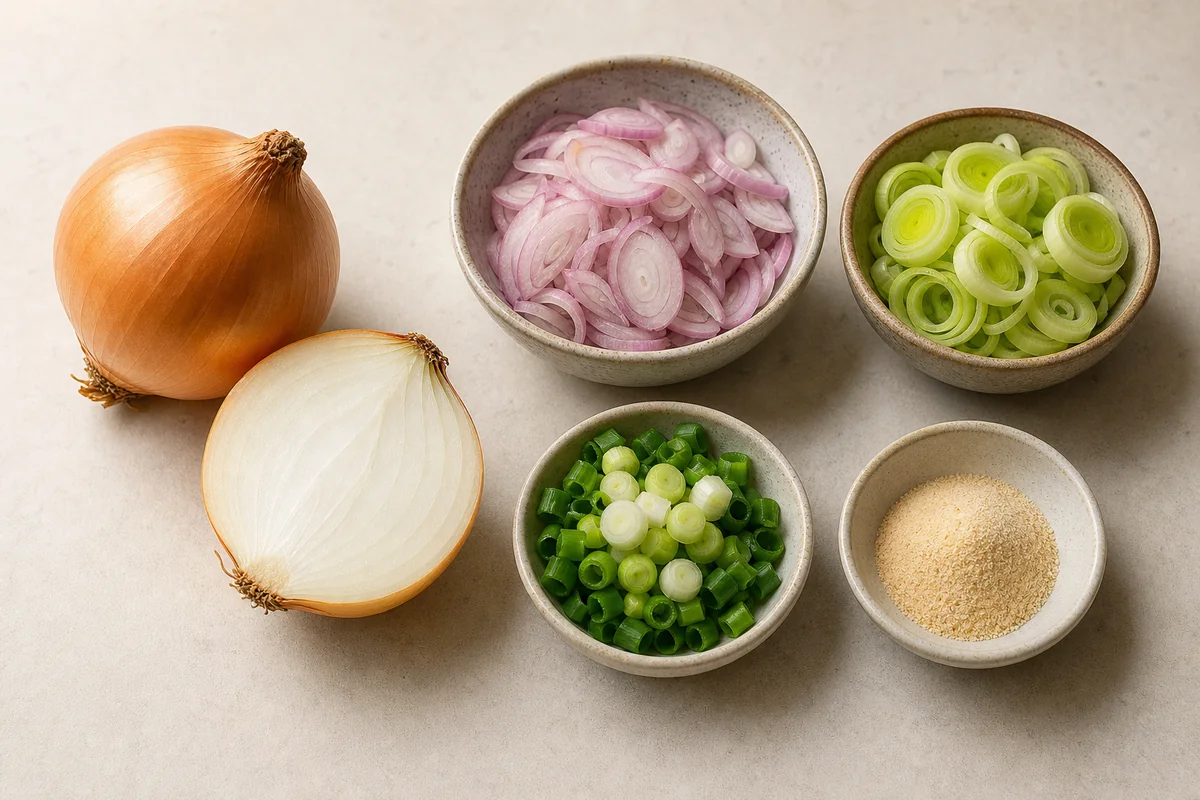
5 Best Yellow Onion Substitutes That Taste Right
Ingredients
Equipment
Method
- Identify how your recipe uses onion: raw bite, sautéed sweetness, or baking/seasoning flavor.
- Choose the substitute from the ratio that matches your use: 1:1 for best matches, ¾:1 for gentler onion-adjacent options.
- Adjust texture: dice smaller for faster softening, or blend/zip for a smoother melt in sauces.
- Taste after cooking (or after baking has set) and rebalance with salt/acid if the swap tastes too sharp or too sweet.
- If using onion powder paste, reduce added liquid elsewhere so the sauce doesn’t thin.
Notes
- For caramelized results, prioritize white/sweet onions and cook until deeply softened.
- For raw uses (salads/toppings), red onion or scallion provides the crispest bite.
Tried this recipe?
Let us know how it was!
Carrie is a food writer and editor with more than 15 years of experience. She has worked for some of the biggest names in the food industry, including Bon Appétit, Food & Wine, and Martha Stewart Living.
As the Editor in Chief of EpicureDelight, Carrie oversees all of the content on the site. She also manages the team of contributing writers and editors, who help to create delicious recipes, helpful tips, and informative articles that you’ll find on the site.
A native of the Chicago area, Carrie is passionate about all things food. She loves trying new restaurants and experimenting with new recipes in her kitchen. She’s also a graduate of the Culinary Institute of America, so she knows a thing or two about food!



