
That mild, ocean-clean bite striped bass brings to a pan-sear or a grill is hard to replace if you don't know what you're looking for. The right striped bass substitute matches two things: a firm-but-flaky texture that holds its shape, and a mild flavor that won't overpower a lemon-butter or herb sauce.
Thickness matters too. A thin fillet of the wrong fish will dry before the center sets.
Match the cut as close as you can, and you'll get the same satisfying result.
Striped bass is mild, firm, and flaky. The best swaps share those traits. Halibut and cod are the top picks for most home preparations. Mahi-mahi and sablefish work well when you want a bit more character. Tilapia is a quick emergency option.
5 Best Striped Bass Substitutes Ranked by Behavior
Here's a fast-reference table before we get into the details. Each substitute is matched to the cooking methods where it behaves most like striped bass.
| # | Substitute | Best For | Ratio | Key Note |
|---|---|---|---|---|
| 1 | Halibut | Sear / Grill | 1:1 | Firm, mild, close match |
| 2 | Cod | Bake / Pan | 1:1 | Lean; cook shorter |
| 3 | Haddock | Bake / Pan | 1:1 | Softer; handle gently |
| 4 | Mahi-mahi | Sear / Grill | 1:1 | Bolder; use more acid |
| 5 | Trout | Pan / Broil | 1:1 | Keep seasoning simple |
1. Halibut
Halibut is the closest thing to striped bass you can drop into most recipes without changing a single step. Its flakes are firm, the flavor is clean and mild, and it holds together whether you're searing in a cast iron or grilling over medium-high heat.
Halibut vs. Striped Bass
Works for: pan-searing, grilling, foil-baking with herb butter, any dish relying on mild white fish flavor
Skip if: your fillets are very thick - halibut takes longer to cook through and the exterior may dry before the center sets
One thing to watch: halibut has less fat than striped bass, so a light baste of butter or oil partway through cooking keeps it from going chalky. We prefer skin-on halibut for searing since the skin crisps up and protects the flesh.
- Sear: Cook 3-4 min per side over medium-high; pull when the flesh just turns opaque at the thickest point
- Grill: Oil the grates well and don't move the fillet until it releases naturally
- Baste: Add 1 tablespoon butter at the 2-minute mark and spoon over the top
If you're swapping halibut into another white fish recipe, our guide to swapping out halibut covers the reverse situation and helps you think through the texture logic.
2. Cod
Cod is what most home cooks already have on hand. It flakes cleanly, tastes mild, and absorbs a lemon-butter sauce just as well as striped bass does in the oven.
The main risk is dryness. Cod is leaner than striped bass, and it loses moisture fast if the oven runs hot or the cook time runs long. Pull it 1-2 minutes earlier than you think, and let carryover heat do the rest.
Skip this swap if you're grilling over high direct heat without a cover - cod can stick or turn cottony before it flakes properly.
- Bake temp: 375°F is better than 400°F for cod; less margin for error
- Moisture trick: Add 2 tablespoon white wine or broth to the pan before it goes in the oven
- Doneness: Pull when the thickest part just separates - it keeps cooking off heat for 2 minutes
- Seasoning: A squeeze of lemon before serving brings it back in line with striped bass's clean finish
For storage guidance, fresh-bought fillets at the counter hold best for 1-2 days refrigerated before cooking.
3. Haddock
Haddock sits close to striped bass on the mildness scale, with a faint briny edge that works well in lemon-herb or cream-based preparations.
It is a touch softer than striped bass, so it rewards careful handling. Don't flip more than once, and bake it on a lined sheet rather than a bare pan to avoid tearing. Skip this swap if your fillets are very thin - haddock can overflake before the sauce even finishes reducing.
- Pan cook: Medium heat, 3 min first side, 2 min second side for a ¾-inch fillet
- Bake: 380°F for 12-14 minutes depending on thickness
- Handling: Use a wide spatula and slide under the whole fillet rather than scooping one end
If haddock isn't available either, the page on similar mild white fish picks covers what else works in the same flavor range.
4. Mahi-Mahi
Mahi-mahi is firmer than striped bass and has a slightly meatier, more pronounced flavor. That's not a bad thing - it just means you need to compensate. A squeeze of lemon or a splash of white wine vinegar in the pan brings it back in line with the lighter profile striped bass recipes expect.
Cook it shorter than you think necessary. Mahi-mahi can turn tough quickly over high heat, and its firm texture masks early signs of overcooking.
Skip this swap if your recipe involves a long simmer or braising liquid - mahi-mahi loses its best texture when held in liquid heat.
- Sear: 2-3 min per side on medium-high; it's done before it looks done
- Acid balance: Add 1 teaspoon lemon juice or light vinegar to the pan sauce at the finish
- Grill: Works well - firm enough to hold on the grates without sticking
- Seasoning: Keep herbs minimal; the fish's own flavor carries the dish
We also have a full breakdown of picking a bolder white fish if mahi-mahi itself becomes unavailable.
5. Trout
Trout brings a balanced flavor and a satisfying flake that works well under a broiler or in a hot pan. It behaves like striped bass in most weeknight preparations, particularly with simple herb or lemon finishes.
Because trout has a slightly more fragrant, earthy note compared to striped bass, keep your seasoning straightforward. Salt, pepper, and fresh thyme are plenty.
Skip this swap if your fillets are already seasoned or smoked - the flavor difference will be too large to work around.
- Pan-sear: Skin-side down first, medium-high heat, 4 min; flip once and cook 2 more min
- Broil: Position 6 inches from the element, 6-8 minutes total for ¾-inch fillets
- Herb finish: Add chopped parsley or chives off heat, not during cooking - it keeps the flavor bright
- Serving temp: Rest 3 minutes before plating; the flakes tighten slightly and hold the plate better
If you want to understand how trout flavors shift across preparations, how trout tastes when cooked is worth a quick read before you commit to the swap.
Making the Substitute Work (Texture + Timing Rules)
The biggest reason a substitute fails isn't the fish itself - it's a mismatch in thickness or cook time. Lean fish like cod or haddock need a shorter, gentler cook than you might expect. storing white fish properly before you cook also affects texture more than most people realize; fish that's been sitting too long turns soft regardless of cooking method.
- Thickness first: Match fillet thickness to what your recipe specifies for striped bass; if the substitute is thinner, reduce oven time by 2-3 minutes or pull from the pan 1 minute early
- Lean vs. rich adjustment: For lean swaps (cod, haddock, tilapia), add a small knob of butter or a drizzle of olive oil; for richer swaps (sablefish, mahi-mahi), skip extra fat and add 1 teaspoon acid to the sauce instead
- Flip timing: Flip only once, and only when the fillet releases naturally from the pan - forcing a flip tears the flesh and destroys the flake structure you're trying to preserve
Frequently Asked Questions
Halibut is the best option. It has the same firm, mild flake and holds up well in a hot pan. Baste with butter at the 2-minute mark to prevent drying.
Yes. Cod works well with lemon-butter sauces but dries faster, so reduce bake time by 2-3 minutes and add a splash of white wine to the pan.
Mahi-mahi or halibut. Both are firm enough to sit on grates without breaking. Oil the grates well and wait for the fillet to release naturally before flipping.
Tilapia is thinner and softer, so cut cook time by 2-3 minutes. Use higher heat for a short burst to set the exterior before it softens through.
It works at a 1:1 ratio by weight, but sablefish is much richer. Cut added fats in half and finish with lemon juice to balance the heavier texture.
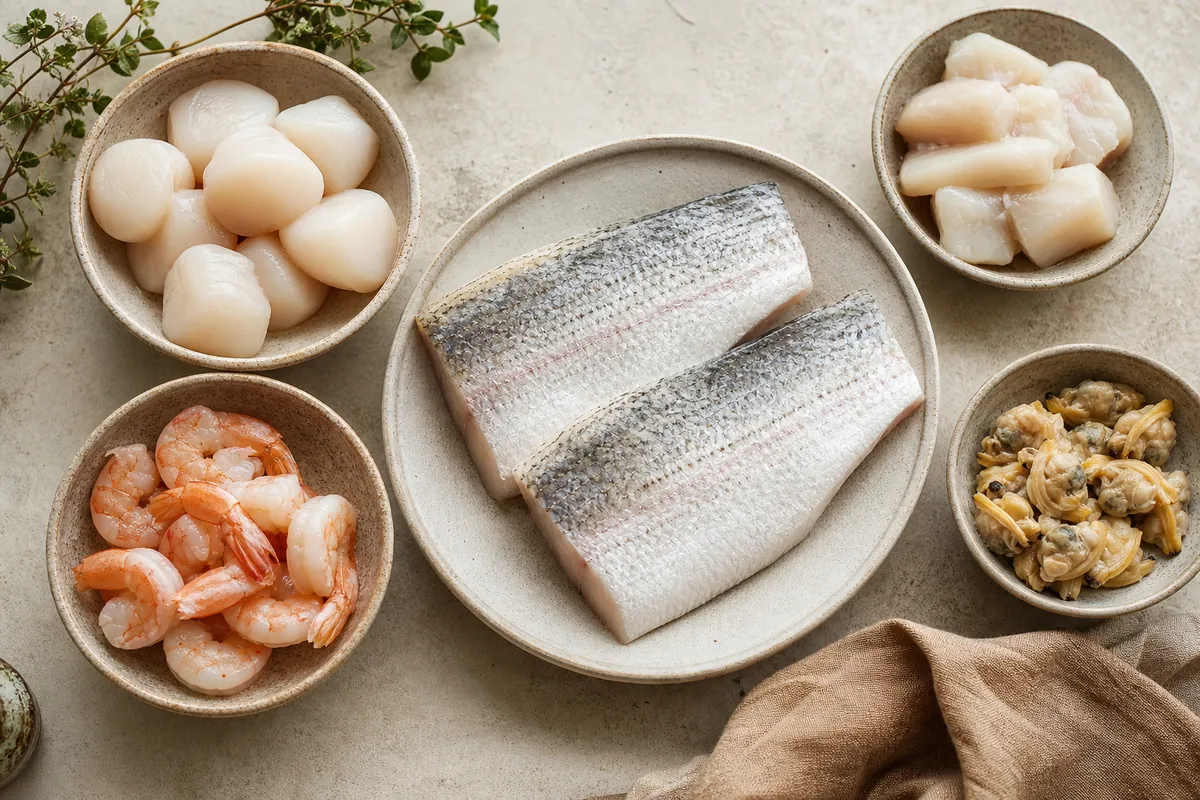
5 Best Striped Bass Substitutes for Home Cooks
Ingredients
Equipment
Method
- Match your cooking method: for pan-sear/grill, prioritize halibut or sablefish; for bake, cod or haddock works best.
- Match thickness to avoid dryness: target similar thickness to your striped bass; if using tilapia, expect a shorter cook.
- Season to compensate: use a touch more salt and a brighter acid (lemon or vinegar) if the substitute is leaner than striped bass.
- Check doneness early: pull the fish when it flakes in the thickest part (it keeps cooking for 1–3 minutes off heat).
- Rest and serve: rest 2–5 minutes so flakes set; serve with the same sauce you planned for striped bass.
Notes
- Use similar fillet thickness for the closest texture match.
- Lean substitutes (cod/tilapia) need less time and can benefit from a quick baste or light oil coating.
Tried this recipe?
Let us know how it was!
Carrie is a food writer and editor with more than 15 years of experience. She has worked for some of the biggest names in the food industry, including Bon Appétit, Food & Wine, and Martha Stewart Living.
As the Editor in Chief of EpicureDelight, Carrie oversees all of the content on the site. She also manages the team of contributing writers and editors, who help to create delicious recipes, helpful tips, and informative articles that you’ll find on the site.
A native of the Chicago area, Carrie is passionate about all things food. She loves trying new restaurants and experimenting with new recipes in her kitchen. She’s also a graduate of the Culinary Institute of America, so she knows a thing or two about food!



