
Sucanat has a particular texture and depth that most pantry sugars don't quite match. It's an unrefined whole cane sugar, so it keeps its natural molasses content, giving it a coarser grain and a caramel-forward flavor that refined sugars lose.
Picking the right sucanat substitute means deciding which quality matters most in your recipe: the molasses depth, the dry grain structure, or the dark color.
Dark brown sugar is the closest 1:1 swap for sucanat in most baking. Muscovado wins on flavor depth. Turbinado works when you need a drier, crunchier profile. For full control, mix granulated sugar with molasses to dial in the exact color and intensity you want.
5 Best Sucanat Substitutes Ranked by Flavor Match
| # | Substitute | Best For | Ratio | Key Note |
|---|---|---|---|---|
| 1 | Dark Brown Sugar | Both | 1:1 | Reduce liquid slightly |
| 2 | Light Brown Sugar | Both | 1:1 | Milder molasses color |
| 3 | Muscovado Sugar | Both | 1:1 | Intense, sticky grain |
| 4 | Turbinado Sugar | Baking | 1:1 | Drier, less molasses |
| 5 | Granulated + Molasses | Both | ¾:1 | Most adjustable option |
Each row shows the starting ratio and a key texture or color note. The 1:1 swaps are straightforward replacements by weight or volume.
For dark syrup options, check whether the recipe needs that liquid component before committing.
1. Dark Brown Sugar (Packed)
Dark brown sugar is the most practical drop-in for sucanat. It has a similar molasses-forward flavor and produces comparable color in baked goods.
The main difference is moisture. Dark brown sugar is softer and slightly stickier than sucanat's coarser, drier grains.
- Color output: Very close to sucanat, especially when packed firmly into the measure
- Sweetness level: Similar overall, though the molasses integration feels smoother
- Texture in dough: Adds a bit more moisture, which softens cookies and quickbreads
Dark Brown Sugar vs. Sucanat
Works for: cookies, cakes, marinades, oatmeal, any recipe where moisture won't hurt
Skip if: you need a dry, coarse grain for crunch or a crisp snap in thin cookies
For most everyday baking, pack the brown sugar firmly and reduce any added liquid by about 1 tablespoon per cup to keep the texture on track. You can also learn more about refined sugar swaps if you're working around multiple ingredients at once.
2. Light Brown Sugar (Packed)
Light brown sugar is a reliable stand-in when sucanat's intensity would overpower a delicate recipe. It has real molasses flavor, just a noticeably lighter version of it.
- Best uses: Cakes, pancakes, glazes, banana bread, muffins
- Color: Produces a golden rather than deep amber tone in the finished bake
- Main downside: You'll lose the treacle depth that sucanat adds to things like gingerbread or dark cookies
If your recipe calls for sucanat mostly for sweetness rather than for pronounced caramel flavor, light brown sugar handles it well. Use a 1:1 swap, pack it the same way, and know the result will be a shade paler and a touch milder.
The refined vs. unrefined choice matters more in bakes where color and depth drive the whole flavor.
Skip if: you need sucanat's strongest caramel and dark color to carry the dish.
3. Muscovado Sugar (Dark)
Muscovado is the substitute that most closely matches sucanat's intensity. It's an unrefined cane sugar with heavy molasses content, and its grains are damp and sticky rather than free-flowing.
Expect a slightly more pronounced bitterness and deeper browning than sucanat. In sauces, cookies, and oatmeal, that extra depth is a genuine advantage.
- Where it shines: Dark baked goods, molasses cookies, sticky sauces, spice rubs
- Watch the stickiness: Its damp grain can clump; break it up before measuring
- Sweetness perception: May taste slightly more intense, so taste and adjust by 1-2 teaspoons if needed
Use it at a 1:1 ratio. For a detailed look at how it compares to standard options, the muscovado and brown sugar differences are worth knowing before you bake.
Skip if: your recipe needs a light color, such as pale frosting or a golden sponge.
4. Turbinado Sugar
Turbinado is the most different option on this list. It's golden, coarse-grained, and much drier than sucanat.
The caramel notes are there, but the molasses depth is not.
It dissolves more slowly than brown sugar. That's actually useful in some cases.
A swap using coarser crystals works particularly well when you want crunch or surface caramelization rather than a moist, dark crumb.
- Top crunch: Excellent sprinkled on muffins, scones, or pie edges before baking
- Quick breads: Works as a 1:1 swap, though the crumb will be slightly lighter in color
- Dissolution: Expect slower melting in thin batters; stir longer or warm the batter slightly
If you're curious how turbinado behaves flavor-wise before committing, the flavor profile of golden cane crystals covers it well. Your bake will brown faster on the surface but carry less molasses intensity through the batter.
Skip if: you're relying on sucanat's molasses depth to carry flavor throughout the whole recipe.
5. Granulated Sugar + Molasses
This is the most adjustable approach on the list. You're essentially building sucanat from scratch, which means you control exactly how dark and how strong it gets.
Start with 1 cup of granulated sugar and stir in 1 tablespoon of molasses for a light result, or up to 2 tablespoons for a deeper, sucanat-like profile. The mixture replaces sucanat at a ¾:1 ratio by volume.
- Sweetness: Granulated sugar provides a clean base; molasses adds depth without extra sweetness
- Color: Add more molasses for darker results, less for a mid-range amber tone
- Flavor depth: This combo can match sucanat's profile more precisely than any pre-made sugar
Granulated + Molasses vs. Brown Sugar
Works for: any recipe where you want to dial in exact color, depth, and sweetness independently
Skip if: you don't have molasses on hand, or need a quick pantry fix with no mixing
Mix the molasses into the sugar thoroughly before adding it to the recipe. Stir until no streaks remain, then treat the mixture exactly as you would sucanat.
Skip if: you don't have molasses. This swap needs it to work.
Making the Swap Work
Getting a sucanat substitute right is mostly about matching three variables: moisture level, color output, and molasses intensity. Get those three close and your recipe lands where it should.
The moisture content of packed sugars also affects how they store, so check your substitute isn't dried out before using it.
- Wetter substitutes (brown sugar, honey, syrup): Reduce added liquids by 1-2 tablespoons per cup of substitute to keep dough or batter at the right consistency
- Drier substitutes (turbinado, granulated): Expect slightly faster surface browning but less molasses depth inside; don't extend bake time unless the center is underdone
- Color correction: If your bake looks paler than expected, a half-teaspoon of molasses stirred into the batter before baking adds color without meaningfully changing sweetness
Frequently Asked Questions
Yes, dark brown sugar works at a 1:1 ratio. It's slightly softer and moister than sucanat, so reduce added liquids by about 1 tablespoon per cup if your batter looks too loose.
Dark brown sugar or muscovado are your best bets. Both match sucanat's molasses depth, though muscovado adds a slightly more intense flavor and darker color to the finished cookie.
Reduce other liquids in the recipe by 3 tablespoons per cup of honey or syrup used. Also lower your oven temperature by about 25°F, since liquid sweeteners caramelize faster.
Not exactly. Turbinado has caramel notes but much less molasses depth. It works best for texture and surface browning rather than carrying sucanat's full flavor through a batter.
Muscovado and dark brown sugar both have high molasses content, which accelerates browning. Reduce oven temperature by 10-15°F and tent with foil if the top is darkening too fast.
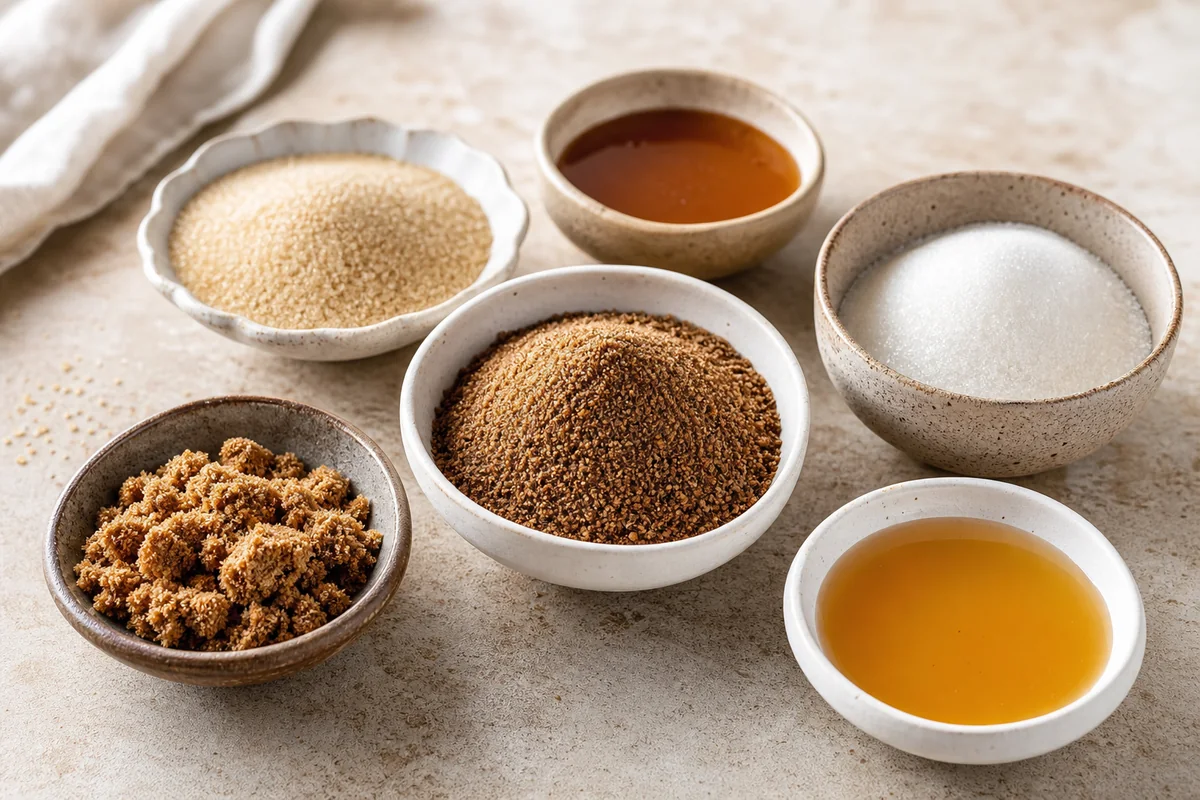
5 Best Sucanat Substitutes for Better Results
Ingredients
Equipment
Method
- Decide your priority: closest sucanat flavor (brown/muscovado) vs drier texture (turbinado) vs adjustable sweetness (sugar + molasses).
- Start with the listed ratio (use 1:1 for the brown-sugar and muscovado options).
- If your substitute is wetter or stickier (brown sugar, honey, syrup), reduce added liquids slightly and watch batter/dough thickness.
- If your substitute is drier or lighter (turbinado, granulated), expect faster browning but less molasses depth—bump bake time only if the center isn’t set.
- Taste the batter/sauce after mixing and adjust: a tiny pinch of molasses for darkness or a pinch of salt to balance sweetness.
Notes
- Sucanat is an unrefined, partially caramelized cane sugar with molasses-like depth; choose based on the recipe’s moisture needs.
- In cakes/cookies, small liquid adjustments matter more than exact sweetness.
Tried this recipe?
Let us know how it was!
Carrie is a food writer and editor with more than 15 years of experience. She has worked for some of the biggest names in the food industry, including Bon Appétit, Food & Wine, and Martha Stewart Living.
As the Editor in Chief of EpicureDelight, Carrie oversees all of the content on the site. She also manages the team of contributing writers and editors, who help to create delicious recipes, helpful tips, and informative articles that you’ll find on the site.
A native of the Chicago area, Carrie is passionate about all things food. She loves trying new restaurants and experimenting with new recipes in her kitchen. She’s also a graduate of the Culinary Institute of America, so she knows a thing or two about food!



