
Suet does something no other fat quite replicates: it stays firm while you mix, then renders quietly into the dough as heat rises. That slow, even melt is what gives suet pastry its tender crumb and what makes a spotted dick or steak pudding hold together.
Finding the right suet substitute means matching that firmness first, then managing water content and melt timing.
Most suet sold outside the UK is hard to find on a regular grocery shelf. So cooks end up reaching for the next closest thing, often without a clear sense of what they're giving up.
The fat's texture at room temperature matters more than flavor here.
A good suet substitute is firm at room temperature and melts slowly in the oven. Lard and shortening are the closest matches. Cold butter works with careful chilling. Coconut oil handles vegetarian bakes. Liquid oils only work for quick breads.
5 Best Suet Substitute Swaps for Baking
These five options cover firm animal fats, solid plant fats, and liquid oil for situations where nothing else is available. The table below gives you the quick scan; each H3 goes deeper on handling and pitfalls.
| # | Substitute | Best For | Ratio | Key Note |
|---|---|---|---|---|
| 1 | Lard | Savory + Sweet | 1:1 | Firm; closest texture match |
| 2 | Vegetable Shortening | Both | 1:1 | Neutral; reliable structure |
| 3 | Cold Butter | Both | ¾:1 | Has water; must stay cold |
| 4 | Coconut Oil (refined) | Both | 1:1 | Re-chill if liquefied |
| 5 | Neutral Oil | Quick Breads Only | ½:1 | Liquid; no firm layers |
1. Lard
Lard is the closest animal-fat alternative to suet. It is firm at room temperature, nearly flavorless in most rendered forms, and it behaves almost identically to suet in pastry and dumpling dough.
For other animal-fat swaps, options exist, but lard is usually the first one worth trying.
Lard vs. Suet
Works for: savory dumplings, suet crust pastry, steamed puddings, biscuit crumbs
Skip if: you need a vegetarian substitute - lard is rendered pork fat
- Ratio: Use 1:1 in any recipe calling for shredded or block suet.
- Texture tip: Keep lard cold before mixing; softer lard produces a denser crumb.
- Flavor note: Good-quality rendered lard is mild, not porky - avoid low-grade commercial blocks.
2. Vegetable Shortening
Shortening is the go-to when you need consistent structure and don't want animal fat. It stays solid until baking heat, so it holds layers and crumb together in much the same way suet does.
We use it 1:1 in most suet-in-batter mixes without any other adjustment. If you're also running low on shortening itself, solid fat options exist that behave similarly.
- Ratio: Start at 1:1 and don't adjust unless your batter looks unusually stiff.
- Texture note: Shortening produces a slightly more tender crumb than suet; expect a softer bite.
- Flavor trade-off: Neutral fat means no savory depth - add a small pinch of salt to compensate.
Skip it if your recipe relies on the suet's faint meaty flavor for savory depth, as shortening won't deliver that.
3. Cold Butter
Butter works, but only with discipline. It has around 15-18% water, which turns to steam during baking and softens the crumb more than suet would.
Grating it frozen directly into your dry ingredients is the fastest way to keep it workable. Chill the whole mixture for 10-15 minutes before baking to buy back some of the firmness you'd normally get from suet.
The ratio shift matters. Use ¾ the amount of butter compared to suet, then decide whether you need butter at all by weighing dairy-free options first.
If the dough feels greasy before it hits the oven, your butter is already too warm.
Skip it if you can't keep the butter cold through the mixing process - warm butter melts before baking and turns the crumb heavy.
4. Coconut Oil (Refined)
Refined coconut oil is firm below about 76°F and melts cleanly above it, which makes it a reasonable plant-based stand-in for suet. It lacks suet's savory character, but for vegetarian steamed puddings or sweet crumble toppings, it does the job.
When choosing a plant-based fat for savory bakes, refined over virgin is the call - virgin adds noticeable coconut flavor.
Coconut Oil vs. Suet
Works for: vegetarian puddings, sweet crumble toppings, dumplings in cool kitchens
Skip if: your kitchen is warm and the oil stays liquid while you mix
- Ratio: Use 1:1; measure when solid, not melted.
- Fix for warm kitchens: Melt slightly to measure, then re-solidify in the fridge before mixing.
- Flavor check: Refined is neutral; virgin will taste like coconut in savory bakes.
5. Tallow or Beef Fat
Rendered beef tallow is the most direct swap - arguably closer to suet than lard, because suet itself is beef fat. The flavor profile of this rendered fat is distinctly savory, which works for steak pies and dumplings but may be too strong for sweet puddings.
Strain it well to remove solids before measuring.
| Use | Ratio | Notes |
|---|---|---|
| Savory pastry / dumplings | 1:1 | Tallow; strain and cool until firm |
| Steamed sweet pudding | ¾:1 | Tallow; flavor can overpower - reduce slightly |
| Crumble topping | 1:1 | Tallow; keep cold and work fast |
- Prep step: Render raw fat on low heat, strain through a fine sieve, and refrigerate until solid.
- Texture check: Tallow should be pale, firm, and odorless at room temp - any softness means it needs more chilling.
Skip it if you haven't rendered and filtered the fat yourself - unrendered beef fat burns unevenly and adds off-flavors.
Making Suet Substitutes Work
The most common mistake is treating all fat swaps as identical. Firm fats (lard, shortening, tallow) need almost no adjustment; softer fats (butter, coconut oil in warm rooms) need active chilling.
For any substitute that's higher in moisture than suet, like when swapping rendered fats, start with a smaller amount and add back only if the dough looks dry. A quick visual check before baking tells you a lot: if the fat is already seeping out of the dough, it's too warm or too much.
- Choose by firmness: Match the fat's room-temperature firmness to suet's - soft substitutes need cold handling to compensate.
- Chill strategy: Grate or cube your fat, then chill the whole dough for 10-15 minutes before baking to delay melt and preserve structure.
- Bake-time check: Excessive spreading or greasy pooling means the fat melted too early - reduce the amount by 10-20% next time or increase chill time.
Frequently Asked Questions
Lard is the closest 1:1 match for most baking. It is firm at room temperature and melts at a similar rate to suet, which keeps crumb texture consistent.
Yes, but start at ¾ the amount of suet called for. Butter's water content softens the crumb, so using slightly less helps maintain a firmer texture.
Grate the butter from frozen and chill the mixed dough for 10-15 minutes before baking. Cold handling is the main control lever here.
Yes, if you use refined coconut oil. Refined versions are processed to remove the coconut scent and taste, making them neutral enough for savory recipes.
The bake loses firm layers and becomes denser or greasier. Liquid oil works only in quick breads; use half the suet amount and reduce other liquids by 1-2 tablespoons.
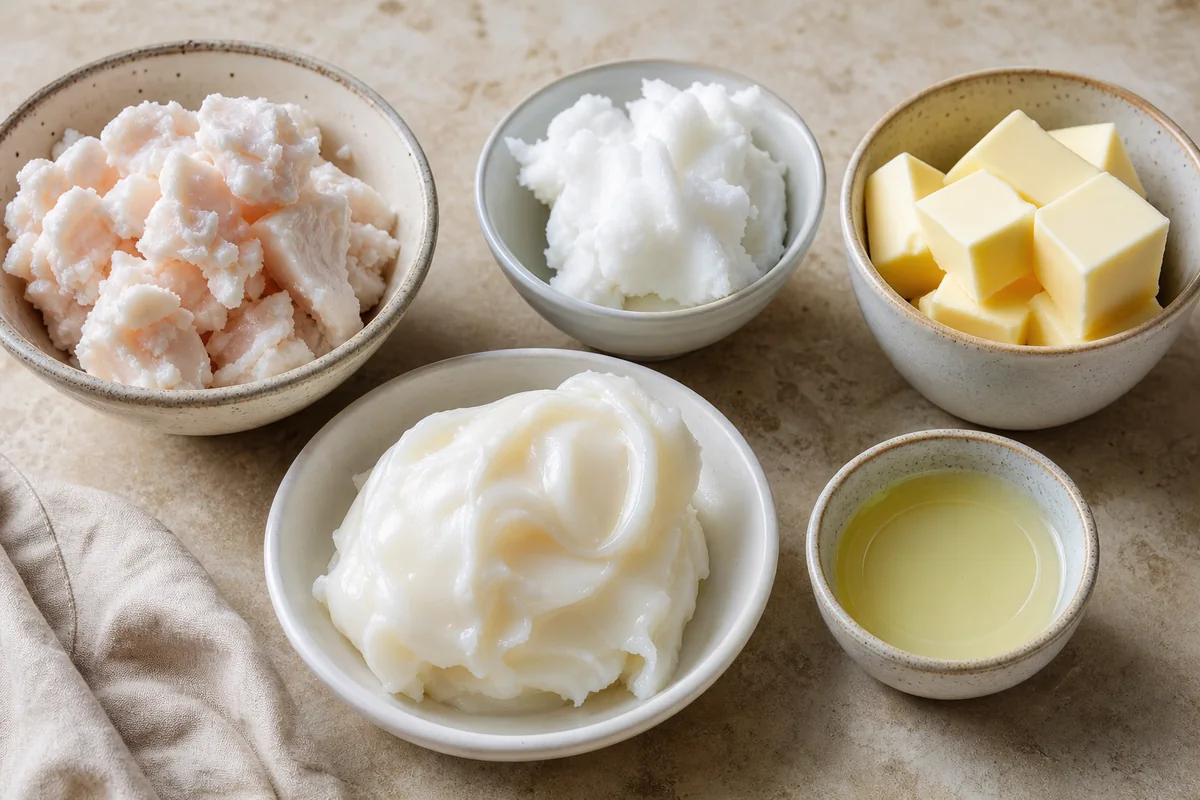
5 Best Suet Substitutes (Easy Swaps)
Ingredients
Equipment
Method
- Identify the job suet must do in your recipe (firm structure, tender crumb, or flaky layers).
- Choose a substitute from the table using the texture goal: firm (lard/shortening), fat-but-water (cold butter), or plant fat (coconut oil).
- Measure by the listed ratio and keep the fat cold when you need flakiness (grate/cube and chill 10–15 minutes).
- If your substitute is softer at room temp (butter/coconut oil), re-chill before baking and watch browning to avoid early melting.
- Do a quick crumb check: if the bake looks greasy or collapses, reduce the next swap by ~10–20% or increase chilling time.
Notes
- For best results in pastry-style recipes, handle the fat cold and minimize melt time before baking.
- Butter contains water—use the reduced ratio and chill aggressively to limit steaming.
Tried this recipe?
Let us know how it was!
Carrie is a food writer and editor with more than 15 years of experience. She has worked for some of the biggest names in the food industry, including Bon Appétit, Food & Wine, and Martha Stewart Living.
As the Editor in Chief of EpicureDelight, Carrie oversees all of the content on the site. She also manages the team of contributing writers and editors, who help to create delicious recipes, helpful tips, and informative articles that you’ll find on the site.
A native of the Chicago area, Carrie is passionate about all things food. She loves trying new restaurants and experimenting with new recipes in her kitchen. She’s also a graduate of the Culinary Institute of America, so she knows a thing or two about food!



