
That creamy, mildly nutty spoonful of sunflower seed butter does more work in a recipe than most people realize. It binds, it softens, it adds fat without shouting.
When you run out mid-bake, the right swap keeps everything on track.
The key is matching texture first. A looser substitute throws off cookie dough spread; a thicker one can make a sauce seize up.
Once you've matched thickness, flavor is easy to nudge with a pinch of salt or sugar.
Sunflower seed butter substitute options are more flexible than you'd expect. Most pantry nut and seed butters land within reach of the same creamy body, especially when you stir them thoroughly before measuring.
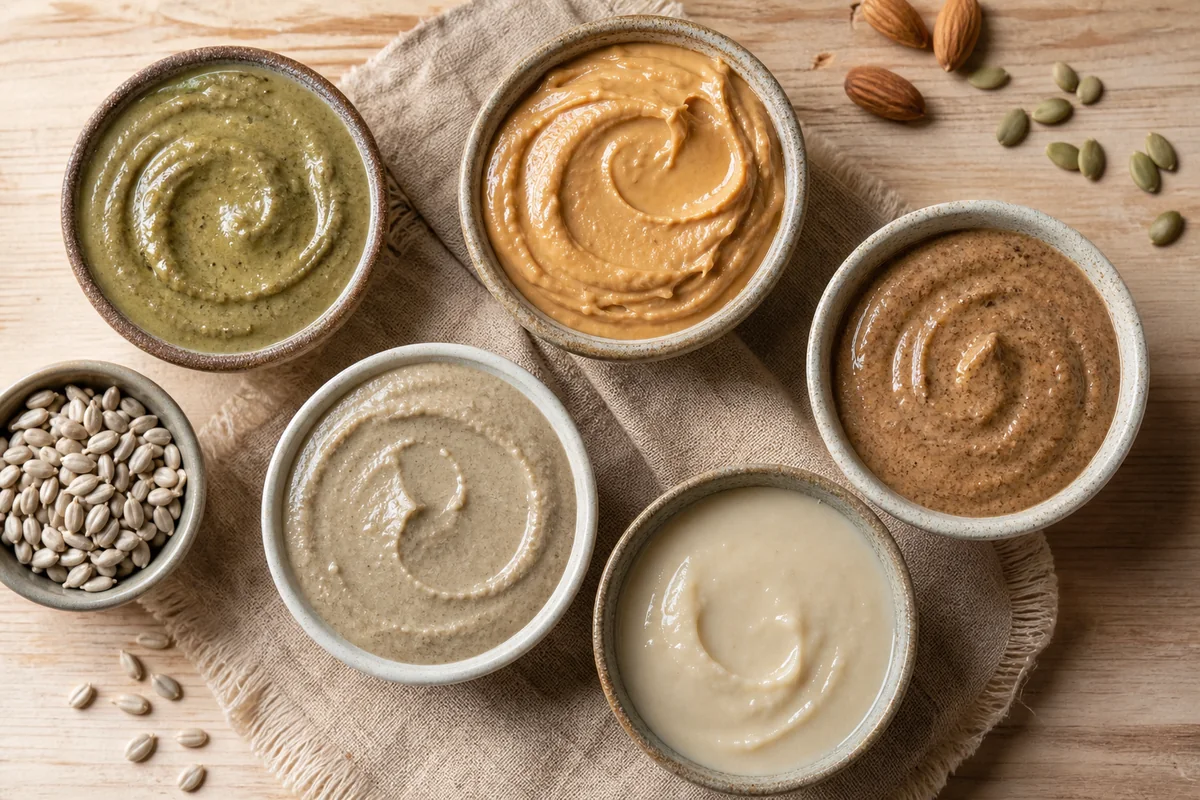
The best sunflower seed butter substitutes are tahini, pumpkin seed butter, almond butter, peanut butter, and cashew butter. All swap at 1:1 by volume. Match thickness before you mix: thicken runny subs with flour or ground oats, loosen thick ones with a teaspoon of water or neutral oil.
5 Best Sunflower Seed Butter Substitutes (Pantry Swaps)
Pick your swap by texture first, then flavor. The table below shows which substitutes work for baking versus spreading, and how each one's character shifts from sunflower seed butter's baseline.
If you're also swapping the whole seed options in a recipe, the logic is similar: match the role the ingredient plays before anything else.
| # | Substitute | Best For | Ratio | Key Note |
|---|---|---|---|---|
| 1 | Tahini | Both | 1:1 | Savory; add pinch sugar |
| 2 | Pumpkin Seed Butter | Both | 1:1 | Slightly roasted depth |
| 3 | Almond Butter | Baking | 1:1 | Sweeter; may need thinning |
| 4 | Peanut Butter | Baking | 1:1 | Strong flavor; use unsweetened |
| 5 | Cashew Butter | Both | 1:1 | Mild; may need thickening |
1. Sesame Seed Butter (Tahini)
Tahini is the first substitute worth reaching for. It has the same pourable-to-spreadable body as sunflower seed butter and a similarly mild, toasty seed flavor that won't overwhelm most recipes.
The earthy seed spread works cleanly in batters, sauces, and sandwich spreads at a straight 1:1 swap.
- Ratio: Use 1:1 for batters, frosting bases, and spreads
- Sweet recipes: Add a small pinch of sugar to offset tahini's naturally savory lean
- Texture: Light tahini is looser; if your sunflower butter is thicker, stir in 1 teaspoon ground oats to firm it up
Skip if your recipe is a delicate vanilla frosting or a very sweet dessert where even a faint sesame note would read as off.
2. Pumpkin Seed Butter
Pumpkin seed butter is underused as a swap, but it's one of the most structurally similar options. The texture is close to sunflower seed butter, the fat content is comparable, and the flavor is a roasted, slightly green-nutty note that plays well alongside swapping the oil component too, if your recipe uses both.
- Ratio: 1:1 for cookies, bars, muffins, and spreads
- Too thick? Loosen with 1-2 teaspoons of water before mixing into batter
- Flavor pairings: Roasted notes work especially well with cocoa, cinnamon, and ginger
The roasted depth does show up more than sunflower's neutral base. Skip if you need a truly neutral flavor, such as in a pale frosting or a recipe where the seed butter is meant to stay invisible.
3. Almond Butter (Smooth)
Smooth almond butter is a reliable swap for most baked goods. It holds structure well in brownies and muffins, and its fat-to-protein ratio keeps baked crumb texture close to what sunflower seed butter delivers.
The smooth nut spread can sit in your pantry for months, so it's worth keeping stocked.
Almond Butter vs. Sunflower Seed Butter
Works for: brownies, muffins, no-bake bars, and cookie dough where some added sweetness is welcome
Skip if: your recipe requires a strictly neutral, seed-forward flavor - almond reads sweeter and more rounded
- Ratio: 1:1 for most baked goods
- Too thick? Stir in 1 teaspoon of water until your batter spreads normally
- Sweetness: Almond butter leans sweeter than sunflower - reduce added sugar by 1 teaspoon if the recipe is already sweet
If your batter looks tighter than usual, water is your fastest fix. Don't over-add: one teaspoon at a time until the texture matches.
4. Peanut Butter (Creamy, Unsweetened)
Peanut butter is the boldest swap on this list. It binds brilliantly in cookie dough and brownies, and the fat content mirrors sunflower seed butter closely.
The difference is flavor: peanut butter has a strong, forward nuttiness that sunflower seed butter simply doesn't have.
Use unsweetened, creamy peanut butter and go 1:1. In savory sauces and dressings, that depth actually improves the dish.
In sweet recipes, the bold roasted spread can crowd out other flavors, so reduce sweeteners slightly or add a small pinch of flaky salt to keep things balanced.
If the peanut butter is too stiff for your recipe, loosen it with 1-2 teaspoons of water or a neutral oil like avocado or sunflower. Skip if your recipe needs a mild background flavor.
Peanut butter will not stay in the background.
5. Cashew Butter (Smooth)
Cashew butter is the mildest swap here, which makes it the best choice when sunflower seed butter is meant to be subtle. It won't push any flavor in a different direction.
That neutrality is an asset in spreads, light frostings, and delicate baked goods where you want the other ingredients to lead.
| Use | Ratio | Notes |
|---|---|---|
| Spreads & toast | 1:1 | Stir well; use as-is if consistency matches |
| Baking (muffins, bars) | 1:1 | Thicken with 1-2 teaspoon flour or ground oats if loose |
| Frosting base | 1:1 | Best mild swap; check for smooth nut alternatives if unavailable |
Cashew butter can be thinner than sunflower seed butter, especially from freshly opened jars. If your dough looks slack, stir in 1 teaspoon of flour or ground oats before proceeding.
Skip if your recipe needs a very thick dough and you can't make that adjustment on the fly.
Making Sunflower Seed Butter Substitutes Work
The swap itself takes under a minute. The adjustments take two.
Start by stirring your substitute thoroughly, since nut-based swap options all share the same oil-separation issue that makes them behave unpredictably if you measure before mixing. Oil sitting on top means too little fat in the scoop - the #1 reason baked goods come out dry or crumbly when using a stand-in.
- Match thickness first: Thicken a loose substitute with 1-2 teaspoons of flour or ground oats; loosen a stiff one with 1-2 teaspoons of water or neutral oil
- Taste before baking: Add a pinch of sugar if the substitute leans savory, or a pinch of salt if the recipe needs a cleaner nut finish
- Rest the batter: Give it 5 minutes before baking - this lets the substitute hydrate fully and prevents uneven texture in the finished bake
Frequently Asked Questions
Yes, swap at 1:1 using creamy, unsweetened peanut butter. The flavor is bolder, so it works best in cookies and brownies where a strong nut taste fits the recipe.
Tahini is the closest match for texture and mild seed flavor. Pumpkin seed butter is the second-closest, with a slightly deeper roasted note.
Loosen a thick substitute with 1-2 teaspoons of water or neutral oil. Thicken a runny one with 1-2 teaspoons of flour or ground oats stirred in before mixing.
Often, yes. Tahini leans savory, so add a pinch of sugar in sweet bakes. Almond and cashew butter lean sweeter, so reduce added sugar by about 1 teaspoon.
Yes. Almond butter and cashew butter are the best picks for no-bake bars and energy balls, as both hold their shape well at room temperature without baking.
5 Best Sunflower Seed Butter Substitutes (Pantry Swaps)
Ingredients
Equipment
Method
- Identify whether your recipe needs a mild spread (like toast) or a structural binder (like cookies/bars).
- Start with the 1:1 swap ratio for most batters, frosting, and spreads.
- If the substitute feels looser than sunflower seed butter, thicken by stirring in 1–2 teaspoons of flour/ground oats per batch; if it’s too thick, loosen with 1–2 teaspoons of water or neutral oil.
- Taste the batter for sweetness/savoriness: adjust by adding a tiny pinch of salt (for nut flavor) or a small pinch of sugar (for sweet bakes).
- Proceed with your recipe; for best flavor in baked goods, let the batter rest 5 minutes before baking.
Notes
- Ratios assume most nut butters are similar in density; always stir first (oils separate).
- For sweet recipes, the darker/stronger swaps may need small sweetness balance changes.
Tried this recipe?
Let us know how it was!
Carrie is a food writer and editor with more than 15 years of experience. She has worked for some of the biggest names in the food industry, including Bon Appétit, Food & Wine, and Martha Stewart Living.
As the Editor in Chief of EpicureDelight, Carrie oversees all of the content on the site. She also manages the team of contributing writers and editors, who help to create delicious recipes, helpful tips, and informative articles that you’ll find on the site.
A native of the Chicago area, Carrie is passionate about all things food. She loves trying new restaurants and experimenting with new recipes in her kitchen. She’s also a graduate of the Culinary Institute of America, so she knows a thing or two about food!



