
Tapioca flour has a way of doing two jobs at once: it thickens sauces into a glossy, soft gel, and it adds a slight chew that no other starch quite replicates. When your pantry runs short, the right tapioca flour substitute depends entirely on which job the recipe is asking it to do.
For thickening a sauce or fruit filling, arrowroot and potato starch are the closest matches. For light baking structure or crisp coatings, rice flour steps in cleanly.
Wheat flour and gluten-free blends are backup options when nothing else is available.
Arrowroot powder and potato starch are the closest tapioca flour alternatives for glossy thickening. Use cornstarch at a slightly reduced ratio for faster-setting sauces. Rice flour works for coatings and baked structure. Wheat flour and gluten-free blends are reliable backup swaps when the above aren't available.
5 Best Tapioca Flour Substitutes Worth Trying
Ratios below are measured against the amount of tapioca flour your recipe calls for. Start at the listed ratio, then adjust after your first heat test.
| # | Substitute | Best For | Ratio | Key Note |
|---|---|---|---|---|
| 1 | Arrowroot Powder | Thickening & Gels | 1:1 | Glossy, clean finish |
| 2 | Potato Starch | Sauces & Gravies | 1:1 | Smooth, neutral gel |
| 3 | Cornstarch | Thickening | ¾:1 | Sets fast, watch heat |
| 4 | Rice Flour (fine) | Baking & Coating | 1:1 | Light body, less gel |
| 5 | Wheat Flour (AP) | Stews & Gravies | 2:1 | Cook longer; not GF |
1. Arrowroot Powder
Arrowroot is the closest match to tapioca for sauces and fruit gels. It thickens into a glossy, clear gel without muddying the color or flavor of your dish.
Unlike cornstarch, it doesn't turn cloudy when heated gently. That makes it ideal for fruit pie fillings and delicate pan sauces.
- Swap ratio: Use arrowroot 1:1 for tapioca flour in any thickening application.
- Slurry first: Whisk arrowroot into cold liquid before adding heat-skipping this step causes clumping.
- Heat tip: Remove from heat as soon as the sauce turns glossy; overcooking breaks the gel down and thins it.
- Texture expectation: Smooth and slightly silky, but less chewy than tapioca in baked goods.
- Best uses: Fruit pie fillings, stir-fry sauces, lemon curd, clear Asian-style glazes.
If you want to explore swapping grain-based flours for tapioca in baked goods instead, arrowroot won't help much there-it's purely a thickener.
Skip if: Your recipe relies on tapioca's stretchy chew, like in mochi-style bakes or chewy cookies.
2. Potato Starch
Potato starch produces a smooth, silky gel that is almost flavorless, which means it won't alter the taste of a delicate sauce or gravy. It thickens slightly slower than cornstarch, giving you more control over the final texture.
- Swap ratio: Use potato starch 1:1 in place of tapioca flour for thickening.
- Where it shines: Glossy sauces, silky gravies, light puddings, and Asian-style dumpling wrappers.
- Slurry method: Mix into cold water or broth before adding to the pan-never add dry starch to hot liquid.
- If it's too thick: Whisk in 1 tablespoon of cold water at a time and stir over low heat.
- Flavor: Completely neutral; won't compete with butter, cream, or wine in the sauce.
Knowing how to store it properly matters too-storing potato starch correctly keeps it from clumping before you need it.
Skip if: You want tapioca's chewy bite in a baked item-potato starch gives softness, not stretch.
3. Cornstarch
Cornstarch is the most common pantry swap, but it behaves differently than tapioca in one key way: it thickens fast and sets firm. A sauce that looks slightly thin at 160°F can turn almost gel-like by 200°F, so you need to keep a close eye on heat.
It can also give sauces a slightly opaque, matte appearance rather than the glossy finish tapioca and arrowroot produce.
- Swap ratio: Start with ¾ of the tapioca amount, then add more only after testing the texture at heat.
- Slurry step: Always dissolve in cold liquid first-1 part cornstarch to 2 parts cold water or broth.
- Heat timing: Stir constantly from the moment the liquid heats; pull it off the burner as soon as it thickens.
- If it over-thickens: Thin with cold broth or water in 1-tablespoon additions; reheat gently.
- Best uses: Stir-fry sauces, puddings, pie fillings, and gravies where a firmer set is acceptable.
Skip if: Your recipe needs gentle, slow-warming thickening without the risk of sudden seizing-use arrowroot or potato starch instead.
4. Rice Flour (Finely Milled)
Rice flour is a better fit for light baking structure and crispy coatings than it is for thickening. It won't form a glossy gel the way arrowroot or potato starch does, but for dusting proteins before frying or adding body to gluten-free baked goods, it is a clean and reliable choice.
The key word in the heading is "finely milled." Coarse rice flour adds grit.
The fine version, often labeled as "glutinous rice flour" for specific applications, blends smoothly into batters. You can read more about the mild, starchy profile of rice flour if you're unsure whether the flavor will suit your dish.
- Swap ratio: 1:1 for coatings, dusting, and baked structure.
- For thickening: Expect less gel strength than arrowroot; add an extra teaspoon if the sauce looks thin.
- Coating tip: Toss proteins in a 50/50 mix of rice flour and cornstarch for a crispier fried crust than tapioca alone.
- Baking note: Works well in pancakes, flatbreads, and shortbreads where a light crumb is the goal.
Skip if: You need a glossy, clear gel for a sauce or fruit filling-choose arrowroot or potato starch.
5. Wheat Flour (All-Purpose)
Wheat Flour vs. True Starches
Works for: thick stews, brown gravies, pot pie fillings, and any dish where opacity and a slightly heavier texture are fine
Skip if: you need gluten-free thickening, a glossy clear gel, or a sauce that stays smooth after refrigerating
Wheat flour thickens through both starch gelatinization and gluten structure, which makes it slower and less predictable than pure starches. It also carries a raw flour flavor that needs cooking out-plan on at least 2 to 3 extra minutes of simmering after the sauce thickens.
The ratio flips from most other substitutes here. You can learn more about wheat flour flavor notes if you're worried about the taste affecting a lighter dish.
- Swap ratio: Use 2 tablespoons of wheat flour for every 1 tablespoon of tapioca flour called for.
- Lump prevention: Whisk flour into cold fat or cold liquid before adding to the hot pan.
- Cook time: Simmer 2 to 3 extra minutes after the sauce thickens to cook off the raw starch flavor.
- Best uses: Beef stew, chicken gravy, pot pie sauce, and hearty soups where the opacity won't matter.
- Texture note: Produces a heavier, less silky finish than arrowroot or potato starch.
Making Tapioca Flour Substitutes Work
The selection logic is simple: match the function first, then apply the ratio. If tapioca is thickening a sauce, reach for arrowroot or potato starch.
If it's adding body to a baked good or coating, rice flour or a gluten-free blend is the smarter call.
Ratio is your second decision, and heat is your third. Every starch substitute responds to temperature differently, so watch the pot rather than the clock.
- Always make a slurry: Combine your substitute starch with cold liquid at a 1:2 ratio (starch to liquid) before adding it to a hot pan-this prevents lumps every time.
- Heat gently and stir: Bring the sauce to a low simmer while stirring constantly; pull it from heat the moment it coats the back of a spoon.
- Fix too-thick: Stir in cold broth or water one tablespoon at a time. Fix too-thin by mixing a separate small slurry and whisking it in, then re-warming briefly.
Frequently Asked Questions
Yes, but start with ¾ of the tapioca amount since cornstarch thickens faster and sets firmer. Stir constantly and pull the pan off heat as soon as the sauce reaches your desired consistency.
Arrowroot powder produces the clearest, glossiest result at a 1:1 ratio. Potato starch is a close second and is slightly more forgiving if you apply a little extra heat.
No single substitute perfectly copies tapioca's chew, but a starch-forward gluten-free blend comes closest. Arrowroot adds a slight softness that can approximate the texture in some chewy cookie recipes.
Always whisk the starch into cold liquid before adding it to the hot pan. Pouring dry starch directly into hot liquid causes immediate clumping that is difficult to reverse.
Not always. Arrowroot and potato starch are both gluten-free and swap cleanly in most GF recipes. Wheat flour is not gluten-free and should only be used when gluten is not a concern.
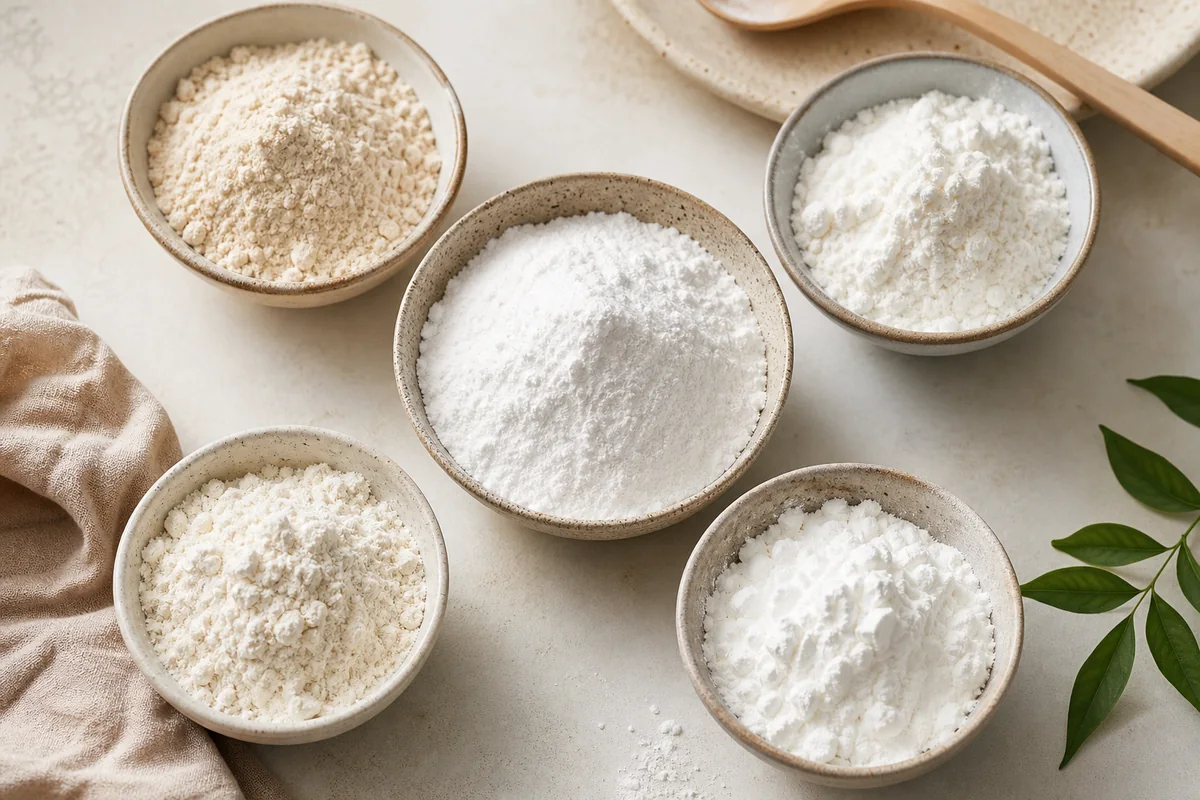
5 Best Tapioca Flour Substitutes Worth Trying
Ingredients
Equipment
Method
- Identify what tapioca is doing in your recipe: thickening a sauce/gel, adding chew, or improving crisp coatings.
- Choose the closest match from the table (arrowroot or potato starch for clean thickening; rice flour for lighter baking structure).
- Use the listed ratio, then reduce cooking time slightly if the mix is already glossy/gelled; add a touch more if it looks thin.
- If your result feels grainy, switch to arrowroot or potato starch next time and whisk longer before heating.
Notes
- For best texture, slurry starches in cold liquid before heating.
- Thickened tapioca-like gels can tighten quickly—stir and rest briefly before judging thickness.
Tried this recipe?
Let us know how it was!
Carrie is a food writer and editor with more than 15 years of experience. She has worked for some of the biggest names in the food industry, including Bon Appétit, Food & Wine, and Martha Stewart Living.
As the Editor in Chief of EpicureDelight, Carrie oversees all of the content on the site. She also manages the team of contributing writers and editors, who help to create delicious recipes, helpful tips, and informative articles that you’ll find on the site.
A native of the Chicago area, Carrie is passionate about all things food. She loves trying new restaurants and experimenting with new recipes in her kitchen. She’s also a graduate of the Culinary Institute of America, so she knows a thing or two about food!



