
Tarragon has a smell that's hard to describe until you're missing it. That faint licorice sweetness, a little citrus lift, and a clean herbal finish - it shows up in béarnaise, chicken dishes, and cream sauces where it quietly anchors everything.
A tarragon substitute has to replace at least one of those two sides: the anise warmth or the bright herbal backbone.
This list is ranked by how closely each option mimics tarragon's actual character. The top picks lean into the anise note first.
The lower picks cover the herb lift when the licorice isn't the point.
Tarragon brings a sweet anise aroma plus a bright herbal lift to sauces, dressings, and chicken dishes. Chervil is the closest match. Fennel fronds cover the licorice note. Dill and basil fill the herbal side. Use a blend of anise spice plus a green herb when nothing else is available.
5 Best Tarragon Substitutes, Ranked by Flavor Match
These five swaps are ordered by how closely they replicate tarragon's signature. Start at the top and work down based on what you have.
| # | Substitute | Best For | Ratio | Key Note |
|---|---|---|---|---|
| 1 | Chervil | Both | 1:1 | Gentle anise, closest match |
| 2 | Fennel Fronds | Both | ¾:1 | Bloom briefly in warm fat |
| 3 | Dill | Both | 1:1 | Grassy-citrusy, not anise |
| 4 | Basil | Both | 1:1 | Add lemon to compensate |
| 5 | Anise-Herb Blend | Both | Start small | Build in two components |
1. Chervil
Chervil is the only herb that genuinely shares tarragon's sweet-licorice profile. It's softer and less assertive, but the anise character is there, which makes it a straight swap in most recipes.
Use 1 teaspoon chervil for every 1 teaspoon tarragon called for. Because it's delicate, add it at the end of cooking rather than early in a simmer.
Heat kills its aroma faster than tarragon's.
If you run low on chervil too, the gentle anise-herb swaps page covers what works next in line.
- Flavor: Mild anise, slightly grassy, less bold than tarragon
- Best uses: Béarnaise, cream sauces, chicken dishes, herb butters
- Ratio: 1:1 fresh; use 1 teaspoon dried chervil per 1 tablespoon fresh tarragon called for
- Watch: Dried chervil loses much of its anise character, so fresh is always better here
Skip if: you want a punchy licorice hit rather than a gentle one. Chervil won't satisfy that craving without adding a small pinch of fennel seed alongside it.
2. Fennel Fronds
Fennel fronds cover tarragon's anise side well. They're not identical, but the licorice-forward aroma is close enough in sauces and marinades.
Fennel seeds work too, though they're more concentrated.
Start with ¾ of the tarragon amount and taste before adding more. For seeds, use just ¼ teaspoon ground fennel per tablespoon of fresh tarragon called for.
If you're using dried seeds, picking a milder anise option is worth considering if the dish is already complex.
- Flavor: Bold anise-licorice with a slight vegetable freshness from fronds
- Best uses: Chicken braises, fish, vinaigrettes, compound butters
- Fronds vs. seeds: Fronds are closer in texture to fresh tarragon; seeds are more concentrated and work better in hot fat or long-cooked dishes
- How to add: Bloom seeds for 20 seconds in warm butter or oil; stir fronds in off-heat
Skip if: the recipe already has fennel in it, or uses star anise elsewhere. Adding fennel here will push the dish firmly into licorice territory.
3. Dill
Dill doesn't have tarragon's anise character, but it has the same herbal brightness that makes tarragon useful in cream sauces and fish dishes. It's grassy where tarragon is sweet, and the grassy-citrus profile works particularly well in cold dressings and quick pan sauces.
Use 1:1 as a starting point. Add a small squeeze of lemon to compensate for the missing sweetness.
Dill is more potent when raw, so if you're finishing a hot dish off-heat, use a touch less than you think you need.
Dill vs. Tarragon
Works for: creamy dressings, salmon, potato salads, quick white wine sauces
Skip if: the recipe depends on the anise note - béarnaise without licorice warmth will taste flat
- Flavor direction: Grassy, faintly citrusy - moves away from licorice, toward fresh green
- Ratio: 1 teaspoon dill = 1 teaspoon tarragon; reduce by 25% if using dried
- Adjustment: Add ¼ teaspoon lemon zest or a small splash of white wine vinegar to restore the brightness tarragon carries naturally
Skip if: tarragon's licorice note is the recipe's entire identity. Dill in a classic béarnaise is a different sauce entirely.
4. Basil
Basil is a reasonable stand-in when you mainly need a leafy, aromatic herb rather than the exact anise note. It's warmer and slightly peppery, but it keeps a dish tasting herb-forward in salads, quick sauces, and light pasta.
Use 1:1 by volume. To bring it closer to tarragon, add a squeeze of lemon juice.
For information on what works when you're also out of basil, the bright leafy herb picks page has a full ranked list.
- Flavor: Warm, slightly sweet, peppery - no anise at all
- Best uses: Tomato-based dishes, light cream sauces, herb vinaigrettes, chicken salads
- Add timing: Stir in off-heat. Basil turns bitter and dark if it simmers too long
- Acid correction: A squeeze of lemon or a small splash of white wine vinegar mimics tarragon's citrus lift
Skip if: the recipe is specifically built around tarragon's anise aroma, like tarragon vinegar or a classic French herb sauce. Basil won't fool anyone there.
5. Anise-Herb Blend
When single-herb substitutes aren't available, a two-part blend covers both sides of tarragon's character. The idea is simple: one anise-like element plus one bright green herb.
A safe starting point is ¼ teaspoon ground anise seed (or the smallest pinch of star anise) plus 1 teaspoon fresh basil or dill, combined to replace 1 tablespoon of fresh tarragon. Taste after the first simmer.
If the blend reads too sharp, a few drops of bright citrus alternatives bring it back into balance. For context on how anise and star anise actually compare in cooking, the anise versus star anise breakdown is worth a look before you start.
- Anise component: Ground anise seed (gentler) or a micro-pinch of ground star anise (more potent)
- Green herb component: Fresh dill, basil, or parsley - whichever you have
- Starting ratio: Use less than you think and build up; anise-forward blends intensify as they cook
- Checkpoint: Taste at the halfway point of cooking and again before plating
Skip if: you have no anise-like ingredient at all. In that case, use dill or basil alone rather than a lopsided blend.
Making a Tarragon Substitute Work
The most common mistake is adding too much at once. Start with about 75% of what the recipe calls for, taste after the dish has cooked for a few minutes, and adjust from there.
A small splash of white wine vinegar or lemon juice is often all it takes to correct a substitute that reads flat or too mild. If you find the herby blend element is solid but the dish still lacks something, the dried herb blend comparison shows how different packaged mixes land on the anise-to-oregano spectrum - useful for knowing what's already in a blend you reach for.
- When to add: Add delicate fresh herbs (chervil, basil, dill) off-heat. Add seeds or dried herbs early so they have time to mellow.
- How to correct: If the substitute tastes sharp or bitter, a pinch of salt and a few drops of acid usually smooth it out without adding more herb.
- Avoid over-aniseing: If using fennel or anise seed, measure by smell. If the raw dish already smells strongly of licorice, stop - it will intensify once heated.
Frequently Asked Questions
Chervil is the closest option for sauces, used at a 1:1 ratio. For béarnaise specifically, adding a tiny pinch of ground fennel seed alongside chervil gets the anise warmth right.
Use 1 teaspoon dried herb for every 1 tablespoon fresh tarragon called for. Add dried herbs earlier in cooking so they have time to rehydrate and soften.
Yes, but use a micro-pinch of ground star anise only. Pair it with a savory green herb like dill to keep the dish from reading as a dessert spice.
Dill works well in creamy dressings because its grassy-citrus character suits rich bases. Add a small squeeze of lemon to replace the slight sweetness tarragon brings.
Steep a few fennel fronds in white wine vinegar for 10 minutes, then strain. It won't be identical, but it delivers the anise-herb acidity tarragon vinegar is known for.
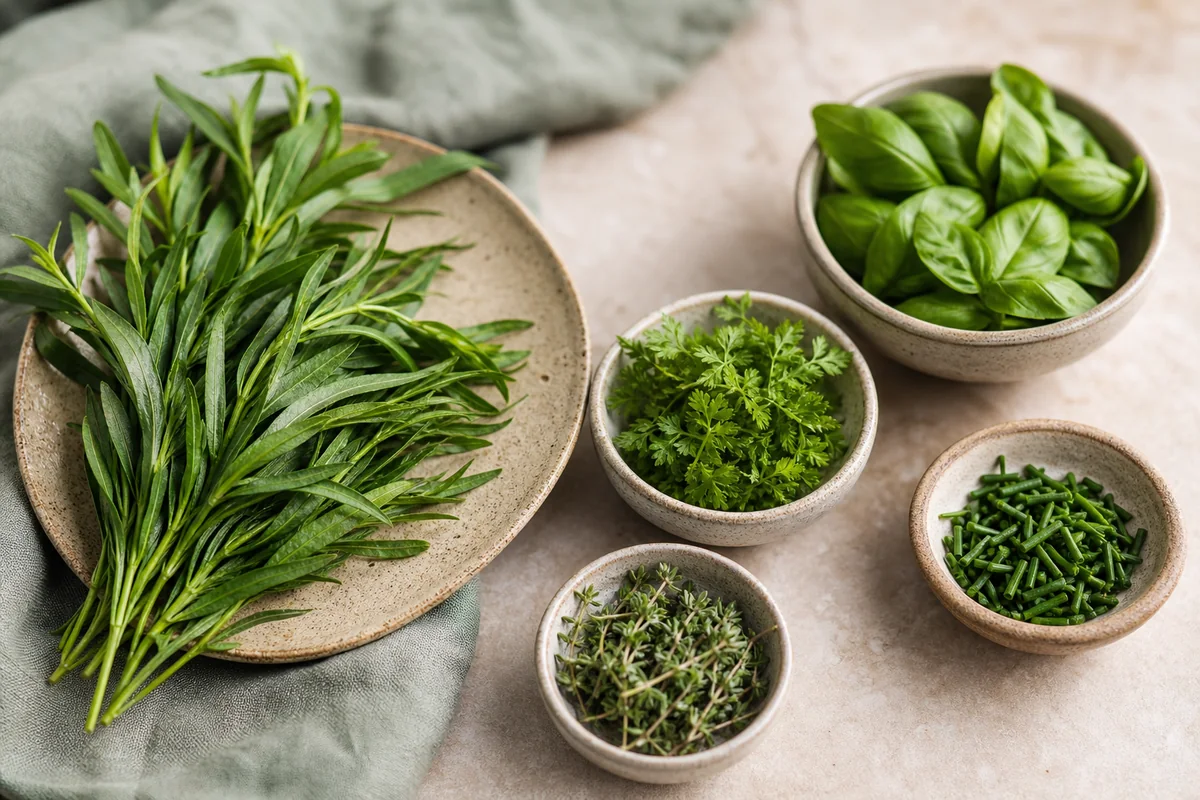
5 Best Tarragon Substitutes (Ranked)
Ingredients
Equipment
Method
- Choose your substitute by what you’re trying to preserve: tarragon’s licorice/anise aroma (fennel, chervil) or its bright herbal lift (basil, dill).
- Start with the listed ratio (or less if you’re using a concentrated swap like ground star anise), then taste after the first simmer or mix.
- If the substitute is bitter or too intense, balance with acid (lemon juice or a small splash of vinegar) and a little salt.
- For hot dishes, bloom dried anise-like herbs in warm butter/olive oil for 20–30 seconds to reduce harshness.
- For creamy sauces/dressings, stir in after heat is off so the aroma stays fresh.
Notes
- Tarragon flavor is anise-leaning and lightly citrus; the best substitutes reproduce both notes.
- Never overdo anise-like substitutes—use less first, then add gradually.
Tried this recipe?
Let us know how it was!
Carrie is a food writer and editor with more than 15 years of experience. She has worked for some of the biggest names in the food industry, including Bon Appétit, Food & Wine, and Martha Stewart Living.
As the Editor in Chief of EpicureDelight, Carrie oversees all of the content on the site. She also manages the team of contributing writers and editors, who help to create delicious recipes, helpful tips, and informative articles that you’ll find on the site.
A native of the Chicago area, Carrie is passionate about all things food. She loves trying new restaurants and experimenting with new recipes in her kitchen. She’s also a graduate of the Culinary Institute of America, so she knows a thing or two about food!



