Go Back
–+ servings
5 Best Tarragon Substitutes (Ranked) | EpicureDelight

5 Best Tarragon Substitutes (Ranked)

No ratings yet
Use an anise-forward herb or a small boost of lemony herbs/spices to approximate tarragon’s sweet-licorice herbal aroma.
Prep Time 5 minutes
Cook Time 0 minutes
Total Time 5 minutes
Servings: 1 batch
Course: Substitutes

Ingredients
  

Best Matches
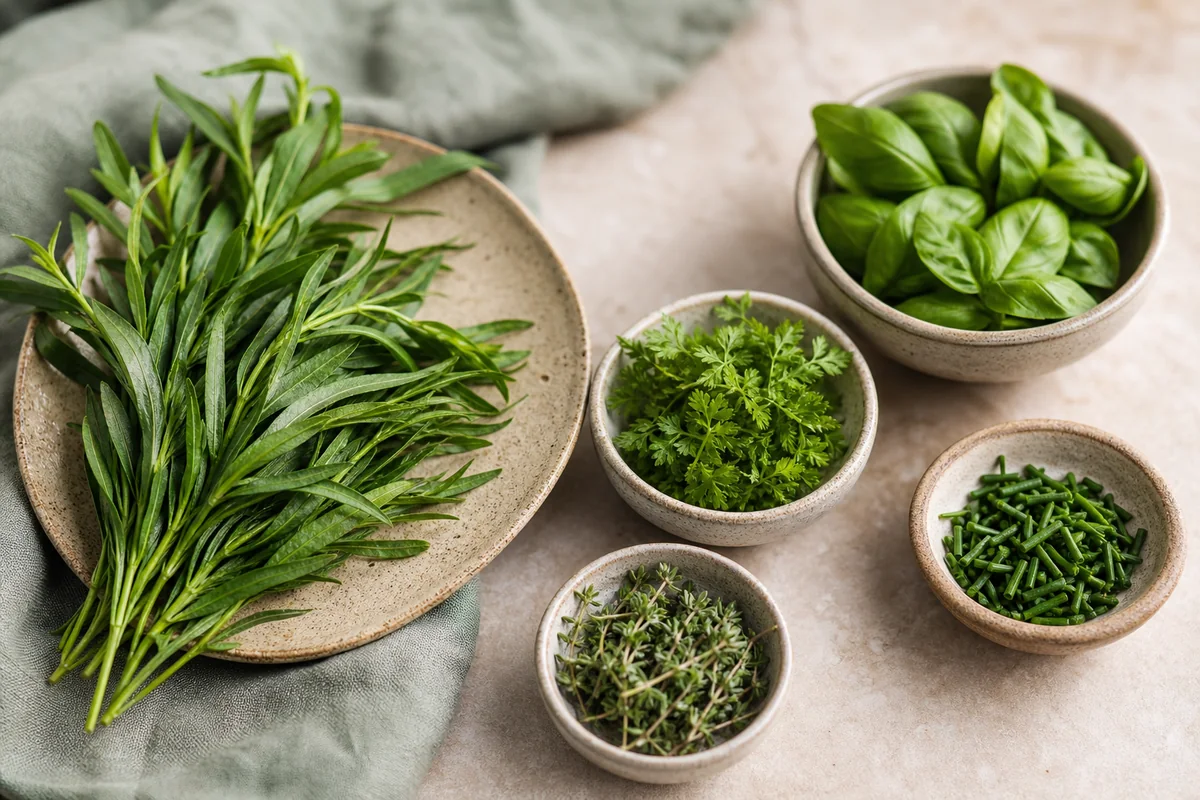
  • 1:1 Fresh or dried basil (use for leafy herb backbone) Closest when you need a green herbal base; add a squeeze of lemon to mimic tarragon’s brightness
  • ¾:1 Fennel fronds (or a pinch fennel seeds) Best for the anise/licorice note; start with ¾ of the amount and bloom it briefly in warm fat
Good Alternatives
  • 1:1 Dill Reads similarly in sauces but is more grassy-citrusy; use for creamy dressings and fish
  • 1:1 Chervil (if available) Gentle, slightly anise-like; keep the portion equal and taste-adjust
Emergency Swaps
  • ⅛:1 Star anise (micro-pinch, ground) or anise extract High impact—use a tiny pinch only, then add a bright herb (basil/dill) to keep it savory, not candy-like

Equipment

  • Small Spoon
  • Ramekin
  • Measuring spoon
  • spoon for tasting

Method
 

  1. Choose your substitute by what you’re trying to preserve: tarragon’s licorice/anise aroma (fennel, chervil) or its bright herbal lift (basil, dill).
  2. Start with the listed ratio (or less if you’re using a concentrated swap like ground star anise), then taste after the first simmer or mix.
  3. If the substitute is bitter or too intense, balance with acid (lemon juice or a small splash of vinegar) and a little salt.
  4. For hot dishes, bloom dried anise-like herbs in warm butter/olive oil for 20–30 seconds to reduce harshness.
  5. For creamy sauces/dressings, stir in after heat is off so the aroma stays fresh.
Notes

  • Tarragon flavor is anise-leaning and lightly citrus; the best substitutes reproduce both notes.
  • Never overdo anise-like substitutes—use less first, then add gradually.

Tried this recipe?

Let us know how it was!