Serve vegetable tempura with steamed rice, miso soup, cucumber sunomono, or cold soba. These sides add acid, broth, or a plain starch while the crisp vegetables remain the clear center of the meal.
Choose one filling side and one fresh side for dinner. Keep every sauce in its own dish because liquid softens tempura batter as soon as it touches the crust.

Steamed rice is the most useful side for vegetable tempura. Add miso soup or cucumber salad when the meal needs warmth or acid, and serve tentsuyu separately to protect the crust.
Set Up the Dip Before the Tempura Lands
Fresh tempura has a dry, brittle surface with small ridges that crack when bitten. A long soak in tentsuyu fills those gaps with water, so dip one edge at the last moment instead of laying pieces in sauce.
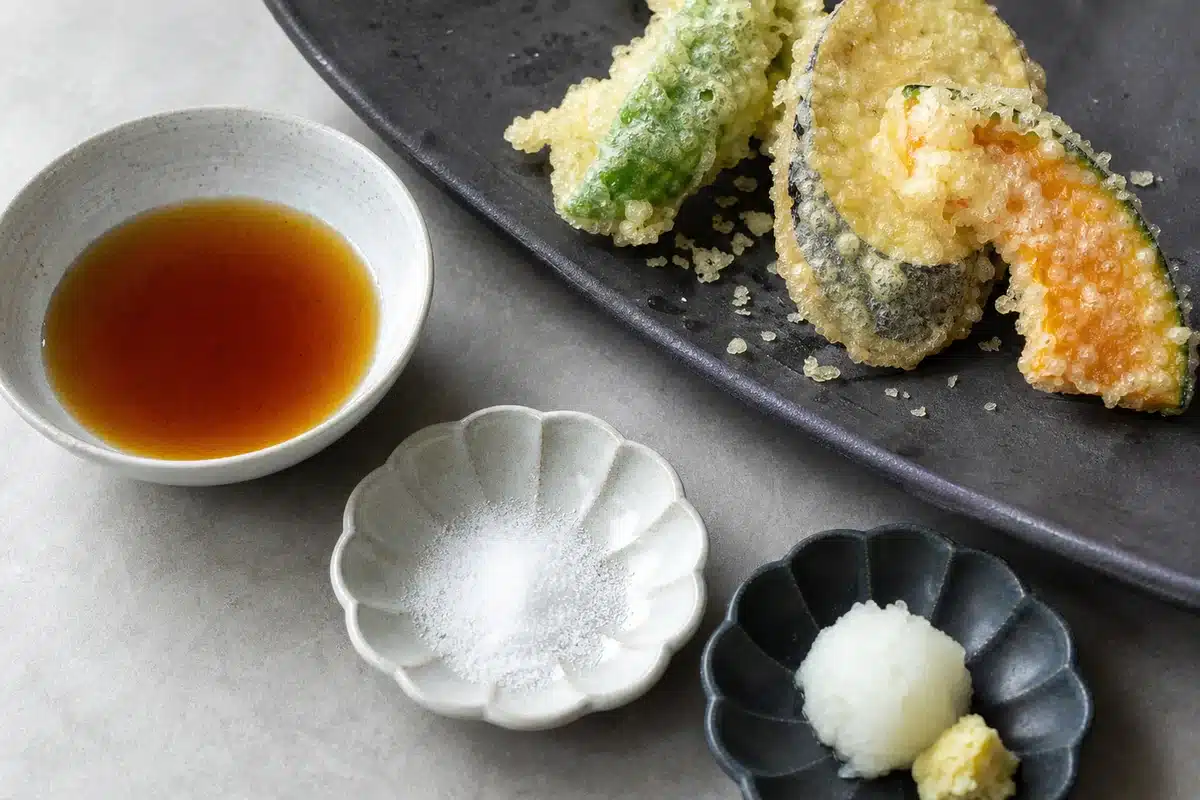
Tentsuyu brings a savory, lightly sweet taste. Salt gives a cleaner result for delicate vegetables such as shiso, green beans, or mushrooms because it leaves the crust dry.
Grated daikon and ginger fit richer pieces such as squash and eggplant.
- Finish the sides first. Rice, soup, noodles, and salads should be ready before the first batch fries.
- Pour sauce into shallow cups. A wide cup makes a quick edge dip easier than a deep bowl.
- Keep wet garnishes separate. Add daikon or ginger to each bite instead of piling them on the platter.
- Move tempura to the table uncovered. Foil and lids trap steam against the batter.
The Japanese Ministry of Agriculture notes that tempura is commonly eaten with sauce or salt and can also be served over rice. That flexibility explains why a plain rice bowl and a small dipping setup work so well together.
The 12 Best Sides Move From Clean to Filling
The ranking starts with sides that refresh the mouth, then moves toward rice, soup, noodles, and protein. Pick near the top for a light plate and lower in the list when tempura needs to become a full dinner.
| Rank | Side | Best for | Prep |
|---|---|---|---|
| 1 | Cucumber sunomono | Best fresh contrast | Easy |
| 2 | Steamed rice | Classic meal base | Easy |
| 3 | Miso soup | Cool evenings | Easy |
| 4 | Daikon herb salad | Rich vegetables | Easy |
| 5 | Cold soba | Summer dinner | Medium |
| 6 | Warm udon broth | Large appetite | Medium |
| 7 | Sesame spinach | Make-ahead spread | Easy |
| 8 | Seaweed salad | Mineral, sharp contrast | Easy |
| 9 | Edamame | Extra protein | Easy |
| 10 | Chilled tofu | Light meatless meal | Easy |
| 11 | Onigiri | Lunch or picnic | Medium |
| 12 | Citrus fruit | Clean final course | Easy |
1. Cucumber Sunomono
Thin cucumber in rice vinegar gives tempura the strongest contrast with very little weight. The cold slices feel crisp after soft eggplant or sweet squash, while the acid clears fried oil from the finish.
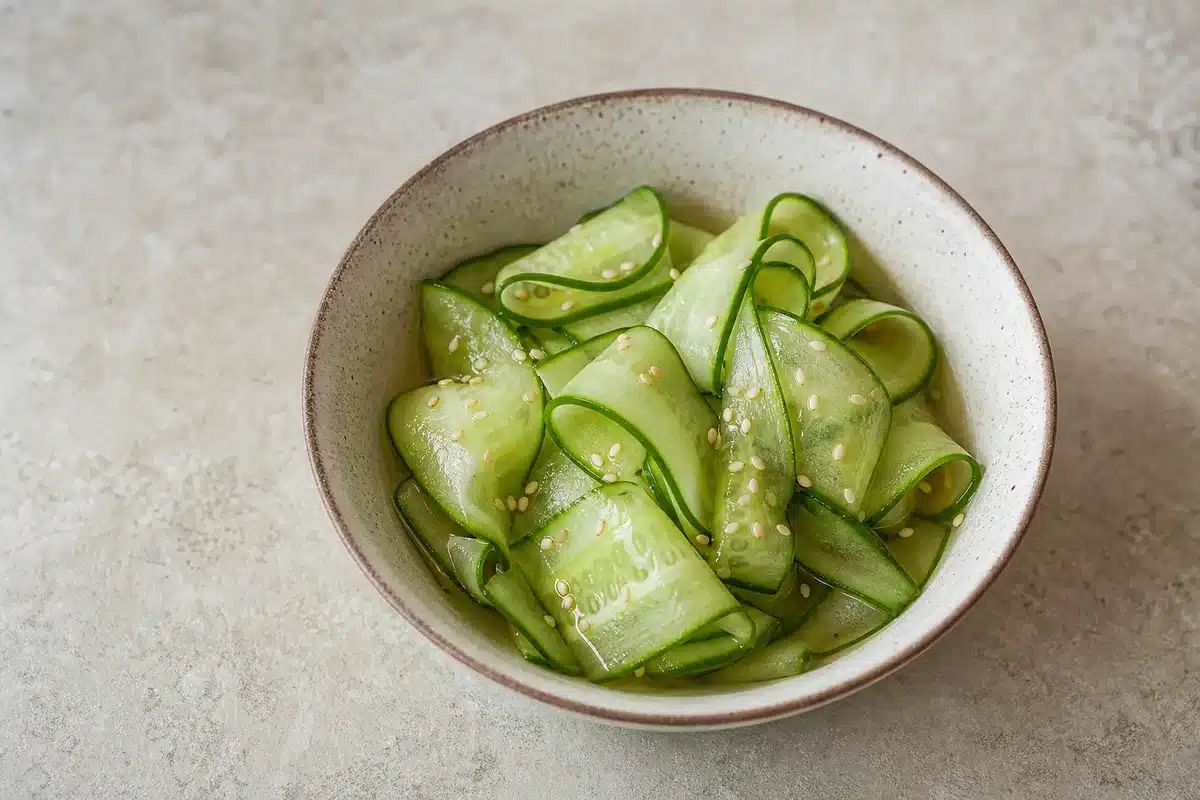
Drain the salad before plating and keep it on the opposite side from the tempura. A pool of dressing can travel under the batter.
2. Steamed Rice
Plain short-grain rice is mild enough for asparagus, mushroom, onion, and squash tempura. It catches the drops of tentsuyu that fall from each bite without competing with the vegetables.

Serve a small bowl per person rather than packing rice under the tempura. Contact with hot rice releases steam and softens the underside of the crust.
3. Miso Soup
Miso soup adds warmth and a savory base to a plate that otherwise feels dry and light. Tofu, wakame, or scallions give the bowl interest without another rich topping.
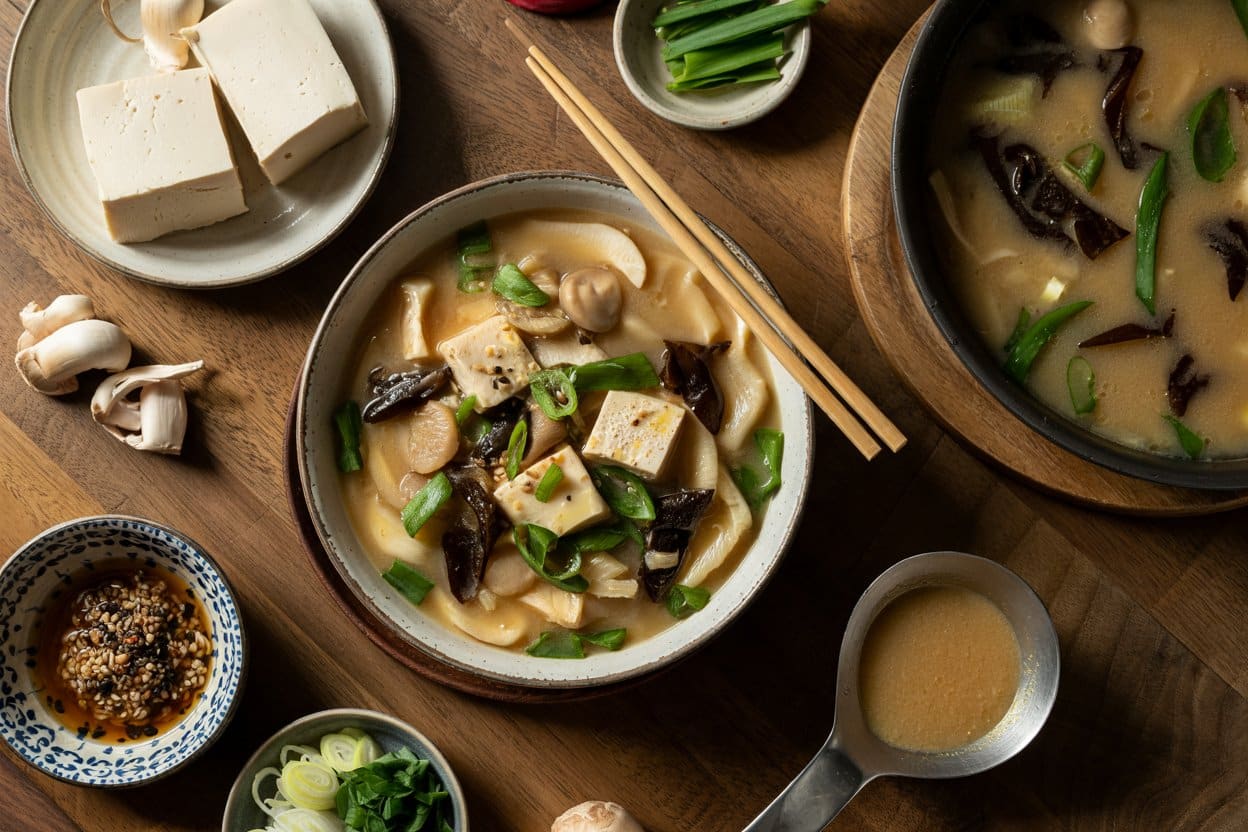
Keep the soup simple. A large bowl loaded with noodles and many vegetables can turn the tempura into a garnish rather than the main event.
4. Daikon Herb Salad
Shredded daikon has a peppery, juicy crunch that suits dense vegetables such as kabocha and sweet potato. Shiso, scallion, or a few radish slices make the salad aromatic without adding cream.
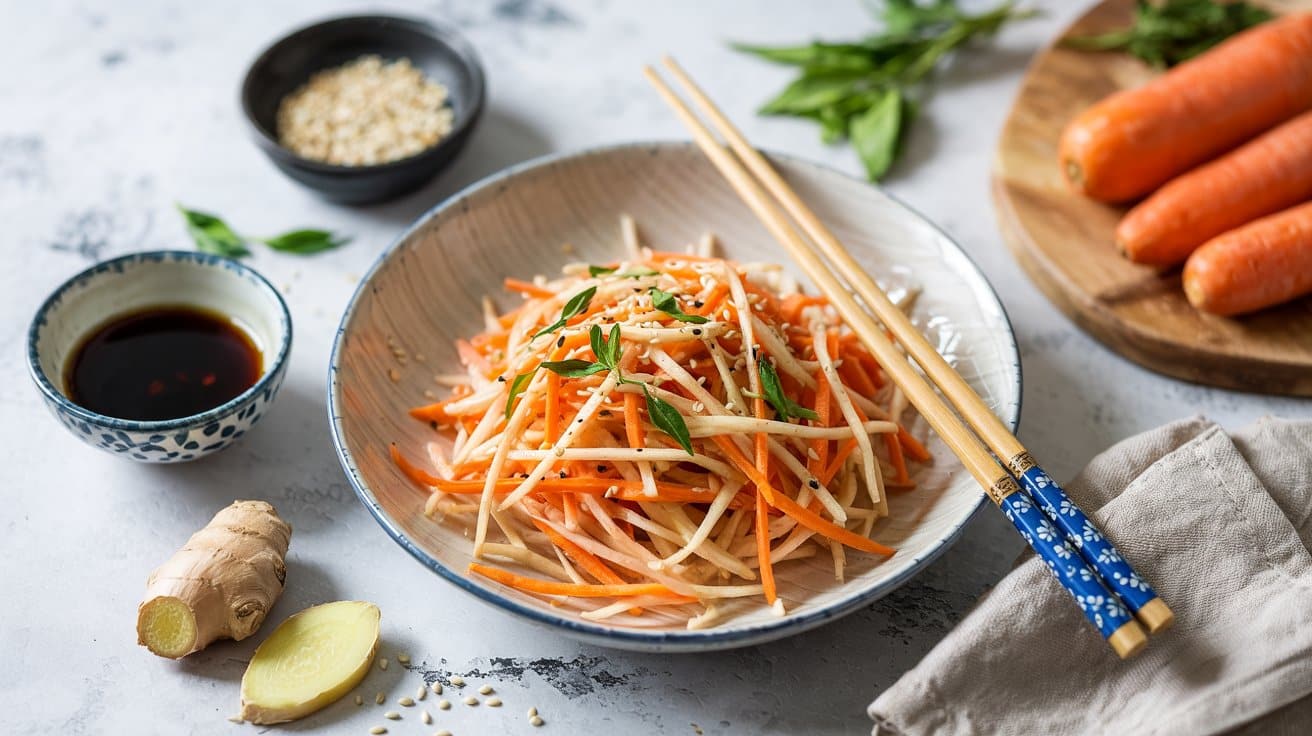
Use a light citrus dressing and add it at the table. Daikon releases water as it sits, so early seasoning makes the salad wetter.
5. Cold Soba
Cold buckwheat noodles create a useful temperature change during a warm-weather meal.
Their earthy flavor works with mushroom, green bean, and root vegetable tempura. Give the noodles their own dipping cup.

Sharing one cup between noodles and tempura sends loose batter into the noodle sauce and encourages longer soaking.
6. Warm Udon Broth
Udon turns a few pieces of tempura into a filling dinner. Thick noodles and clear broth are especially useful when the tempura assortment is mostly light vegetables such as onion, pepper, and green beans.
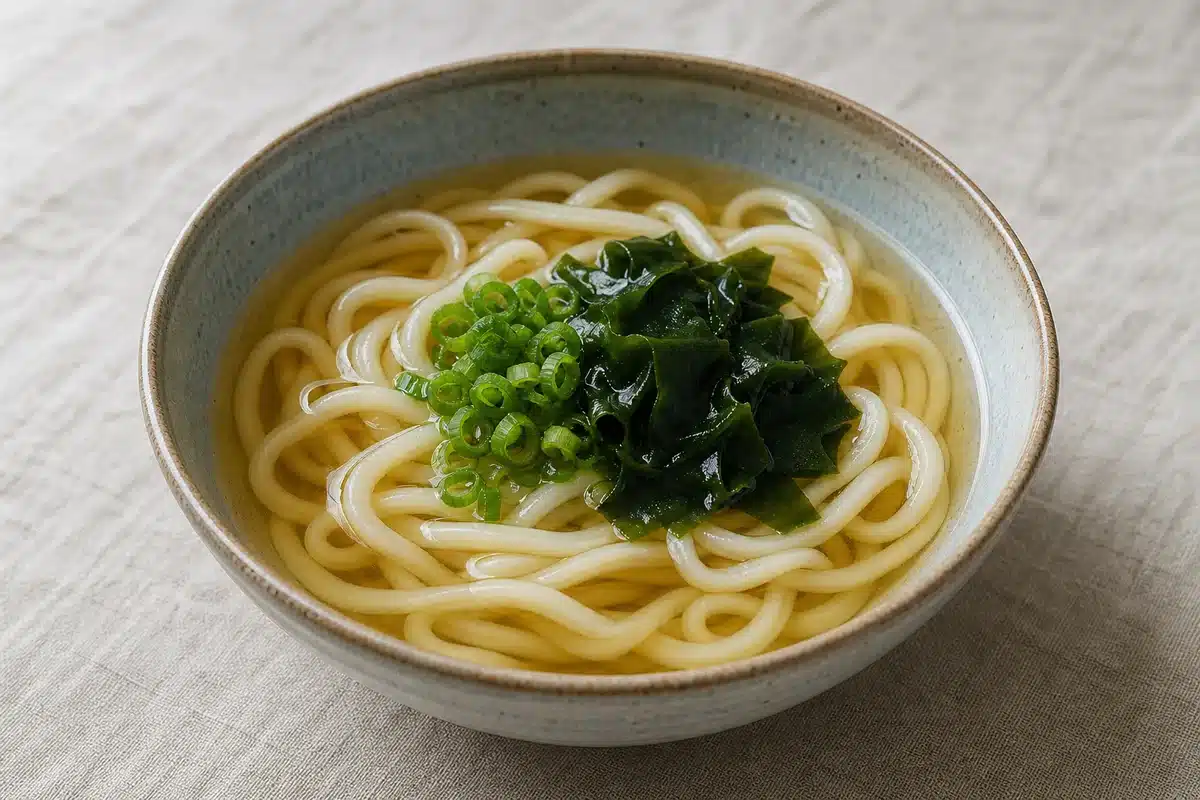
Serve the tempura beside the bowl and add one piece at a time. Pieces left in broth lose their crust within minutes.
7. Sesame Spinach
Blanched spinach with a small amount of sesame has a soft texture but a deep roasted flavor. It can be made early, chilled, and squeezed dry before dinner.

Keep the dressing restrained because sesame paste can feel as rich as fried batter. A loose soy and sesame dressing gives a cleaner result.
8. Seaweed Salad
A lightly dressed wakame salad adds a mineral flavor and springy bite.
It pairs well with mild tempura such as lotus root, zucchini, or shiso. Commercial seaweed salads can be sweet and heavily seasoned.
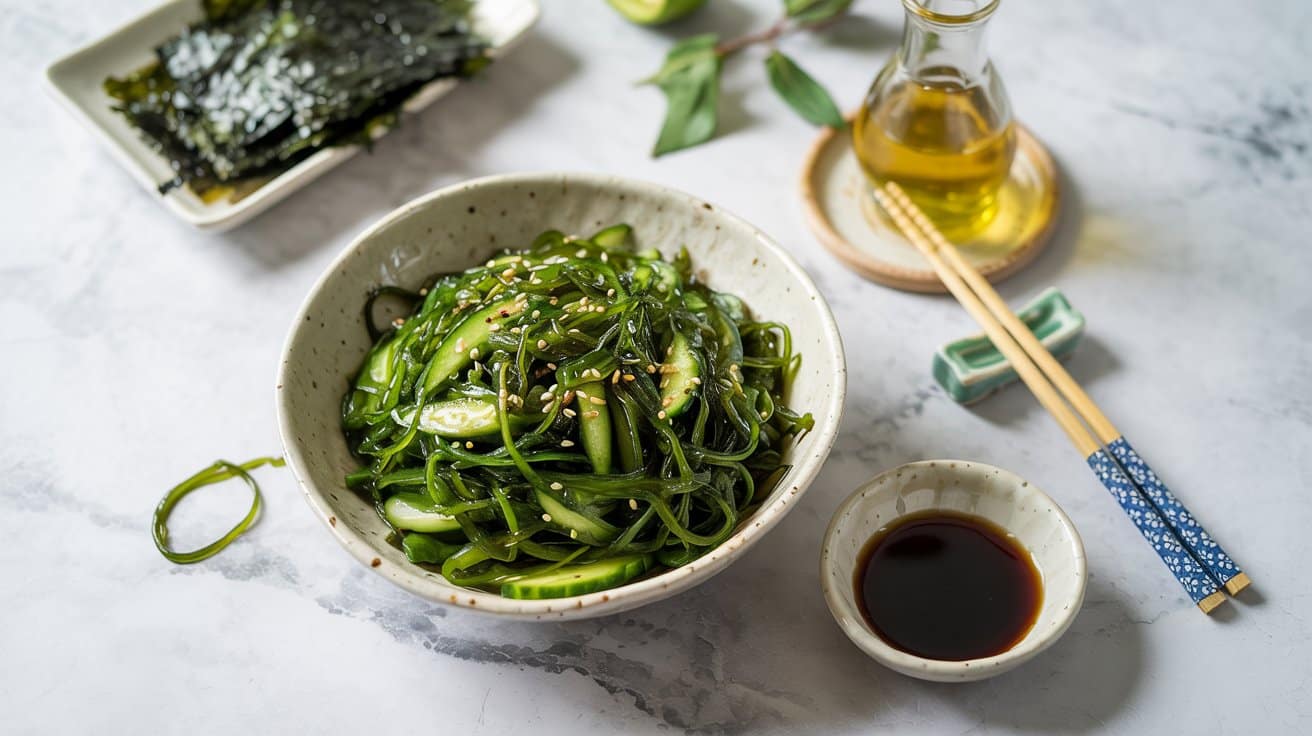
Taste before adding more sauce to the rest of the meal.
9. Edamame
Edamame supplies protein while keeping the meal plant-based. Salted pods also give diners a slow, hands-on break between crisp tempura bites.
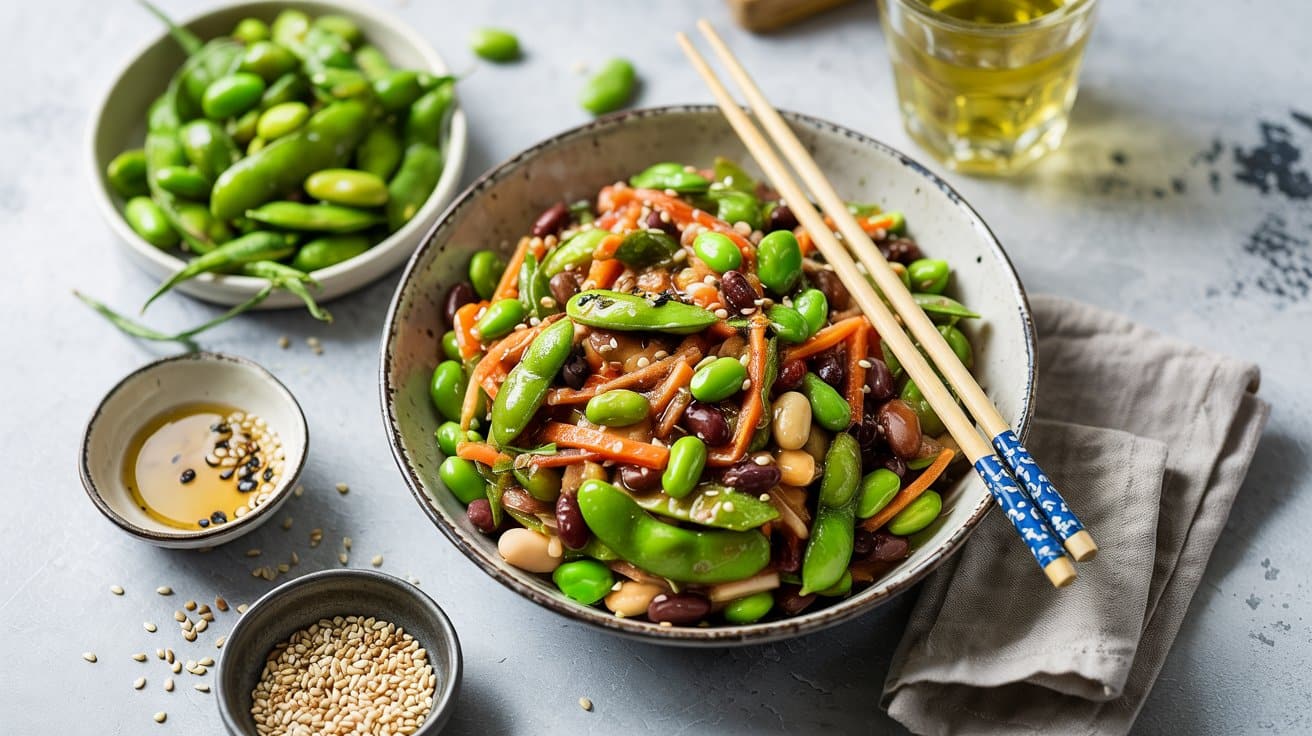
Use plain sea salt or a little citrus. Chili oil and sticky glazes can overwhelm the clean flavor of the fried vegetables.
10. Chilled Tofu
Cold silken or soft tofu brings protein, moisture, and almost no added work. Scallion, grated ginger, and a small spoon of soy sauce connect it to the tempura dipping setup.
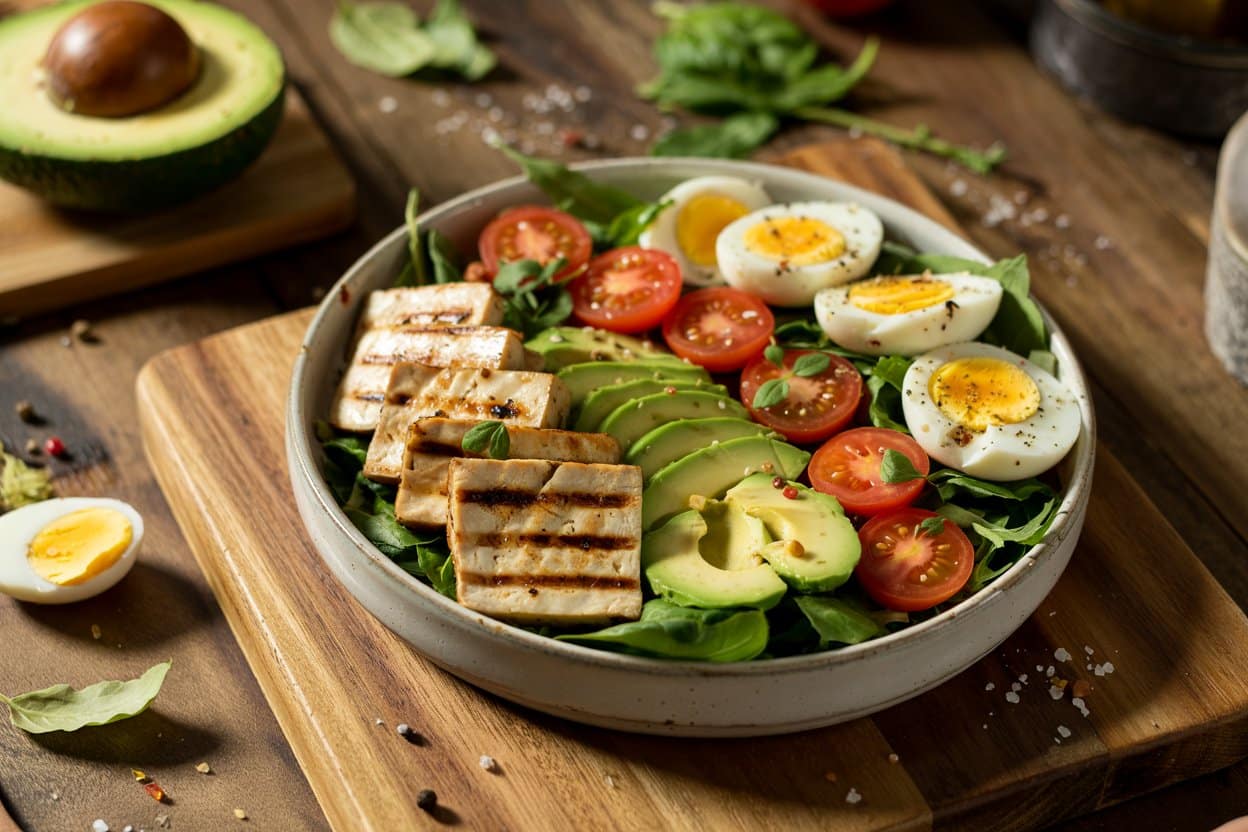
Serve the tofu in a separate bowl. Its released water should never reach the tempura platter.
11. Onigiri
Onigiri is useful for a lunch box or casual spread because each rice portion is easy to hold.
Choose a mild filling such as salted salmon, kombu, or plain sesame so it supports the vegetables.
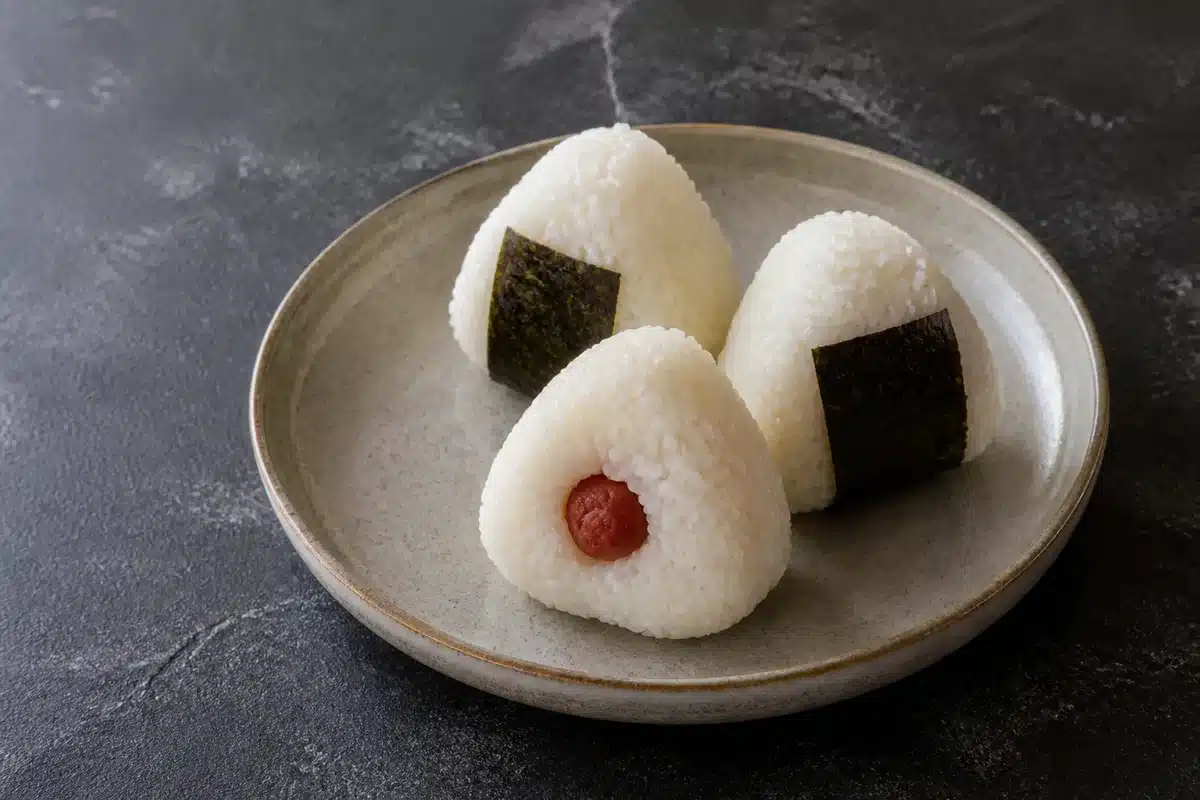
This side is heavier than a rice bowl because diners often eat a full rice ball.
Use it when the tempura portion is small.
12. Citrus Fruit
Orange, mandarin, or grapefruit segments can close the meal with fresh juice and gentle acidity. Fruit works best as a final small course instead of sitting beside hot tempura.
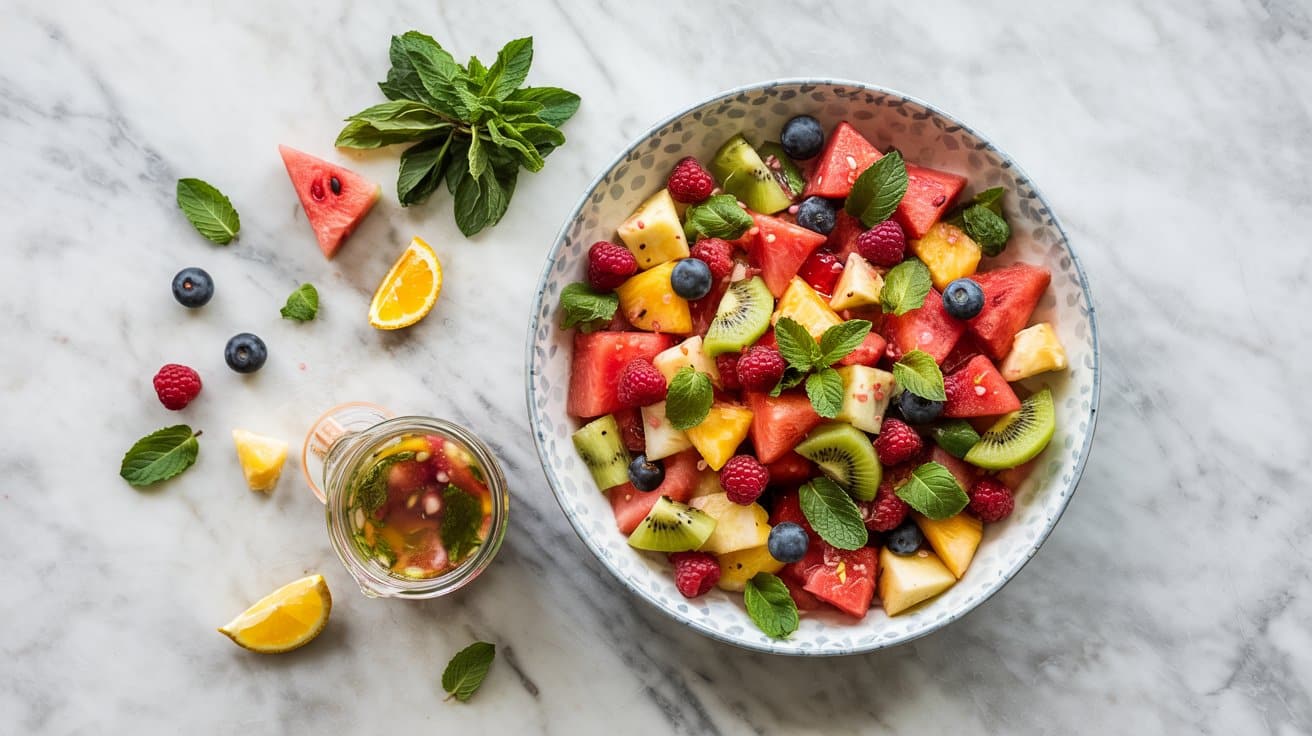
Skip heavy syrup and whipped toppings. The goal is a clean finish after fried food.
Build the Plate in Three Moves
A good tempura meal changes with appetite, yet the same order still works. Start with something sharp, add one source of substance, and keep every wet item away from the crust.
Light Lunch
Pair five or six vegetable pieces with cucumber sunomono and chilled tofu. Use salt for half the pieces and tentsuyu for the rest.
Standard Dinner
Serve tempura with a small rice bowl, miso soup, and grated daikon. This gives starch, broth, and a fresh condiment without a crowded plate.
Large Meal
Choose cold soba or warm udon, then add seaweed salad. Reduce the rice or skip it because the noodles already fill the starch role.
Avoid heavy combinations such as croquettes, fried rice, and another battered main on the same plate. Repeated oil makes every item taste less distinct, while wet sides create soggy tempura before dinner is finished.
Serve chilled sides first, place rice and soup next, then bring the tempura out last. That order protects the food that changes fastest.
Vegetable choice can fine-tune the plate. Sweet potato and kabocha benefit from daikon, cucumber, or citrus because their centers are dense and sweet.
Mushroom and eggplant absorb more oil, so miso soup and plain rice work better than sesame-heavy salads.
Thin green beans, shiso, and onion rings feel lighter. They can share the table with soba or tofu without making the meal dense.
Mix two or three vegetable families in the tempura basket so one side does not have to correct every piece.
For four diners, prepare the cold salad and dipping garnishes up to an hour ahead. Cook rice next and hold it covered.
Warm soup gently, but wait to add delicate scallions or wakame until service so their flavor stays clear.
Fry in small batches and send each batch out instead of building one large covered platter. Diners receive hotter tempura, and the cook avoids stacking pieces where steam collects between them.
Save These Vegetable Tempura Sides
Keep the ranked sides, dipping setup, and three meal formulas for your next tempura dinner.
Sources
Vegetable Tempura Side Dish FAQ
What is the best side for vegetable tempura?
Steamed rice is the best all-purpose side because its mild flavor catches dipping sauce without adding oil or strong seasoning.
What salad goes with vegetable tempura?
Cucumber sunomono, daikon salad, and lightly dressed seaweed salad all add cool texture and enough acid to refresh the palate.
Should tempura be served over rice?
It can be served over rice, but place each piece on top at the last moment. Steam and sauce will soften the underside.
Can vegetable tempura be a full meal?
Yes. Add rice or noodles, miso soup, and tofu or edamame so the meal has starch, broth, and protein.
What should you avoid serving with tempura?
Avoid several fried sides, thick creamy salads, and sauce poured over the platter. They add weight and weaken the crisp texture.

Carrie is a food writer and editor with more than 15 years of experience. She has worked for some of the biggest names in the food industry, including Bon Appétit, Food & Wine, and Martha Stewart Living.
As the Editor in Chief of EpicureDelight, Carrie oversees all of the content on the site. She also manages the team of contributing writers and editors, who help to create delicious recipes, helpful tips, and informative articles that you’ll find on the site.
A native of the Chicago area, Carrie is passionate about all things food. She loves trying new restaurants and experimenting with new recipes in her kitchen. She’s also a graduate of the Culinary Institute of America, so she knows a thing or two about food!