
Vacherin has a way of making a dish feel effortless. It melts into a near-liquid pool, carries a mild briny tang, and stays creamy without turning grainy.
Finding a vacherin cheese substitute that replicates all three traits at once is harder than it sounds.
The good news is that you rarely need all three traits matched perfectly. Most recipes call on vacherin for one job: either the melt, the tang, or the soft scoopable body.
Pick a swap that handles whichever one matters most in your dish, and the result will be close.
Camembert and brie (both rind-removed) are the closest matches for vacherin's creamy melt. Saint-Nectaire adds savory depth for gratins. Raclette gives maximum stretch and melt. Cream cheese or Monterey Jack work as pantry-friendly fallbacks when the others aren't available.
Best Vacherin Cheese Substitutes for Melty, Tangy Results
Each substitute below is matched to a specific use case and ratio. Soft cheeses that can't hold heat without turning grainy are excluded.
| # | Substitute | Best For | Ratio | Key Note |
|---|---|---|---|---|
| 1 | Camembert (rind off) | Both | 1:1 | Soften 10 min first |
| 2 | Brie (rind off) | Both | 1:1 | Mild, won't overpower |
| 3 | Saint-Nectaire | Savory | 1:1 | Chop small to melt evenly |
| 4 | Raclette cheese | Savory | 1:1 | Saltier-taste first |
| 5 | Cream cheese | Both | ¾:1 | Loosen with milk/cream |
1. Camembert (Rind Removed)
Camembert is the closest swap for vacherin in most baked or warm dishes. When you pull the rind off and let it sit at room temperature for about 10 minutes, softening the paste before mixing makes it fold into sauces and casseroles almost exactly like vacherin does.
Camembert vs. Vacherin
Works for: baked dishes, cheese sauces, stuffed pastries, gratins where creamy melt matters most
Skip if: you need a strong briny or aged tang-camembert sits milder on the flavor scale
- Prep: Remove rind completely, then break into rough chunks before adding to the dish
- Ratio: Use a 1:1 swap by weight
- Tang fix: Add a few drops of lemon juice if the dish needs more acidity
- Heat: Bake until just melted; too long at high heat turns it oily
Skip this if you're using vacherin cold or unheated. Camembert's texture at fridge temperature is firmer and won't read the same.
2. Brie (Rind Removed)
Brie is a reliable backup when camembert isn't on the shelf. The creamy cheese options comparison between brie and cream cheese shows how distinct their melt behaviors are.
Brie wins for dishes where you want a smooth, even melt without extra richness tipping the balance.
Break it into small pieces before heating. It disperses faster and creates a more uniform texture.
- Ratio: 1:1 by weight, rind removed
- Texture: Melts into a creamy, slightly stretchy layer in baked dishes
- Flavor: Gentle tang, mild enough for both savory and sweet-savory recipes
- Best uses: Stuffed chicken, baked pasta, flatbreads, melted over roasted vegetables
Skip this if your recipe depends on a funky, aged character. Brie is gentler than vacherin when vacherin is at peak ripeness.
3. Saint-Nectaire (Room Temp, Chopped)
Saint-Nectaire is the most underrated swap on this list. It has a savory, almost earthy flavor that brie and camembert can't match, and it holds up beautifully in hot dishes like gratins or stuffed mushrooms.
Its texture is semi-soft, so chopping it small before it goes into the pan helps it melt without clumping.
- Ratio: 1:1 by weight at room temperature
- Best uses: Potato gratin, baked mushrooms, cheese-layered tarts
- Flavor profile: Richer and more savory than brie; closer to vacherin's depth
- Prep: Let it sit out 20 minutes before chopping so it softens slightly
Skip this if you're aiming for a very mild, neutral-tasting base. Saint-Nectaire brings its own distinct note that can take over delicate dishes.
4. Raclette Cheese (Melt Then Fold)
Raclette is the go-to when maximum melt is the goal. It shreds easily, melts into a smooth, glossy pool, and creates that bubbly top layer that makes baked cheese dishes so appealing.
If you're exploring melting raclette alternatives for other recipes, the same rule applies here: salt level is the thing to watch.
Raclette can run saltier than vacherin. Taste the dish before adding any seasoning and hold back on salt until the end.
- Ratio: 1:1 shredded by weight
- Technique: Melt it partially first in a low pan, then fold into the main dish for an even texture
- Best uses: Cheese sauces, baked potato dishes, fondue-style preparations
- Salt check: Taste at the halfway point and season accordingly
Skip this if you need a delicate, gentle melt. Raclette's flavor is assertive and will dominate lighter ingredients.
5. Cream Cheese (Loosened with Milk)
Cream cheese is the emergency pantry option. It doesn't melt the way bloomy-rind cheeses do, but loosened with a small splash of milk or cream, it comes close enough for baked dips, sauces, and stuffed pastries.
| Use | Ratio | Notes |
|---|---|---|
| Baked dips | ¾:1 | Loosen with 1 tablespoon milk per 2 oz cream cheese |
| Cheese sauces | ¾:1 | Add 2 tablespoon cream and stir on low heat |
| Stuffed pastries | ¾:1 | Mix with a pinch of sugar to balance tang |
The tang in cream cheese is sharper than vacherin's briny note. If the flavor tips too sour, a small pinch of sugar or an extra tablespoon of cream smooths it out.
Explore spreadable dairy swaps if you need a different base texture entirely.
- Ratio: Use ¾ the amount of vacherin called for, then adjust texture with liquid
- Tang fix: Add a pinch of sugar or extra cream if the flavor reads too sharp
- Mixing tip: Stir on low heat only-high heat turns cream cheese grainy fast
Skip this if you need a pronounced briny or aged flavor. Cream cheese is dairy-forward but lacks the character of a washed or bloomy rind.
Making Vacherin Substitutes Work (Without Texture Surprises)
The biggest mistake when swapping soft cheeses is adding them too early or at too high a heat. Most of these substitutes are more heat-sensitive than hard cheeses, and once they break, there's no recovering the texture.
For dishes using picking a reliable melt over a richer option, the technique matters as much as the cheese itself.
- Break or shred first: Always cut soft-cheese substitutes into small pieces before they go into the dish-uniform sizing means uniform melt
- Add tang after melting begins: Stir in lemon juice or a spoon of plain yogurt once the cheese starts to soften, not before, to avoid curdling
- Keep heat low: Most of these swaps melt best between 275-325°F in the oven; higher temps push them toward greasy separation
Frequently Asked Questions
Yes, both work at a 1:1 ratio by weight. Remove the rind first so it doesn't create a chewy or bitter layer in the finished dish.
Raclette is the strongest melter on this list. Shred it and melt gently before folding into the dish for the most even, stretchy result.
Stir in a few drops of lemon juice or a small spoon of plain yogurt after the cheese begins to melt. Add gradually and taste as you go.
Yes, always remove it when blending or baking. The rind can turn rubbery and bitter once it's incorporated into a melted cheese base.
It can make the dish thicker and slightly tangier than vacherin would. Loosen it with 1-2 tablespoons of milk or cream before baking to keep it smooth.
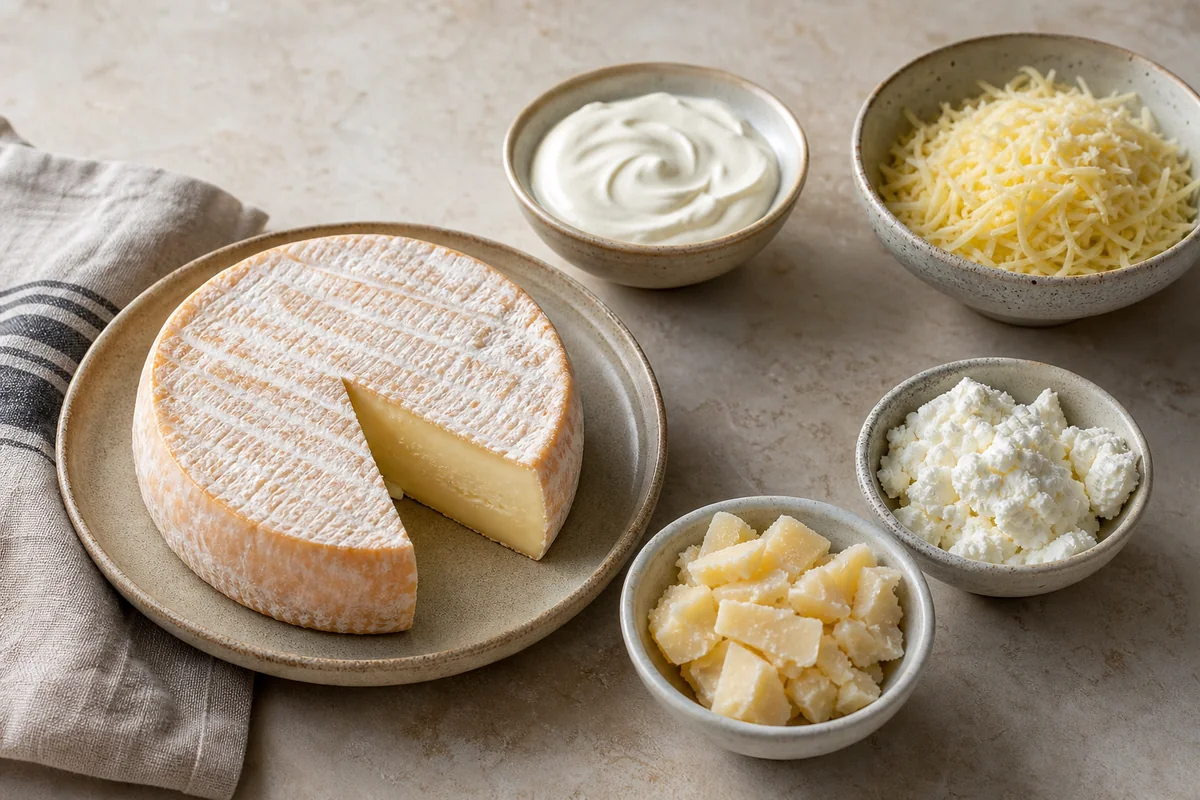
5 Best Vacherin Cheese Substitutes That Taste Right
Ingredients
Equipment
Method
- Decide what role vacherin plays in your recipe: creamy melt, briny tang, or scoopable spread.
- Use the listed ratio from the substitute options, then break or shred the cheese so it disperses evenly.
- If your substitute is creamier than vacherin, warm it briefly or stir in a small splash of milk/cream to smooth.
- If your substitute is less tangy (like Monterey Jack), add a tiny tang adjuster (lemon juice or a spoon of yogurt) and taste.
- Bake or heat until just melted; avoid long high-heat simmering to prevent graininess or separation.
Notes
- Rind removal often improves blend and texture for brie/camembert swaps.
- For tang-forward recipes, taste after melting—adjust with acid rather than extra salt.
Tried this recipe?
Let us know how it was!
Carrie is a food writer and editor with more than 15 years of experience. She has worked for some of the biggest names in the food industry, including Bon Appétit, Food & Wine, and Martha Stewart Living.
As the Editor in Chief of EpicureDelight, Carrie oversees all of the content on the site. She also manages the team of contributing writers and editors, who help to create delicious recipes, helpful tips, and informative articles that you’ll find on the site.
A native of the Chicago area, Carrie is passionate about all things food. She loves trying new restaurants and experimenting with new recipes in her kitchen. She’s also a graduate of the Culinary Institute of America, so she knows a thing or two about food!



