
Verjuice has a very specific personality: sharp but not harsh, grape-tinged but not winey, bright without the aggression of straight vinegar. That combination is harder to fake than most people expect, which is why a lot of quick swaps miss the mark.
A good verjuice substitute matches the acidity first, then softens it so the dish doesn't taste like it has a vinegar problem.
The list below covers both savory and baking-friendly options. Some substitutes are one-ingredient fixes.
Others need a small adjustment, like a pinch of sugar or a quick simmer, to land in the right place.
The closest swap for verjuice is lemon juice or white wine vinegar with a pinch of sugar, used at a 1:1 ratio. For a grape-like, winey depth, reduced pomegranate juice is your best option. Rice vinegar works when you want a gentler acid. Tamarind concentrate suits deep, complex sauces at a lower ratio.
5 Best Verjuice Substitutes Worth Trying
The table below is your at-a-glance guide before you start cooking. Ratios are starting points, not absolutes.
Taste after the first addition, then nudge from there.
| # | Substitute | Best For | Ratio | Key Note |
|---|---|---|---|---|
| 1 | Lemon Juice | Both | 1:1 | Add pinch sugar if sharp |
| 2 | White Wine Vinegar | Both | 1:1 | Sugar softens the edge |
| 3 | Rice Vinegar | Both | 1:1 | Mildest acidity option |
| 4 | Apple Cider Vinegar | Savory | 1:1 | Fruitier; simmer briefly |
| 5 | Pomegranate Juice | Savory | ¾:1 | Reduce first for best results |
If you only need a tiny finishing splash, lemon juice is the fastest pick. You can add it drop by drop, which no other substitute on this list allows as easily.
1. Lemon Juice
Lemon juice is the most immediate fix. It matches verjuice's brightness and works well for deglazing a pan or finishing a sauce right before serving.
The flavor is more citrus-forward than verjuice, which is grape-toned by nature. If your dish reads too tart after the swap, those who swap in bright citrus alternatives often find that a small pinch of sugar closes the gap.
- Best use: Finishing sauces, deglazing, salad dressings, light marinades
- Starting ratio: 1:1 - begin with the same amount the recipe calls for
- Adjustment tip: Add 1 small pinch of sugar per tablespoon if the citrus reads too sharp
- Baking note: Works at 1:1; reduce by 1 teaspoon if the recipe already has other acidic ingredients
Skip if your dish needs that soft, grape-like undertone. Lemon juice is clean but unmistakably citrusy, and no amount of sugar will turn it winey.
2. White Wine Vinegar
White wine vinegar is the sharpest substitute on this list, but it is also the one that most closely mimics the clean, fermented edge of verjuice. The key is softening it before it hits the dish.
The sugar pinch is not optional if you want it to read like verjuice. Without it, vinegar dominates.
When deciding on a wine-forward option, choosing a dry wine base can help you understand why the fermented note matters here.
- Starting ratio: 1:1, but taste before adding the full amount
- Sugar range: ⅛ to ¼ teaspoon per tablespoon of vinegar, depending on dish richness
- Best for: Pan sauces, poaching liquids, marinades for chicken or pork
- Taste check: After mixing in sugar, it should taste tart but rounded, not sharp or sweet
Skip if you need a completely alcohol-free or non-winy flavor. Use rice vinegar for a milder, cleaner result.
3. Rice Vinegar
Rice vinegar is the quiet option. It has the least vinegar-forward punch of any swap on this list, which makes it useful when verjuice is supposed to lift a dish without announcing itself.
Use it at a 1:1 ratio to start. Because it's milder than verjuice's natural acidity, you may want to add a small pinch of salt alongside it.
Salt draws out the brightness in rice vinegar the same way it does in a well-seasoned salad dressing. For those who regularly swap mild acids, swapping gentle vinegars is a useful habit to understand before the recipe depends on it.
Rice vinegar also handles baking well. It won't clash with vanilla or butter the way a stronger vinegar might.
If the recipe asks verjuice to activate baking soda, rice vinegar does the job without adding an off-note.
Skip if the recipe specifically needs verjuice's sharper snap, like a deglaze that needs to cut through fat quickly. Use lemon juice or white wine vinegar in that case.
4. Apple Cider Vinegar
Apple cider vinegar brings a fruitier, earthier character that fits naturally when verjuice is part of a marinade or glaze. It is tangier than verjuice but shares that faint fruit-acid quality.
When storing acidic pantry liquids, apple cider vinegar tends to last well and stay consistent in flavor.
- Starting ratio: 1:1, but reduce by 1 teaspoon if the dish already has fruit or sweetness
- Best timing: Simmer it briefly in sauces, 30 to 60 seconds, so the raw edge cooks off
- Balance tip: If your glaze already has honey or brown sugar, use ¾ of the measured amount
| Use | Ratio | Notes |
|---|---|---|
| Marinade | 1:1 | Simmer 30-60 sec before adding protein |
| Glaze | ¾:1 | Reduce with sweetener; taste before finishing |
| Pan sauce | 1:1 | Deglaze, then reduce by half to mellow |
Skip if the dish is delicate, like a light vinaigrette or a poached fruit recipe. Apple cider vinegar's earthiness can overpower subtle flavors. Use lemon juice for a cleaner result.
5. Pomegranate Juice
This is the substitute to reach for when you want something genuinely grape-like and winey. Pomegranate juice has a tart, fruity depth that raw vinegar and lemon juice simply don't replicate.
Understanding the flavor profile of pomegranate helps you predict how it will behave once it reduces.
Using It Straight
Works for: finishing sauces, dressings, quick glazes where extra liquid is acceptable
Skip if: the dish needs concentrated acidity or can't handle additional sweetness or volume
Reduced (Recommended)
Works for: pan sauces, braises, glazes where verjuice adds a concentrated winey tang
Skip if: you're short on time or working with a very small quantity - lemon juice is faster
- Starting ratio (reduced): Use ¾ the amount the recipe calls for in verjuice
- How to reduce: Simmer over medium heat until slightly syrupy, about 8 to 10 minutes for ½ cup
- Best uses: Finishing sauces for lamb or duck, glazes, wine-braised dishes
Skip if you need sharp, clean acidity with no sweetness. Use lemon juice or white wine vinegar for that job.
Making Verjuice Substitutes Work in Real Recipes
The method matters as much as the swap itself. Start by matching acidity level: if the substitute tastes sharper than verjuice did (which it usually will), add a small pinch of sugar before it goes into the dish.
Then check salt. Knowing how this bright pantry acid behaves over time also helps you judge whether your lemon juice is still at full strength before you cook with it.
For anyone who keeps this mild fermented liquid on hand, checking the date before using it in a sauce is worth the five seconds it takes.
- For cooking (sauces, marinades): Add the substitute early and simmer at least 30 seconds so the raw acid integrates. Taste before serving and adjust by drops, not spoonfuls.
- For baking: Use the same volume as the verjuice called for, then add a micro-pinch of sugar if the batter or dough tastes sharp. Don't overshoot - overly sweet baked goods are harder to fix than slightly tart ones.
- Final balancing rule: If the dish tastes flat after the swap, a pinch of salt usually restores brightness better than adding more acid.
Frequently Asked Questions
Yes, a 1:1 swap works in most baked goods. If the recipe already has other acidic ingredients, reduce the lemon juice by about 1 teaspoon to avoid an overly tart result.
White wine vinegar with a small pinch of sugar is the closest match for marinades. Apple cider vinegar also works well when the marinade includes fruit or savory-sweet components.
Reducing it gives a much closer result. Straight pomegranate juice is too thin and sweet; simmering it for 8 to 10 minutes concentrates the tart, winey notes verjuice provides.
Add vinegar early and let it simmer 30 to 60 seconds. A pinch of sugar before it goes in also softens the sharpness without making the sauce taste sweet.
It works well in complex sauces and braises, but start at half the amount since tamarind is stronger and more syrupy. Add water to thin it if the sauce becomes too thick.
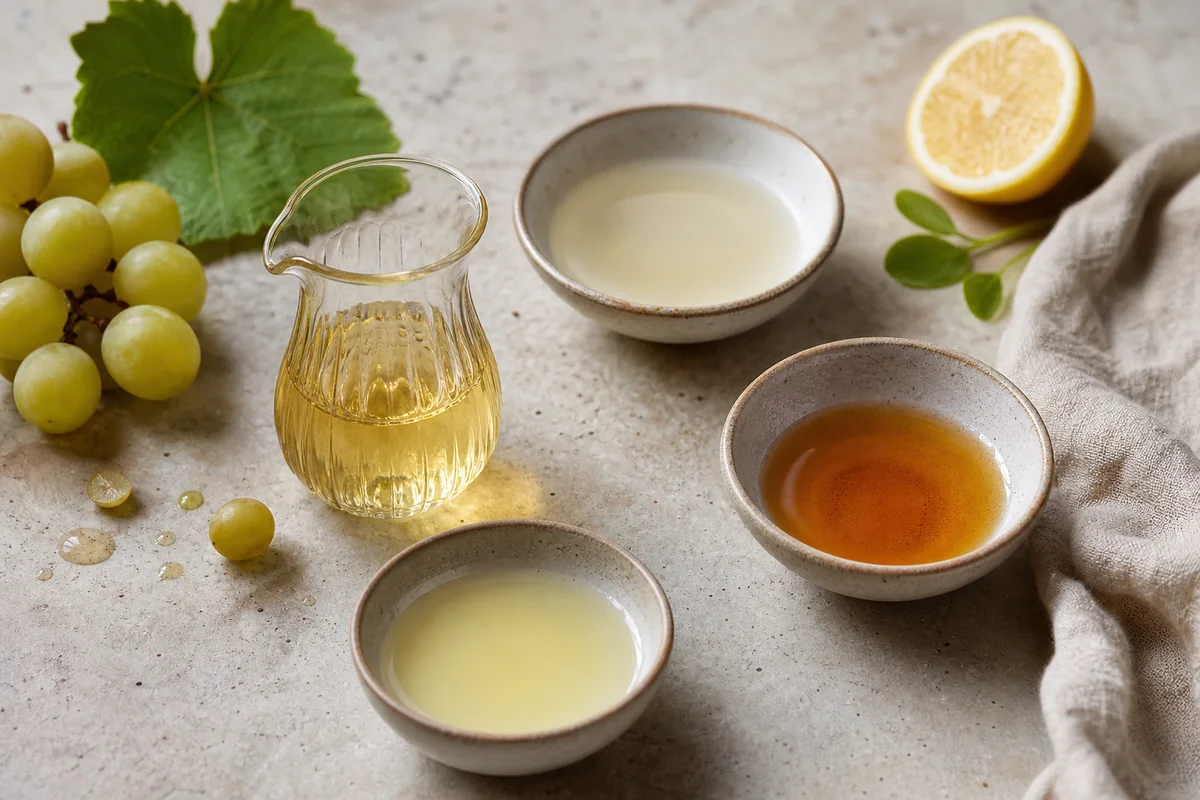
5 Best Verjuice Substitutes Worth Trying
Ingredients
Method
- Identify whether you need verjuice for a finishing acidity (vinegar-like brightness) or for cooking (needs reduced, blended tang).
- Start with the listed ratio. For any swap that’s sharper than verjuice (vinegar), add a pinch of sugar to soften the bite.
- For sauces or braises, simmer the substitute 30–90 seconds so it integrates rather than tasting like raw acid.
- For baking, swap in the same amount, then taste/adjust: add a micro-pinch of salt for balance or a touch of sugar if the tang reads too aggressive.
- Taste at the end and fine-tune with 1–2 drops more acid (or a small pinch of sugar) rather than adding a full extra tablespoon.
Notes
- Verjuice is tart and wine-like; swaps work best when sweetness/salt are adjusted to match the recipe’s balance.
- If your substitute is a vinegar, simmer briefly for cooking dishes to reduce harshness.
Tried this recipe?
Let us know how it was!
Carrie is a food writer and editor with more than 15 years of experience. She has worked for some of the biggest names in the food industry, including Bon Appétit, Food & Wine, and Martha Stewart Living.
As the Editor in Chief of EpicureDelight, Carrie oversees all of the content on the site. She also manages the team of contributing writers and editors, who help to create delicious recipes, helpful tips, and informative articles that you’ll find on the site.
A native of the Chicago area, Carrie is passionate about all things food. She loves trying new restaurants and experimenting with new recipes in her kitchen. She’s also a graduate of the Culinary Institute of America, so she knows a thing or two about food!



