
Running out of white wine mid-cook is surprisingly common. Most home cooks keep a bottle open in the fridge, but it runs dry, goes flat, or you simply never grabbed one.
A good white wine substitute is within reach in almost every kitchen.
The substitutes below aren't guesses. They've been matched to specific cooking contexts: deglazing pans, building braises, lightening baked goods, and adding acidity to sauces.
Some swap 1:1 without adjustment; others need a small calibration.
Check the ratio table before you start. It makes the cooking-vs-baking decision much faster.
For dry, savory dishes, dry sherry or dry vermouth are the closest matches. For acidity-driven needs, diluted apple cider vinegar or lemon-spiked broth work well. In baking, dry champagne or prosecco adds lift. Each substitute here works 1:1 unless noted.
5 Best White Wine Swaps (With Ratios for Cooking & Baking)
These five substitutes cover nearly every scenario white wine shows up in. Scan the table for the ratio and best use, then read the section that matches your recipe.
| # | Substitute | Best For | Ratio | Key Note |
|---|---|---|---|---|
| 1 | Dry Sherry | Savory | 1:1 | Mild nutty depth |
| 2 | Dry Vermouth | Savory | 1:1 | Herbal; use less in delicate dishes |
| 3 | Dry Champagne / Prosecco | Both | 1:1 | Adds lift, slight sweetness |
| 4 | Apple Cider Vinegar + Water | Savory | Start under 1:1 | Sharp; simmer to soften |
| 5 | Chicken Broth + Lemon Juice | Savory | 1:1 | Add lemon at end |
1. Dry Sherry
Dry sherry is the closest thing to white wine for savory cooking. It has the same dryness, a compatible body, and it deglazes a hot pan cleanly without turning bitter.
If you're working on a pan sauce or a seafood sauté, swapping dry sherry in at 1:1 is the most seamless move on this list.
- Ratio: Use 1:1 without any adjustments in most savory recipes.
- Best for: Pan sauces, mushroom dishes, cream sauces, and risotto-style dishes.
- Nutty depth: Sherry adds a faint nuttiness; taste after adding and decide if you want to balance with a splash of lemon.
- Skip if: Your recipe requires a completely neutral flavor base and that nuttiness will compete with other ingredients.
2. Dry Vermouth
Dry vermouth behaves almost identically to white wine in a hot pan. The alcohol evaporates, it deglazes well, and it brings a dry, slightly botanical edge that integrates nicely in herb-forward dishes.
For risotto swaps and wine-based pasta sauces, it is an easy yes.
If you're concerned about those herbal overtones, use a slightly smaller pour. Start at ¾ of the called-for amount, taste, and add the rest only if the dish needs more liquid.
For a deeper look at vermouth-style swaps, there are more options worth knowing.
- Ratio: Start at ¾:1 for delicate dishes; go full 1:1 for assertive, herb-heavy recipes.
- Skip if: The recipe is subtle (light butter sauce, delicate fish) and you can't accommodate any botanical flavor.
- Storage tip: Vermouth keeps much longer than white wine once open, so it's a practical bottle to have on hand.
3. Dry Champagne or Prosecco
Dry sparkling wine gives a dish genuine brightness. The acidity is sharp and clean, and it adds a lightness that works especially well in recipes where white wine is part of a batter or a light cream sauce.
It is the go-to before leftover prosecco turns flat and loses its point entirely.
- Cooking use: Simmer for at least 3 minutes so the bubbles calm down and the sauce reduces properly.
- Baking use: Add the same volume as called for, but let the batter rest 5 minutes before baking to prevent over-wet mixing.
- Sweetness note: Extra-dry or brut works best; avoid anything labeled "sweet" or "semi-dry."
- Skip if: You need a crisp, non-fruity wine flavor and any residual sweetness will unbalance the dish.
4. Apple Cider Vinegar + Water
White wine's job in many recipes is purely acidic: it lifts, brightens, and cuts fat. Apple cider vinegar does that job well, but it's stronger and fruitier than wine.
Mix 1 tablespoon of apple cider vinegar with 3 tablespoons of water to get close to the gentler acidity of white wine in savory dishes.
Apple Cider Vinegar + Water
Works for: Deglazing, braises, acidity-forward sauces, and grain dishes that need brightness.
Skip if: The recipe needs wine for depth or sweetness, or if you're baking something where vinegar tang would read sharp.
Start at slightly under the full amount and taste as you go. For dishes where risotto-style acidity matters, this ratio approach prevents over-souring the dish.
- Base ratio: 1 tablespoon apple cider vinegar + 3 tablespoon water per ¼ cup wine called for.
- Simmer step: Cook for 4-5 minutes to mellow the sharpness before tasting.
- Adjust: Add a small pinch of sugar if the acidity reads too aggressive after simmering.
- Rice vinegar works too: It's milder and slightly sweeter; a better pick for delicate Asian-style sauces.
5. Chicken Broth + Lemon Juice
This combination handles the body problem that pure acidity swaps miss. Chicken broth gives the sauce a base that behaves like wine: it reduces, it adds a faint savory depth, and it keeps the dish from tasting thin.
The lemon juice is there to replace the brightness that broth alone can't give you.
Use ¾ cup of low-sodium chicken broth, similar to an opened dry white in terms of fridge life, plus 1 tablespoon of fresh lemon juice per ¼ cup of wine. Add the lemon juice near the end of cooking to keep the citrus from turning bitter.
- Ratio: ¾ cup broth + 1 tablespoon lemon juice per ¼ cup white wine.
- Salt check: Even low-sodium broth adds salt; reduce any added salt in the recipe by half and adjust at the end.
- Lemon timing: Stir in lemon juice in the final 2 minutes of cooking for cleanest flavor.
- Skip if: The recipe is vegetarian and chicken broth isn't an option; swap to vegetable broth with the same lemon ratio.
Making Any White Wine Substitute Taste Right
Choosing the right substitute is half the work. The other half is adjusting after it goes in.
The three questions to ask are: does your recipe need dryness (pick sherry or vermouth), acidity (pick vinegar mix or lemon juice), or body (pick broth)? Once you've answered those, the calibration is mostly about timing and tasting.
For recipes like braises and grain dishes, the choosing a different vermouth style is sometimes the cleaner fix if dryness feels off. Start with slightly less substitute than the recipe calls for, then build up.
- Taste early: Add about ¾ of the substituted amount, let it simmer 2 minutes, then taste before adding the rest.
- Deglaze smart: For vinegar-based subs, add a splash at a time and scrape the pan quickly; they reduce faster than wine.
- Balance at the end: A small pinch of sugar softens vinegar sharpness; a few extra drops of lemon brightens a broth-heavy swap.
Frequently Asked Questions
Yes, for most sauces and braises, a 1:1 swap works. Dry sherry and dry vermouth are the most reliable 1:1 swaps; vinegar-based options should start slightly under.
Dry champagne or prosecco is the best baking option. It adds lift and mild acidity without the savory notes that sherry or broth would bring to a batter.
Mix 1 tablespoon of apple cider vinegar with 3 tablespoons of water per ¼ cup of wine. Simmer for 4-5 minutes to mellow the sharpness.
Not directly, but vegetable broth with the same lemon ratio is a solid vegetarian swap. Use low-sodium vegetable broth and add lemon in the last 2 minutes.
In savory cooking, yes. Simmer sparkling wine for at least 3 minutes so it reduces and integrates. In baking, no reduction is needed.
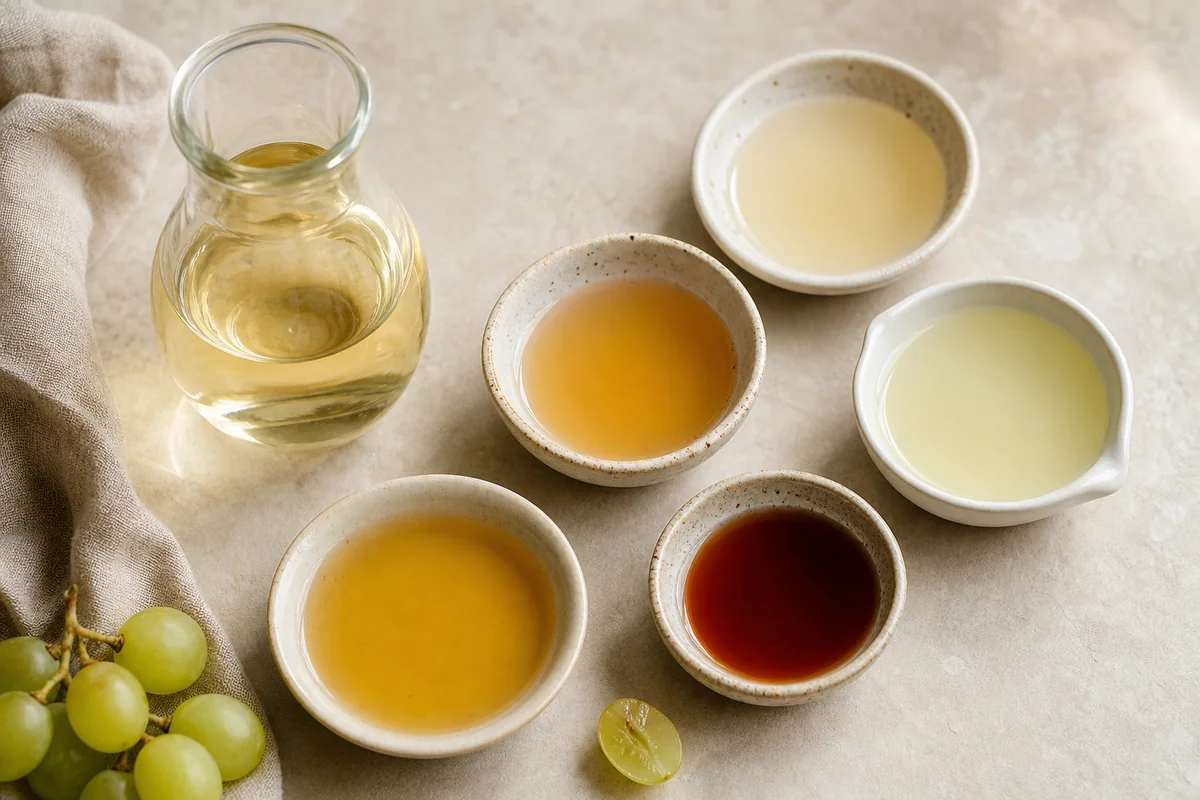
5 Best White Wine Substitutes You Can Trust
Ingredients
Method
- Identify whether your recipe needs dryness (savory sauces) or acidity/lightness (deglazing, braises, baking lifts).
- Choose the closest substitute from the table by flavor direction (dry vs acidic vs neutral-brothy).
- Use the listed ratio for a straight swap; if the substitute is more acidic or salty, start with slightly less and adjust at the end.
- For savory cooking, simmer 2–5 minutes to mellow sharp edges (especially vinegar-based swaps).
- For baking, reduce extra liquid transfer: let batter rest 5 minutes or add a small thickener (flour/starch) if needed to reach the target consistency.
Notes
- If your recipe is sweet (rare), favor champagne/prosecco (dry) over vinegar-based swaps to avoid a sharp result.
- For salty swaps (broth+lemon), taste after simmering and reduce added salt accordingly.
Tried this recipe?
Let us know how it was!
Carrie is a food writer and editor with more than 15 years of experience. She has worked for some of the biggest names in the food industry, including Bon Appétit, Food & Wine, and Martha Stewart Living.
As the Editor in Chief of EpicureDelight, Carrie oversees all of the content on the site. She also manages the team of contributing writers and editors, who help to create delicious recipes, helpful tips, and informative articles that you’ll find on the site.
A native of the Chicago area, Carrie is passionate about all things food. She loves trying new restaurants and experimenting with new recipes in her kitchen. She’s also a graduate of the Culinary Institute of America, so she knows a thing or two about food!



