Go Back
+ servings
5 Best Duck Fat Substitutes for Better Results | EpicureDelight

5 Best Duck Fat Substitutes for Better Results

No ratings yet
Use the substitute ratios and prep tips to match duck fat’s flavor and texture for roasting, frying, and baking.
Prep Time 5 minutes
Cook Time 0 minutes
Total Time 5 minutes
Servings: 1 batch
Course: Substitutes

Ingredients
  

Best Matches
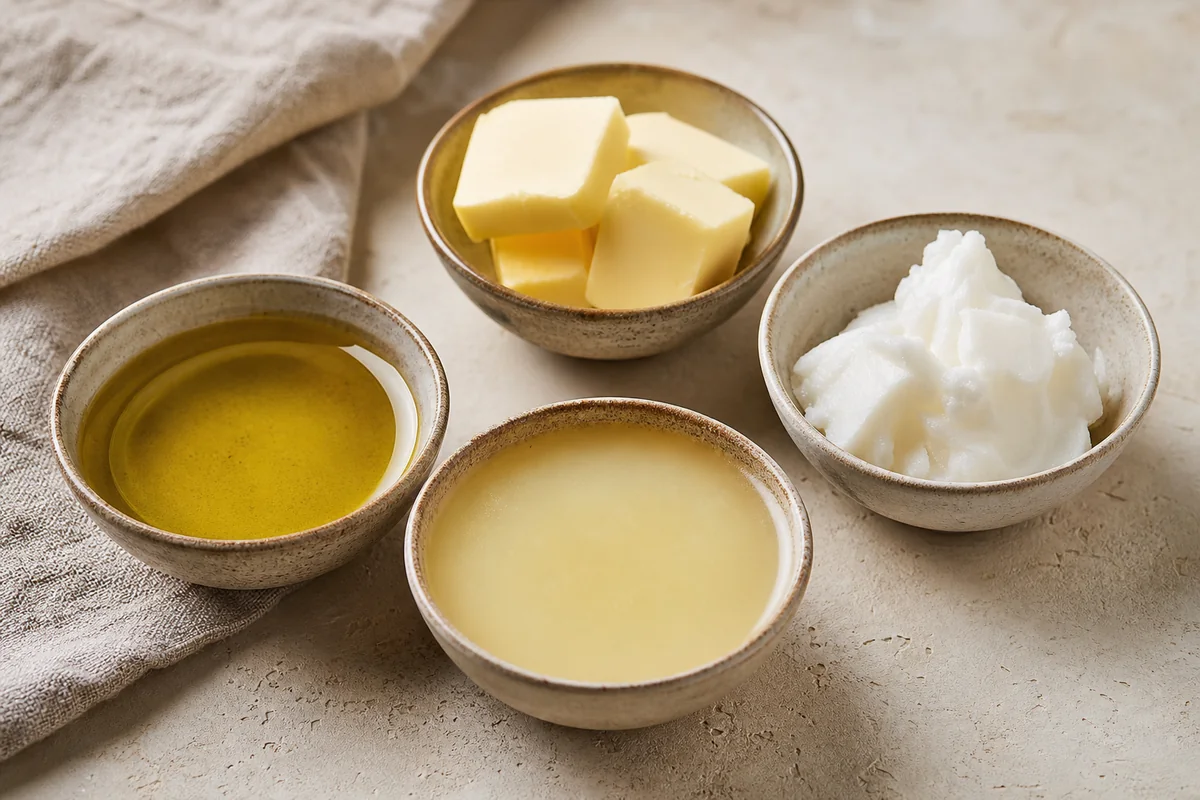
  • 1:1 tallow (beef or lamb) Closest mouthfeel and browning; use for high-heat roasting and frying
  • 1:1 lard (pork fat) Great for crispy results; choose for potatoes, pastries, and pan-frying
Good Alternatives
  • ¾:1 butter + neutral oil blend Balances buttery flavor with heat tolerance; best when you miss the buttery note
  • 1:1 olive oil (high-heat friendly) Works for roasting and dressings; crisping is less “duck-like” than rendered fats
Emergency Swaps
  • 1:1 vegetable shortening Reliable texture in baking; limited flavor—use when you only need fat performance

Equipment

  • Measuring spoon or kitchen scale
  • skillet or roasting pan
  • paper towels for drying ingredients

Method
 

  1. Pick your goal: roast/crisp (use tallow or lard), flavor-forward baking (butter + oil), or “just fat” baking (shortening).
  2. Measure by the listed ratio (use weight where possible for consistent browning).
  3. Adjust cooking: rendered fats brown faster—start checking 2–4 minutes earlier for high-heat roasting.
  4. If the substitute is less savory (olive oil or shortening), increase seasoning or add aromatics (garlic/thyme/rosemary) to replace lost depth.
  5. For crispy textures, dry the surface well (pat protein/vegetables dry) before adding the fat.
Notes

  • Use 1:1 by weight for most solid rendered fats unless the substitute is a blend (then follow the ratio).
  • For frying, keep heat steady; fats that smoke sooner will require slightly lower heat than duck fat.

Tried this recipe?

Let us know how it was!