
Few fats do what duck fat does. That glossy, golden coat on roasted potatoes or pan-fried chicken skin is hard to replicate because duck fat delivers both flavor depth and efficient heat transfer at once.
The good news is that several fats come close. The right duck fat substitute depends on whether you need crisping power, buttery richness, or a neutral base for baking.
Rendered animal fats lead the ranking. Liquid oils and solid shortenings trail behind but still earn their place in the right context.
Tallow and lard are the closest duck fat replacements for high-heat roasting and frying. A butter and neutral oil blend suits flavor-forward dishes. Olive oil works for roasting when you dry the surface. Vegetable shortening and ghee handle baking and richness swaps.
5 Best Duck Fat Swaps (Ranked by Crisping + Flavor)
Rendered animal fats generally brown closer to duck fat than plant oils do. Solid fats also tend to outperform liquid ones in baking when texture is the priority.
The table below gives you a fast-scan reference before the detailed breakdowns.
| # | Substitute | Best For | Ratio | Key Note |
|---|---|---|---|---|
| 1 | Tallow (beef or lamb) | Roast + Fry | 1:1 | Strongest browning power |
| 2 | Lard (pork fat) | Roast + Pastry | 1:1 | Excellent for potatoes |
| 3 | Butter + neutral oil | Roast + Bake | ¾:1 | Butter flavor, better heat |
| 4 | Olive oil | Roast + Dress | 1:1 | Less crunch than rendered |
| 5 | Vegetable shortening | Baking | 1:1 | Neutral fat, needs seasoning |
1. Tallow (Beef or Lamb)
Tallow is the closest thing to duck fat you can find at most butcher counters. It is a solid rendered fat with steady frying performance, and its browning power is hard to beat.
The mouthfeel lands very close to duck fat on roasted vegetables and meats.
Use it at a 1:1 ratio for any roasting or frying application. If you want to learn more about other tallow-based fat options, the options there overlap well with duck fat cooking too.
- Roasting: Preheat the pan with tallow in the oven before adding vegetables or meat.
- Frying: Tallow holds heat steadily; monitor temperature with a thermometer for accuracy.
- Flavor: Expect a slightly meatier, more savory note than duck fat provides.
- Storage: Keep rendered tallow sealed; it lasts longer than butter at room temperature.
Skip if: your recipe needs a very neutral fat. Tallow's savory edge can overpower delicate dishes like mild fish or light vegetable gratins.
2. Lard (Pork Fat)
Lard melts smoothly and browns reliably, which makes it one of the best options for crispy potatoes and pan-frying. It also performs well in pastry and biscuits, where duck fat is sometimes used for flakiness.
- Potatoes: Use lard at 1:1; parboil and roughen potato surfaces before roasting for best crunch.
- Pan-frying: Lard handles high heat without burning as fast as butter does alone.
- Pastry: Replace duck fat with lard 1:1 in pie crust for a flaky, tender result.
- Heat check: Start checking doneness 2-3 minutes earlier than your recipe suggests.
If lard becomes unavailable too, choosing among lard alternatives gives you a clear next step. Skip if: the dish is mild and pork flavor would compete with the main ingredient.
3. Butter + Neutral Oil Blend
A butter and neutral oil blend is not as powerful as rendered animal fat, but it solves a common problem: butter scorches, and plain oil lacks richness. Together they produce better browning than butter alone.
Mix roughly 3 parts butter to 1 part neutral oil (canola, grapeseed, or avocado oil) to reach about ¾ of the volume called for in the original recipe. This blend works especially well when you want a buttery flavor note in roasted carrots, squash, or baked goods.
For recipes where fat richness matters as much as technique, butter-forward swaps are worth scanning too.
- Roasting: Coat vegetables evenly and roast at 400°F or above for proper browning.
- Baking: Use melted in quick breads or muffins; solid butter handles pastry better.
- Flavor boost: Add a pinch of extra salt and a sprig of thyme to the pan.
Skip if: maximum crisping is the goal. Pure rendered fats consistently outperform this blend for crunch.
4. Olive Oil
Olive oil is a workable duck fat replacement when you need a liquid fat and don't have anything rendered on hand. Its flavor is noticeably different, and its crisping ceiling is lower, but proper technique closes some of that gap.
Olive Oil vs. Rendered Fat
Works for: roasted vegetables, dressings, sheet-pan proteins at moderate heat
Skip if: you need maximum crunch or a very savory, neutral fat base
Understanding olive oil flavor profiles helps you predict when it will complement a dish versus compete with it. Use it 1:1 by volume, but compensate with these adjustments.
- Surface prep: Pat proteins and vegetables completely dry before adding oil.
- Preheat: Get the pan or sheet tray hot before adding food to encourage browning.
- Temperature: Roast at 425°F minimum; lower temps lead to steaming, not crisping.
- Seasoning: Add garlic, rosemary, or smoked paprika to compensate for lost savoriness.
Skip if: the recipe depends on maximum crunch. Olive oil tends to crisp less than solid rendered fats in nearly every side-by-side test.
5. Vegetable Shortening
Vegetable shortening is not glamorous, but it is reliable. It is a solid fat with good stability, which makes it a practical duck fat substitute specifically in baking where you need fat performance without caring much about flavor.
| Use | Ratio | Notes |
|---|---|---|
| Pie crust | 1:1 | Shortening gives flaky layers; add a pinch of salt |
| Biscuits | 1:1 | Cut in cold shortening for soft, tender crumb |
| Cookies | 1:1 | Produces a softer, thicker cookie than butter |
If you need to go further, picking a shortening alternative covers situations where even shortening is unavailable.
- Flavor gap: Shortening is bland; add extra seasoning, herbs, or spice to compensate.
- Texture: Use it cold and cut it in rather than melting for best pastry results.
- Savory baking: Works in savory scones or crackers; add dried rosemary or thyme for depth.
Skip if: you're counting on duck fat flavor in the final dish. Shortening is fat-only and will not add any savory quality.
6. Ghee (Clarified Butter)
Ghee is butter with milk solids removed, which means it handles higher heat without burning. It brings buttery richness to roasting and baking and is a strong choice when you want flavor without the browning problems of whole butter.
- Roasting: Use ghee at 1:1; it coats evenly and browns vegetables well at 400-425°F.
- Baking: Substitute in equal parts for duck fat in savory breads and flatbreads.
- Heat advantage: Ghee's smoke point is higher than butter, making it more forgiving in hot pans.
- Flavor note: Expect a nutty, slightly caramel quality that differs from duck fat's meatier tone.
Knowing more about rendered fat storage habits helps here too since ghee keeps well at room temperature when properly sealed. Skip if: you need the most duck-like crisping effect. Animal rendered fats generally outperform ghee for crunch on skin-on proteins.
7. Coconut Oil
Coconut oil is solid at room temperature, which gives it some structural advantage over liquid oils in certain high-heat applications. However, its coconut aroma is noticeable in savory dishes, so it has a narrower use case than any other substitute on this list.
Coconut Oil
Works for: vegan roasting, sweet-savory dishes, stir-frying where coconut flavor fits
Skip if: the dish is fully savory and coconut flavor would clash with other ingredients
The flavor of swapping liquid oils in savory cooking applies here too since coconut oil behaves more like a liquid oil once melted.
- Best dishes: Sweet potato roasts, coconut-spiced proteins, or curry-adjacent recipes.
- Ratio: Use 1:1, but reduce salt slightly since coconut oil changes the seasoning balance.
- Refined version: Choose refined coconut oil for a milder, more neutral result in savory cooking.
Skip if: you're cooking a classic savory roast or potato dish where any coconut flavor would be out of place.
Making Duck Fat Substitutes Work (Roast, Fry, or Bake)
The right substitute only gets you halfway. How you prepare the food before the fat even touches it matters just as much.
Understanding that glossy rendered quality is also useful so you know what you're trying to replicate.
- Surface drying + preheat: Dry vegetables and proteins thoroughly. Preheat the pan or tray in the oven for at least 5 minutes before adding food.
- Timing by fat type: Rendered fats (tallow, lard, ghee) brown faster than liquid oils. Start checking doneness 2-4 minutes earlier than your recipe states.
- Seasoning balance: If the substitute is less savory (olive oil, shortening, coconut oil), add aromatics like garlic, thyme, or rosemary to replace the depth duck fat naturally provides.
Frequently Asked Questions
Tallow is the closest match for crispy roasted potatoes. It browns at a similar rate and produces a comparable mouthfeel at a 1:1 ratio. Lard is a strong second choice.
Yes, but technique matters. Dry the surface completely, preheat the pan, and roast at 425°F or higher to encourage browning rather than steaming.
Lard or vegetable shortening both produce flaky, tender pastry at a 1:1 ratio. Lard adds a subtle flavor; shortening stays fully neutral.
Yes. Both rendered fats brown faster than liquid oils, so start checking 2-4 minutes earlier. Keep temperature the same but monitor color closely.
Vegetable shortening is the most neutral option, followed by refined coconut oil. Neither adds any savory or buttery note on its own.
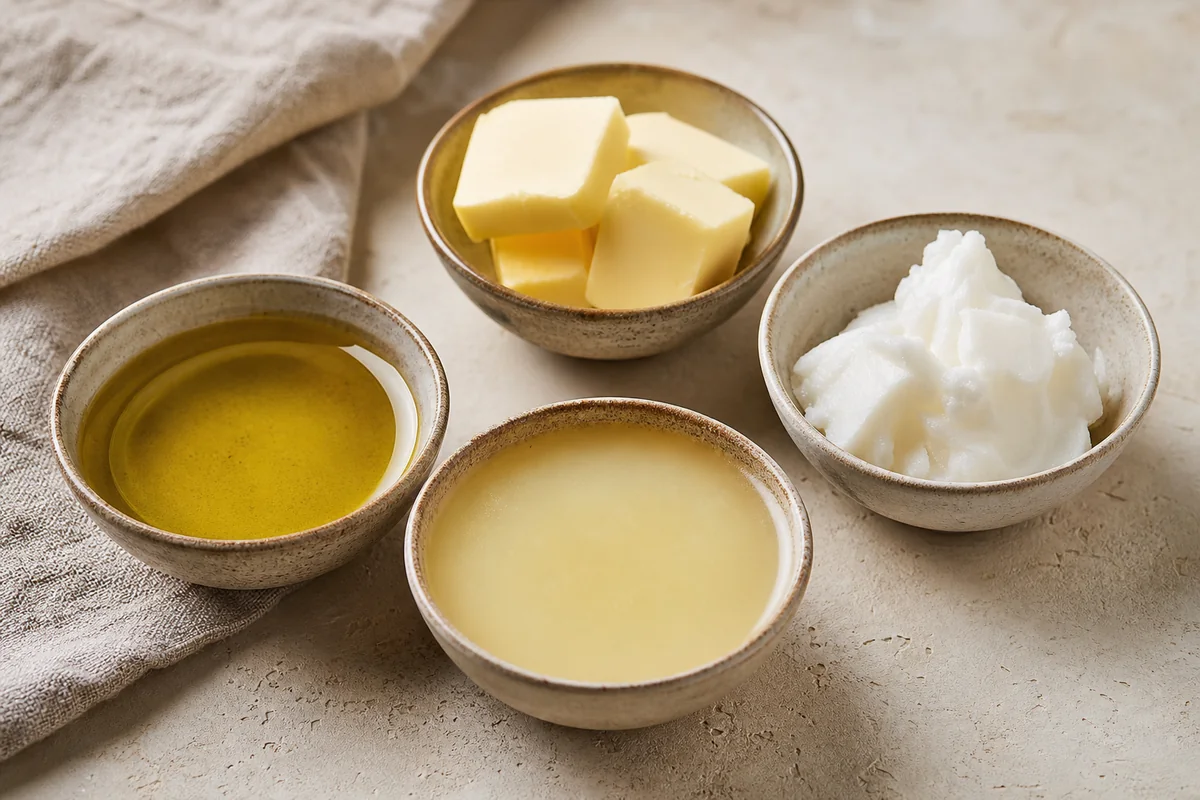
5 Best Duck Fat Substitutes for Better Results
Ingredients
Equipment
Method
- Pick your goal: roast/crisp (use tallow or lard), flavor-forward baking (butter + oil), or “just fat” baking (shortening).
- Measure by the listed ratio (use weight where possible for consistent browning).
- Adjust cooking: rendered fats brown faster—start checking 2–4 minutes earlier for high-heat roasting.
- If the substitute is less savory (olive oil or shortening), increase seasoning or add aromatics (garlic/thyme/rosemary) to replace lost depth.
- For crispy textures, dry the surface well (pat protein/vegetables dry) before adding the fat.
Notes
- Use 1:1 by weight for most solid rendered fats unless the substitute is a blend (then follow the ratio).
- For frying, keep heat steady; fats that smoke sooner will require slightly lower heat than duck fat.
Tried this recipe?
Let us know how it was!
Carrie is a food writer and editor with more than 15 years of experience. She has worked for some of the biggest names in the food industry, including Bon Appétit, Food & Wine, and Martha Stewart Living.
As the Editor in Chief of EpicureDelight, Carrie oversees all of the content on the site. She also manages the team of contributing writers and editors, who help to create delicious recipes, helpful tips, and informative articles that you’ll find on the site.
A native of the Chicago area, Carrie is passionate about all things food. She loves trying new restaurants and experimenting with new recipes in her kitchen. She’s also a graduate of the Culinary Institute of America, so she knows a thing or two about food!



