Go Back
+ servings
5 Best Lard Substitutes That Taste Right | EpicureDelight

5 Best Lard Substitutes That Taste Right

No ratings yet
Lard works because it’s a neutral, plastic fat that coats flour for tenderness and supports crisp, flaky layers.
Prep Time 5 minutes
Cook Time 0 minutes
Total Time 5 minutes
Servings: 1 batch
Course: Substitutes

Ingredients
  

Best Matches
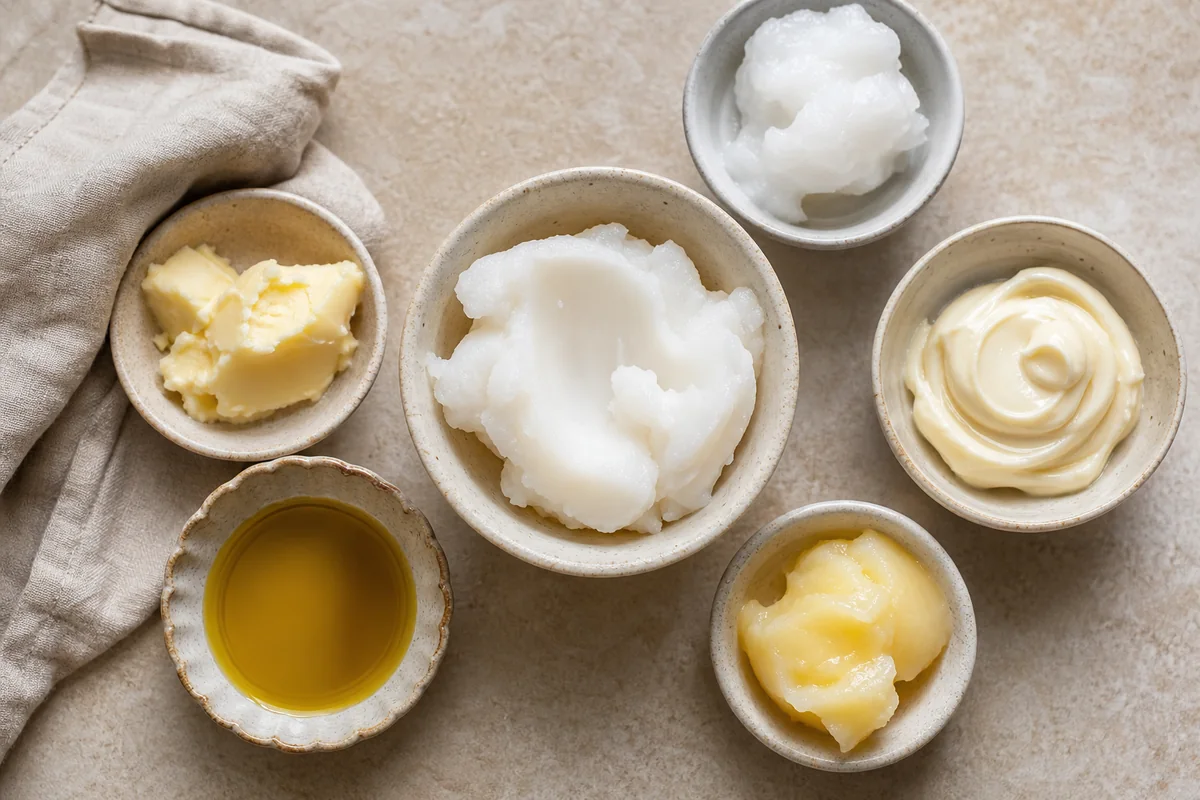
  • 1:1 Shortening (all-vegetable, solid) Closest flaky texture for pie crust and biscuits; keeps dough tender because it’s relatively neutral.
  • 1:1 Butter (unsalted, chilled; for baking only) Gives flavor and flakiness; use in pastry and biscuits where butter’s water won’t break structure too much.
Good Alternatives
  • 1:1 Coconut oil (refined; solid form) Comparable solid fat when chilled; can firm up quickly, which helps flaky dough if handled cold.
  • 1:1 Ghee (browned butter fat) Low-water option for cooking; slightly nutty flavor—best for savory baking and frying.
Emergency Swaps
  • ¾:1 Vegetable oil + butter (combo for softness) For pie crust/dough when you only have liquids; solidifies with butter for flake but may be less crisp.
  • 1:1 Duck fat (or chicken fat) Excellent frying substitute; richer flavor than lard, so it works best in savory recipes.

Equipment

  • measuring spoons/cup
  • Kitchen scale (recommended for baking swaps)
  • Small bowl for mixing fat (optional)
  • Plastic wrap for chilling dough (optional)

Method
 

  1. Identify your use case: flaky baking (pie crust/biscuits) vs. cooking/frying (browning and crisping).
  2. Choose the closest match from the table: shortening for texture, butter or ghee for flavor, coconut oil for a solid swap, and duck/chicken fat for savory frying.
  3. Apply the listed ratio (use weight for best consistency in baking).
  4. If your substitute is softer than lard (like butter-ghee blends), chill the dough 20–30 minutes before baking for cleaner layers.
  5. Taste and adjust: if flavor turns too rich or nutty, reduce the amount slightly next time or balance with salt/acid in the dough.
Notes

  • For baking, keep fat cold to preserve flake; for frying, choose a substitute that tolerates heat and browns well.
  • If the substitute contains more water than lard (notably butter), expect slightly less flake unless dough is handled cold.

Tried this recipe?

Let us know how it was!