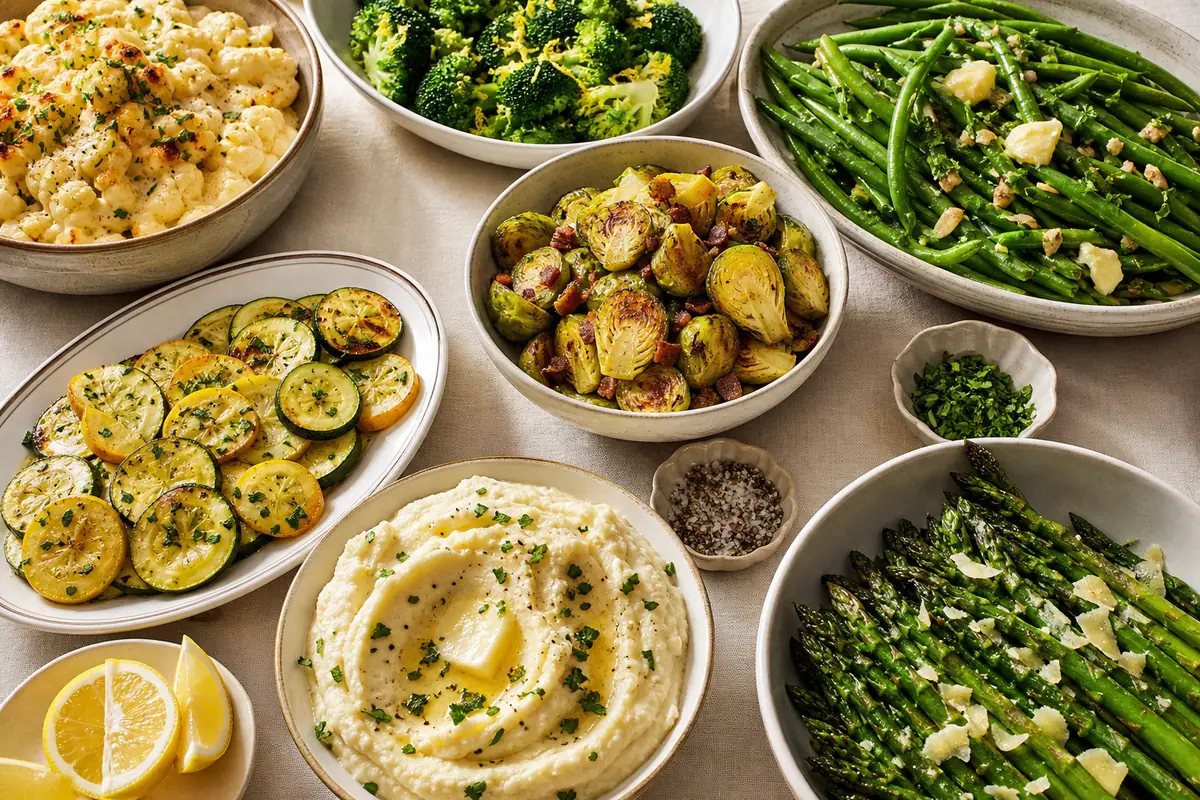
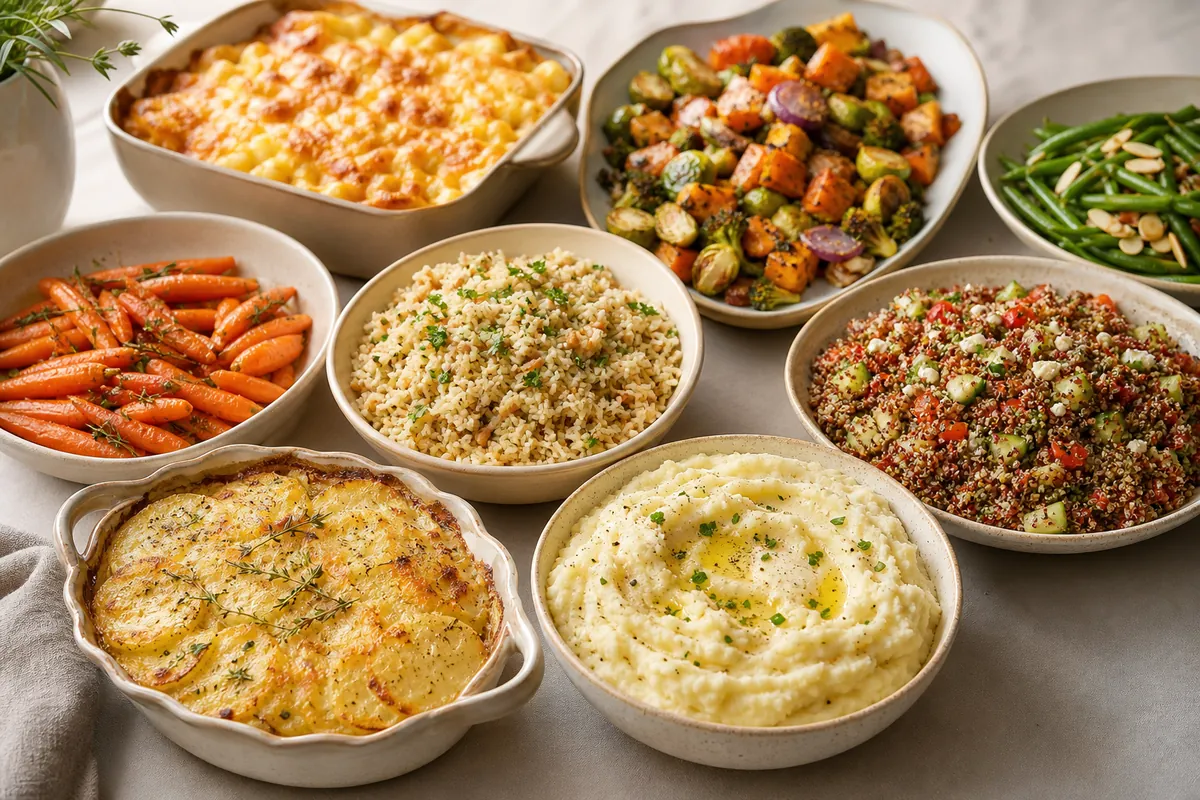
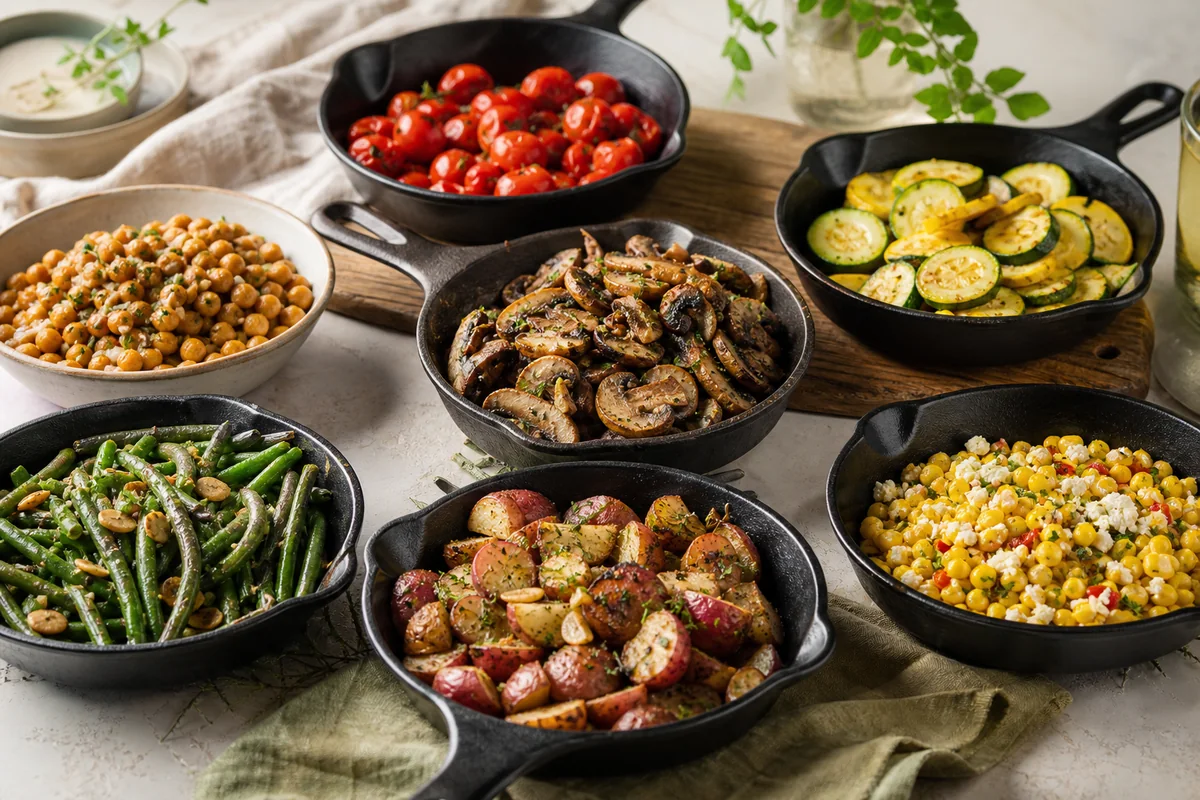
Mediterranean side dishes earn their place on the table the hard way: through honest ingredients, good olive oil, and flavors that hold up whether the food is warm off the grill or cold from the fridge.
This collection covers 20 recipes that span the full width of the Mediterranean, from the herb-heavy salads of Lebanon to the sweet-sour stews of Sicily and the smoky dips of the Levant.
You will find something for every occasion here. These Mediterranean veggie sides with garlic and herbs are built around the same pantry principles: lemon, olive oil, fresh herbs, and vegetables that actually taste like something.
Most of these recipes require minimal cooking, and several improve after a night in the fridge. That makes them practical for meal prep, weeknight dinners, and larger gatherings where you need food that travels well and looks good on a platter.
The Mediterranean diet consistently ranks among the most researched eating patterns in the world, with Harvard Health noting its documented benefits for cardiovascular health. These recipes reflect that approach naturally, relying on plant-forward ingredients rather than heavy sauces.
Each recipe includes notes on whether it works best cold, warm, or at room temperature, so you can plan your table without guessing. Twenty recipes is a lot of ground to cover, so the quick summary below will help you orient fast.
This collection of 20 Mediterranean side dishes spans salads, dips, grain dishes, and roasted vegetables. Every recipe uses olive oil, lemon, and fresh herbs as its backbone. Most can be made ahead and served cold, warm, or at room temperature, making them flexible for weeknight meals and larger gatherings alike.
1. Classic Tabbouleh
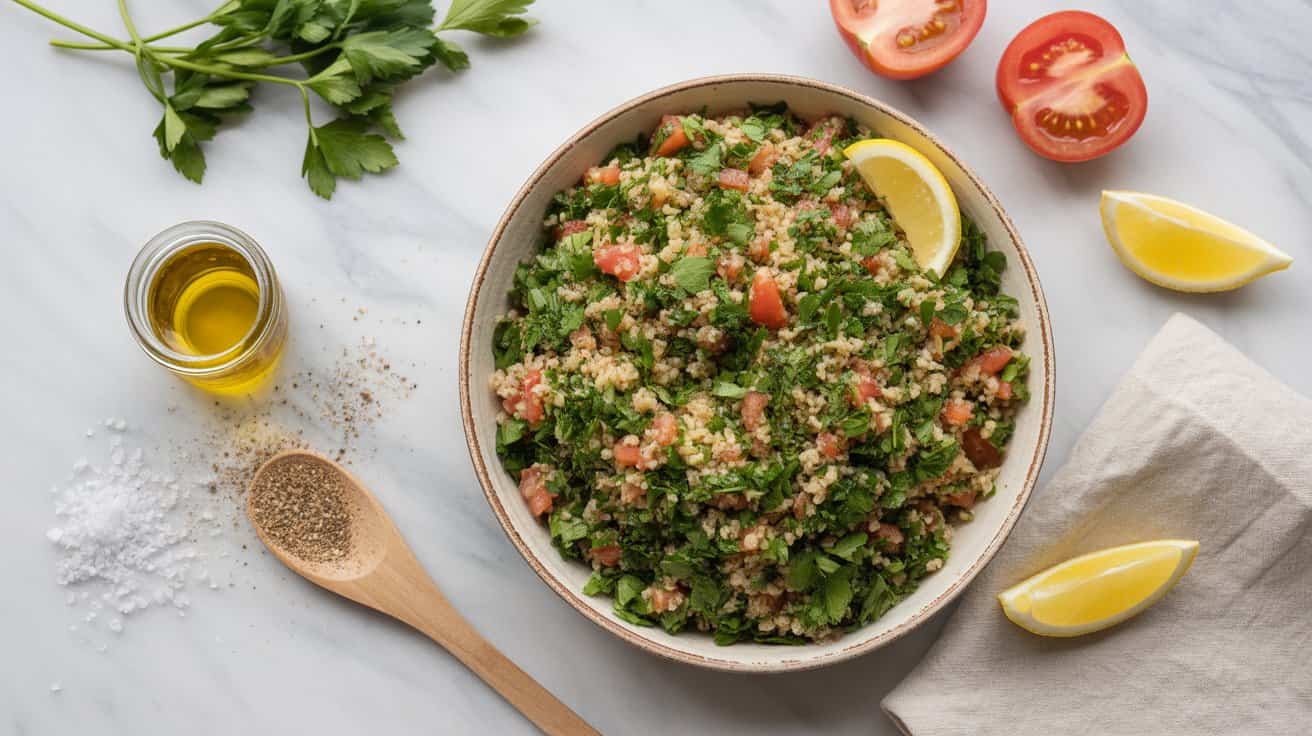
Classic tabbouleh is built almost entirely on flat-leaf parsley, with bulgur playing a supporting role rather than a starring one.
Finely chopped parsley, ripe tomatoes, cucumber, and mint come together with lemon juice and good olive oil to produce a salad that is bright, herby, and genuinely refreshing.
The key to great tabbouleh is patience. Let it rest for at least 20 minutes after dressing so the bulgur softens fully and the parsley absorbs the lemon oil.
It tastes noticeably better the next day, which makes it one of the most reliable make-ahead sides for entertaining.
Why This Recipe Works
Tabbouleh rewards minimal effort with maximum flavor, and it fits naturally into vegetarian and vegan menus without any modification.
- Convenience - Quick to make with simple ingredients and minimal cooking needed.
- Flavor balance - Bright citrus and fresh herbs mix with earthy bulgur and crisp vegetables.
- Texture - A crisp and chewy mix that adds a fresh contrast to any main dish.
- Appeal - Suitable for family meals and friendly for vegetarian or vegan diets.
Ingredient Swap Ideas
Swapping ingredients can help you tailor this salad to your dietary needs or what you have on hand, without losing its fresh character.
- Bulgur - Replace with quinoa or couscous if gluten-free or for a different texture.
- Parsley - Use cilantro or a combination of parsley and mint for a varied herbal flavor.
- Lemon juice - Lime juice can provide a slightly different but still fresh acidity.
- Cucumber - Replace with diced zucchini or bell pepper to change the crunch profile.
Ingredients
- ½ cup bulgur wheat - coarse or medium grind, well rinsed
- 2 medium tomatoes - diced
- 1 English cucumber - peeled and diced
- 1 bunch fresh parsley - finely chopped, about 2 cups packed
- ¼ cup fresh mint leaves - finely chopped
- 3 tablespoons fresh lemon juice - about 1 large lemon
- ¼ cup extra-virgin olive oil - good quality for flavor
- ½ teaspoon salt - adjust to taste
- ¼ teaspoon black pepper - freshly ground
Instructions
- Place the bulgur in a bowl and cover with boiling water by about an inch. Let it soak for 15 to 20 minutes, until softened but still slightly chewy. Drain any excess water through a fine mesh sieve and gently fluff with a fork.
- In a large mixing bowl, combine the chopped parsley, mint, diced tomatoes, and cucumber. Add the soaked bulgur and mix gently to combine all ingredients evenly.
- In a small bowl, whisk together the lemon juice, olive oil, salt, and pepper until well blended. Pour this dressing over the salad and toss gently to coat everything.
- Taste and adjust seasoning if needed. For best flavor, chill the tabbouleh for at least 30 minutes before serving to allow the ingredients to meld.
- Serve cold or at room temperature as a side dish or light meal accompaniment. It pairs well with grilled meats, roasted vegetables, or flatbreads.
2. Greek Orzo Salad with Feta & Olives
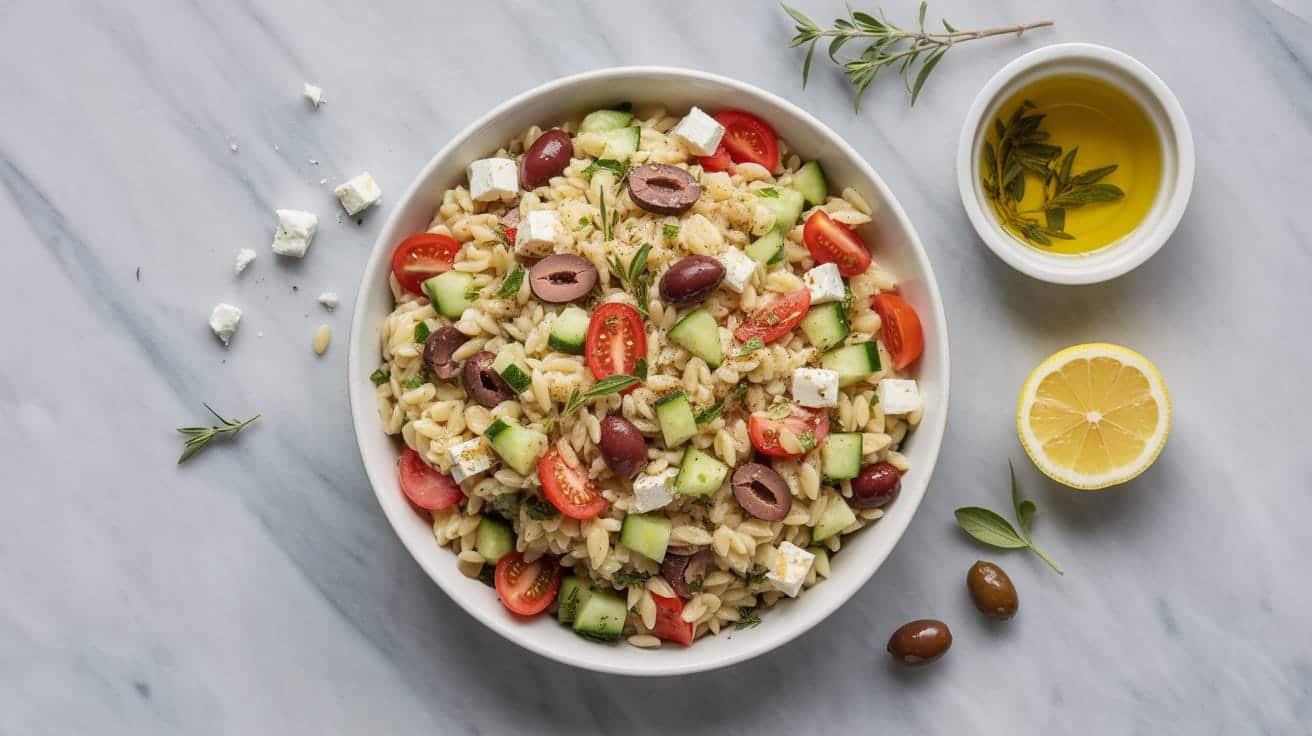
Greek orzo salad takes about 20 minutes to pull together, and it holds up well in the fridge for up to three days.
Tender orzo pairs with crumbled feta, kalamata olives, and thinly sliced red onion, all tossed in a sharp lemon-oregano vinaigrette that gets into every curve of the pasta.
This salad works equally well as a light main or a side next to grilled chicken or fish. The soft pasta, salty feta, and snappy onion give you three distinct textures in a single bowl, which is part of why it disappears fast at gatherings.
If you enjoy grain-forward sides, our roundup of lentil side dishes covers similarly satisfying options.
Why This Recipe Works
This salad is reliable precisely because it is unfussy. The ingredients are easy to source, the assembly is fast, and it serves well at any temperature.
- Convenience - Quick to prepare and can be made ahead of time, making it ideal for meal prep or entertaining.
- Flavor balance - Bright lemon and oregano contrast nicely with the creamy feta and tangy olives.
- Texture variety - Smooth orzo, crumbly cheese, and crisp onion deliver an enjoyable mix of mouthfeel.
- Versatility - Suitable for serving cold or at room temperature, perfect for different occasions and preferences.
Ingredient Swap Ideas
Swapping ingredients in this salad can adjust flavors or meet dietary needs without losing its core character.
- Pasta alternatives - Use gluten-free orzo or small pasta shapes to make it suitable for gluten-sensitive diets.
- Cheese substitutes - Swap feta with a vegan cheese or omit it completely for a dairy-free option.
- Olives - Use green olives or Castelvetrano instead of kalamata for a milder taste.
- Herbs - Fresh dill or mint can replace oregano for a slightly different herbal note.
Ingredients
- 1 ½ cups orzo pasta - Small, rice-shaped pasta, cooked according to package directions.
- ¾ cup crumbled feta cheese - Adds creamy, salty flavor to the salad.
- ½ cup kalamata olives - Pitted and halved for a briny bite.
- ⅓ cup red onion - Thinly sliced for a sharp, crunchy contrast.
- ¼ cup fresh parsley - Chopped to add fresh herbal notes.
- Juice of 1 lemon - Provides bright acidity in the dressing.
- 3 tablespoons extra-virgin olive oil - Adds richness and smoothness.
- 1 teaspoon dried oregano - Traditional herb to enhance Mediterranean flavor.
- Salt and black pepper - To taste, for seasoning.
Instructions
- Cook the orzo pasta according to package instructions until al dente. Drain and rinse under cold water to stop cooking and cool the pasta. Set aside.
- In a large bowl, whisk together lemon juice, olive oil, oregano, salt, and black pepper to create the dressing.
- Add the cooked orzo, crumbled feta, kalamata olives, sliced red onion, and chopped parsley to the bowl with the dressing. Toss gently to combine all the ingredients evenly.
- Adjust seasoning by adding more salt, pepper, or lemon juice if desired. Chill the salad in the fridge for at least 30 minutes or serve immediately at room temperature.
- Serve as a refreshing side dish or a light main, garnished with extra parsley or a sprinkle of feta if you like.
3. Warm Grilled Halloumi & Veggie Platter
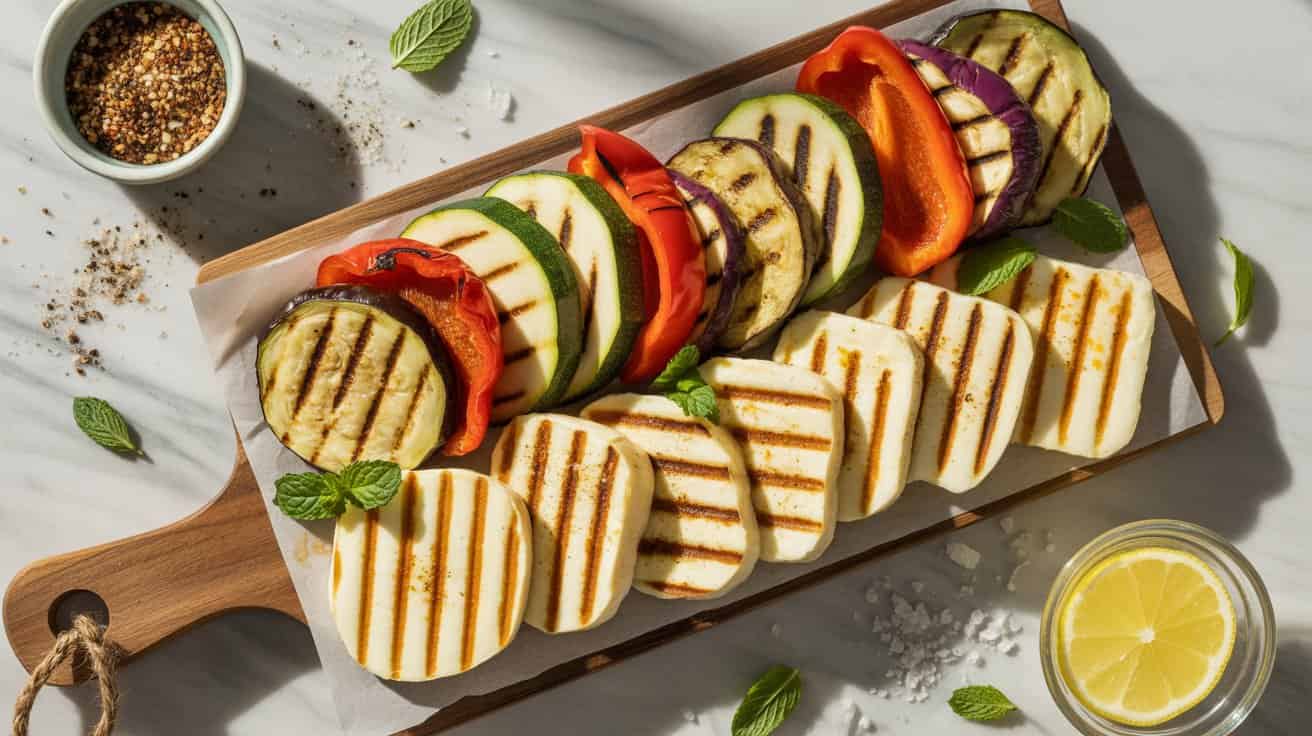
Halloumi has a high melting point, which is what makes it ideal for grilling. It develops a deep golden crust on the outside while the inside stays firm and creamy, rather than collapsing into the grill grates the way softer cheeses would.
This platter pairs halloumi with zucchini, eggplant, and bell peppers, all grilled until tender and slightly charred. Serve it straight off the grill for a warm, satisfying spread, or let it cool to room temperature for a platter that works well for casual entertaining.
For more ideas built around charred vegetables, our golden roasted vegetable sides are worth bookmarking.
Why This Recipe Works
Grilling does most of the flavor work here. The combination of salty cheese and smoky vegetables needs very little else to be genuinely good.
- Convenience - Quick grilling requires minimal hands-on time and simple prep.
- Flavor balance - The salty, firm halloumi contrasts nicely with the sweet, smoky vegetables.
- Texture - Crispy edges on the cheese and tender, juicy vegetables create wonderful mouthfeel.
- Appeal - A colorful platter that is great for sharing or pairing with other dishes.
Ingredient Swap Ideas
Swapping ingredients here can customize the platter to suit dietary preferences or add new flavor dimensions without losing its essence.
- Halloumi cheese - Try feta or paneer for different textures and flavor profiles while maintaining the grill-ready quality.
- Zucchini - Use yellow squash as an alternative for a slightly sweeter flavor and similar grilling results.
- Eggplant - Replace with portobello mushrooms for a meaty texture and earthy taste.
- Bell peppers - Try roasting cherry tomatoes or asparagus for variety in sweetness and crunch.
Ingredients
- 8 ounces halloumi cheese - cut into ½-inch thick slices.
- 1 medium zucchini - sliced lengthwise into ¼-inch strips.
- 1 small eggplant - cut into ½-inch thick rounds or lengthwise strips.
- 2 medium bell peppers - any color, seeded and quartered.
- 2 tablespoons olive oil - for brushing vegetables and cheese.
- 1 teaspoon smoked paprika - to lightly season the vegetables.
- ½ teaspoon salt - to enhance flavor.
- ¼ teaspoon freshly ground black pepper - for subtle heat.
- 1 tablespoon fresh lemon juice - to drizzle before serving.
- Fresh herbs - such as parsley or mint, chopped for garnish (optional).
Instructions
- Preheat your grill or grill pan to medium-high heat. Brush halloumi slices and prepared vegetables lightly with olive oil on both sides. Season vegetables with salt, black pepper, and smoked paprika.
- Place halloumi and vegetables on the grill. Cook halloumi for about 2-3 minutes per side until grill marks appear and cheese is golden but still firm. Grill vegetables until tender and lightly charred, about 3-5 minutes per side depending on thickness.
- Remove all items from the grill and arrange attractively on a serving platter. Drizzle with fresh lemon juice and scatter chopped herbs over the top if using.
- Serve immediately while warm, or allow the platter to come to room temperature before serving for a casual presentation. This dish pairs well with crusty bread or a fresh salad.
4. Marinated Feta & Mixed Olives
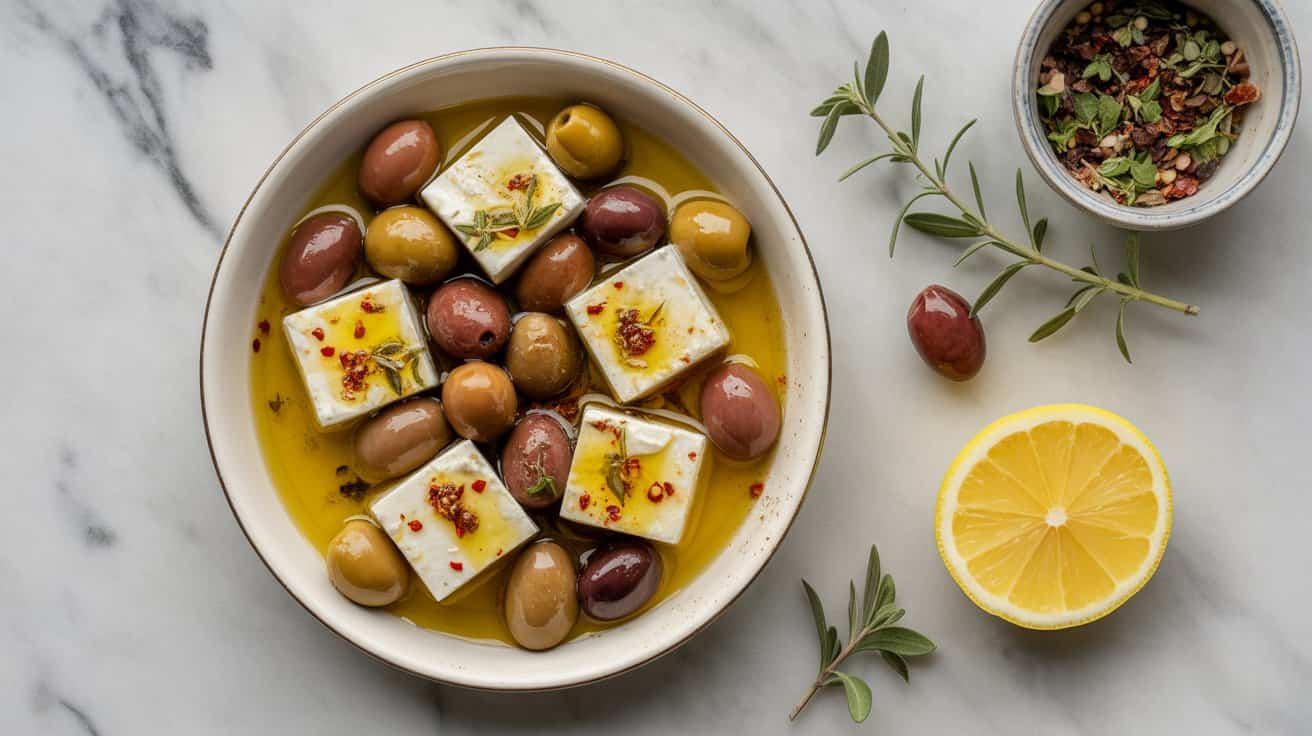
This is one of those recipes that requires almost no effort and looks far more impressive than it has any right to. Cubed feta, mixed olives, and sun-dried tomatoes sit in a jar of olive oil infused with dried oregano, chili flakes, and lemon zest.
Two hours of marinating transforms the feta from sharp and salty into something softer and more complex.
Pull it straight from the fridge for a quick snack, or let it come to room temperature for 15 minutes before serving. The infused oil doubles as a dipping sauce for bread, so nothing goes to waste.
It pairs well with easy-to-make bread sides that come together in under an hour.
Why This Recipe Works
The brilliance here is in the ratio: enough olive oil to coat everything, enough herbs to perfume it, and enough time to let the feta absorb the flavors without losing its structure.
- Convenience - Easy to assemble in minutes with no cooking required.
- Flavor balance - Combines creamy, salty, tangy, and herbaceous tastes.
- Texture contrast - Soft feta cubes paired with firm olives and chewy sun-dried tomatoes.
- Versatility - Great for entertaining, snacking, or adding to salads and charcuterie boards.
Ingredient Swap Ideas
Adjusting this recipe to suit personal preferences or dietary requirements is straightforward and maintains its Mediterranean essence. Swapping a few ingredients can cater to different tastes without losing the core flavor.
- Feta cheese - Use halloumi or a firm mozzarella for a different twist on texture and flavor.
- Mixed olives - Choose your favorite varieties like Kalamata, Castelvetrano, or green olives to customize the brine intensity.
- Sun-dried tomatoes - Substitute with roasted red peppers or chopped artichoke hearts for a milder, sweeter taste.
- Herbs and oil - Try fresh basil or rosemary and use avocado oil if you prefer a lighter flavor than olive oil.
Ingredients
- 1 cup feta cheese - cut into bite-sized cubes for easy serving.
- 1 cup mixed olives - assorted varieties, pitted or unpitted based on preference.
- ¼ cup sun-dried tomatoes - chopped, preferably packed in oil for extra richness.
- ¼ cup extra-virgin olive oil - good quality for flavor and marinade.
- 1 tablespoon fresh oregano - finely chopped, or 1 teaspoon dried oregano.
- 1 tablespoon fresh thyme - chopped, optional but adds bright herbal notes.
- 1 clove garlic - minced, adds a sharp bite to the marinade.
- ½ teaspoon crushed red pepper flakes - optional, for a little heat.
- Freshly ground black pepper - to taste.
Instructions
- Place the feta cubes, mixed olives, and chopped sun-dried tomatoes into a medium bowl.
- Add the minced garlic, fresh oregano, thyme, and crushed red pepper flakes to the bowl.
- Pour the extra-virgin olive oil over the ingredients, making sure everything is well-coated.
- Gently toss the mixture to combine all flavors, being careful not to break up the feta cubes.
- Cover and refrigerate for at least 2 hours, or overnight if possible, to let the flavors meld together.
- Before serving, let the marinated feta and olives come to room temperature for the best texture and flavor experience.
This dish keeps well for up to 5 days refrigerated, so it's a handy make-ahead option for gatherings or an easy addition to any meal.
5. Smoky Baba Ganoush
The defining characteristic of good baba ganoush is smoke, and you only get it by charring the eggplant directly over a gas flame or under a very hot broiler until the skin is completely blackened.
That char infuses the flesh with a depth that no amount of spice can replicate.
Once roasted and peeled, the eggplant gets blended with tahini, lemon juice, garlic, and a pinch of cumin. The result is a silky, slightly tangy dip that pairs naturally with warm pita, raw vegetables, or grilled meats.
It keeps well in the fridge for up to four days, making it a solid option for weekly meal prep.
Char the eggplant until the skin is fully blackened on all sides. Stopping early produces a dip that tastes steamed rather than smoky.
Why This Recipe Works
Roasting over an open flame takes about 15 minutes and requires no special equipment beyond a gas burner or broiler. The payoff in flavor is significant.
- Convenience - Roasting the eggplants directly on the flame develops flavor quickly with minimal hands-on time.
- Flavor balance - Lemon juice and garlic add bright, fresh notes that complement the smoky eggplant and creamy tahini.
- Texture - The silky smooth purée contrasts nicely with the slight char from roasting, making every bite interesting.
- Appeal - This dip suits vegetarian and vegan diets while also working well as a shareable appetizer.
Ingredient Swap Ideas
Adjusting ingredients offers options for different dietary needs or flavor preferences while keeping the base recipe satisfying. These swaps help you customize the dip without losing its essence.
- Tahini alternative - Use almond butter or cashew butter to change the nutty backdrop or avoid sesame allergies.
- Citrus swap - Replace lemon juice with lime juice for a slightly different tangy profile.
- Heat level - Add a pinch of smoked paprika or a small amount of chili flakes for a smoky heat boost.
- Fresh herbs - Stir in chopped parsley, cilantro, or mint for a fresh herbal lift.
Ingredients
- 2 large eggplants - Whole, washed and dried for roasting.
- 3 tablespoons tahini - Sesame seed paste that adds creaminess and nuttiness.
- 2 cloves garlic - Minced, to bring pungent depth.
- 3 tablespoons fresh lemon juice - For acidity and brightness.
- 2 tablespoons extra-virgin olive oil - Plus extra for drizzling when serving.
- ½ teaspoon ground cumin - Adds a warm, earthy note.
- Salt - To taste, enhancing all flavors.
- Freshly ground black pepper - To taste, for subtle heat.
- Fresh parsley - Finely chopped, for garnish (optional).
Instructions
- Preheat your oven to 450°F (230°C). Prick the eggplants a few times with a fork to prevent bursting. Place them on a baking sheet and roast for about 35-40 minutes, turning occasionally, until the skin is charred and the flesh is very soft. Alternatively, roast them directly over a flame on a gas stove or grill for an extra smoky flavor.
- Remove the eggplants from the oven and let them cool slightly. Cut them open and scoop out the soft flesh into a bowl, discarding the skin. Drain any excess liquid to avoid a runny dip.
- Add the tahini, minced garlic, lemon juice, olive oil, ground cumin, salt, and pepper to the eggplant flesh. Mix or blend using a food processor until smooth and creamy but still textured slightly. Adjust seasoning as needed.
- Transfer the baba ganoush to a serving dish. Make a shallow well in the center and drizzle with a little olive oil. Garnish with chopped parsley if using.
- Serve the dip cold or at room temperature with warm pita bread, vegetable sticks, or as part of a mezze platter.
This smoky baba ganoush makes a simple yet flavorful addition to your meal rotation, offering both familiar comfort and a touch of exotic flair.
6. Red Pepper & Walnut Muhammara
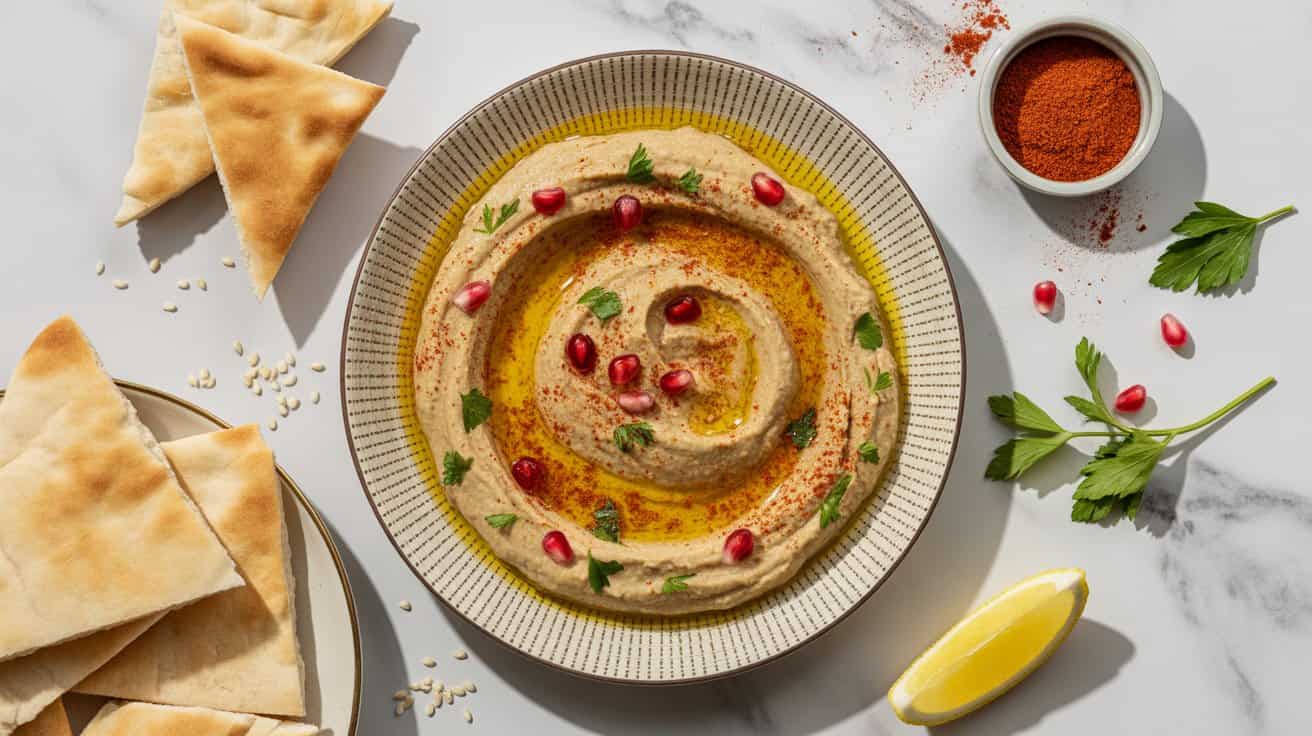
Muhammara is a Syrian dip that most people outside the region have not tried, which makes it a genuinely interesting addition to a mezze spread.
Roasted red peppers and toasted walnuts are blended with pomegranate molasses, Aleppo pepper, and a splash of olive oil into a thick, rust-colored dip with a sweet-smoky-tangy profile.
The pomegranate molasses is non-negotiable here. It provides a tartness that balances the natural sweetness of the peppers and prevents the dip from tasting flat.
Serve it with warm flatbread or alongside grilled lamb for a pairing that makes sense immediately. Our guide to high-fiber sides that actually taste good includes other dip-adjacent options worth trying.
Why This Recipe Works
The combination of roasted peppers and toasted walnuts gives this dip both body and depth without requiring any dairy or long cooking times.
- Convenience - Roasting peppers and blending ingredients is straightforward and quick.
- Flavor balance - Combines sweetness from peppers and pomegranate molasses with a savory, nutty undertone from walnuts.
- Texture - Smooth yet slightly coarse texture from ground walnuts creates a satisfying bite.
- Versatility - Delicious served cold or warm alongside bread, vegetables, or grilled meats.
Ingredient Swap Ideas
Making swaps allows you to tailor the dip to your preferences or dietary needs without losing its core character.
- Walnuts - Substitute with almonds or pecans for a different nutty flavor and texture.
- Pomegranate molasses - Use a combination of balsamic vinegar and honey if you don't have molasses on hand.
- Bread crumbs - Gluten-free breadcrumbs or crushed gluten-free crackers work well for those avoiding gluten.
- Spices - Add a pinch of smoked paprika instead of cayenne for a milder smoky heat.
Ingredients
- 3 large red bell peppers - roasted, skins removed, and roughly chopped.
- 1 cup walnuts - toasted lightly to bring out their flavor.
- ¼ cup breadcrumbs - plain or gluten-free depending on preference.
- 3 tablespoons pomegranate molasses - adds a sweet-tart depth.
- 1 clove garlic - minced for a fresh bite.
- 2 tablespoons lemon juice - to brighten the dip.
- 1 teaspoon ground cumin - for warm spice notes.
- ¼ teaspoon cayenne pepper - for gentle heat (adjust to taste).
- ½ teaspoon salt - to balance flavors.
- 3 tablespoons extra virgin olive oil - stirred in for richness and smooth texture.
Instructions
- Roast the red peppers over an open flame or under a broiler until the skins are blackened and blistered. Place them in a covered bowl to steam for 10 minutes, then peel off the skins, remove seeds, and chop roughly.
- Toast the walnuts in a dry skillet over medium heat for about 5 minutes, stirring frequently until fragrant and lightly browned. Let cool.
- In a food processor, combine the roasted peppers, toasted walnuts, breadcrumbs, garlic, pomegranate molasses, lemon juice, cumin, cayenne, and salt. Pulse until the mixture reaches a coarse but spreadable consistency.
- With the processor running, slowly add the olive oil until fully incorporated and the muhammara is smooth yet textured. Taste and adjust seasoning if needed.
- Transfer to a serving bowl and chill for at least 30 minutes to meld the flavors, or warm gently before serving as a cozy appetizer.
This Red Pepper & Walnut Muhammara pairs beautifully with fresh pita, crisp vegetables, or grilled meats, making it a flexible addition to your meal plans.
7. Lebanese Fattoush Salad
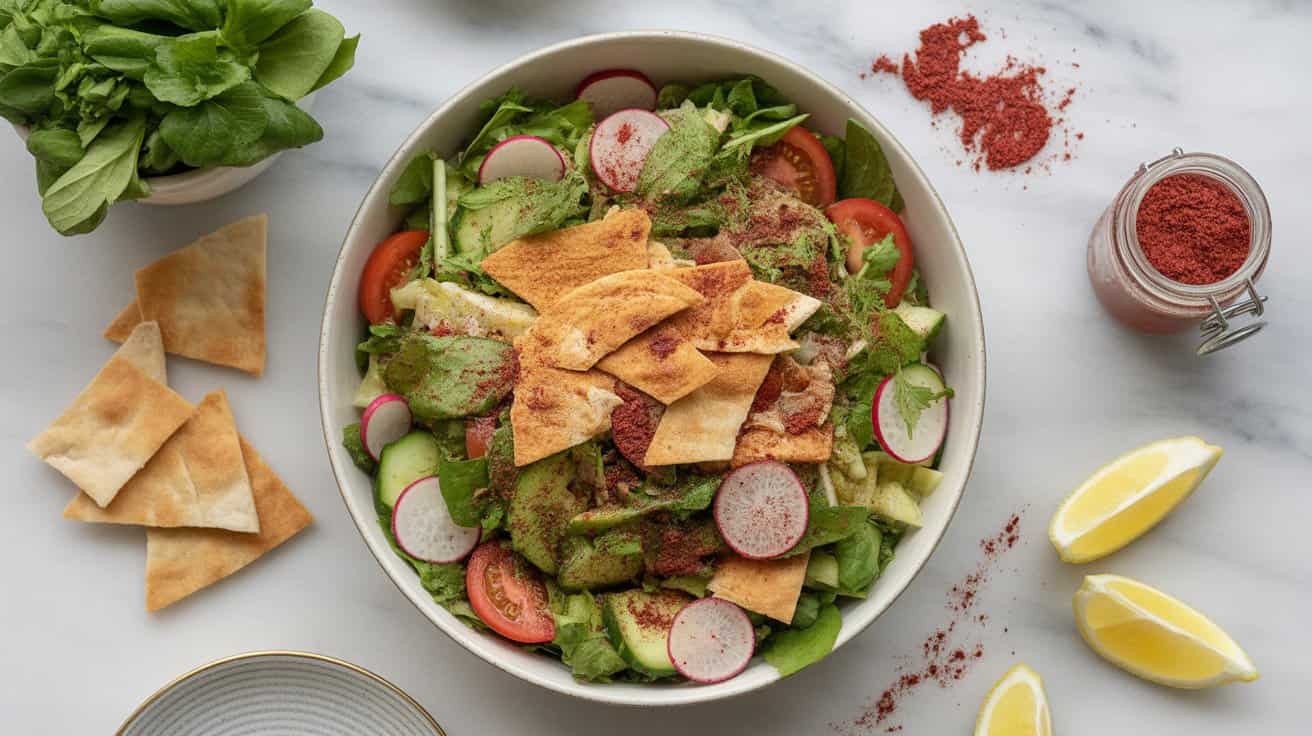
Fattoush is a Lebanese bread salad built around toasted or fried pita pieces that absorb the dressing without going completely soggy. The vegetables, typically torn lettuce, cucumber, tomatoes, and thinly sliced radish, stay crisp while the pita provides a satisfying crunch throughout.
What separates fattoush from other salads is sumac, a ground dried berry with a tart, fruity acidity. It goes into the dressing and sometimes gets sprinkled on top at the end.
The sourness it adds is distinct from lemon, and it is the flavor that makes the salad taste specifically Lebanese. Dress the salad right before serving to keep the pita from softening too much.
Why This Recipe Works
Sumac in the dressing does the heavy lifting here. It gives the salad a sharp, identifiable flavor that holds up against the crunchy pita and fresh vegetables.
- Convenience - Quick to assemble with simple, fresh ingredients that do not require much prep.
- Flavor balance - The zesty sumac dressing adds a bright, tangy note that ties the salad together.
- Texture - Crunchy pita contrasts beautifully with crisp vegetables and lettuce.
- Appeal - A vibrant, healthy option suitable for everyday meals or casual gatherings.
Ingredient Swap Ideas
Adjusting ingredients can help suit different dietary preferences or what you have on hand without losing the essence of this salad.
- Pita bread - Swap regular pita for gluten-free pita or omit completely for a grain-free version.
- Sumac - Substitute with lemon zest and a pinch of smoked paprika to mimic the tangy, slightly smoky flavor.
- Lettuce - Use arugula or mixed greens instead of romaine for a pepperier taste.
- Vegetables - Add bell peppers or omit radishes if you prefer a milder crunch.
Ingredients
- 2 to 3 pita breads - toasted and broken into bite-sized pieces.
- 4 cups torn romaine lettuce - washed and dried well.
- 1 medium cucumber - diced or sliced into half-moons.
- 2 medium tomatoes - diced into bite-sized chunks.
- 4 to 5 radishes - thinly sliced.
- 1 small red onion - thinly sliced (optional).
For the vinaigrette:
- 3 tablespoons extra-virgin olive oil - for a smooth, rich base.
- 2 tablespoons lemon juice - freshly squeezed for bright acidity.
- 1 teaspoon ground sumac - essential for authentic sharpness and color.
- 1 garlic clove - finely minced.
- ½ teaspoon salt - adjust to taste.
- ¼ teaspoon black pepper - freshly ground.
Instructions
- Toast pita bread pieces in the oven or a dry skillet until they are golden and crisp. Set aside to cool.
- In a large bowl, combine torn lettuce, cucumber, tomatoes, radishes, and red onion if using.
- In a separate small bowl, whisk together olive oil, lemon juice, sumac, minced garlic, salt, and pepper until well combined.
- Pour the vinaigrette over the salad ingredients and toss gently to coat everything evenly.
- Add the toasted pita pieces on top and toss briefly again. Serve immediately to keep the pita crisp, or let the salad sit a few minutes for the flavors to develop but beware the pita might soften.
8. Stuffed Grape Leaves (Dolmades)
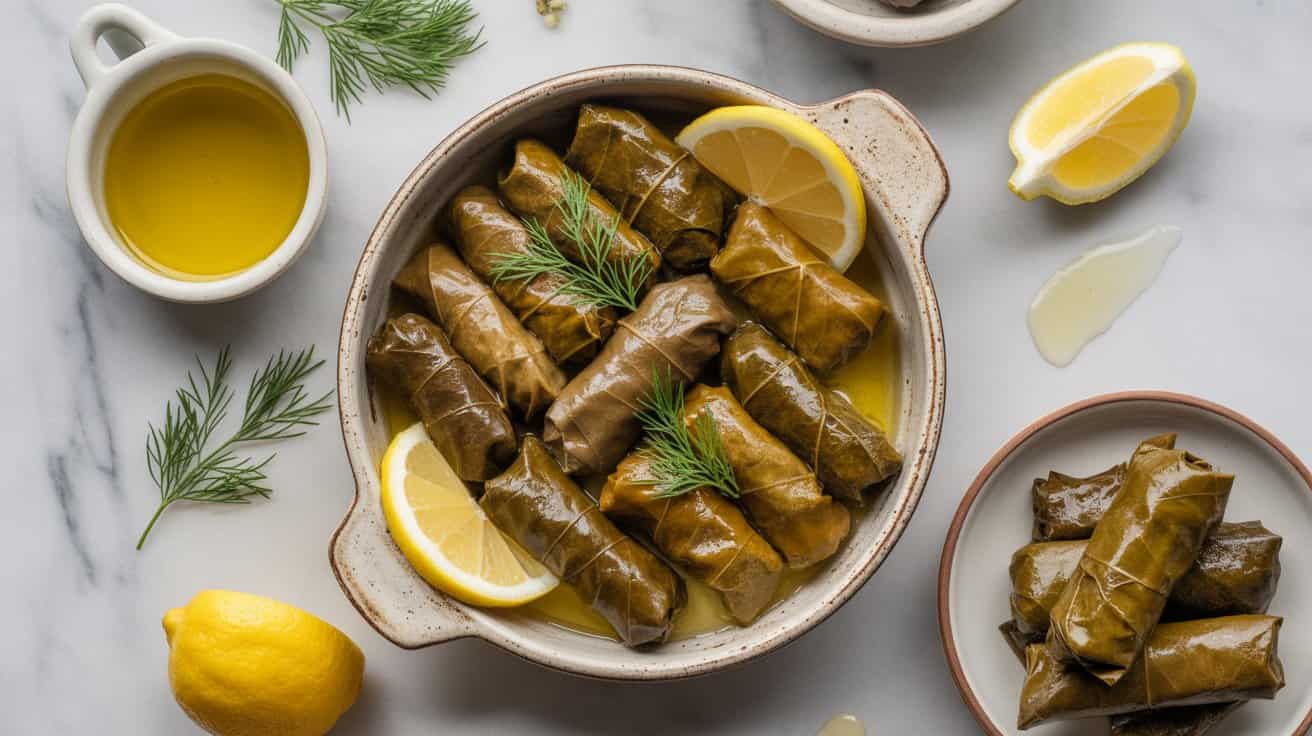
Dolmades take a little time to roll, but the process is methodical rather than difficult.
The filling is a mixture of short-grain rice, fresh herbs like dill and mint, toasted pine nuts, and lemon zest, all rolled tightly into brined grape leaves and then simmered in a lemon-olive oil broth until tender.
The brining liquid from jarred grape leaves is quite salty, so rinse the leaves well before using them. Dolmades are traditionally served cold or at room temperature with a wedge of lemon.
They keep in the fridge for up to five days, which makes them one of the better options for preparing ahead of a large gathering. Check out our collection of classic comfort-style side dishes if you need ideas for a more mixed spread.
Why This Recipe Works
The combination of lemon-braised rice, pine nuts, and fresh herbs inside tender grape leaves produces a side dish that is satisfying without being heavy.
- Convenience - You can prepare dolmades in advance and serve them cold or gently warmed.
- Flavor balance - The blend of lemon, herbs, and pine nuts creates brightness alongside subtle earthiness.
- Texture - The combination of tender rice and pliable grape leaves provides a pleasant mouthfeel.
- Appeal - These are a crowd-pleasing appetizer with an elegant look and versatile serving options.
Ingredient Swap Ideas
Adjusting a few ingredients helps tailor the dish for different preferences or diets without losing its essence.
- Rice - Use brown rice or quinoa instead of white rice for a nuttier texture and added fiber.
- Pine nuts - Substitute toasted slivered almonds or walnuts to vary the nutty flavor.
- Herbs - Swap fresh dill and mint for parsley and cilantro for a different herbal touch.
- Grape leaves - If fresh grape leaves aren't available, jarred ones work well after rinsing to remove brine.
Ingredients
- 40 grape leaves - fresh or jarred, rinsed if jarred and drained well.
- 1 cup long-grain white rice - rinsed and drained.
- ¼ cup pine nuts - toasted lightly to enhance flavor.
- 1 medium onion - finely chopped.
- 2 tablespoons fresh dill - chopped.
- 2 tablespoons fresh mint - chopped.
- ¼ cup fresh parsley - chopped.
- Juice of 2 lemons - plus extra for serving if desired.
- ¼ cup olive oil - plus more for drizzling.
- 1 teaspoon salt
- ½ teaspoon black pepper
- 1 ½ cups vegetable broth or water
Instructions
- Place the grape leaves in a large bowl with hot water to soften for about 10 minutes if fresh. Drain and pat dry.
- Heat 2 tablespoons of olive oil in a skillet over medium heat. Sauté the chopped onion until soft, about 5 minutes. Add the rice and pine nuts, stirring to coat for 2 minutes.
- Pour in 1 cup of vegetable broth and lemon juice, season with salt and pepper, then cook on low heat until the rice absorbs the liquid but remains undercooked, about 10 minutes. Remove from heat and stir in the fresh herbs. Allow the filling to cool.
- Lay a grape leaf flat, vein side up, with the stem end towards you. Place about 1 tablespoon of filling near the stem, fold the sides over, then roll tightly from the stem end to enclose the filling. Repeat with remaining leaves.
- Arrange the stuffed leaves seam side down in a single layer in a wide pot. Drizzle with remaining olive oil and pour ½ cup vegetable broth over them. Place a heatproof plate on top to keep them from unrolling. Cover and simmer gently for 40-45 minutes until the leaves are tender and rice fully cooked. Let cool slightly before serving warm or cold with lemon wedges.
9. Mini Spinach & Feta Spanakopita

Spanakopita triangles are one of those things that always get eaten first at a party.
The filling is straightforward: wilted spinach, crumbled feta, eggs, and fresh dill, wrapped in layers of buttered phyllo and baked at 375°F for about 25 minutes until deeply golden and shatteringly crisp.
Phyllo dries out fast, so keep unused sheets covered with a damp towel as you work. The filling can be made a day ahead and refrigerated, which cuts down significantly on day-of prep time.
These are also good at room temperature, so you do not need to worry about serving them piping hot.
Why This Recipe Works
Preparing the filling in advance and assembling just before baking makes this a much more manageable recipe for busy households or pre-event prep.
- Convenience - Prepare the filling ahead and assemble just before baking for quick cooking.
- Flavor balance - Combines fresh spinach, salty feta, and aromatic dill in each bite.
- Texture - Crisp, buttery phyllo layers contrasting with a creamy, soft interior.
- Appeal - Perfectly portioned and elegant enough for entertaining or everyday treats.
Ingredient Swap Ideas
Swapping ingredients can adjust the recipe to suit dietary preferences or what you have on hand, without losing its essential character.
- Feta cheese - Substitute with ricotta mixed with a bit of grated Parmesan for a milder, creamier filling.
- Spinach - Use kale or Swiss chard instead, just be sure to cook and drain them well to avoid excess moisture.
- Phyllo dough - Use puff pastry for a richer, thicker crust if preferred.
- Fresh dill - Replace with fresh parsley or mint for a different herb note.
Ingredients
- 10 sheets phyllo pastry - thawed according to package instructions and kept covered with a damp towel.
- 1 tablespoon olive oil - for brushing the phyllo layers.
- 1 pound fresh spinach - washed, trimmed, and roughly chopped.
- 8 ounces feta cheese - crumbled.
- ½ cup onion - finely chopped.
- 2 cloves garlic - minced.
- ¼ cup fresh dill - chopped.
- 2 large eggs - beaten.
- Salt and black pepper - to taste.
- 2 tablespoons olive oil - for sautéing.
Instructions
- Preheat your oven to 375°F (190°C). Heat 2 tablespoons of olive oil in a large skillet over medium heat. Add the chopped onion and cook until soft, about 5 minutes. Stir in the garlic and cook for another minute.
- Add the chopped spinach to the skillet and cook until wilted and moisture evaporates, 5 to 7 minutes. Remove from heat and let cool slightly.
- In a large bowl, mix the cooked spinach and onion mixture with crumbled feta, chopped dill, and beaten eggs. Season with salt and pepper.
- Lay one sheet of phyllo on a clean surface and brush lightly with olive oil. Place another sheet on top and brush again. Cut the layered phyllo into 3 to 4 strips. Place a spoonful of filling at one end of each strip and fold the strip over itself diagonally to form a triangle. Continue folding like a flag until you reach the end of the strip. Repeat with remaining phyllo sheets and filling.
- Place the triangles on a baking sheet lined with parchment paper. Brush the tops with olive oil and bake for 20 to 25 minutes, or until golden and crisp. Serve warm or at room temperature.
10. Patatas Bravas with Harissa Aioli
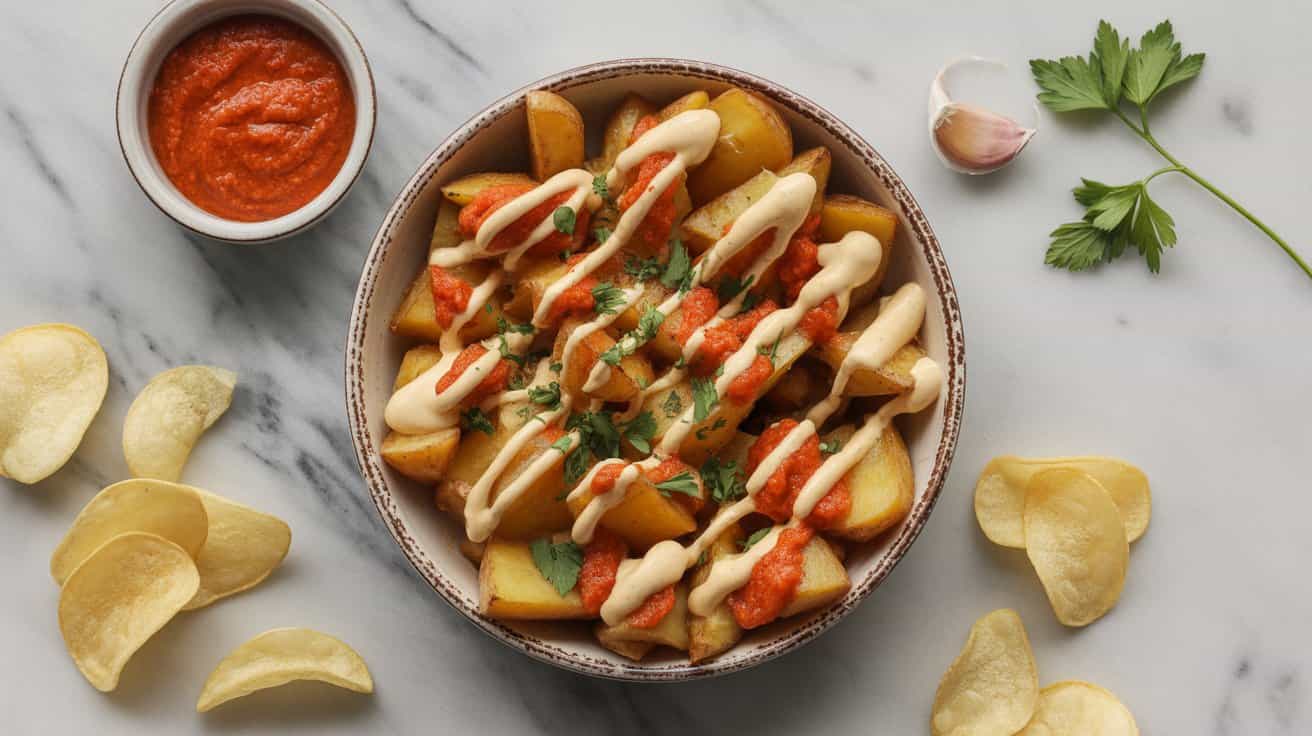
Patatas bravas are a Spanish tapa staple, and this version swaps the traditional alioli for a harissa-spiked version that adds heat and a faint smokiness to every bite.
The potatoes are roasted rather than deep-fried, which keeps them lighter without sacrificing the crispy exterior that makes them worth eating.
Roast the potatoes at 425°F and do not crowd the pan. Overcrowding steams them instead of crisping them, and you end up with soft cubes instead of golden ones.
For a wider look at potato-based sides, our guide to satisfying potato side dish ideas covers everything from mashed to roasted formats.
Do not overcrowd the roasting pan. Potatoes need space around them to roast properly. Use two pans if necessary, otherwise they steam and stay soft.
Why This Recipe Works
Roasting at high heat produces a crispy crust that holds up under the harissa aioli without going soggy. That textural contrast is the point of the dish.
- Convenience - Roasting the potatoes is simple and hands-off, freeing you up to prepare the sauce and aioli without rushing.
- Flavor balance - The smoky tomato sauce paired with the spicy, creamy harissa aioli creates a lively contrast that is both rich and bright.
- Texture - Crispy on the outside and tender inside, the potatoes hold up well whether served hot or at room temperature.
- Appeal - This dish is a crowd-pleaser with minimal fuss, ideal for sharing at gatherings or a flavorful weeknight treat.
Ingredient Swap Ideas
Swapping ingredients can help you tailor this salad to your dietary needs or what you have on hand, without losing its fresh character.
- Bulgur - Replace with quinoa or couscous if gluten-free or for a different texture.
- Parsley - Use cilantro or a combination of parsley and mint for a varied herbal flavor.
- Lemon juice - Lime juice can provide a slightly different but still fresh acidity.
- Cucumber - Replace with diced zucchini or bell pepper to change the crunch profile.
Ingredients
- ½ cup bulgur wheat - coarse or medium grind, well rinsed
- 2 medium tomatoes - diced
- 1 English cucumber - peeled and diced
- 1 bunch fresh parsley - finely chopped, about 2 cups packed
- ¼ cup fresh mint leaves - finely chopped
- 3 tablespoons fresh lemon juice - about 1 large lemon
- ¼ cup extra-virgin olive oil - good quality for flavor
- ½ teaspoon salt - adjust to taste
- ¼ teaspoon black pepper - freshly ground
Instructions
- Place the bulgur in a bowl and cover with boiling water by about an inch. Let it soak for 15 to 20 minutes, until softened but still slightly chewy. Drain any excess water through a fine mesh sieve and gently fluff with a fork.
- In a large mixing bowl, combine the chopped parsley, mint, diced tomatoes, and cucumber. Add the soaked bulgur and mix gently to combine all ingredients evenly.
- In a small bowl, whisk together the lemon juice, olive oil, salt, and pepper until well blended. Pour this dressing over the salad and toss gently to coat everything.
- Taste and adjust seasoning if needed. For best flavor, chill the tabbouleh for at least 30 minutes before serving to allow the ingredients to meld.
- Serve cold or at room temperature as a side dish or light meal accompaniment. It pairs well with grilled meats, roasted vegetables, or flatbreads.
11. Sicilian Caponata
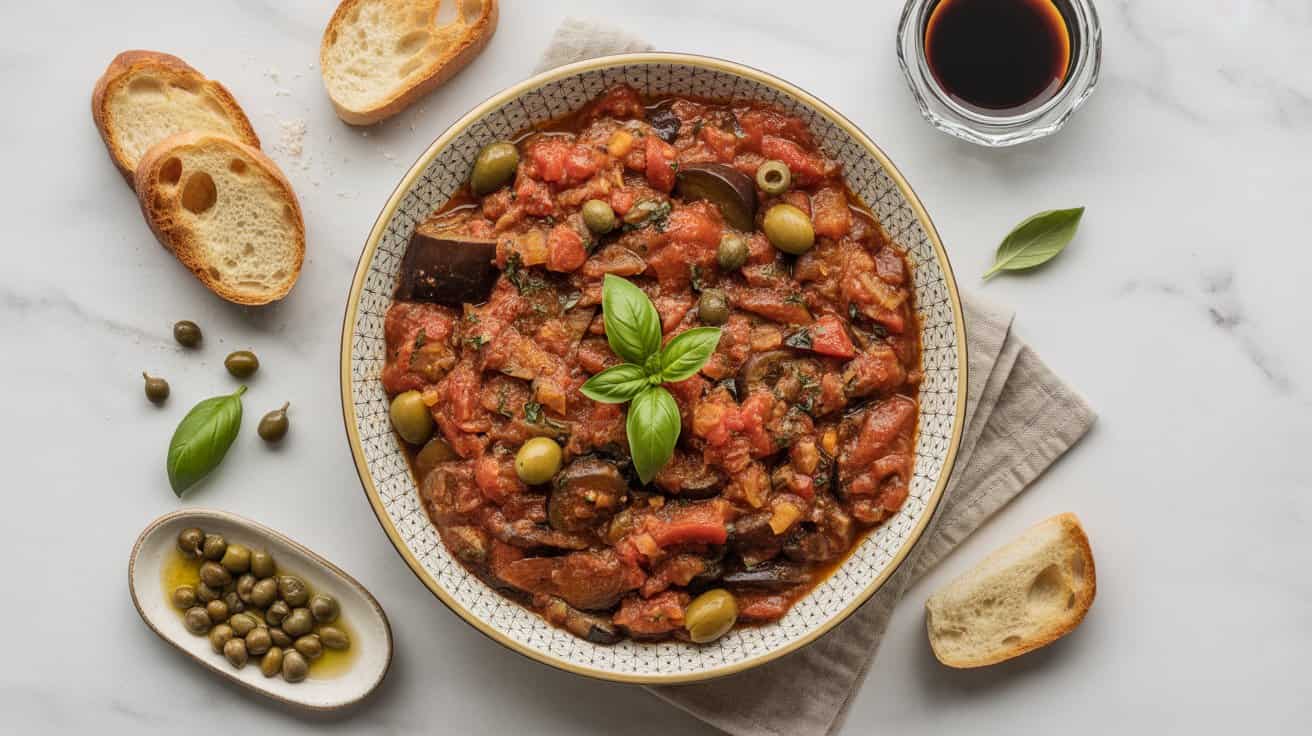
Caponata is a Sicilian agrodolce, which means sweet-sour in Italian, and that tension between sugar and vinegar is what defines the dish.
Eggplant, celery, capers, and olives are cooked together in a tomato base, then finished with a splash of red wine vinegar and a pinch of sugar to create a bright, layered sauce that is neither fully sweet nor fully acidic.
This dish genuinely improves with time. Make it a day ahead and serve it cold on toasted bread, or warm it up and spoon it alongside grilled swordfish or lamb chops.
The capers and olives provide a briny punch that keeps the flavor interesting even after the eggplant softens completely.
Why This Recipe Works
The agrodolce technique is simple to execute but produces a dish with far more complexity than its ingredient list suggests. It also holds well, which reduces day-of stress considerably.
- Convenience - Can be made ahead and served cold or warm, making it flexible for different meals.
- Flavor balance - Combines sweet, sour, and savory notes for a well-rounded taste.
- Texture - Offers a pleasing mix of tender vegetables with briny crunch from capers and olives.
- Versatility - Works well as a dip, side dish, or accompaniment to fish and meats.
Ingredient Swap Ideas
Swapping ingredients can help you tailor this salad to your dietary needs or what you have on hand, without losing its fresh character.
- Bulgur - Replace with quinoa or couscous if gluten-free or for a different texture.
- Parsley - Use cilantro or a combination of parsley and mint for a varied herbal flavor.
- Lemon juice - Lime juice can provide a slightly different but still fresh acidity.
- Cucumber - Replace with diced zucchini or bell pepper to change the crunch profile.
Ingredients
- ½ cup bulgur wheat - coarse or medium grind, well rinsed
- 2 medium tomatoes - diced
- 1 English cucumber - peeled and diced
- 1 bunch fresh parsley - finely chopped, about 2 cups packed
- ¼ cup fresh mint leaves - finely chopped
- 3 tablespoons fresh lemon juice - about 1 large lemon
- ¼ cup extra-virgin olive oil - good quality for flavor
- ½ teaspoon salt - adjust to taste
- ¼ teaspoon black pepper - freshly ground
Instructions
- Place the bulgur in a bowl and cover with boiling water by about an inch. Let it soak for 15 to 20 minutes, until softened but still slightly chewy. Drain any excess water through a fine mesh sieve and gently fluff with a fork.
- In a large mixing bowl, combine the chopped parsley, mint, diced tomatoes, and cucumber. Add the soaked bulgur and mix gently to combine all ingredients evenly.
- In a small bowl, whisk together the lemon juice, olive oil, salt, and pepper until well blended. Pour this dressing over the salad and toss gently to coat everything.
- Taste and adjust seasoning if needed. For best flavor, chill the tabbouleh for at least 30 minutes before serving to allow the ingredients to meld.
- Serve cold or at room temperature as a side dish or light meal accompaniment. It pairs well with grilled meats, roasted vegetables, or flatbreads.
12. Herbed Couscous & Chickpea Salad
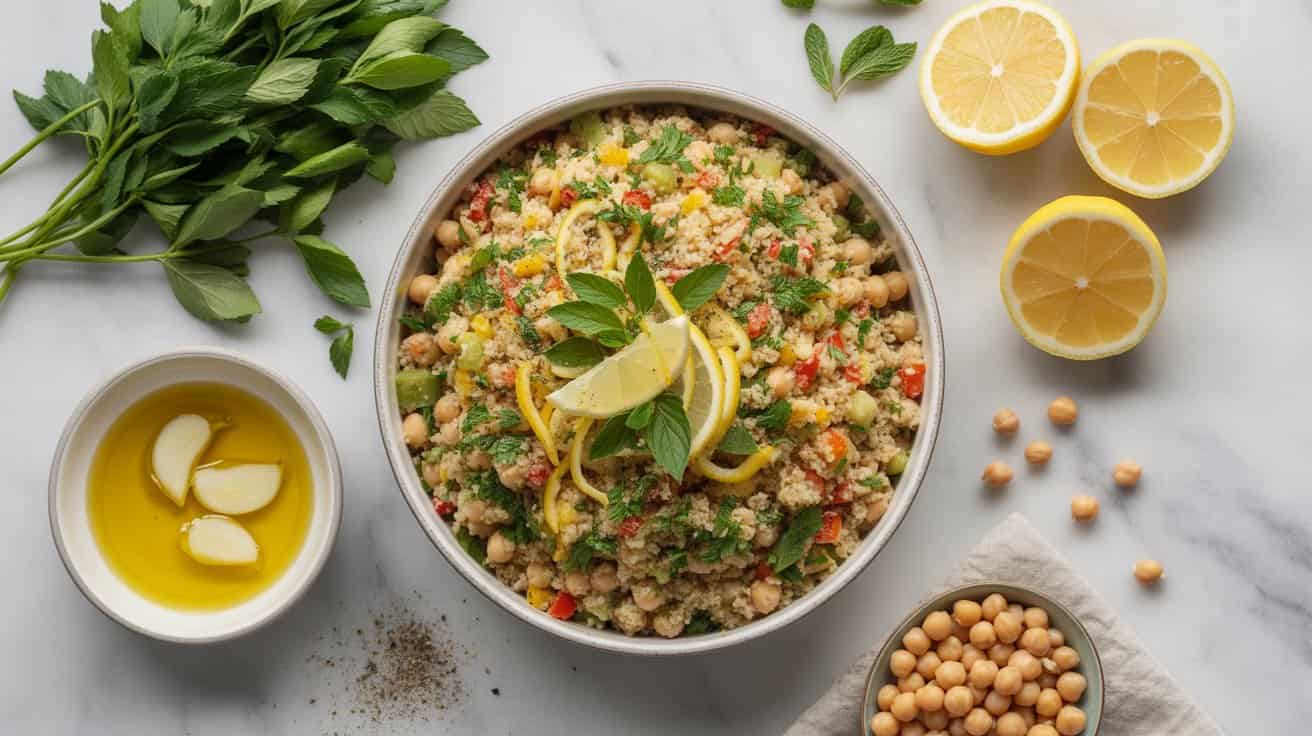
Couscous is technically a pasta, and it cooks in about 5 minutes by simply pouring boiling water over it and covering the bowl. That speed makes it one of the most practical bases for a grain salad when you are short on time.
Here it gets tossed with chickpeas, diced bell pepper, cucumber, parsley, and mint, then dressed in a bright lemon-cumin vinaigrette.
This salad is a natural fit for meal prep. It keeps for up to three days in the fridge, and the flavors deepen as it sits.
If you are building out a high-fiber spread, our list of fiber-packed sides that actually taste amazing pairs well with this type of chickpea-based dish.
Why This Recipe Works
The combination of couscous and chickpeas gives this salad staying power, making it filling enough to stand alone as a light lunch.
- Convenience - The couscous cooks in minutes, and the salad can be prepped ahead and stored in the fridge.
- Flavor balance - Fresh herbs and citrus provide brightness, complementing the earthiness of chickpeas and nuttiness of couscous.
- Texture - Tender couscous with firm-bite chickpeas and crunchy bell peppers create a pleasant mix.
- Appeal - A wholesome, plant-based option that works well as a side or light main.
Ingredient Swap Ideas
Swapping ingredients can help you tailor this salad to your dietary needs or what you have on hand, without losing its fresh character.
- Bulgur - Replace with quinoa or couscous if gluten-free or for a different texture.
- Parsley - Use cilantro or a combination of parsley and mint for a varied herbal flavor.
- Lemon juice - Lime juice can provide a slightly different but still fresh acidity.
- Cucumber - Replace with diced zucchini or bell pepper to change the crunch profile.
Ingredients
- ½ cup bulgur wheat - coarse or medium grind, well rinsed
- 2 medium tomatoes - diced
- 1 English cucumber - peeled and diced
- 1 bunch fresh parsley - finely chopped, about 2 cups packed
- ¼ cup fresh mint leaves - finely chopped
- 3 tablespoons fresh lemon juice - about 1 large lemon
- ¼ cup extra-virgin olive oil - good quality for flavor
- ½ teaspoon salt - adjust to taste
- ¼ teaspoon black pepper - freshly ground
Instructions
- Place the bulgur in a bowl and cover with boiling water by about an inch. Let it soak for 15 to 20 minutes, until softened but still slightly chewy. Drain any excess water through a fine mesh sieve and gently fluff with a fork.
- In a large mixing bowl, combine the chopped parsley, mint, diced tomatoes, and cucumber. Add the soaked bulgur and mix gently to combine all ingredients evenly.
- In a small bowl, whisk together the lemon juice, olive oil, salt, and pepper until well blended. Pour this dressing over the salad and toss gently to coat everything.
- Taste and adjust seasoning if needed. For best flavor, chill the tabbouleh for at least 30 minutes before serving to allow the ingredients to meld.
- Serve cold or at room temperature as a side dish or light meal accompaniment. It pairs well with grilled meats, roasted vegetables, or flatbreads.
13. Zucchini Fritters (Kolokithokeftedes)
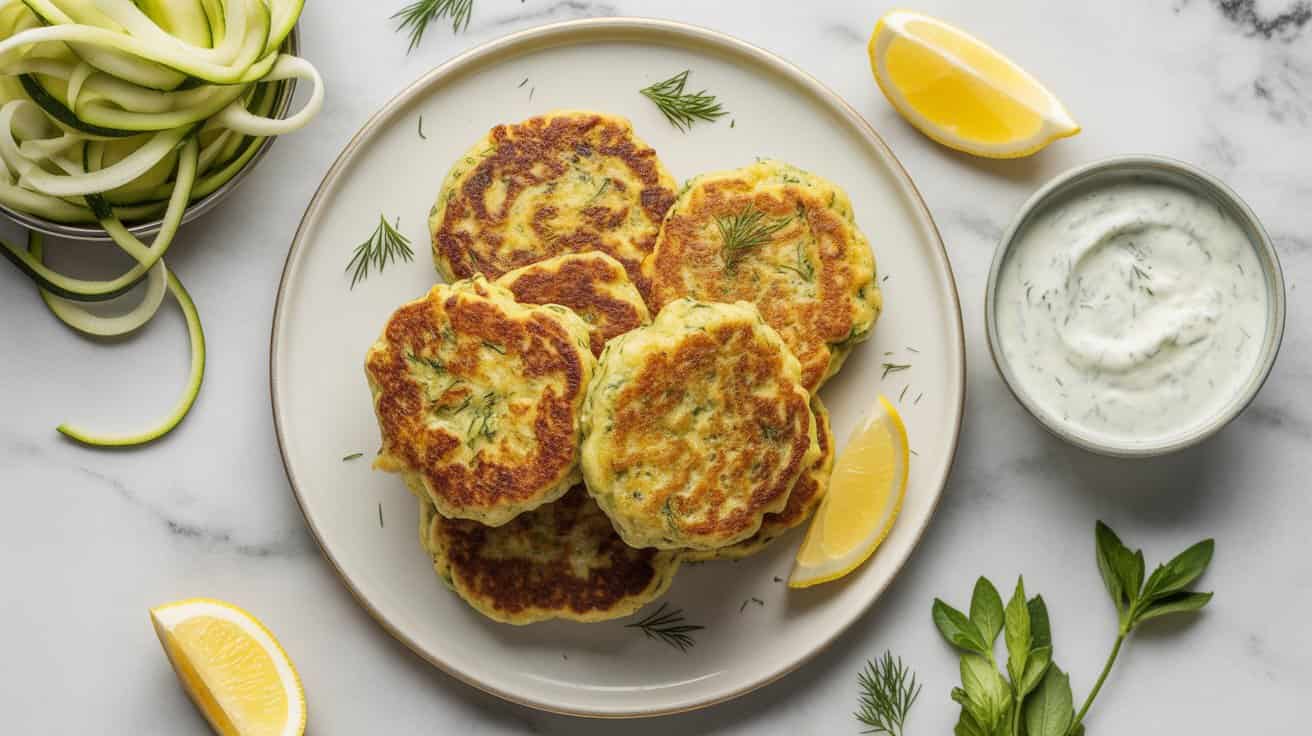
The single most important step in making zucchini fritters is squeezing out the moisture. Shredded zucchini holds an enormous amount of water, and if you skip this step, you get steamed patties instead of crispy, golden fritters.
Salt the zucchini, let it sit for 10 minutes, then wring it out in a clean towel until no more liquid comes out.
Once drained, the mixture combines with crumbled feta, fresh dill, egg, and just enough flour to bind it. Pan-fry in olive oil over medium-high heat for about 3 minutes per side.
These are good hot and still decent at room temperature, which makes them practical for a mezze table. Our sheet pan side dish ideas offer another approach when you want less stovetop work.
Why This Recipe Works
The feta and dill combination inside the fritter does most of the seasoning work, so there is very little need for additional spicing.
- Convenience - Quick to prepare with simple ingredients and fast cooking.
- Flavor balance - The salty feta and fresh dill complement the mild zucchini beautifully.
- Texture - Crispy edges with a soft, tender inside for contrast.
- Appeal - Versatile for serving at casual family meals or as party finger food.
Ingredient Swap Ideas
Swapping ingredients can help you tailor this salad to your dietary needs or what you have on hand, without losing its fresh character.
- Bulgur - Replace with quinoa or couscous if gluten-free or for a different texture.
- Parsley - Use cilantro or a combination of parsley and mint for a varied herbal flavor.
- Lemon juice - Lime juice can provide a slightly different but still fresh acidity.
- Cucumber - Replace with diced zucchini or bell pepper to change the crunch profile.
Ingredients
- ½ cup bulgur wheat - coarse or medium grind, well rinsed
- 2 medium tomatoes - diced
- 1 English cucumber - peeled and diced
- 1 bunch fresh parsley - finely chopped, about 2 cups packed
- ¼ cup fresh mint leaves - finely chopped
- 3 tablespoons fresh lemon juice - about 1 large lemon
- ¼ cup extra-virgin olive oil - good quality for flavor
- ½ teaspoon salt - adjust to taste
- ¼ teaspoon black pepper - freshly ground
Instructions
- Place the bulgur in a bowl and cover with boiling water by about an inch. Let it soak for 15 to 20 minutes, until softened but still slightly chewy. Drain any excess water through a fine mesh sieve and gently fluff with a fork.
- In a large mixing bowl, combine the chopped parsley, mint, diced tomatoes, and cucumber. Add the soaked bulgur and mix gently to combine all ingredients evenly.
- In a small bowl, whisk together the lemon juice, olive oil, salt, and pepper until well blended. Pour this dressing over the salad and toss gently to coat everything.
- Taste and adjust seasoning if needed. For best flavor, chill the tabbouleh for at least 30 minutes before serving to allow the ingredients to meld.
- Serve cold or at room temperature as a side dish or light meal accompaniment. It pairs well with grilled meats, roasted vegetables, or flatbreads.
14. Pan-Fried Polenta with Tomato Confit
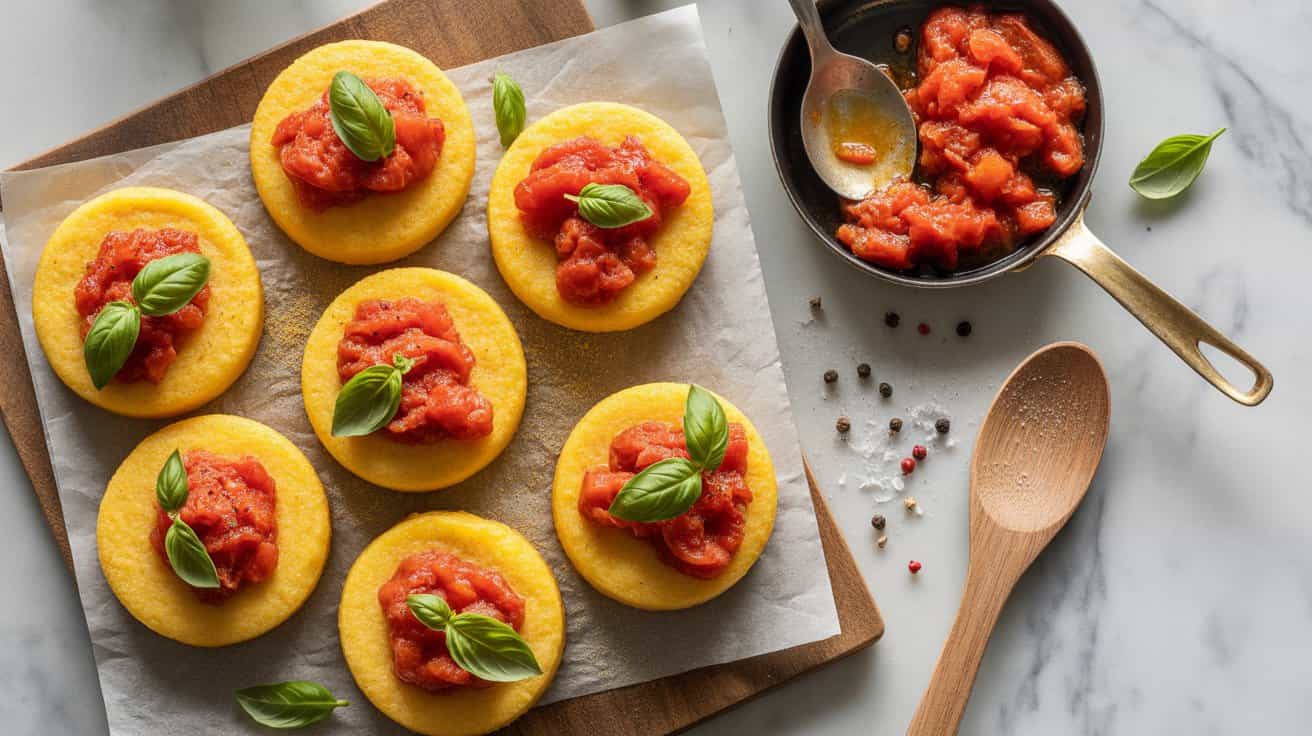
Polenta rounds are one of the easier ways to get a crispy, golden base onto a plate without much effort.
Pour cooked polenta into a baking dish, let it set in the fridge for at least an hour, then slice it into rounds and pan-fry in olive oil until each side is deeply golden and firm.
The tomato confit is the other half of this recipe and requires a bit of planning: cherry tomatoes roasted low and slow at 300°F for 60 to 90 minutes until they collapse and concentrate into something intensely sweet and jammy. The contrast between the crispy polenta and the soft, yielding tomatoes is what makes the dish work.
These are best served warm but hold at room temperature for about 30 minutes without losing much texture.
Why This Recipe Works
Making the polenta and the confit ahead of time means the day-of assembly is just a quick pan-fry. The result looks considered and deliberate with very little last-minute work.
- Convenience - You can make polenta ahead of time and crisp it up quickly when ready to serve.
- Flavor balance - The mild corn base of the polenta complements the intense sweetness and acidity of the roasted tomatoes.
- Texture - Crisp polenta rounds contrast nicely with tender, melting tomato confit.
- Appeal - Its bright colors and fresh ingredients make for an inviting presentation that suits casual gatherings or more formal meals.
Ingredient Swap Ideas
Swapping ingredients can help you tailor this salad to your dietary needs or what you have on hand, without losing its fresh character.
- Bulgur - Replace with quinoa or couscous if gluten-free or for a different texture.
- Parsley - Use cilantro or a combination of parsley and mint for a varied herbal flavor.
- Lemon juice - Lime juice can provide a slightly different but still fresh acidity.
- Cucumber - Replace with diced zucchini or bell pepper to change the crunch profile.
Ingredients
- ½ cup bulgur wheat - coarse or medium grind, well rinsed
- 2 medium tomatoes - diced
- 1 English cucumber - peeled and diced
- 1 bunch fresh parsley - finely chopped, about 2 cups packed
- ¼ cup fresh mint leaves - finely chopped
- 3 tablespoons fresh lemon juice - about 1 large lemon
- ¼ cup extra-virgin olive oil - good quality for flavor
- ½ teaspoon salt - adjust to taste
- ¼ teaspoon black pepper - freshly ground
Instructions
- Place the bulgur in a bowl and cover with boiling water by about an inch. Let it soak for 15 to 20 minutes, until softened but still slightly chewy. Drain any excess water through a fine mesh sieve and gently fluff with a fork.
- In a large mixing bowl, combine the chopped parsley, mint, diced tomatoes, and cucumber. Add the soaked bulgur and mix gently to combine all ingredients evenly.
- In a small bowl, whisk together the lemon juice, olive oil, salt, and pepper until well blended. Pour this dressing over the salad and toss gently to coat everything.
- Taste and adjust seasoning if needed. For best flavor, chill the tabbouleh for at least 30 minutes before serving to allow the ingredients to meld.
- Serve cold or at room temperature as a side dish or light meal accompaniment. It pairs well with grilled meats, roasted vegetables, or flatbreads.
15. Cheese Saganaki
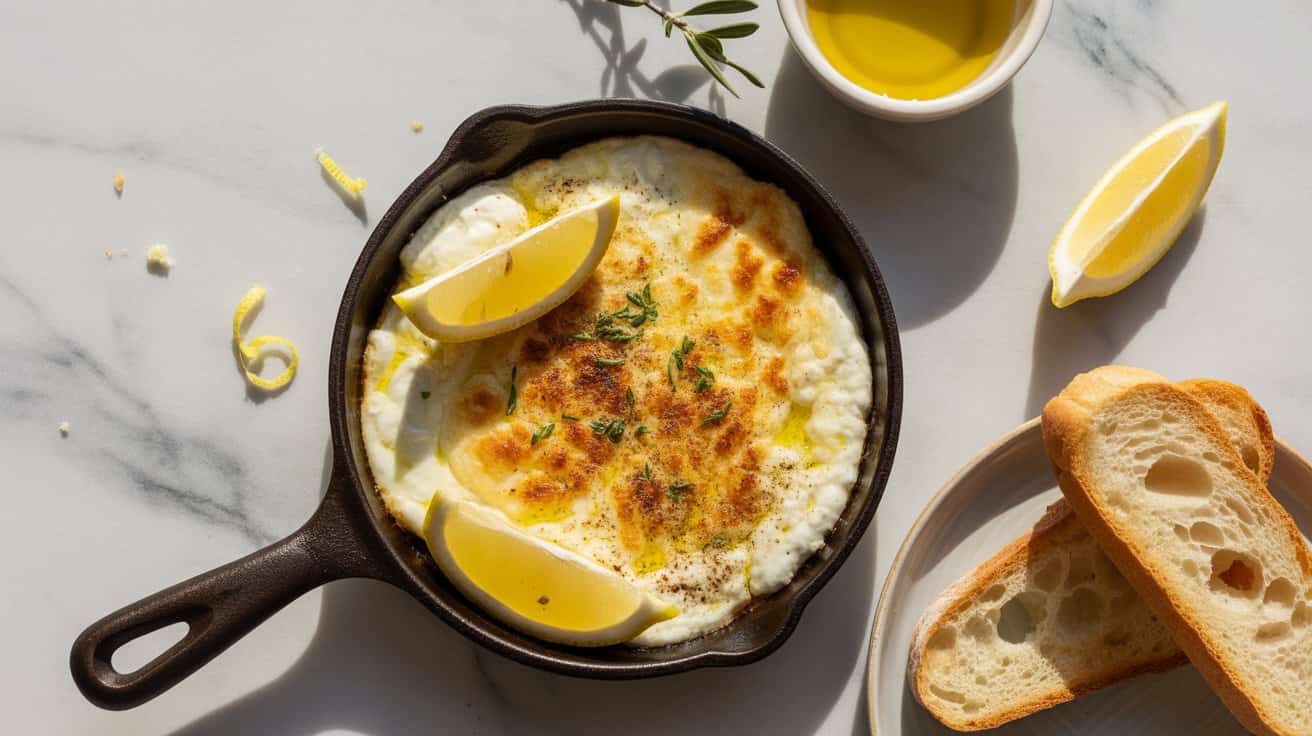
Saganaki is pan-fried cheese, and it is one of the most straightforward Greek dishes you can make at home. The traditional choice is kefalograviera, a firm sheep's milk cheese with a sharp, slightly funky flavor, though halloumi works well too.
A light dusting of flour before frying helps the crust set and prevents the cheese from sticking to the pan.
Get the pan properly hot before the cheese goes in. Medium-high heat for 2 minutes per side produces a deep golden crust while the interior stays warm and pliable rather than fully melted.
Finish with a squeeze of fresh lemon right before serving. It needs to be eaten quickly, as it firms back up as it cools.
Why This Recipe Works
The flour coating creates a barrier that allows the exterior to brown without the cheese losing its shape. That is the technical reason this simple dish works as well as it does.
- Convenience - Only a few ingredients and minutes required for a fresh, hot cheese dish.
- Flavor balance - A combination of salty, slightly tangy cheese with a toasty crust enhances each bite.
- Texture - Crispy outside contrasts with a soft, warm center, providing a tempting mouthfeel.
- Serving ease - Ready to eat immediately after cooking, perfect for quick entertaining or a casual snack.
Ingredient Swap Ideas
Swapping ingredients can help you tailor this salad to your dietary needs or what you have on hand, without losing its fresh character.
- Bulgur - Replace with quinoa or couscous if gluten-free or for a different texture.
- Parsley - Use cilantro or a combination of parsley and mint for a varied herbal flavor.
- Lemon juice - Lime juice can provide a slightly different but still fresh acidity.
- Cucumber - Replace with diced zucchini or bell pepper to change the crunch profile.
Ingredients
- ½ cup bulgur wheat - coarse or medium grind, well rinsed
- 2 medium tomatoes - diced
- 1 English cucumber - peeled and diced
- 1 bunch fresh parsley - finely chopped, about 2 cups packed
- ¼ cup fresh mint leaves - finely chopped
- 3 tablespoons fresh lemon juice - about 1 large lemon
- ¼ cup extra-virgin olive oil - good quality for flavor
- ½ teaspoon salt - adjust to taste
- ¼ teaspoon black pepper - freshly ground
Instructions
- Place the bulgur in a bowl and cover with boiling water by about an inch. Let it soak for 15 to 20 minutes, until softened but still slightly chewy. Drain any excess water through a fine mesh sieve and gently fluff with a fork.
- In a large mixing bowl, combine the chopped parsley, mint, diced tomatoes, and cucumber. Add the soaked bulgur and mix gently to combine all ingredients evenly.
- In a small bowl, whisk together the lemon juice, olive oil, salt, and pepper until well blended. Pour this dressing over the salad and toss gently to coat everything.
- Taste and adjust seasoning if needed. For best flavor, chill the tabbouleh for at least 30 minutes before serving to allow the ingredients to meld.
- Serve cold or at room temperature as a side dish or light meal accompaniment. It pairs well with grilled meats, roasted vegetables, or flatbreads.
16. Taramosalata (Greek Fish-Roe Dip)
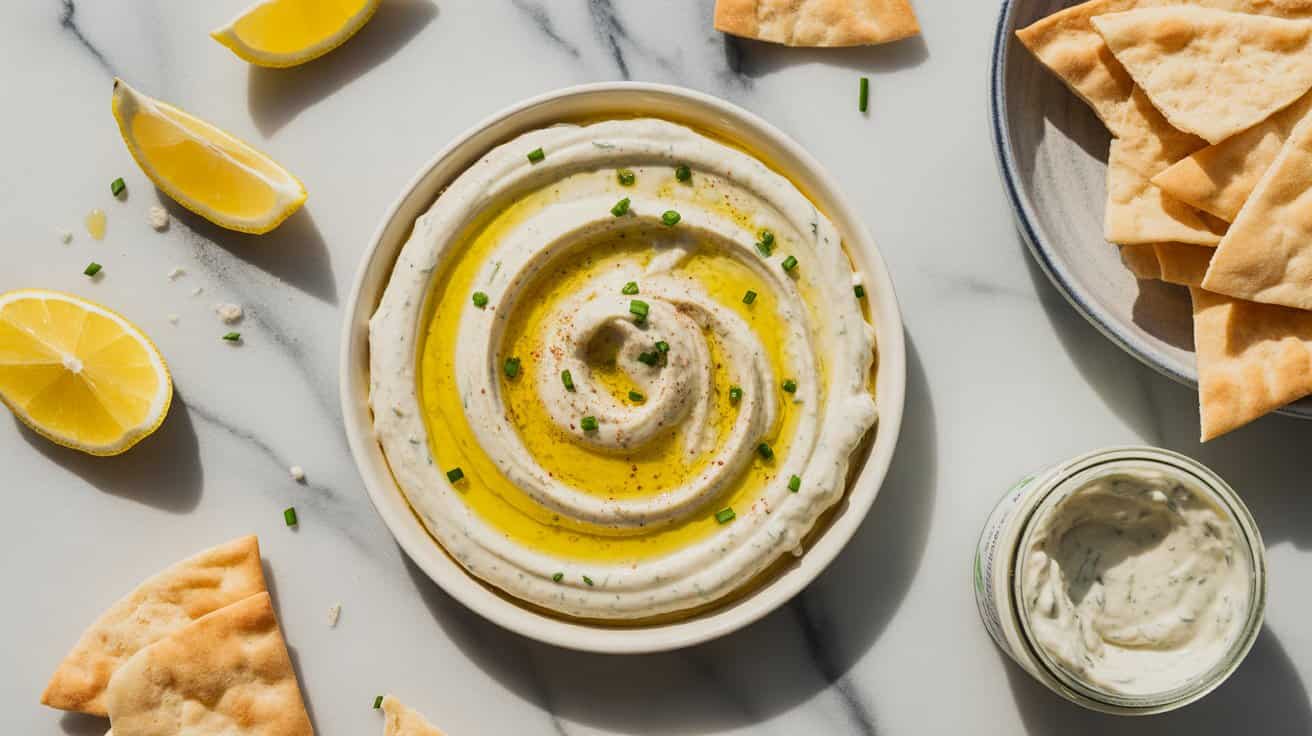
Taramosalata is made from tarama, salted and cured fish roe, typically from carp or cod, blended with soaked bread, lemon juice, and olive oil into a smooth, pale pink dip. It is a standard item on Greek mezze tables and requires no cooking whatsoever.
The key is the bread. Day-old white bread, soaked in water and squeezed dry, gives the dip its characteristic velvety body.
Too much bread and it becomes bland and starchy; too little and it turns grainy and oily. Start with two slices and adjust from there.
Serve chilled with warm pita or cucumber slices alongside other dips and marinated vegetables for a proper mezze spread. For inspiration on broccoli-based sides that pair well with such spreads, our broccoli sides worth trying offer some solid lighter options.
Why This Recipe Works
The balance of tarama, bread, lemon, and oil is simple in principle but requires attention to proportion. Getting the ratio right produces a dip with a silky texture and a clean, briny finish.
- Convenience - Requires no cooking and comes together in minutes, perfect for busy days.
- Flavor balance - Offers a smooth, tangy, and slightly briny profile that appeals to both seafood lovers and newcomers.
- Texture - The combination of cured fish roe and soft soaked bread creates a rich, spreadable consistency.
- Serving ease - Ready to serve straight from the fridge or at room temperature, making plating simple.
Ingredient Swap Ideas
Swapping ingredients can help you tailor this salad to your dietary needs or what you have on hand, without losing its fresh character.
- Bulgur - Replace with quinoa or couscous if gluten-free or for a different texture.
- Parsley - Use cilantro or a combination of parsley and mint for a varied herbal flavor.
- Lemon juice - Lime juice can provide a slightly different but still fresh acidity.
- Cucumber - Replace with diced zucchini or bell pepper to change the crunch profile.
Ingredients
- ½ cup bulgur wheat - coarse or medium grind, well rinsed
- 2 medium tomatoes - diced
- 1 English cucumber - peeled and diced
- 1 bunch fresh parsley - finely chopped, about 2 cups packed
- ¼ cup fresh mint leaves - finely chopped
- 3 tablespoons fresh lemon juice - about 1 large lemon
- ¼ cup extra-virgin olive oil - good quality for flavor
- ½ teaspoon salt - adjust to taste
- ¼ teaspoon black pepper - freshly ground
Instructions
- Place the bulgur in a bowl and cover with boiling water by about an inch. Let it soak for 15 to 20 minutes, until softened but still slightly chewy. Drain any excess water through a fine mesh sieve and gently fluff with a fork.
- In a large mixing bowl, combine the chopped parsley, mint, diced tomatoes, and cucumber. Add the soaked bulgur and mix gently to combine all ingredients evenly.
- In a small bowl, whisk together the lemon juice, olive oil, salt, and pepper until well blended. Pour this dressing over the salad and toss gently to coat everything.
- Taste and adjust seasoning if needed. For best flavor, chill the tabbouleh for at least 30 minutes before serving to allow the ingredients to meld.
- Serve cold or at room temperature as a side dish or light meal accompaniment. It pairs well with grilled meats, roasted vegetables, or flatbreads.
17. Artichoke Heart & Sun-Dried Tomato Salad
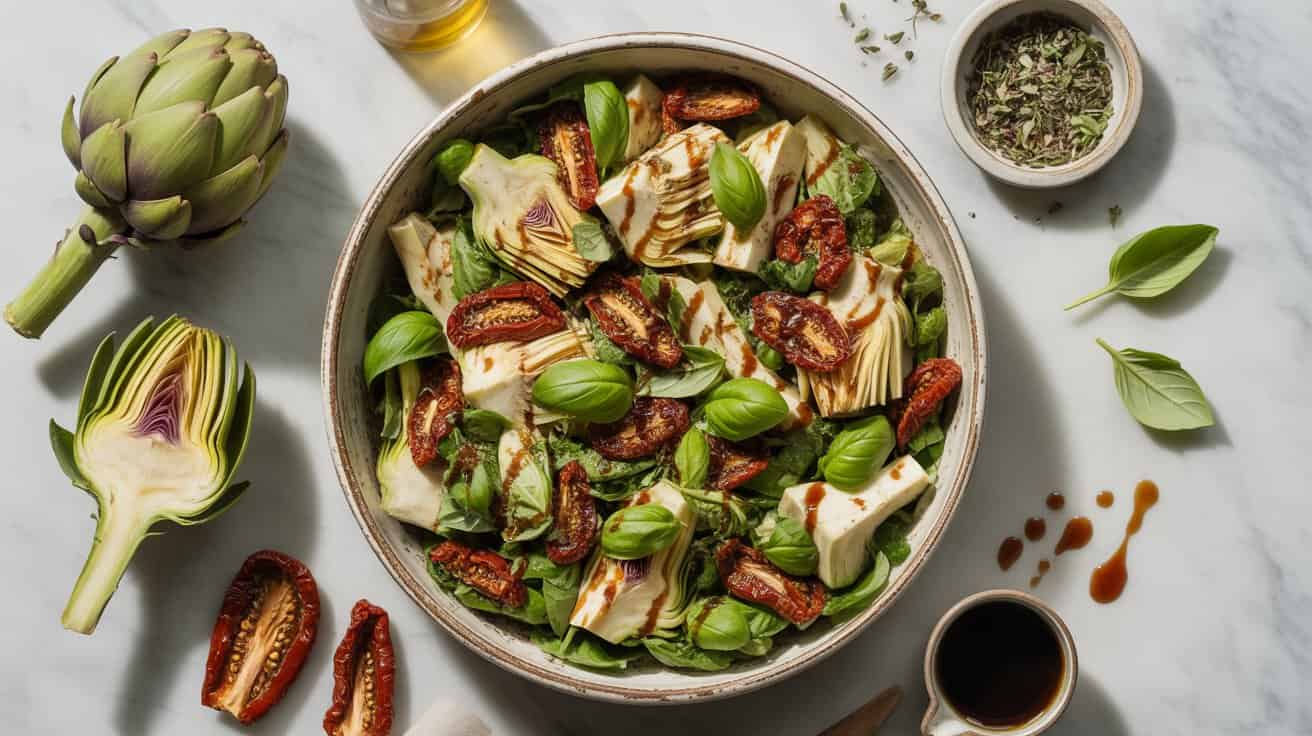
This salad is almost entirely pantry-driven. Marinated artichoke hearts and oil-packed sun-dried tomatoes carry most of the flavor, supplemented by kalamata olives, fresh parsley, and a garlic-lemon oil dressing.
No cooking required, and assembly takes about 10 minutes.
The textures here are what make it interesting: the tender artichoke hearts, the chewy and intense sun-dried tomatoes, and the firm bite of the olives all read differently in the mouth. Use the oil from the sun-dried tomato jar as part of your dressing.
It has been infusing with tomato flavor already, so it adds depth without any extra effort.
Why This Recipe Works
Marinated pantry ingredients do most of the prep work before you even open the jar. The dressing just needs to amplify what is already there.
- Convenience - Uses ready-to-eat marinated ingredients for quick assembly.
- Flavor balance - Combines tangy lemon, savory garlic, and herbaceous accents.
- Texture - Features tender hearts, chewy tomatoes, and firm olives.
- Appeal - Works well as a side, salad, or appetizer in casual or formal settings.
Ingredient Swap Ideas
Swapping ingredients can help you tailor this salad to your dietary needs or what you have on hand, without losing its fresh character.
- Bulgur - Replace with quinoa or couscous if gluten-free or for a different texture.
- Parsley - Use cilantro or a combination of parsley and mint for a varied herbal flavor.
- Lemon juice - Lime juice can provide a slightly different but still fresh acidity.
- Cucumber - Replace with diced zucchini or bell pepper to change the crunch profile.
Ingredients
- ½ cup bulgur wheat - coarse or medium grind, well rinsed
- 2 medium tomatoes - diced
- 1 English cucumber - peeled and diced
- 1 bunch fresh parsley - finely chopped, about 2 cups packed
- ¼ cup fresh mint leaves - finely chopped
- 3 tablespoons fresh lemon juice - about 1 large lemon
- ¼ cup extra-virgin olive oil - good quality for flavor
- ½ teaspoon salt - adjust to taste
- ¼ teaspoon black pepper - freshly ground
Instructions
- Place the bulgur in a bowl and cover with boiling water by about an inch. Let it soak for 15 to 20 minutes, until softened but still slightly chewy. Drain any excess water through a fine mesh sieve and gently fluff with a fork.
- In a large mixing bowl, combine the chopped parsley, mint, diced tomatoes, and cucumber. Add the soaked bulgur and mix gently to combine all ingredients evenly.
- In a small bowl, whisk together the lemon juice, olive oil, salt, and pepper until well blended. Pour this dressing over the salad and toss gently to coat everything.
- Taste and adjust seasoning if needed. For best flavor, chill the tabbouleh for at least 30 minutes before serving to allow the ingredients to meld.
- Serve cold or at room temperature as a side dish or light meal accompaniment. It pairs well with grilled meats, roasted vegetables, or flatbreads.
18. Grilled Zucchini Rolls with Ricotta & Mint
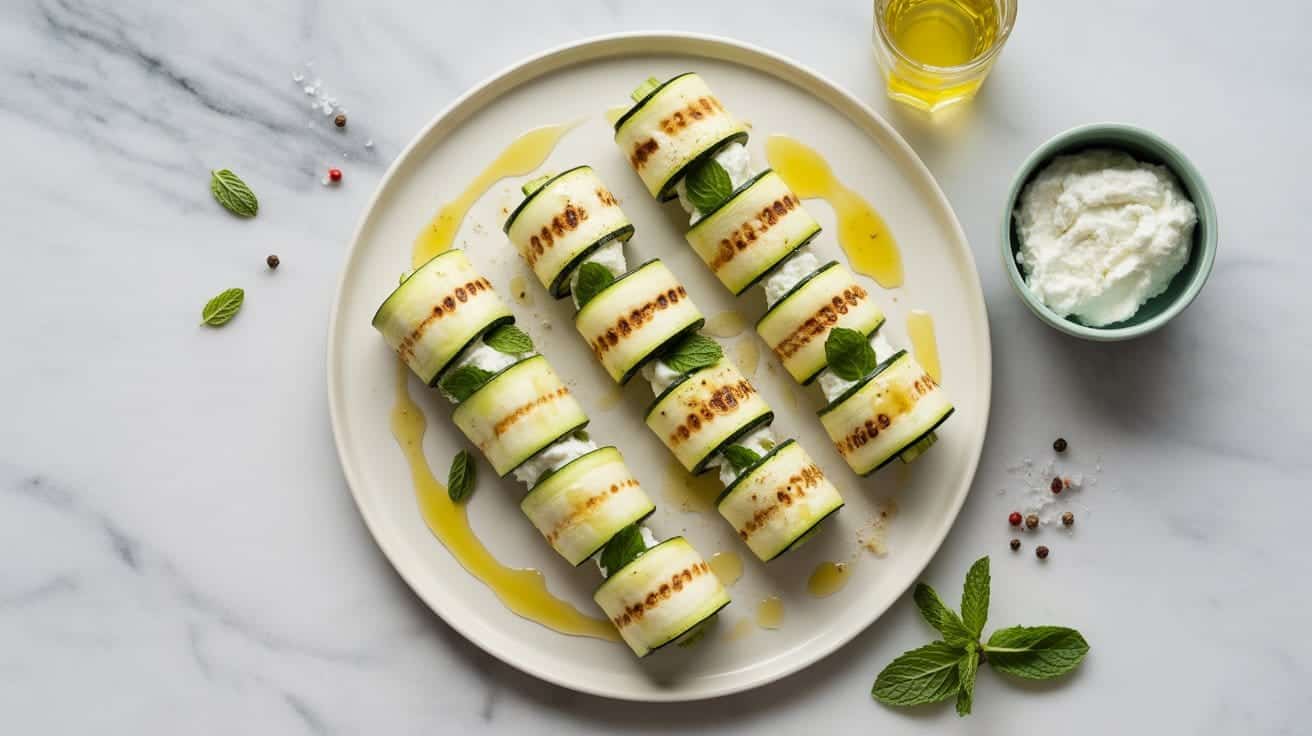
The zucchini needs to be sliced thin, about 3mm, so it is pliable enough to roll without cracking. A mandoline makes this faster and more consistent, though a sharp knife works fine if you have a steady hand.
Grill the strips over high heat for 2 minutes per side until they develop grill marks and become flexible.
The ricotta filling is simply whole-milk ricotta, fresh mint, lemon zest, salt, and cracked pepper. Spoon a small amount onto one end of each zucchini strip and roll it up.
These can be made a few hours ahead and refrigerated on a platter, then pulled out 15 minutes before serving. They are light, fresh, and genuinely attractive on a table.
Why This Recipe Works
The contrast between the warm, smoky zucchini and the cool, herbed ricotta is the whole point of this dish. It is simple enough to prepare in bulk for a party without requiring any reheating.
- Convenience - Prepped quickly with few ingredients and easy grilling.
- Flavor balance - Creamy ricotta contrasts with smoky zucchini and refreshing mint.
- Texture - Tender zucchini strips wrapped around smooth, fluffy ricotta create a nice mouthfeel.
- Appeal - Light, healthy, and visually attractive, making it great for entertaining or a simple snack.
Ingredient Swap Ideas
Swapping ingredients can help you tailor this salad to your dietary needs or what you have on hand, without losing its fresh character.
- Bulgur - Replace with quinoa or couscous if gluten-free or for a different texture.
- Parsley - Use cilantro or a combination of parsley and mint for a varied herbal flavor.
- Lemon juice - Lime juice can provide a slightly different but still fresh acidity.
- Cucumber - Replace with diced zucchini or bell pepper to change the crunch profile.
Ingredients
- ½ cup bulgur wheat - coarse or medium grind, well rinsed
- 2 medium tomatoes - diced
- 1 English cucumber - peeled and diced
- 1 bunch fresh parsley - finely chopped, about 2 cups packed
- ¼ cup fresh mint leaves - finely chopped
- 3 tablespoons fresh lemon juice - about 1 large lemon
- ¼ cup extra-virgin olive oil - good quality for flavor
- ½ teaspoon salt - adjust to taste
- ¼ teaspoon black pepper - freshly ground
Instructions
- Place the bulgur in a bowl and cover with boiling water by about an inch. Let it soak for 15 to 20 minutes, until softened but still slightly chewy. Drain any excess water through a fine mesh sieve and gently fluff with a fork.
- In a large mixing bowl, combine the chopped parsley, mint, diced tomatoes, and cucumber. Add the soaked bulgur and mix gently to combine all ingredients evenly.
- In a small bowl, whisk together the lemon juice, olive oil, salt, and pepper until well blended. Pour this dressing over the salad and toss gently to coat everything.
- Taste and adjust seasoning if needed. For best flavor, chill the tabbouleh for at least 30 minutes before serving to allow the ingredients to meld.
- Serve cold or at room temperature as a side dish or light meal accompaniment. It pairs well with grilled meats, roasted vegetables, or flatbreads.
19. Peperonata (Stewed Peppers & Onions)
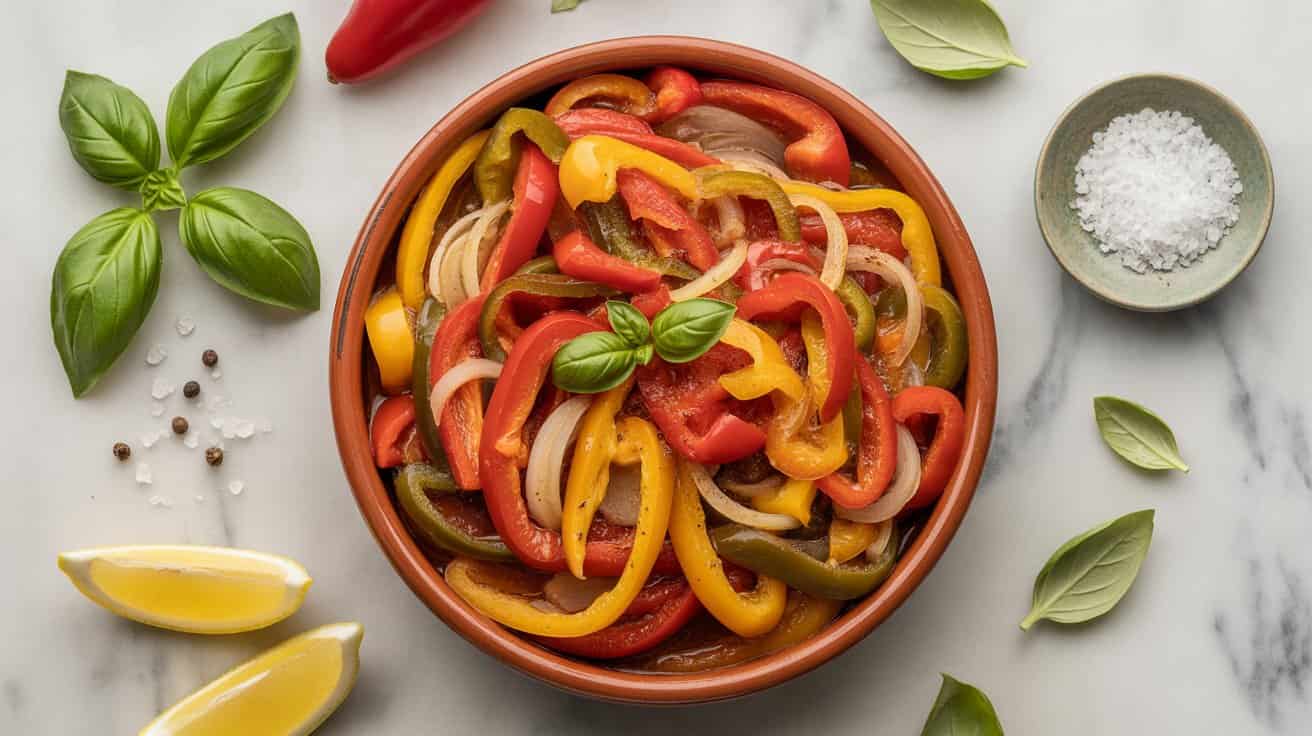
Peperonata is an Italian agrodolce made by slowly stewing sweet bell peppers and onions in olive oil and tomato until everything collapses into a soft, glossy, deeply flavored mixture. The key word is slowly.
Low heat for 40 to 45 minutes is what transforms sharp, raw onions and firm peppers into something velvety and mellow.
A small splash of red wine vinegar added in the last few minutes sharpens everything up and gives the dish the characteristic tangy edge that balances the natural sweetness of the peppers. Peperonata is one of those dishes that tastes better at room temperature than piping hot, and it keeps in the fridge for up to four days.
Serve it alongside grilled meats, spoon it over polenta, or use it as an antipasto with crusty bread.
Make peperonata two days ahead. The flavors meld and deepen significantly overnight, and reheating it takes only 5 minutes on the stovetop over low heat.
Why This Recipe Works
Low, slow cooking concentrates the natural sugars in the peppers and eliminates the bitterness of raw onion without any complicated technique involved.
- Convenience - Requires only basic ingredients and a single pot, making preparation straightforward.
- Flavor balance - Sweet, tangy, and savory notes combine for a satisfying taste.
- Texture - Soft, stewed peppers and onions provide a luscious, melt-in-your-mouth feel.
- Versatility - Works as a side dish, topping for grilled meats, or chilled as an antipasto.
Ingredient Swap Ideas
Swapping ingredients can help you tailor this salad to your dietary needs or what you have on hand, without losing its fresh character.
- Bulgur - Replace with quinoa or couscous if gluten-free or for a different texture.
- Parsley - Use cilantro or a combination of parsley and mint for a varied herbal flavor.
- Lemon juice - Lime juice can provide a slightly different but still fresh acidity.
- Cucumber - Replace with diced zucchini or bell pepper to change the crunch profile.
Ingredients
- ½ cup bulgur wheat - coarse or medium grind, well rinsed
- 2 medium tomatoes - diced
- 1 English cucumber - peeled and diced
- 1 bunch fresh parsley - finely chopped, about 2 cups packed
- ¼ cup fresh mint leaves - finely chopped
- 3 tablespoons fresh lemon juice - about 1 large lemon
- ¼ cup extra-virgin olive oil - good quality for flavor
- ½ teaspoon salt - adjust to taste
- ¼ teaspoon black pepper - freshly ground
Instructions
- Place the bulgur in a bowl and cover with boiling water by about an inch. Let it soak for 15 to 20 minutes, until softened but still slightly chewy. Drain any excess water through a fine mesh sieve and gently fluff with a fork.
- In a large mixing bowl, combine the chopped parsley, mint, diced tomatoes, and cucumber. Add the soaked bulgur and mix gently to combine all ingredients evenly.
- In a small bowl, whisk together the lemon juice, olive oil, salt, and pepper until well blended. Pour this dressing over the salad and toss gently to coat everything.
- Taste and adjust seasoning if needed. For best flavor, chill the tabbouleh for at least 30 minutes before serving to allow the ingredients to meld.
- Serve cold or at room temperature as a side dish or light meal accompaniment. It pairs well with grilled meats, roasted vegetables, or flatbreads.
20. Lemony Chickpea & Red Onion Salad
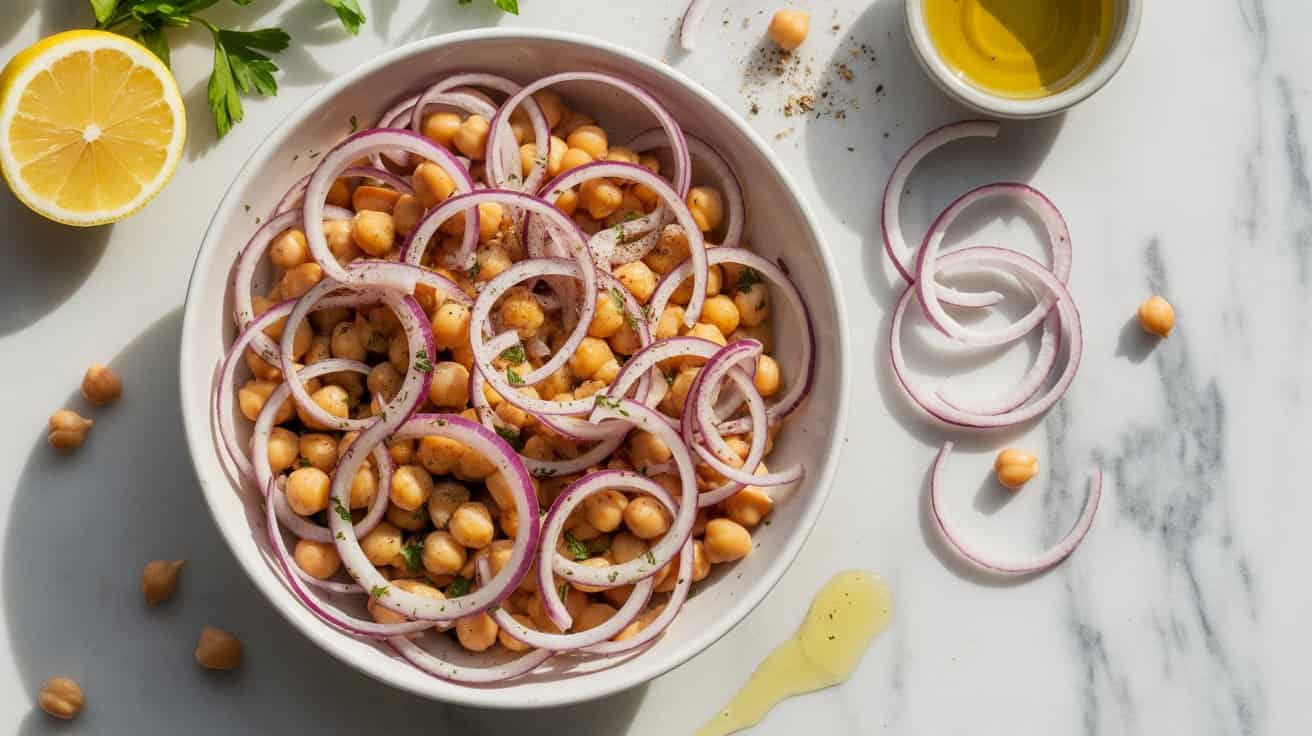
This salad comes together in under 15 minutes using a can of chickpeas, a red onion, fresh parsley, lemon juice, and olive oil. That simplicity is not a limitation.
It is what makes the salad so versatile. The lemon juice brightens the earthy chickpeas, the raw red onion adds a sharp, crisp counterpoint, and the parsley keeps the whole thing feeling fresh.
For a slightly softer onion flavor, soak the sliced red onion in cold water for 10 minutes before adding it to the salad. This takes away the harshness without removing the crunch.
Let the finished salad sit for at least 20 minutes before serving so the chickpeas absorb some of the dressing.
Why This Recipe Works
Canned chickpeas make this a genuinely pantry-ready recipe. There is no soaking, no long cooking, and no special equipment needed to produce something that tastes bright and well-seasoned.
- Convenience - Uses canned chickpeas and basic ingredients you likely have on hand, ready in under 15 minutes.
- Flavor balance - The lemon juice adds brightness that complements the earthy chickpeas and pungent onion.
- Texture - The creamy chickpeas contrast nicely with the crunchy red onion slices.
- Versatility - Perfect served cold or at room temperature, making it practical for any meal or occasion.
Ingredient Swap Ideas
Swapping ingredients in this salad can adjust flavors or meet dietary needs without losing its core character.
- Pasta alternatives - Use gluten-free orzo or small pasta shapes to make it suitable for gluten-sensitive diets.
- Cheese substitutes - Swap feta with a vegan cheese or omit it completely for a dairy-free option.
- Olives - Use green olives or Castelvetrano instead of kalamata for a milder taste.
- Herbs - Fresh dill or mint can replace oregano for a slightly different herbal note.
Ingredients
- 1 ½ cups orzo pasta - Small, rice-shaped pasta, cooked according to package directions.
- ¾ cup crumbled feta cheese - Adds creamy, salty flavor to the salad.
- ½ cup kalamata olives - Pitted and halved for a briny bite.
- ⅓ cup red onion - Thinly sliced for a sharp, crunchy contrast.
- ¼ cup fresh parsley - Chopped to add fresh herbal notes.
- Juice of 1 lemon - Provides bright acidity in the dressing.
- 3 tablespoons extra-virgin olive oil - Adds richness and smoothness.
- 1 teaspoon dried oregano - Traditional herb to enhance Mediterranean flavor.
- Salt and black pepper - To taste, for seasoning.
Instructions
- Cook the orzo pasta according to package instructions until al dente. Drain and rinse under cold water to stop cooking and cool the pasta. Set aside.
- In a large bowl, whisk together lemon juice, olive oil, oregano, salt, and black pepper to create the dressing.
- Add the cooked orzo, crumbled feta, kalamata olives, sliced red onion, and chopped parsley to the bowl with the dressing. Toss gently to combine all the ingredients evenly.
- Adjust seasoning by adding more salt, pepper, or lemon juice if desired. Chill the salad in the fridge for at least 30 minutes or serve immediately at room temperature.
- Serve as a refreshing side dish or a light main, garnished with extra parsley or a sprinkle of feta if you like.
Frequently Asked Questions
What are the best Mediterranean side dishes for summer?
Cold or room-temperature dishes like tabbouleh, fattoush, orzo salad, and lemony chickpea salad are ideal in summer since they require no reheating and stay fresh outdoors for up to two hours.
Can Mediterranean sides be prepared in advance for entertaining?
Most of these recipes can be made 24 to 48 hours ahead. Dolmades, caponata, baba ganoush, and marinated feta all improve overnight as the flavors continue to develop in the fridge.
What makes a dish Mediterranean in flavor?
The core flavor markers are olive oil, lemon, garlic, and fresh herbs like parsley, mint, and dill. Spices like cumin, sumac, and Aleppo pepper also appear frequently across the region's cuisines.
Are these Mediterranean side dishes naturally gluten-free?
About half are naturally gluten-free, including baba ganoush, muhammara, saganaki, peperonata, and the chickpea salad. Tabbouleh contains bulgur wheat, but swapping in quinoa makes it gluten-free.
How much olive oil do Mediterranean recipes typically use?
Most recipes in this collection use two to four tablespoons of extra-virgin olive oil per serving. The Oldways Mediterranean Diet Pyramid lists olive oil as the primary added fat in this eating pattern.
Save This for Later
Pin this 20 vibrant mediterranean side dishes to elevate any meal guide so you always have it when you need it.

Carrie is a food writer and editor with more than 15 years of experience. She has worked for some of the biggest names in the food industry, including Bon Appétit, Food & Wine, and Martha Stewart Living.
As the Editor in Chief of EpicureDelight, Carrie oversees all of the content on the site. She also manages the team of contributing writers and editors, who help to create delicious recipes, helpful tips, and informative articles that you’ll find on the site.
A native of the Chicago area, Carrie is passionate about all things food. She loves trying new restaurants and experimenting with new recipes in her kitchen. She’s also a graduate of the Culinary Institute of America, so she knows a thing or two about food!