Guacamole tastes creamy, buttery, grassy, lightly nutty, salty, and bright with lime. Onion, cilantro, tomato, and chile can add sharp, herbal, juicy, or hot notes, but ripe avocado should remain the soft center of the flavor.
A good bowl tastes fresh rather than sour, bitter, or greasy. Its texture may be chunky or smooth, yet it should hold on a chip or spoon without releasing a puddle of thin green liquid.

Expect mild avocado richness with salt, citrus, and fresh aromatics. Chunky guacamole gives you stronger contrast between ingredients, while a smooth bowl tastes more even and can seem richer.
Read the First Spoonful in Three Layers
Guacamole does not hit your tongue as one flat avocado flavor. A balanced spoonful moves from mellow fat to bright seasoning and then to the sharper ingredients that linger.
The Opening Is Cool and Creamy
Ripe avocado brings a soft buttery feel with a mild green aroma. Its flavor sits closer to fresh peas and raw nuts than to sweet fruit.
Cool guacamole can taste quieter because low temperature holds back aroma. Let a refrigerated bowl stand for a few minutes before adjusting the seasoning.
Salt and Lime Wake Up the Middle
Salt makes the avocado taste fuller, while lime cuts through its fat and adds a clean citrus edge. Neither should erase the avocado.
A balanced bowl tastes bright without making your mouth tighten. Sharp sourness means the lime has moved from support to the main flavor.
Fresh Aromatics Shape the Finish
Raw onion supplies crisp sulfur bite. Cilantro adds a green citrus-like aroma, and serrano or jalapeño brings heat that often grows after the first swallow.
Tomato adds mild sweetness and juice. Garlic can add a longer savory finish, though too much raw garlic becomes hot and bitter.
Ripe Avocado Sets the Baseline
The avocado controls both flavor and body. An underripe fruit resists the fork and tastes grassy or faint, while an overripe fruit can taste dull, fermented, or stale.
Press the whole fruit gently near the stem. It should yield to steady pressure without feeling hollow, watery, or deeply sunken.
| Ingredient or state | What it adds | Too much tastes or feels like |
|---|---|---|
| Ripe avocado | Buttery body and mild green flavor | Heavy when seasoning is too weak |
| Underripe avocado | Firm bite and grassy note | Rubbery, bland, or chalky |
| Lime juice | Brightness and acid | Sharp, thin, or sour |
| Salt | Fuller avocado flavor | Harsh and thirst-making |
| Onion and cilantro | Crisp bite and fresh aroma | Raw heat or soapy herbal flavor |
| Tomato | Juice, mild acid, and sweetness | Watery dip |
| Fresh chile | Green aroma and heat | Burn that hides the avocado |
Add seasonings in small rounds. Salt first, taste, then add lime and aromatics, since acid cannot correct an avocado that simply needs salt.
Scoop out dark bruised areas before mashing. Broad gray flesh, a fermented odor, or watery collapse means the fruit is a poor base for the bowl.
Texture Changes What Your Tongue Notices
Chunky guacamole creates contrast. One bite may contain a soft avocado piece, a crisp onion cube, and a chile fleck, so the flavors arrive separately.
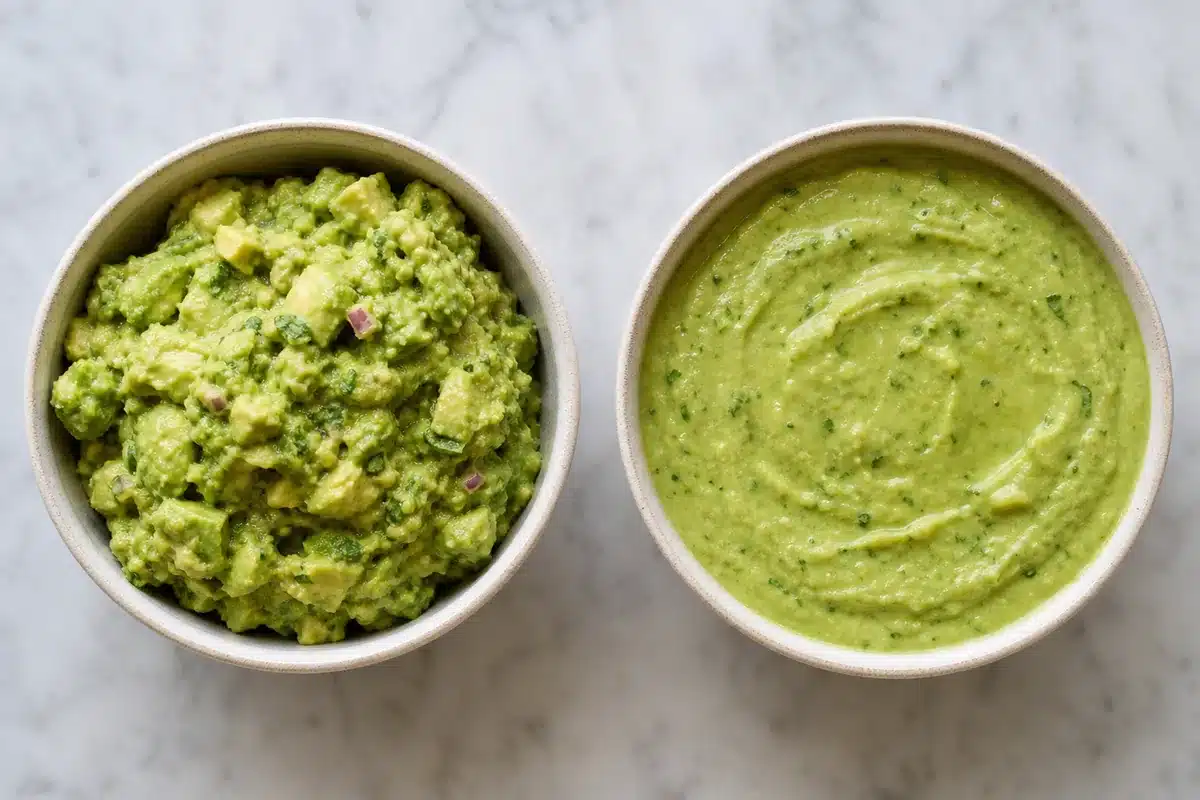
A smooth bowl spreads avocado fat, salt, and lime across the tongue at once. It often feels richer and works well as a spread, though it can lose the fresh bite that makes a dip lively.
Whipping introduces air and can make guacamole feel lighter for a short time. Long mixing also warms the bowl and breaks every piece into the same pasty texture.
Tomato juice, excess lime, or liquid from rinsed onion can thin the mixture. Drain wet additions before folding them into the avocado.
Match the texture to the job. Keep larger pieces for chips and tacos, mash more finely for toast or sandwiches, and stop before a plated topping runs into the rest of the food.
Fix the Flavor You Actually Have
Taste the guacamole on an unsalted spoon or piece of vegetable before making a change. A salty chip can hide a weak bowl and make a balanced one seem bland.
Flat
Add a small pinch of salt and wait thirty seconds. Add lime only when the avocado still tastes heavy after the salt dissolves.
Too Sour
Fold in more ripe avocado. Onion, tomato, or sugar will not remove excess acid as cleanly.
Too Hot
Add avocado and remove any visible chile pieces. More lime can spread the burn instead of cooling it.
Too Salty
Dilute with unseasoned avocado. Serve with plain vegetables rather than salted chips.
Watery
Drain free liquid and fold in firm avocado pieces. Do not keep mashing a loose bowl.
Bitter
Remove citrus seeds, pith, or scorched chile. A strongly bitter avocado cannot be repaired with extra salt.
Let the corrected bowl rest for five minutes in the refrigerator, then taste again. Onion, chile, garlic, and salt spread through the avocado during that short pause.
Use a clean spoon for each check. Repeated dipping with a used chip adds crumbs and saliva to a dip that you may want to store.
Fresh Browning and Spoilage Are Different
Avocado flesh turns brown when oxygen reaches cut surfaces. A thin tan layer can appear while the guacamole still smells clean and remains safe within its cold storage window.
Press food-safe wrap against the surface or use a tight shallow container to reduce air contact. Lime slows visible browning, but it does not make the fresh dip shelf-stable.
Guacamole contains cut produce and often raw onion, tomato, and herbs. Refrigerate it at 40°F or below and return the bowl to the refrigerator within two hours, or within one hour above 90°F.
- Color only. A light brown surface with a clean smell may be stirred in or scraped off.
- Sour or fermented odor. Discard the bowl when the smell changed beyond fresh lime.
- Gas or swelling. Bubbles in stored guacamole or a puffed package signal unwanted activity.
- Slime or mold. Do not taste a bowl with fuzzy growth or a slippery, stringy texture.
- Unknown warm time. Discard guacamole that sat out beyond the safe limit.
Serve a small amount and refill from a cold container when guests will graze for a long time. This keeps the main batch colder and reduces repeated dipping.
Store leftover guacamole promptly in a clean container rather than returning table scraps to the original bowl. Water from melted ice or wet serving tools can thin it further.
Sources
- USDA food safety basics and the two-hour rule
- USDA guidance for cut fruit and vegetable storage
- FDA processed avocado and guacamole sampling report
Guacamole is savory. Ripe avocado and tomato can add gentle sweetness, but salt, lime, onion, herbs, and chile define the finished dip.
Some people perceive cilantro aldehydes as soapy. Leave it out or replace part of it with a small amount of parsley and lime zest.
Thawed avocado can make a smooth dip, but freezing softens its cells and reduces chunk definition. Drain extra liquid before seasoning it.
It may use more salt, fresher lime, a warmer serving temperature, or a stronger chile and onion balance. Change one element at a time at home.
The pit blocks air only where it touches the dip. A tight cover pressed against the whole surface protects more area.

Carrie is a food writer and editor with more than 15 years of experience. She has worked for some of the biggest names in the food industry, including Bon Appétit, Food & Wine, and Martha Stewart Living.
As the Editor in Chief of EpicureDelight, Carrie oversees all of the content on the site. She also manages the team of contributing writers and editors, who help to create delicious recipes, helpful tips, and informative articles that you’ll find on the site.
A native of the Chicago area, Carrie is passionate about all things food. She loves trying new restaurants and experimenting with new recipes in her kitchen. She’s also a graduate of the Culinary Institute of America, so she knows a thing or two about food!