A caramel macchiato tastes sweet and creamy at first, with vanilla milk, roasted espresso, and buttery caramel arriving in layers. It usually tastes more coffee-forward than a caramel latte until you stir it.
The top can feel bold and foamy, while the bottom is cooler, milkier, and sweeter. Espresso roast, syrup amount, milk choice, temperature, and melting ice can all shift that balance.

A caramel macchiato combines sweet vanilla milk, a roasted espresso mark, soft foam, and caramel drizzle. Leaving it layered makes each sip change, while stirring creates one sweeter and more even coffee.
What Does a Caramel Macchiato Taste Like?
An unstirred caramel macchiato changes as your mouth moves through the top of the cup. Caramel aroma arrives first because the drizzle sits on the foam and meets your nose before the drink reaches your tongue.
The espresso below brings roast, bitterness, and a dry cocoa-like edge. That darker band keeps the drink from tasting like warm vanilla milk with dessert sauce.
Lower in the cup, milk and vanilla syrup become more obvious. The last sip may taste sweeter than the first when the syrup has stayed near the bottom.
The caramel top brings buttery cooked-sugar aroma, the espresso mark adds roast and bitterness, and vanilla milk supplies most of the creamy sweetness below. Foam holds the drizzle near the surface, so an unstirred cup changes as you drink.
Vanilla builds the sweet base while caramel finishes it. That is why the drink can taste clearly sweet even when little caramel reaches the bottom of the cup.
The name puts caramel first, but much of the sweetness comes from vanilla syrup mixed with the milk. Starbucks describes its version as vanilla syrup, steamed milk, espresso, and caramel sauce in that order.
Vanilla gives the entire drink a soft bakery-like sweetness. It rounds the sharp corners of espresso even in sips that carry little caramel drizzle.
Too much vanilla can make the drink taste flat because every layer lands at the same sweetness. A smaller amount leaves more room for roasted coffee aroma.
Espresso contributes bitterness, acidity, roast aroma, and body. The coffee is poured through the foam, so some of it remains concentrated near the top before mixing.
A darker roast often brings smoke, molasses, and caramelized-sugar notes. A lighter espresso can taste fruitier or brighter, which makes the same syrup seem more lively.
Steamed milk gives the hot drink its creamy body. Natural milk sugar tastes sweeter as the milk warms, while foam spreads aroma without adding the same dense weight as liquid milk.
Whole milk feels rounder and richer. Lower-fat milk feels lighter, and some plant milks add oat, nut, coconut, or bean notes that remain visible under the caramel.
Caramel sauce adds a cooked-sugar taste with butter and toasted edges. Because it sits on top, one sip may catch a concentrated ribbon while the next gets almost none.
Cold caramel can cling to the lid or glass instead of dissolving. That is why an iced cup may taste less caramel-heavy than its dark drizzle suggests.
Why Does a Caramel Macchiato Taste Different After Stirring?
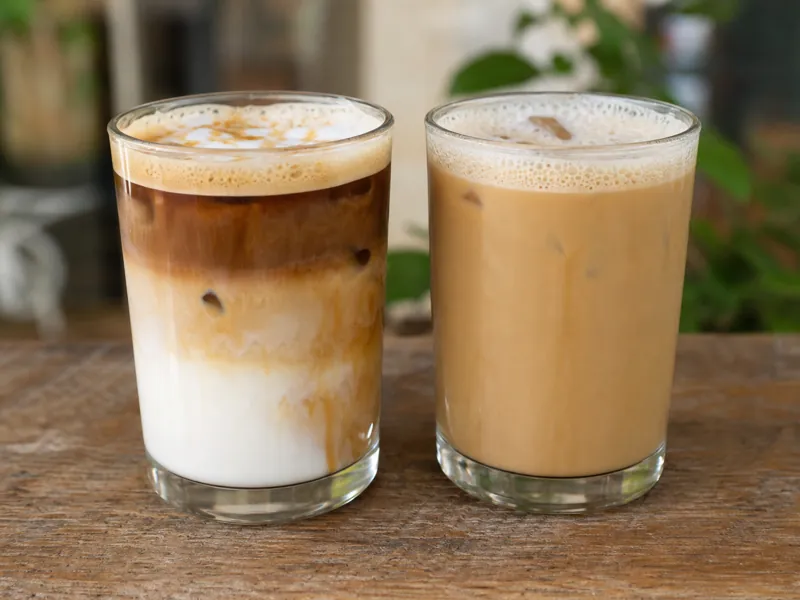
An unstirred cup gives you contrast. The first sips carry foam, caramel, and a stronger coffee band, while later sips lean toward sweet vanilla milk.
Stirring breaks that sequence. Espresso bitterness spreads downward, vanilla sweetness rises, and caramel leaves the surface to flavor more of the drink.
Leave it layered for changing flavors. Stir it when you want the same coffee-to-sweetness balance from top to bottom.
Neither method is wrong. The better choice depends on whether contrast or consistency makes the drink more appealing to you.
If the first sip tastes too bitter, stirring may solve the problem without adding syrup. If the mixed drink is already too sweet, more milk or another espresso shot changes the balance more cleanly than extra ice.
How Do Ice, Roast, and Milk Change the Flavor?
Fresh hot espresso poured over cold milk and ice creates a strong temperature contrast. The coffee can stay near the top briefly, so the early sip tastes darker than the pale lower layer suggests.
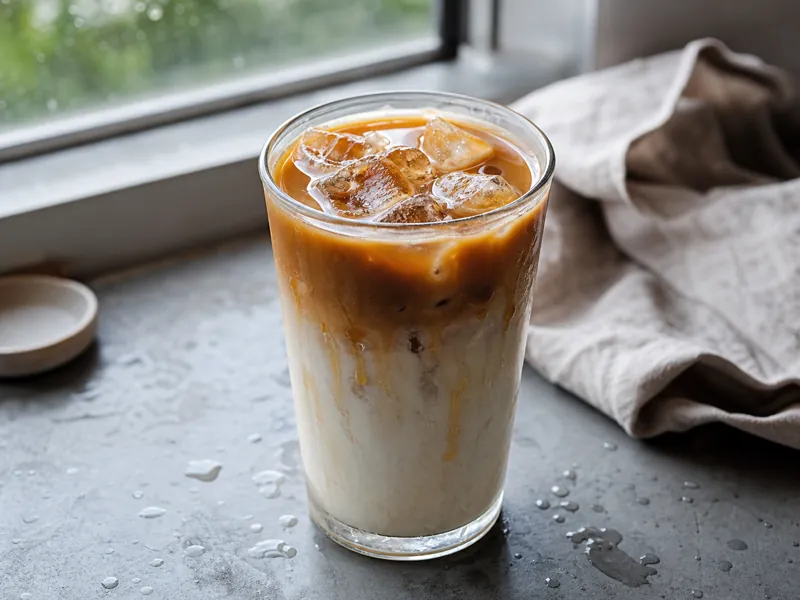
Cold temperature reduces aroma release compared with a hot cup. The iced drink may smell less caramel-heavy even when it contains the same sauce.
- Early cup. Espresso and cold milk remain distinct, with the sharpest roast impression near the top.
- Middle cup. Movement and melting begin to mix the layers, so vanilla becomes easier to taste.
- Late cup. Meltwater lowers body, sweetness, and coffee strength unless the drink was finished quickly.
Syrup can settle beneath cold milk, especially when the cup has not been stirred. A few gentle turns distribute it without smashing every ice cube into the foam.
Large clear cubes melt more slowly than small wet cubes. A drink built with plenty of small ice can lose its first balance before the coffee has cooled fully.
An iced caramel macchiato should not taste sour merely because it is cold. Sharp fruit-like acidity can come from the espresso, while a stale dairy odor means the milk needs attention.
Two shops can use the same visible caramel drizzle and deliver very different cups. The espresso dose, roast, syrup pumps, milk, and serving size set the balance below that surface pattern.
| Change | What you taste | Best adjustment |
|---|---|---|
| Darker roast | More roast, bitterness, smoke, and molasses | Keep syrup modest so the coffee stays clear |
| Extra espresso shot | Stronger coffee and lower sweet impression | Choose this when the standard cup tastes milky |
| Less vanilla syrup | Drier finish and clearer espresso | Reduce before removing all caramel |
| Whole milk | Richer body and softer bitterness | Use when the drink feels thin |
| Oat or nut milk | Added grain or nut flavor | Choose a flavor that fits caramel |
| More ice | Colder early sip and more late dilution | Drink sooner or request light ice |
For a stronger cup, add espresso or reduce milk rather than chasing bitterness with a darker sauce. Caramel adds sweetness and cooked flavor, but it does not make the coffee itself more concentrated.
For less dairy weight, choose a smaller size with the same shot count. That changes the coffee-to-milk ratio more directly than switching from whole milk to skim milk.
Is a Caramel Macchiato Sweeter Than a Latte?
The word macchiato means marked or stained, yet cafe names cover several different drinks. A caramel macchiato is a flavored milk drink marked by espresso, not a traditional small espresso with a spoonful of foam.
A caramel latte is usually mixed more evenly and may carry caramel flavor through the full cup. It tastes consistent, milky, and sweet from the start.
The caramel macchiato keeps a stronger espresso zone when left unstirred. Choose it when you like sweetness with a changing coffee edge.
A traditional espresso macchiato is much smaller and uses only a little steamed milk or foam. Nespresso describes the classic drink as espresso topped with a small amount of milk foam.
That version tastes intense, roasted, and only gently softened by milk. It has no built-in vanilla or caramel sweetness.
A latte macchiato also starts with milk and receives espresso afterward. It shares the layered look, but it does not automatically include vanilla syrup or caramel sauce.
Choose a caramel macchiato when you want a sweet layered drink with coffee still visible. Choose a latte for an even milk-forward cup, or a traditional macchiato for a short espresso-led drink.
Sources
- Starbucks Coffee at Home, caramel macchiato ingredients and build order
- Starbucks Stories, beverage layer diagram
- Nespresso, espresso macchiato definition and milk ratio
No, espresso roast and vanilla milk remain major flavors. Caramel acts as a sweet toasted finish rather than the full base of the drink.
It can be, but the recipes differ by shop. Mocha brings cocoa bitterness, while a caramel macchiato leans on vanilla and cooked-sugar sweetness.
Bright espresso acidity can read as sour when the shot is under-extracted or the roast is light. Spoiled milk smells stale or rancid and should not be covered with syrup.
Yes, decaf espresso still supplies roast and bitterness. Bean quality and extraction matter more to the balance than caffeine itself.
The foam collapses, ice dilutes the drink, and espresso aroma fades. Refrigerate a no-ice leftover promptly, then expect a flatter mixed coffee rather than the original layers.

Carrie is a food writer and editor with more than 15 years of experience. She has worked for some of the biggest names in the food industry, including Bon Appétit, Food & Wine, and Martha Stewart Living.
As the Editor in Chief of EpicureDelight, Carrie oversees all of the content on the site. She also manages the team of contributing writers and editors, who help to create delicious recipes, helpful tips, and informative articles that you’ll find on the site.
A native of the Chicago area, Carrie is passionate about all things food. She loves trying new restaurants and experimenting with new recipes in her kitchen. She’s also a graduate of the Culinary Institute of America, so she knows a thing or two about food!