A traditional macchiato tastes like a concentrated espresso with roasted bitterness, lively acidity, and a short creamy finish. The small mark of milk foam softens the first edge, but it does not turn the drink sweet or milky.
This answer applies to an espresso macchiato, the small Italian-style drink. A caramel macchiato from a flavored coffee menu is a much larger milk drink and tastes very different.

Expect an espresso-forward drink, not a tiny latte. It starts roasted and intense, gains a brief creamy note from the foam, and finishes much like the espresso beneath it.
What Does a Macchiato Taste Like?
The aroma reaches you before the milk does. It can smell toasted, cocoa-like, nutty, fruity, or smoky because the espresso roast and bean blend remain the main flavor source.
The first contact may feel soft where the spooned foam sits. A moment later, the small shot brings its full bitterness, acidity, and concentrated coffee flavor.
A well-made shot feels dense and lightly syrupy. Crema adds a fine froth and a dry bitter edge, while the milk foam feels airier and rounder.
The drink does not have enough hot milk to create the broad, silky body of a latte. Even a generous foam mark leaves the center dark and coffee-led.
A medium roast may finish with cocoa, caramel-like roast notes, or toasted nuts. A lighter roast can feel brighter and show fruit or floral notes, while a dark roast can leave smoke and firm bitterness.
The milk fades fast because there is so little of it. The aftertaste should still tell you what the espresso tasted like before it was marked.
If you enjoy the dense, strong style described in our Turkish coffee taste guide, a macchiato may feel familiar in intensity, though its filtered espresso texture is cleaner and its serving is smaller.
Why Does a Macchiato Taste Stronger Than a Latte?
The name comes from an Italian word meaning marked or stained. Nespresso's traditional guide describes espresso marked with a small amount of warm milk and foam, which explains both the look and the flavor balance.
A typical order is one espresso shot with a spoonful or small splash of foam. Cafes vary, so ask for a traditional espresso macchiato when the menu also sells sweet or layered drinks.
| Drink | Coffee impression | Milk impression | Usual sweetness |
|---|---|---|---|
| Espresso macchiato | Strong and concentrated | Brief foam-softened edge | None by default |
| Plain espresso | Strongest and most direct | None | None by default |
| Cortado | Strong but more rounded | Warm milk throughout | None by default |
| Cappuccino | Balanced with roast flavor | Clearly creamy and foamy | None by default |
| Latte macchiato | Gentle coffee streak | Milk-led | None unless flavored |
Traditional does not mean there is one fixed worldwide ratio. The useful test is simple: if milk has become the main body of the cup, the drink has moved toward a cortado, cappuccino, or latte.
It is also not sweet by default. Sugar, vanilla syrup, and caramel drizzle belong to a separate flavored order, not to the basic definition.
How Do Espresso, Roast, and Foam Change the Flavor?
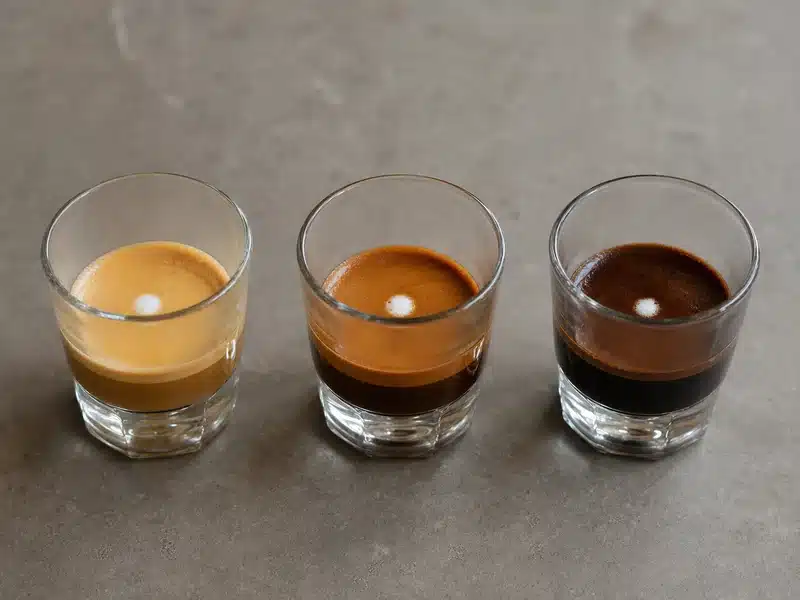
Milk can round a rough edge, but it cannot rebuild a poor shot. Look at the color, smell the cup, and notice where the unpleasant flavor appears.
If it tastes sharply sour
A thin shot with a quick lemon-like sting may be under-extracted. Water did not take enough balanced flavor from the coffee, so acidity stands alone.
A finer grind, slightly longer contact, or a more even coffee bed may help. Do not solve the problem by adding enough milk to erase the drink's identity.
If it tastes balanced
A balanced shot can still be bitter, but the bitterness sits beside sweetness, aroma, and acidity. The crema looks hazelnut to brown rather than very pale or almost black.
The foam then works as a small contrast. It makes one part of the sip softer while leaving the roasted center clear.
If it tastes dry and harsh
A long, rough finish can come from over-extraction, very dark beans, water that is too hot, or old coffee. The result may feel woody, ashy, or mouth-drying.
Coarsen the grind or shorten the shot before changing the milk. Espresso powder is made for cooking rather than pulling a fresh shot, so use our espresso powder substitutes only when a recipe needs concentrated coffee flavor.
Light-roast espresso can taste bright, floral, or fruit-led, and a small milk mark may make its acidity feel gentler. It can also taste sour when the cafe does not adjust the extraction for a dense light-roast bean.
Medium roasts often show chocolate, caramel-like roast flavor, and nuts. Dark roasts push smoke, char, and bitterness forward, which can make the same amount of foam seem less effective.
Foam style changes texture more than flavor. Wet foam carries more warm liquid milk and gives a rounder sip, while dry foam feels airy and keeps the espresso more separate.
Ask for an espresso macchiato with only a small foam mark. Say "no syrup" when a menu uses macchiato for a sweet flavored drink.
Plant milks add their own flavor. Oat milk can bring cereal sweetness, while almond milk can add a nutty note and thinner foam.
The broader milk substitutes guide explains which choices behave differently in hot drinks.
A foam that tastes cooked or sulfur-like can come from overheated dairy. Proper foam should smell clean and sweet, with bubbles fine enough to merge into the first sip.
What Foods Pair Well with a Macchiato?
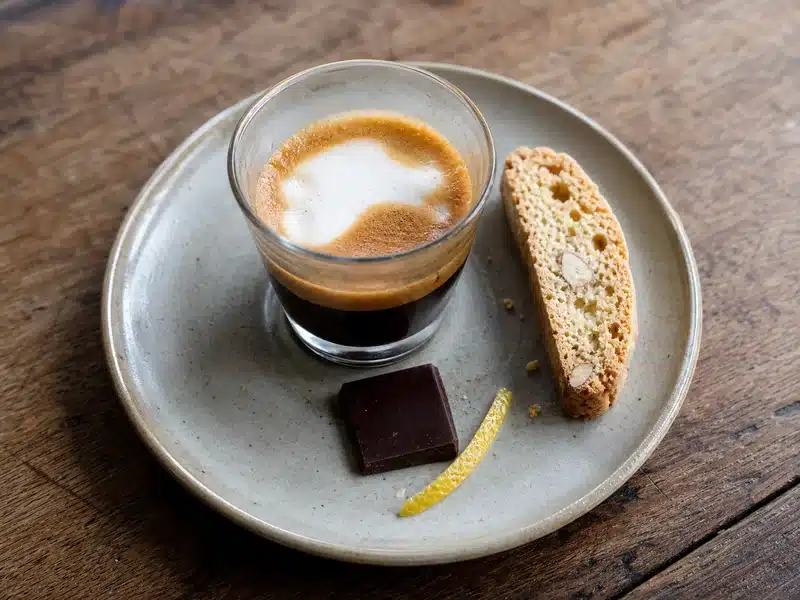
A macchiato is small, so one rich pastry can outlast the drink. Pair by contrast and portion rather than by building a full dessert plate.
- Choose crisp food such as plain biscotti or a thin butter cookie to contrast with the syrupy shot.
- Choose controlled bitterness from one square of dark chocolate when the espresso already shows cocoa notes.
- Choose a bright aroma such as orange or lemon zest when a medium roast tastes heavy.
- Skip strong syrup when you want to judge the beans, because caramel and vanilla can cover the finish.
Store chocolate carefully before pairing it. Old bloom is often a texture problem, while stale odors can spoil the match.
Our chocolate chip shelf-life guide covers the same storage signals for baking chocolate.
Sources
- Nespresso, traditional macchiato identity, name, and milk mark
- Nespresso USA, espresso and spooned milk foam preparation
Yes, a traditional macchiato keeps most of espresso's bitterness. The small foam mark softens it briefly but does not remove it.
Not by default. Warm milk may add a faint natural sweetness, but syrup or sugar must be added for a clearly sweet drink.
No. A latte is milk-led and creamy throughout, while a traditional macchiato is espresso-forward with only a small milk mark.
The espresso may be under-extracted or made from a bright light roast. Adjust the shot before adding more milk.
You can stir it, but leaving the foam on top preserves the change from soft first contact to stronger espresso below. Stirring makes the small milk amount more even.

Carrie is a food writer and editor with more than 15 years of experience. She has worked for some of the biggest names in the food industry, including Bon Appétit, Food & Wine, and Martha Stewart Living.
As the Editor in Chief of EpicureDelight, Carrie oversees all of the content on the site. She also manages the team of contributing writers and editors, who help to create delicious recipes, helpful tips, and informative articles that you’ll find on the site.
A native of the Chicago area, Carrie is passionate about all things food. She loves trying new restaurants and experimenting with new recipes in her kitchen. She’s also a graduate of the Culinary Institute of America, so she knows a thing or two about food!