Thai peanut one-pot pasta builds a thin, savory peanut sauce directly in the pot by whisking peanut butter into the simmering broth before adding the pasta - the result is tangy, slightly spicy, and nothing like the thick takeout version. It is one of the more globally inspired entries in the one-pot pasta collection, done in under 35 minutes.
Soy sauce, lime juice, and a small amount of sriracha balance the richness of the peanut butter so the sauce stays light and drinkable rather than heavy.
Bell pepper, shredded carrots, and scallions cook directly in the broth with the pasta, adding crunch and color without requiring a separate pan.
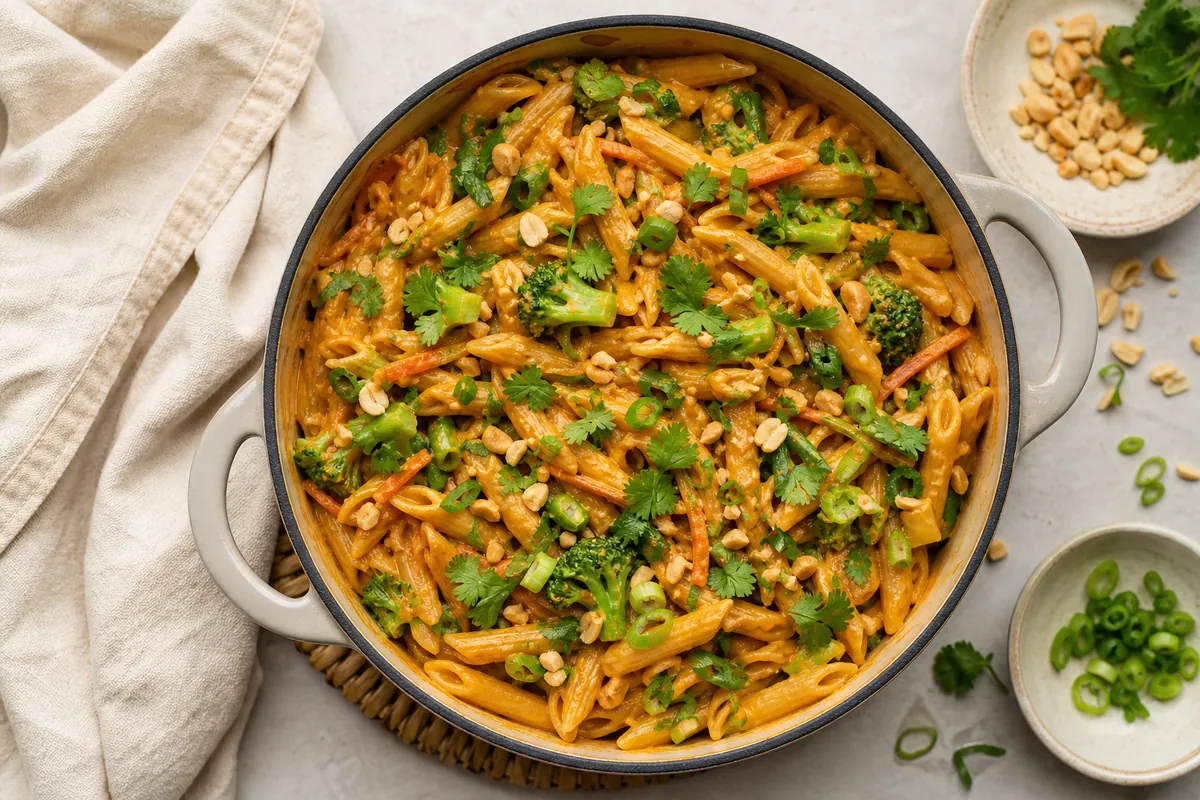
Thai Peanut One-Pot Pasta - spaghetti or rice noodles simmered in a thin peanut-soy-lime broth with bell pepper, carrots, and scallions, finished with crushed peanuts and fresh cilantro.
Remember it later
Planning to try this recipe soon? Save it for a quick find later!
Why This Recipe Works
Standard peanut sauce uses a high ratio of peanut butter to achieve its thick, coating consistency. This recipe inverts that ratio - a modest amount of peanut butter is first thinned into the broth so it emulsifies evenly before the pasta even enters the pot. The starch released during pasta cooking then binds the sauce to the noodles naturally.
- Pre-whisking peanut butter into warm broth: Cold peanut butter seizes when it contacts hot liquid; starting it in warm (not boiling) broth and whisking continuously breaks it into a smooth slurry before heat causes protein aggregation.
- Soy sauce for umami depth: Soy sauce introduces glutamates that amplify the savory note of the peanut butter and eliminate the need for fish sauce or a separate flavoring agent.
- Lime juice added after cooking: Acid added during cooking loses brightness quickly; a squeeze of lime at the finish restores the sharp citrus note that defines Thai flavor profiles.
- Vegetables cooked in the broth: Bell pepper and shredded carrot added with the pasta soften to just-tender as the noodles cook, absorbing the peanut-soy broth without losing all their crunch.
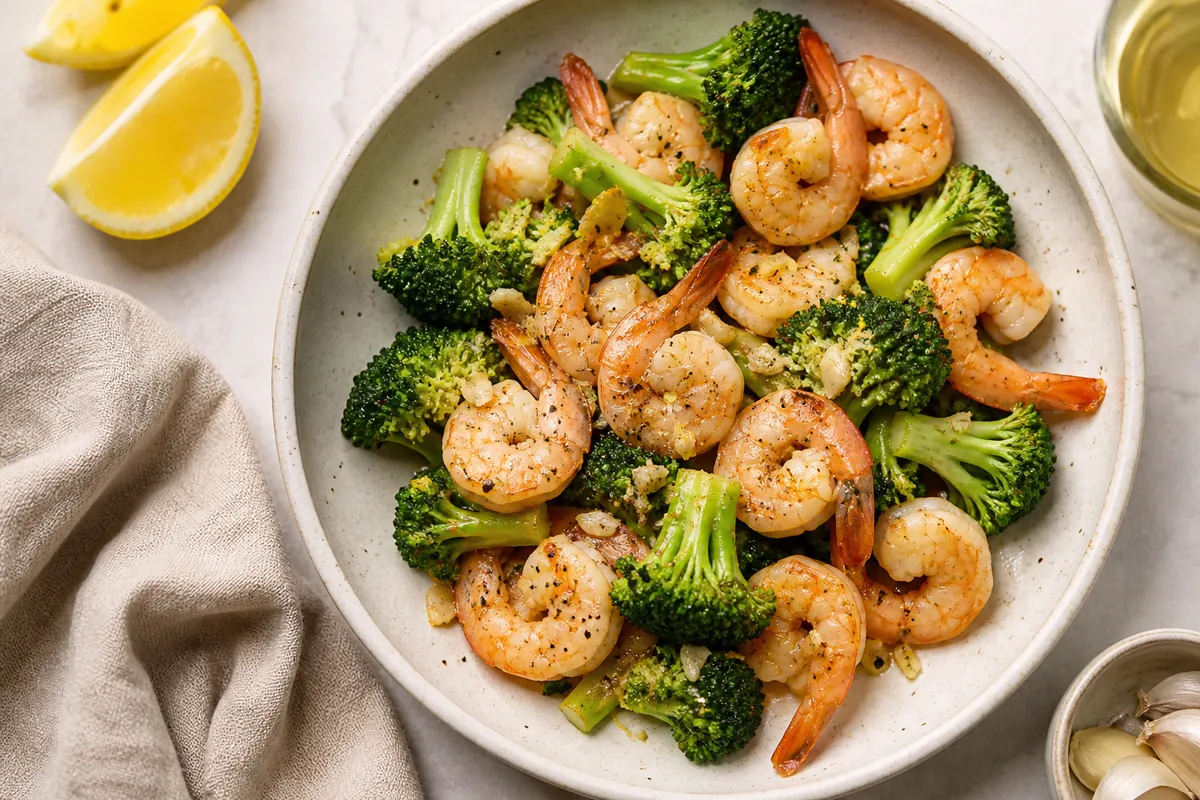
The starchy pasta water emulsification technique that ties this recipe together also powers Tuscan chicken pasta and spicy shrimp pasta.
What You Need
- 10 oz spaghetti (or flat rice noodles - see notes)
- 1 red bell pepper, thinly sliced
- 1 cup shredded carrots (about 2 medium carrots)
- 4 scallions, cut into 1-inch pieces (whites and greens separated)
- 1 cup snap peas or snow peas, strings removed
- 3 cloves garlic, minced
- 1 tablespoon fresh ginger, grated
- ¼ cup fresh cilantro, roughly chopped (for garnish)
- 1 lime, cut into wedges (for serving)
- 3½ cups low-sodium chicken or vegetable broth, warmed
- 3 tablespoon natural peanut butter (creamy)
- 3 tablespoon low-sodium soy sauce
- 1 tablespoon rice vinegar
- 1 teaspoon sriracha (optional, adjust to taste)
- 1 teaspoon sesame oil
- 1 teaspoon neutral oil (avocado or canola)
- ⅓ cup roasted peanuts, roughly crushed
- 1 tablespoon sesame seeds (optional)
Ingredient Details
- Natural peanut butterNatural peanut butter (peanuts and salt only) dissolves into broth cleanly because it contains no added stabilizers. Stir the jar well before measuring - separated oil on top means the ratio is off and it will behave unpredictably in the sauce.
- SpaghettiStandard dried spaghetti works best for this recipe - it absorbs the peanut-soy broth evenly as it simmers. Flat rice noodles (pad thai width) are an excellent gluten-free substitute; reduce cook time to 8-10 minutes.
- Fresh gingerA 1-inch piece of fresh ginger yields about 1 tablespoon when grated on a Microplane. Frozen ginger grates even more easily than fresh and can be stored in the freezer indefinitely - use it directly from frozen.
- Rice vinegarUnseasoned rice vinegar adds mild acidity that sharpens the peanut sauce without the harsh bite of white vinegar. Seasoned rice vinegar (which contains sugar and salt) can substitute but will slightly sweeten the sauce.
- Sesame oilToasted sesame oil is added at the finish, not during cooking - its flavor compounds burn and turn bitter when heated for extended periods. One teaspoon is enough to deliver a distinct, nutty aroma without dominating the sauce.
Ingredient Swaps
The peanut-soy-lime framework adapts easily to different proteins, vegetables, and heat levels while keeping the one-pot technique intact.
- Spaghetti → rice noodles: Use flat pad-thai-width rice noodles; reduce broth by ½ cup and cook time to 8-10 minutes since rice noodles absorb liquid faster.
- Peanut butter → almond butter: Almond butter produces a slightly thinner sauce with a nuttier, less sweet profile; increase soy sauce by 1 teaspoon to compensate for less inherent sweetness.
- Red bell pepper → yellow bell pepper + edamame: Shelled edamame (thawed from frozen) added in the last 3 minutes adds protein and a bright color contrast.
- Sriracha → sambal oelek: Sambal oelek provides more texture and a fresh-chili flavor compared to the vinegar-forward heat of sriracha; start with ½ tsp.
- No protein → shredded rotisserie chicken: Stir in 2 cups shredded chicken with the scallion greens at the very end - it just needs to warm through and does not require additional cook time.
Natural vs Conventional Peanut Butter
Natural peanut butter: dissolves cleanly into the broth without leaving a gummy residue; the pure peanut flavor comes through in the finished sauce
Skip natural if: you only have conventional - it works, but whisk it into the broth more aggressively and expect a slightly thicker, stickier sauce
Spaghetti vs Rice Noodles
Spaghetti: holds its shape longer during reheating, stores well for 3 days, and carries the sauce in a familiar way
Skip spaghetti if: you need a gluten-free option - flat rice noodles absorb the peanut broth beautifully and are traditional for Thai flavor profiles
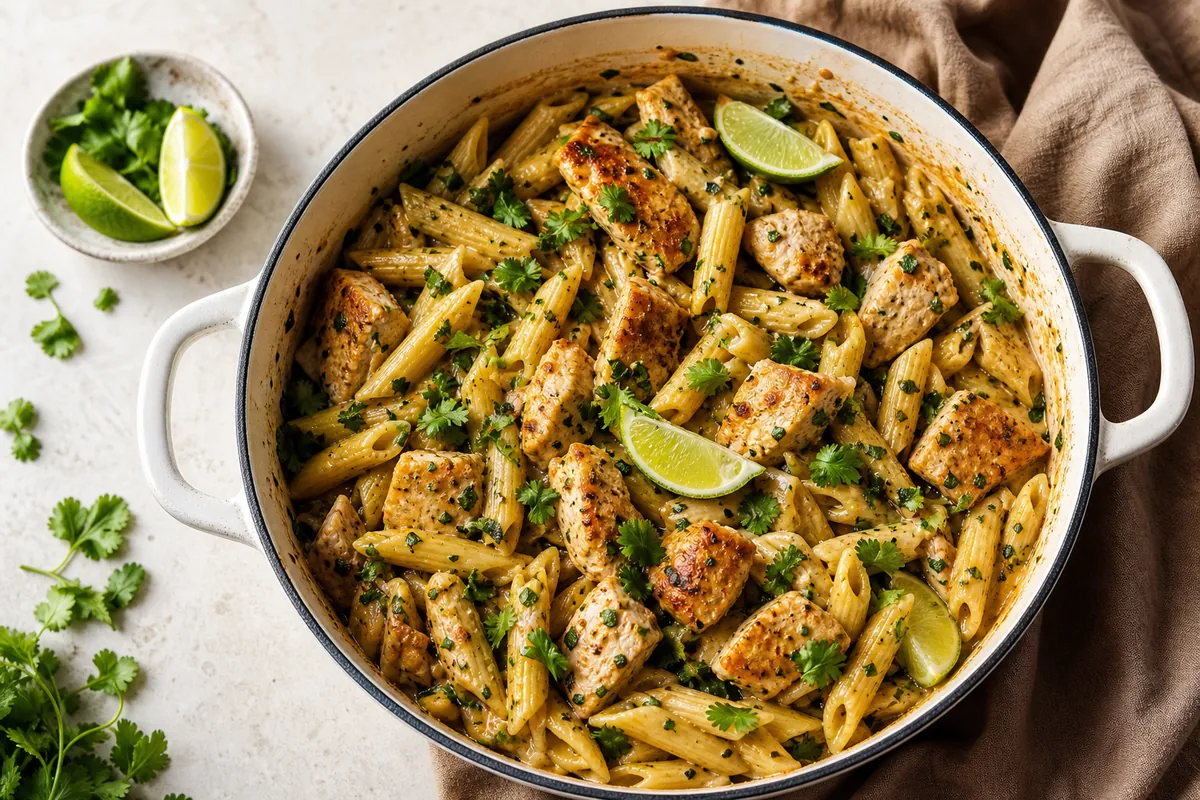
If you want a protein swap or a different sauce direction, caprese pasta and cilantro lime chicken pasta follow the same sequence.
Instructions
The unique step in this recipe is pre-emulsifying the peanut butter into warm broth before the pot reaches a boil. This 60-second whisking step determines the texture of the entire sauce - skip it and you will have peanut butter lumps that never fully incorporate.
- Emulsify the peanut sauce. Warm the broth in the pot over medium-low heat until steaming but not boiling (about 160°F). Add peanut butter, soy sauce, and rice vinegar. Whisk continuously for 60-90 seconds until completely smooth and no peanut butter streaks remain.
- Build the aromatics. Add neutral oil, then garlic, ginger, and scallion whites to the pot. Cook over medium heat, stirring, for 2 minutes until fragrant.
- Add pasta and vegetables. Increase heat to bring to a gentle boil. Add spaghetti (break in half to submerge), red bell pepper, and shredded carrots. Stir to separate the noodles.
- Simmer until al dente. Cook over medium, stirring every 2 minutes, for 12-14 minutes until spaghetti is just tender and the sauce coats the noodles thickly. Add snap peas in the last 3 minutes.
- Finish the dish. Remove from heat. Stir in sesame oil, sriracha (if using), and scallion greens. Squeeze juice from ½ lime directly into the pot and toss to combine. Taste and adjust soy sauce or lime.
- Plate and garnish. Divide among bowls. Top with crushed roasted peanuts, cilantro, sesame seeds, and lime wedges for squeezing at the table.
What to Serve With It
| Side Dish | Prep | Why It Works | How to Serve |
|---|---|---|---|
| Crispy tofu | Medium | Firm tofu cubed and pan-fried adds plant-based protein with a contrasting crunch against the soft noodles | Press extra-firm tofu, cube it, toss with cornstarch; pan-fry in 2 tablespoon oil over high heat 4 min per side until golden |
| Cucumber ribbon salad | Easy | Cool, crunchy cucumber ribbons provide a refreshing contrast to the warm peanut-soy noodles | Use a peeler to pull wide cucumber ribbons; toss with rice vinegar, sesame oil, and a pinch of salt |
| Mango slices | Easy | Fresh mango's sweetness and acidity cut through the savory peanut sauce and add a tropical brightness | Slice 1 ripe mango and serve alongside; squeeze fresh lime over the slices |
| Spring rolls (fresh) | Medium | Cold rice-paper rolls filled with shrimp and herbs echo the Thai flavor profile without adding heaviness | Soak rice paper 15 sec; fill with shrimp, vermicelli, mint, and lettuce; serve with peanut dipping sauce |
| Edamame with sea salt | Easy | Warm edamame adds protein and provides a simple, complementary snack while the pasta cooks | Microwave frozen edamame in pod 3 min; toss with flaky sea salt and serve in pod for shelling at the table |
For meal prep variety, cheesy broccoli pasta and avocado tomato pasta store and reheat on the same schedule as this one.
Store and Reheat
| Method | Time | Best For |
|---|---|---|
| Skillet over medium-low | 4-5 min | Best method - add 3 tablespoon broth or water; the peanut sauce re-emulsifies with gentle heat and stirring |
| Microwave at 70% power | 90 sec, stir halfway | Quick option - cover loosely; add 1 tablespoon water before heating; sauce may separate slightly but stirs back together |
| Pot over low with lid | 5 min | Best for full portions - add ¼ cup broth, stir well every 2 min; the peanut base holds up well with low heat |
- Refrigerate in an airtight container within 2 hours; pasta keeps 3 days.
- The peanut sauce thickens considerably in the refrigerator - always add broth or water when reheating.
- Do not freeze - the peanut sauce separates and becomes grainy upon thawing.
- Add fresh cilantro, crushed peanuts, and a squeeze of lime after reheating to restore brightness.
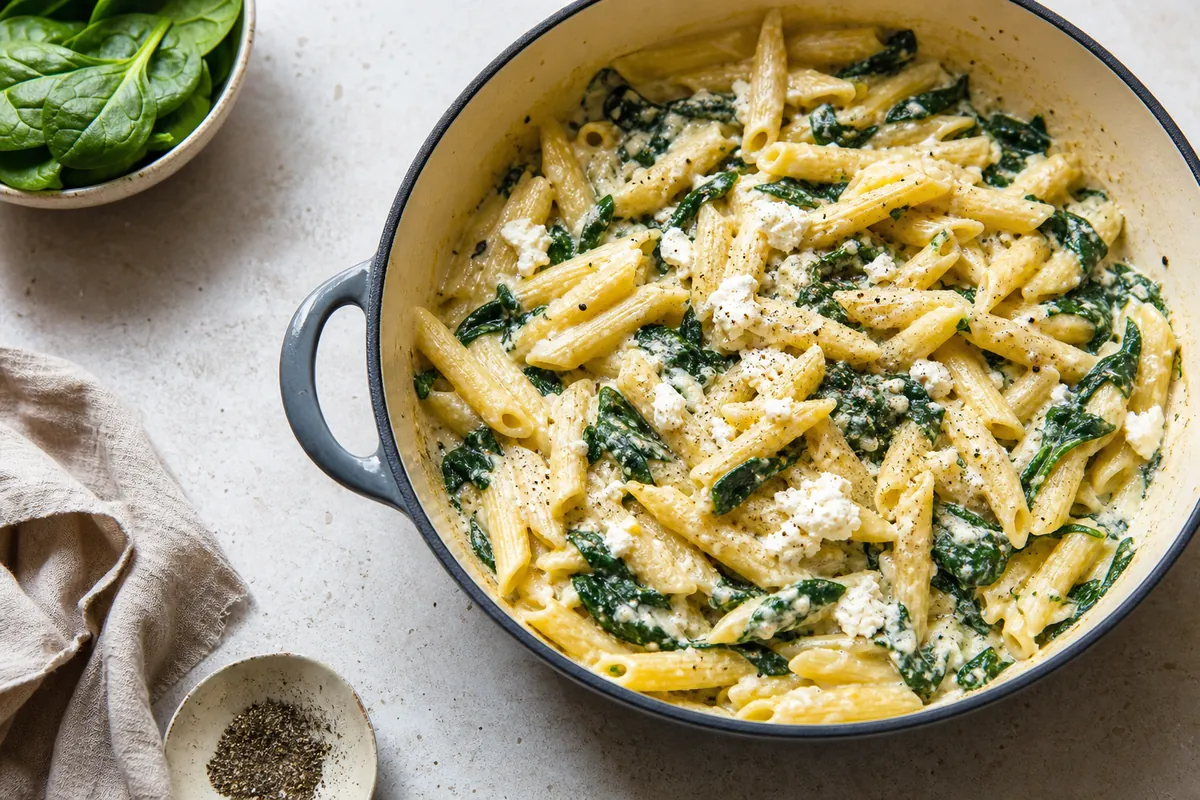
If the sauce reduces too fast or too slow, the same adjustments covered here apply to creamy lemon version and spinach tomato pasta.
Frequently Asked Questions
Why is my peanut sauce lumpy or grainy?
Lumps form when peanut butter contacts boiling liquid - the sudden heat causes the proteins in the peanut butter to seize before they can emulsify. Always whisk it into warm (not boiling) broth first.
If you already have lumps, reduce heat to low and whisk vigorously while adding 2 tablespoon additional warm broth - many lumps will dissolve with persistent stirring.
Can I make this dish spicier?
Yes - increase sriracha to 2 tsp, or add ½ teaspoon sambal oelek along with the scallion greens at the finish for more heat and texture.
A few drops of chili oil drizzled over each bowl at serving is an effective way to add heat individually without committing the entire pot to a spice level.
Is this recipe gluten-free?
Not as written - both spaghetti and standard soy sauce contain gluten. To make it gluten-free, substitute flat rice noodles for the spaghetti and use tamari or coconut aminos in place of soy sauce in the same quantity.
Can I add a protein without changing the cook time significantly?
Shredded rotisserie chicken is the easiest option - stir 2 cups into the finished dish off heat. It only needs to warm through, which takes about 2 minutes of residual heat.
Large shrimp can be added in the last 3 minutes of simmering - they cook through in exactly that time in the hot broth.
Can I use almond butter instead of peanut butter for an allergy?
Yes - use the same 3 tablespoon of natural almond butter and follow the same pre-whisking process. The flavor will be nuttier and slightly less sweet; increase soy sauce by 1 teaspoon and taste before serving.
Sunflower seed butter is the best peanut-free alternative for tree-nut allergies as well - it produces a slightly more neutral sauce that accepts the soy and lime flavors cleanly.
Thai Peanut One-Pot Pasta
Ingredients
Equipment
Method
- Warm broth in the pot over medium-low until steaming (about 160°F). Add peanut butter, soy sauce, and rice vinegar. Whisk 60–90 seconds until completely smooth.
- Add neutral oil, garlic, ginger, and scallion whites. Cook over medium heat 2 minutes, stirring.
- Increase heat to a gentle boil. Add spaghetti (break in half), bell pepper, and shredded carrots. Stir to separate noodles.
- Cook over medium, stirring every 2 minutes, for 12–14 minutes until spaghetti is al dente. Add snap peas in the last 3 minutes.
- Remove from heat. Stir in sesame oil, sriracha, scallion greens, and juice of ½ lime. Taste and adjust.
- Divide among bowls. Top with crushed peanuts, cilantro, sesame seeds, and lime wedges.
Notes
- Whisk peanut butter into warm (not boiling) broth — boiling liquid causes it to seize.
- Use natural peanut butter only; stabilizers in conventional peanut butter create a gummy sauce.
- Add sesame oil off heat; it turns bitter when cooked at high heat.
- Add lime juice at the finish, not during simmering, to preserve brightness.
- Peanut sauce thickens in the fridge; add broth when reheating.
Tried this recipe?
Let us know how it was!
Carrie is a food writer and editor with more than 15 years of experience. She has worked for some of the biggest names in the food industry, including Bon Appétit, Food & Wine, and Martha Stewart Living.
As the Editor in Chief of EpicureDelight, Carrie oversees all of the content on the site. She also manages the team of contributing writers and editors, who help to create delicious recipes, helpful tips, and informative articles that you’ll find on the site.
A native of the Chicago area, Carrie is passionate about all things food. She loves trying new restaurants and experimenting with new recipes in her kitchen. She’s also a graduate of the Culinary Institute of America, so she knows a thing or two about food!