
That warm golden-orange tint in rice, stews, and braised meats comes almost entirely from annatto seed doing its quiet work in hot oil.
When you're out of it, the dish doesn't have to lose that color-you just need to pick the right annatto seed substitute and know how to apply it.
Color is the priority. Flavor is secondary and easier to correct.
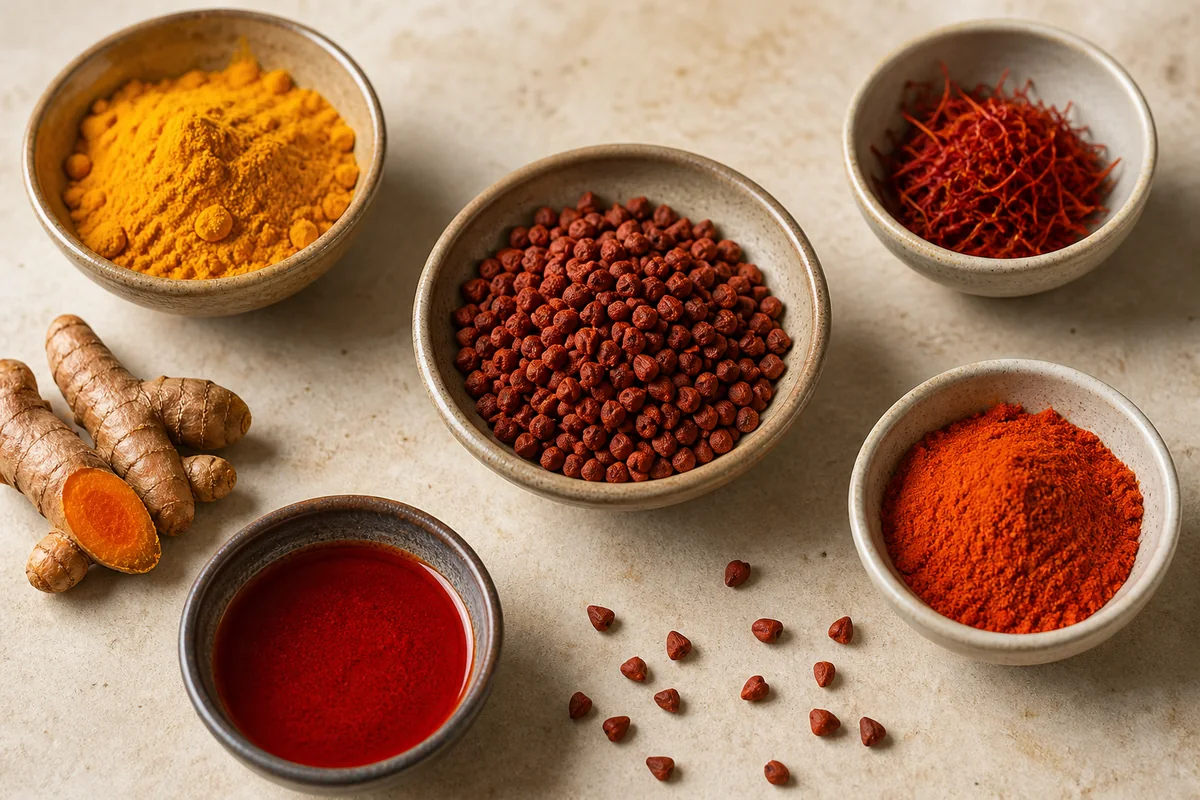
The best annatto seed substitutes are annatto powder, ground achiote seeds, achiote paste, turmeric, and paprika. Match color intensity first, then taste. Powders and pastes disperse faster than whole seeds, so start with a smaller amount and build up in the pot.
The Best Annatto Seed Alternatives (Reference Table)
Scan this table first. It tells you which substitute to reach for based on what you need: color, flavor, or both.
| # | Substitute | Best For | Ratio | Key Note |
|---|---|---|---|---|
| 1 | Annatto Powder | Both | 1:1 | Add in stages; can darken fast |
| 2 | Ground Achiote Seeds | Both | 1:1 | Steep in warm fat 5-10 min |
| 3 | Achiote Paste | Both | ¾:1 | Seasoned; reduce salt in dish |
| 4 | Turmeric (ground) | Color | 1:2 | Golden hue; herbal flavor shift |
| 5 | Paprika (sweet/mild) | Color | 1:2 | Red-orange tint; avoid smoked |
Turmeric and paprika shift the hue noticeably. Start with half the intended amount and adjust by eye before the main simmer.
5 Substitutes That Work Instead of Annatto Seed
1. Annatto Powder
Annatto powder (also called achiote powder) is the most direct swap because it comes from the same seed, just ground. It colors oil or broth almost immediately, so you'll hit your target shade faster than with whole seeds. If you've ever read about annatto, you know the earthy, faintly peppery note is mostly intact in the powder form too.
- How to use: Stir into 2-3 tablespoons of warm oil over medium-low heat for 2-3 minutes before adding other ingredients.
- Color to expect: Deep orange, slightly more saturated than whole-seed infusions - check it early.
- When to reduce: Drop to ¾ the listed amount in light-colored sauces where hue reads more intense.
- Bitterness risk: If the oil smokes, the powder can taste sharp; keep the heat gentle.
Skip if: Your recipe needs annatto's mild earthy note more than color, because powder can taste a bit sharper after extended simmering.
2. Ground Achiote Seeds
Ground achiote seeds are just annatto seeds that have already been processed for you. Same source, same pigment compounds, but the smaller particle size means the color releases faster into warm fat or broth.
This is the closest you'll get to the whole-seed behavior without steeping whole seeds.
For dishes like arroz con pollo or sofrito bases, it handles beautifully. You can find it in Latin grocery stores, usually right next to the whole seeds.
- Steep method: Add to 2 tablespoons of warm oil or broth and let it infuse for 5-10 minutes over low heat.
- Strain or not: Strain if you want a smooth sauce; leave it in for rustic stews and rice dishes.
- Timing: Don't rush past 5 minutes - the color deepens noticeably in those last 2 minutes of steeping.
- Ratio: Use 1:1 as a starting point, then adjust by eye.
Skip if: You don't have time for even a short warm-oil infusion, because the ground spice still needs heat contact for consistent color.
3. Achiote Paste
Achiote paste is annatto-based but comes blended with garlic, vinegar, cumin, and other seasonings. The pigment is stronger per tablespoon, and the color payoff is excellent.
Understanding achiote paste flavor matters here, because you're not just adding color - you're adding a whole spice profile.
Achiote Paste vs. Annatto Seed
Works for: marinades, braises, cochinita pibil, rice dishes where seasoning is welcome
Skip if: your dish is already salt-forward or the sauce reduces heavily (paste seasoning concentrates)
- Start ratio: Use about ¾ of what the recipe calls for in annatto seeds, then taste before adding more.
- Dissolve it first: Mash the paste into a tablespoon of warm oil or citrus juice to help it disperse evenly.
- Salt check: Reduce added salt by at least ¼ teaspoon when using paste - it already carries seasoning.
- Acid adjustment: If the dish tastes sharp, a pinch of sugar or a splash of broth balances the vinegar notes in the paste.
Skip if: You're making a reduced broth sauce where seasoning concentrates - paste can overshoot both color and salt quickly.
4. Turmeric
Turmeric is a color stand-in, not a flavor match. It gives dishes a golden-yellow tone that can read as close to annatto's hue in rice and light soups, but the taste is more herbal and slightly bitter - nothing like annatto's mild peppery warmth.
If you need achiote paste alternatives for a recipe and turmeric is all you have, it will keep the dish looking appetizing even if the flavor profile shifts.
Use ½ teaspoon of turmeric for every 1 teaspoon of annatto seed called for. More than that and the dish can tip into a noticeably "curry-adjacent" zone that doesn't fit Latin or Caribbean recipes.
The hue also reads yellower under warm lighting than annatto's true orange. For dishes where the golden tint is the goal and diners won't be comparing side-by-side, it works fine.
Skip if: The recipe relies specifically on annatto's earthy, faintly nutty note - turmeric will dominate the flavor in a different direction.
5. Paprika (Sweet or Mild)
Sweet paprika carries a warm red-orange pigment that can stand in for annatto's glow in rice, soups, and sauces. It won't land in exactly the same color zone - paprika leans a bit more red than annatto's true golden-orange - but in a finished dish, most people won't flag the difference.
Knowing paprika in cooking helps: the sweet version is much closer to annatto's warmth than smoked paprika, which pulls flavor in a completely different direction.
- Golden target: Use ½ teaspoon paprika for every 1 teaspoon annatto seed and check the color before the simmer.
- Sweet vs. mild: Both work; sweet paprika is slightly more vibrant, mild is more neutral - either is fine for rice and stews.
- Avoid smoked: Smoked paprika adds a barbecue-adjacent note that clashes with dishes built around annatto's subtle earthiness.
- Bloom it: Stir into warm oil for 60 seconds before adding liquid - raw paprika powder can taste a bit flat.
Skip if: You need a genuinely golden-orange look rather than red-orange - paprika will tip the color toward red, especially in pale sauces. For savory dishes where paprika is already an option, it can also replace other warm spices; see savory uses for more context.
Making Your Annatto Seed Substitute Work (Color + Flavor Control)
The key is always color first, seasoning second. Nail the hue in warm fat before anything else hits the pan, because once the dish is loaded with proteins and vegetables, you can't correct color cleanly.
Keep a small dish of your substitute nearby so you can add in increments.
- Infuse in warm fat: Add your substitute to 2-3 tablespoons of oil or broth over medium-low heat and let it sit 3-5 minutes before building the dish - this mimics how whole annatto seeds release pigment.
- Adjust shade in small steps: Add ¼ teaspoon at a time, stir, and check the color after 2 minutes of simmering - the shade deepens as liquids reduce.
- Taste and correct late: Powders and pastes bring extra flavor; taste the dish at the halfway mark and adjust salt, acid, or sweetness before serving.
One detail worth remembering: color looks different after cooking reduces the liquid. A sauce that looks perfectly golden-orange at 30 minutes can look quite dark at 45.
Pull back on the substitute amount if the recipe has a long simmer time.
Frequently Asked Questions
Annatto powder is the closest match - same pigment source, faster dispersal. Use a 1:1 ratio and steep in warm oil for 2-3 minutes before adding other ingredients.
You can add it directly, but the color may be uneven. A quick 2-minute bloom in warm oil gives a more consistent golden-orange result.
Start at ¾ of the annatto seed amount called for. Achiote paste is seasoned, so it can overshoot salt and intensity if used at a straight 1:1 ratio.
Yes, both do. Turmeric tastes more herbal and bitter; paprika reads sweeter. Neither replicates annatto's mild, faintly peppery note, so use smaller amounts.
Add extra broth or unseasoned liquid in small splashes and simmer 3-4 minutes. Diluting mid-cook is the most reliable way to lighten an over-colored dish.
5 Best Annatto Seed Substitutes (Honest Picks)
Ingredients
Equipment
Method
- Decide what you need most: color (most important) or the mild earthy/peppery flavor (secondary).
- Choose your substitute from the list above based on your available form (powder/paste/threads) and cooking method (oil infusion vs direct simmer).
- Start with the listed ratio, then adjust by looking for the target shade: golden-orange for color-forward dishes.
- If using powder/paste, steep in 2-3 tablespoons of warm oil or broth for 5-10 minutes before adding to the pot for a more even color.
- Taste near the end: if it's too intense, dilute with extra liquid; if too pale, add small pinches and simmer 2-3 minutes.
Notes
- Annatto's job in most recipes is color extraction, typically from steeping in warm fat or liquid before simmering.
- Flavor impact varies: annatto is mild-earthy; turmeric and paprika are more flavor-forward than they look in color.
Tried this recipe?
Let us know how it was!
Carrie is a food writer and editor with more than 15 years of experience. She has worked for some of the biggest names in the food industry, including Bon Appétit, Food & Wine, and Martha Stewart Living.
As the Editor in Chief of EpicureDelight, Carrie oversees all of the content on the site. She also manages the team of contributing writers and editors, who help to create delicious recipes, helpful tips, and informative articles that you’ll find on the site.
A native of the Chicago area, Carrie is passionate about all things food. She loves trying new restaurants and experimenting with new recipes in her kitchen. She’s also a graduate of the Culinary Institute of America, so she knows a thing or two about food!



