
That slow, steady stir-watching a risotto turn glossy and thick-depends almost entirely on one thing: starch. Arborio rice releases it in waves as you cook, which is why swapping it carelessly can leave you with either gruel or gravel. The grain type and how much you rinse it matter more than the brand.
The good news is that several other rice varieties share Arborio's short-to-medium grain structure and high amylopectin content. Pick the right one and your dish will still hit that creamy, spoonable finish.
Pick the wrong one and no amount of stirring will save it.
The best arborio rice substitute depends on your dish. Carnaroli and Vialone Nano are the closest matches for stovetop risotto. Medium-grain sushi rice works as a pantry fallback. Short-grain pudding rice is ideal for baking. Jasmine rice is a last resort-expect less creaminess.
5 Best Arborio Rice Substitutes (Ranked by Texture Match)
Most substitutes swap in at a 1:1 ratio by weight or volume. What changes is how much you stir, how long you simmer, and whether you rinse first.
Skipping the rinse preserves surface starch-and surface starch is what creates the creamy coating that defines a proper risotto. Keep that principle in mind across all five options below.
| # | Substitute | Best For | Ratio | Key Note |
|---|---|---|---|---|
| 1 | Carnaroli Rice | Risotto / Stovetop | 1:1 | Firmest grain, creamiest result |
| 2 | Vialone Nano | Risotto / Paella-style | 1:1 | Stays tender without going mushy |
| 3 | Medium-Grain Sushi Rice | Stovetop / Casseroles | 1:1 | Don't rinse for max starch |
| 4 | Generic Risotto Rice | Risotto / Baking | 1:1 | Check label for short grain |
| 5 | Short-Grain Pudding Rice | Baking / Rice Pudding | 1:1 | Softer finish, great for desserts |
1. Carnaroli Rice
Carnaroli is the professional kitchen's preferred risotto grain for a reason: it holds its al dente center longer than Arborio while still releasing a generous amount of starch into the cooking liquid. If you want to understand what makes arborio rice special, Carnaroli is the benchmark that puts it in context-they're that close in character.
- Texture: Slightly firmer grain than Arborio; creamy sauce develops at the same rate
- Liquid adjustment: Use the same liquid ratio; the grain absorbs at a nearly identical rate
- Stirring: Stir as frequently as you would with Arborio-no change in technique needed
- Best for: Classic stovetop risotto, baked risotto in a covered pot with enough liquid
Skip if: You're making a quick oven-baked rice dish without enough added moisture to sustain active starch release-Carnaroli performs best with stovetop simmering.
2. Vialone Nano Rice
Vialone Nano is smaller and rounder than Carnaroli, and it produces a looser, more flowing risotto-closer to the Venetian style called *all'onda* ("wave-like"). It is a legitimate top-tier arborio rice replacement and deserves more pantry space than it gets.
- Creaminess level: Very high-starch releases quickly, so watch the final 3 minutes closely
- Liquid ratio: You may need 2-3 tablespoons less stock than Arborio recipes specify
- Best for: Stovetop risotto, paella-style simmered dishes, any recipe where a flowing finish is preferred
- Grain behavior: Holds shape well under heat; doesn't collapse the way overcooked Arborio can
Skip if: Your recipe needs fully separated, non-creamy grains-fried rice, grain bowls, or any dish where stickiness is the enemy.
3. Medium-Grain Sushi Rice
Sushi rice is the most accessible high-starch grain you're likely to already have. The key decision is whether to rinse it.
For an arborio rice substitute in cooking, skip the rinse entirely-that surface starch is what drives the creamy result you're after.
- Rinse or not: No rinse for risotto-style dishes; one rinse and drain if you want slightly less stickiness in casseroles
- Cook time: Slightly shorter than Arborio-check for doneness 2 minutes early
- Caution: It can turn gluey fast if you over-stir or leave it on heat too long
- Best for: Stovetop risotto when no Italian varieties are available, rice-based casseroles
Skip if: You want distinct, separate grains in the finished dish-sushi rice goes creamy and cohesive almost immediately once stirred and simmered.
4. Generic Risotto Rice
Store-brand bags labeled "risotto rice" are worth buying when the pantry is bare and specialty options aren't nearby. Look at the grain description on the back: you want short or medium grain, not "long grain blend."
Packaging that says "for risotto" but lists basmati or long-grain rice as the first ingredient is misleading-put it back.
Generic Risotto Rice vs. Arborio
Works for: stovetop risotto, baked rice dishes, creamy casseroles when the label confirms short or medium grain
Skip if: the label reads "long-grain" or "basmati-style"-starch behavior won't match Arborio
- Check the label: "Short grain" or "medium grain" is the signal; grain shape matters more than brand name
- Liquid: Start with the same ratio as Arborio and add stock in small increments as usual
- Stirring: Stir every 60-90 seconds; some generic varieties release starch slightly slower than Arborio
Skip if: You can only find long-grain or basmati-labeled "risotto rice"-neither will deliver the starch-driven creaminess the recipe needs.
5. Short-Grain Pudding Rice
Short-grain pudding rice is the best arborio rice substitute in baking and in any recipe where you want a soft, creamy, dessert-leaning texture. It soaks up moisture eagerly, which makes it ideal for rice pudding but means you need to watch liquid levels carefully in savory applications.
| Use | Ratio | Notes |
|---|---|---|
| Rice pudding / baked dessert | 1:1 | Use same liquid; texture is softer and creamier than Arborio |
| Stovetop risotto | 1:1 | Reduce stock by 3-4 tbsp; stops cooking 2 min earlier than Arborio |
| Baked casserole | 1:1 | Cover dish tightly; add 2 tablespoon extra liquid to prevent dryness |
- Creaminess: Very high-softer finish than Arborio, which suits desserts perfectly
- Baking tip: If the dish bakes uncovered, add 2-3 extra tablespoons of liquid to compensate for evaporation
- Savory use: Works in casseroles but will be noticeably softer than a traditional risotto grain
Skip if: You're making classic stovetop risotto that needs al dente centers-this grain over-softens before you reach the right finish texture.
Making Arborio Rice Substitutes Work
The most common mistake when using any arborio rice substitute is rinsing the grain too aggressively before cooking. Rinsing strips the surface starch that creates the characteristic creamy consistency, and no amount of extra stirring will fully replace it.
You can find more on managing arborio rice shelf life and freshness-which also affects starch performance-if you're working from an older bag. For cooks switching to jasmine as a last resort, checking out best jasmine rice alternatives may open up better options first.
- Skip the rinse (or go light): One quick rinse maximum for stovetop risotto substitutes; no rinse at all if maximum creaminess is the goal
- Adjust liquid in small amounts: Add warm stock 2-3 tablespoons at a time rather than pouring in large quantities; this applies to every substitute on this list
- Pull it early: Most substitutes reach doneness 2-3 minutes faster than Arborio, so taste frequently and stop cooking the moment the texture is right
Frequently Asked Questions
Carnaroli rice is the closest match. It releases starch at a similar rate to Arborio and holds its al dente center slightly longer, giving you a creamy, controlled finish.
No. Skip the rinse to preserve surface starch. Rinsing sushi rice before a risotto-style dish removes the starch that creates the creamy sauce.
Jasmine rice is a last resort only. It will not release starch the same way, so expect a fluffier, less creamy result even with constant stirring.
Start with the same amount and adjust as you go. Vialone Nano and pudding rice absorb slightly faster, so you may need 2-4 tablespoons less total.
Short-grain pudding rice is the best choice. It absorbs moisture evenly and produces a soft, creamy texture that suits baked desserts better than any other substitute.
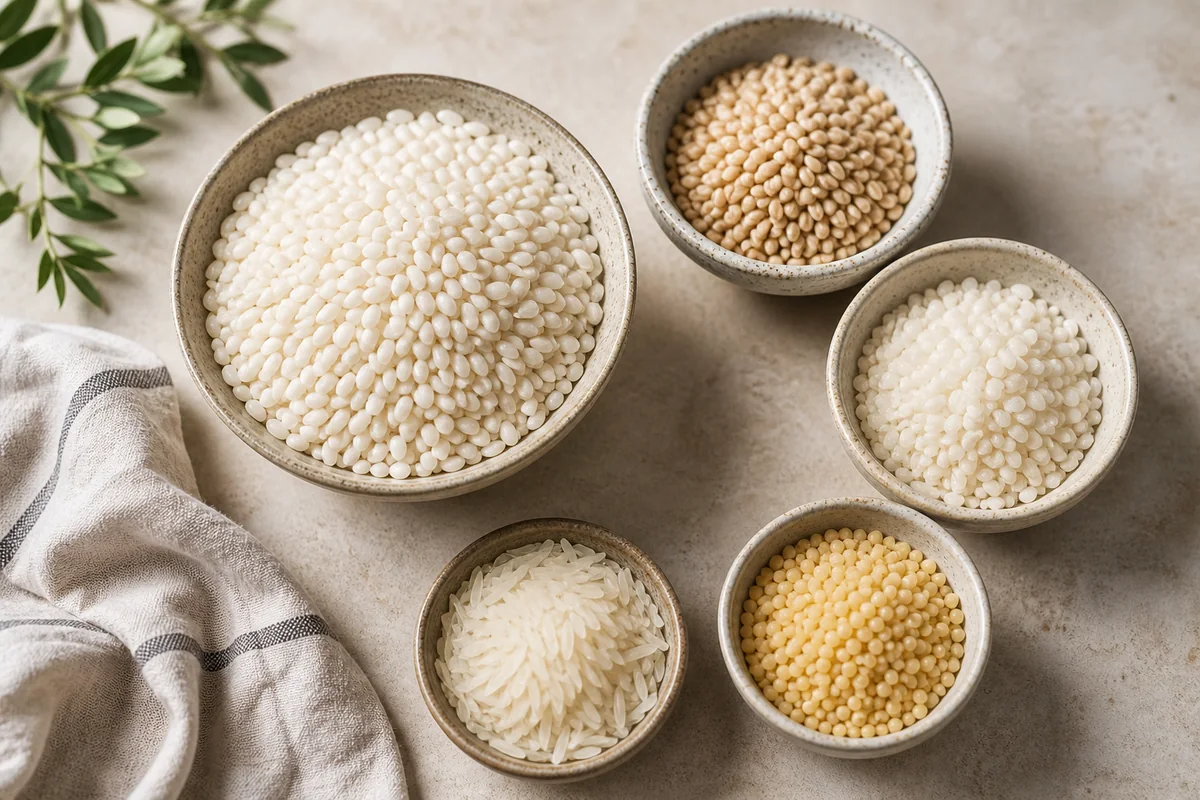
5 Best Arborio Rice Substitutes (Ranked)
Ingredients
Equipment
Method
- Match your goal: for risotto-style creaminess, pick Carnaroli, Vialone Nano, or medium-grain sushi rice.
- Use the table’s ratio (usually 1:1). For higher-absorption grains, slightly reduce added liquid by 2–4 tablespoons and adjust as you cook.
- If your substitute is very starchy, avoid heavy rinsing; if it’s too sticky, rinse once and drain thoroughly before cooking.
- For baking swaps, undercook by 2–3 minutes or compensate by adding a bit more moisture so the rice finishes tender.
- Taste for doneness and stop cooking as soon as the rice is creamy/tender; Arborio-style substitutes can turn mushy if overcooked.
Notes
- Creaminess comes from starch release—choose short/medium grains over long-grain varieties.
- For most swaps, use a 1:1 ratio and adjust liquid after the first few minutes of simmering.
Tried this recipe?
Let us know how it was!
Carrie is a food writer and editor with more than 15 years of experience. She has worked for some of the biggest names in the food industry, including Bon Appétit, Food & Wine, and Martha Stewart Living.
As the Editor in Chief of EpicureDelight, Carrie oversees all of the content on the site. She also manages the team of contributing writers and editors, who help to create delicious recipes, helpful tips, and informative articles that you’ll find on the site.
A native of the Chicago area, Carrie is passionate about all things food. She loves trying new restaurants and experimenting with new recipes in her kitchen. She’s also a graduate of the Culinary Institute of America, so she knows a thing or two about food!



