
Savory, tender, and just a little briny - artichoke hearts do a lot of quiet work in a dish. When you're staring at an empty pantry, finding the right artichoke heart substitute means thinking about what the artichoke is actually doing: adding creamy body, mild vegetal flavor, or that faint tang from the brine.
The swaps below are chosen for tenderness first, then either briny punch or creamy bulk depending on the role. Most require just draining, a quick chop, and sometimes a splash of acid to close the gap.
For most recipes, marinated artichoke hearts (drained) are the best artichoke heart substitute because they share the same flavor and texture. When those aren't available, hearts of palm work best for creamy dips and bakes, while green olives cover the briny tang in salads and pizza toppings.
Choose Your Artichoke Heart Substitute by Texture and Flavor
Pick based on what the recipe actually needs. If you want tender bites in a roasted dish, lean toward hearts of palm or artichoke bottoms.
If the recipe depends on briny tang, olives or marinated hearts are the better call. For a bulkier body in salads and spreads, chickpeas or eggplant fill the gap without overwhelming the other flavors.
If you're also adjusting other parts of the dish, knowing about lemon juice substitutes is helpful when the recipe needs brightness and you're running low on acid too.
| # | Substitute | Best For | Ratio | Key Note |
|---|---|---|---|---|
| 1 | Hearts of Palm | Both | 1:1 | Creamy dips and bakes |
| 2 | Artichoke Bottoms | Cooking | 1:1 | Rinse to control salt |
| 3 | Marinated Artichoke Hearts | Both | 1:1 | Drain well first |
| 4 | Green Olives | Cooking | ¾:1 | Reduce added salt |
| 5 | Canned Chickpeas | Both | 1:1 | Lightly smash for texture |
5 Artichoke Heart Substitutes Matched by Texture and Role
1. Hearts of Palm
Hearts of palm have a mild, slightly sweet flavor and a firm-yet-yielding texture that blends almost invisibly into creamy dishes. They're the go-to swap when the artichoke is doing body work - think spinach-artichoke dip, baked pasta, or casserole filling.
Drain and rinse them before use, then chop to about the same size you'd use for the artichoke. If your artichoke heart was doing the flavor heavy-lifting in the dish, add a small squeeze of lemon to hearts of palm to round out the flavor.
- Flavor profile: Mild and slightly vegetal, less tangy than brined artichoke hearts
- Texture match: Firm enough to hold a chop; softens well when baked into fillings
- Best uses: Spinach-artichoke dip, baked casseroles, stuffed pasta
Skip if: your dish depends on distinct, chunky artichoke bites - hearts of palm can get a little stringy and won't hold the same satisfying pull.
2. Artichoke Bottoms
Canned artichoke bottoms are the closest single-ingredient swap you'll find, sitting in the same family but offering a slightly denser, meatier texture than hearts. They behave almost identically in roasted dishes and baked preparations.
Canned Artichoke Bottoms
Works for: roasting, sautéing, baking, and spreads where you want tender bites
Skip if: your recipe is delicate - drain thoroughly and pat dry, or the dish turns watery
- Roasting/sauté: Holds its shape well; slice into quarters before adding to a pan
- Baking: Stays tender without going mushy at oven temps up to 400°F
- Spreads: Blend or chop fine; milder than hearts so add a splash of white wine vinegar for tang
Skip if: you want a briny punch straight from the can - rinse canned bottoms to control salt and liquid, then finish with acid.
3. Marinated Artichoke Hearts
When the recipe is built around that bright, tangy note - pizza toppings, antipasto plates, or zesty pasta salads - marinated artichoke hearts (drained) are the most faithful swap. They keep the brine flavor intact while adding a slight herbal edge from the marinade.
The main thing to watch is moisture. For dishes that can't handle extra liquid, like a best green olive alternatives or a pizza topping, drain them on a paper towel for about 5 minutes before adding.
- Flavor intensity: Bolder and more complex than plain canned artichoke hearts
- Moisture: Drain on paper towels; excess oil can make baked dishes greasy
- Best uses: Pizza, antipasto-style salads, white bean dips, flatbreads
Skip if: your recipe already has strong salty components - taste before adding any extra salt or soy sauce.
4. Green Olives
Olives won't replicate the vegetable bite, but they nail the briny, savory punch that artichoke hearts bring to pasta salads, tapenade-style blends, and pizza. The key difference is fat: olives carry more oil, so use ¾ cup of chopped olives for every 1 cup of artichoke hearts called for.
If you regularly use olives and want backup options, check out the best green olive alternatives for when those run out too. Balance the swap with a squeeze of lemon to add the brightness olives don't naturally have.
Green Olives vs. Artichoke Hearts
Works for: briny pasta salads, pizza toppings, olive-forward spreads, tapenade
Skip if: the dish needs a mild, tender bite - olives are sharp and assertive by comparison
- Ratio: Use ¾ cup chopped olives per 1 cup artichoke hearts; they're stronger
- Acid balance: Add 1 teaspoon fresh lemon juice per ½ cup of olives to mimic artichoke brightness
- Best uses: Pasta salad, pizza toppings, grain bowls, bruschetta-style spreads
Skip if: you need a mild, vegetable-forward flavor - the salt level can easily overwhelm a delicate recipe.
5. Canned Chickpeas
When artichoke hearts are mainly adding bulk and body to a salad or spread - not flavor complexity - chickpeas are a reliable fallback. They're neutral enough to take on seasoning and lemon without fighting the other ingredients.
Knowing how long artichoke heart lasts helps you plan ahead, but when they're genuinely out, lightly smash chickpeas with a fork to break the firm exterior and create a texture closer to a soft vegetable bite.
- How to prep: Drain, rinse, then smash lightly - 4 to 5 presses with a fork per chickpea, not a full mash
- Seasoning: Add ¼ teaspoon garlic powder, a pinch of salt, and 1 teaspoon lemon juice per cup to pull out savory notes
- Best uses: Chopped salads, hummus-adjacent dips, grain bowl bases, wraps
Skip if: delicate tenderness matters - chickpeas can taste hearty and starchy in dishes where artichoke softness is the point.
Making the Swap Work: Flavor, Texture, and Timing Checklist
Texture is the first decision, and acid is the finishing move. Match the substitute's texture to what the artichoke was doing in the dish (creamy body, tender bite, or briny flavor), then taste at the end and add lemon or vinegar if the swap feels flat.
If you're using a roasted preparation, eggplant needs 20 to 25 minutes at 400°F before it reaches the softness of a canned artichoke.
When you're cooking with substitute ingredients and also swapping something liquid in the recipe, keep in mind that best sake alternatives behave differently in marinades and can affect the final brine balance of the whole dish.
- Ratio check: Use 1:1 for hearts of palm, artichoke bottoms, marinated hearts, and chickpeas; drop to ¾:1 for olives
- Drain and chop: Pat canned substitutes dry before adding to bakes or sautés - excess liquid ruins texture
- Acid timing: Add lemon juice or white wine vinegar in the final 2 minutes of cooking, not at the start, so the brightness stays sharp
Frequently Asked Questions
Hearts of palm is the best match for dips. Drain, chop small, and add a squeeze of lemon to replicate the mild, tender body of artichoke hearts in spinach-artichoke dip.
Yes. Hearts of palm hold their texture well during baking and blend into casseroles and stuffed pastas without going mushy. Drain and rinse them first.
Use only ¾ cup of chopped olives per 1 cup of artichoke hearts, and cut any added salt in the recipe by half. Taste before seasoning further.
Yes, when artichokes are mainly adding bulk. Lightly smash the chickpeas and season with lemon and garlic so they absorb the dish's flavor profile rather than tasting starchy.
White wine vinegar or fresh lemon juice both work. Add 1 teaspoon per cup of roasted eggplant during the last 2 minutes of cooking to mimic artichoke brightness.
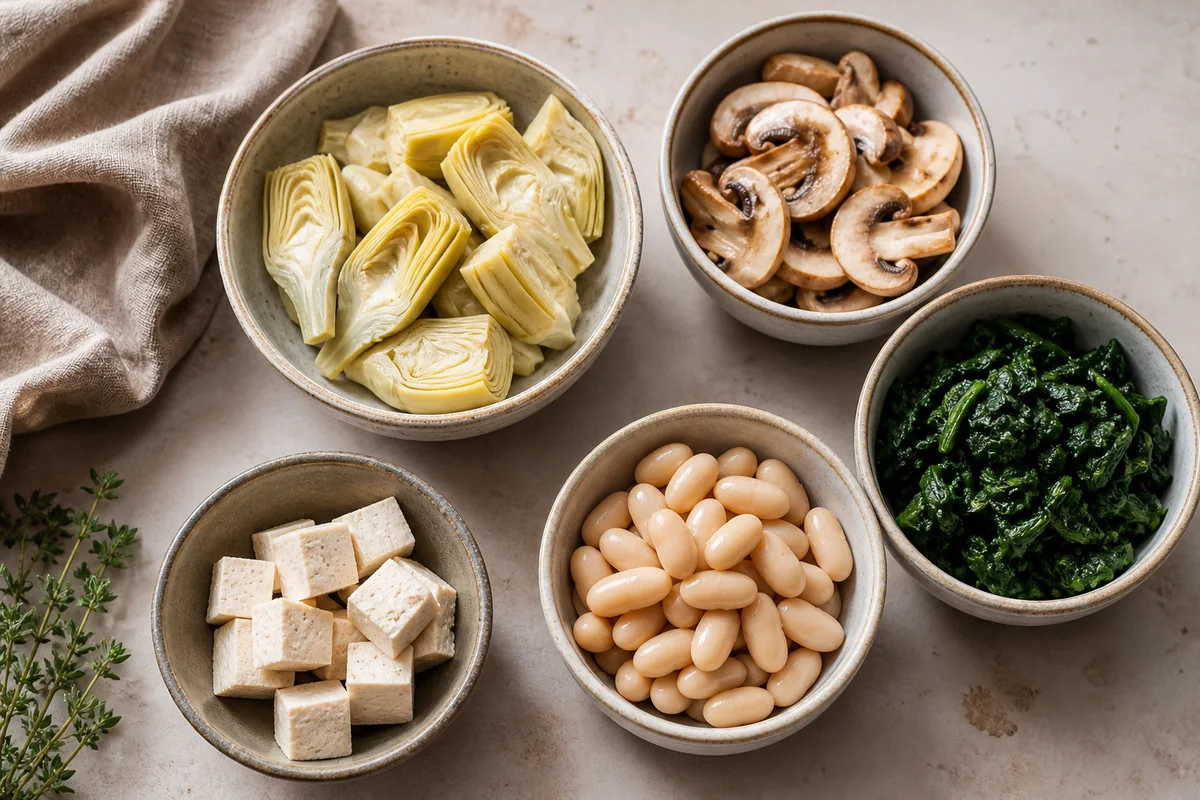
5 Best Artichoke Heart Substitutes (Easy Swaps)
Ingredients
Equipment
Method
- Identify what your recipe needs: tender bites (hearts), briny tang (olives), or creamy body (hearts of palm/chickpeas).
- Choose the closest swap from the ingredient list, then use the listed ratio to replace artichoke hearts.
- Drain and chop substitutes that come canned (hearts of palm, chickpeas) so the dish doesn’t turn watery.
- Adjust seasoning: if the substitute is salty (olives), reduce added salt; if it’s not tangy (eggplant), add acid (lemon/vinegar).
- Finish to match texture: bake/sauté briefly for tender bites, or blend/smash for dip-like consistency.
Notes
- Best results come from matching texture first (tender bite vs creamy body), then flavor (briny/acid).
- For baking/dips, drainage and chopping size matter more than exact variety.
Tried this recipe?
Let us know how it was!
Carrie is a food writer and editor with more than 15 years of experience. She has worked for some of the biggest names in the food industry, including Bon Appétit, Food & Wine, and Martha Stewart Living.
As the Editor in Chief of EpicureDelight, Carrie oversees all of the content on the site. She also manages the team of contributing writers and editors, who help to create delicious recipes, helpful tips, and informative articles that you’ll find on the site.
A native of the Chicago area, Carrie is passionate about all things food. She loves trying new restaurants and experimenting with new recipes in her kitchen. She’s also a graduate of the Culinary Institute of America, so she knows a thing or two about food!



