
That sweet-tangy crunch on a loaded sub or pizza slice? That's banana peppers doing quiet, important work.
When you're out of them, the right banana pepper substitute depends on exactly which job they're doing: are they the pickled tang that cuts through cheese and meat, or the mild pepper heat that adds a little brightness without burn?
Most recipes calling for banana peppers want both at once. A fresh green pepper alone won't cover it.
A jar of something pickled gets you closer fast.
The best banana pepper substitute depends on whether your recipe needs pickled tang, mild heat, or crunchy texture. For pizza and subs, pickled pepperoncini is the closest swap. For fresh pepper uses, a mild bell pepper with a splash of brine gets you surprisingly close.
5 Banana Pepper Substitutes Ranked by Tang and Mild Heat
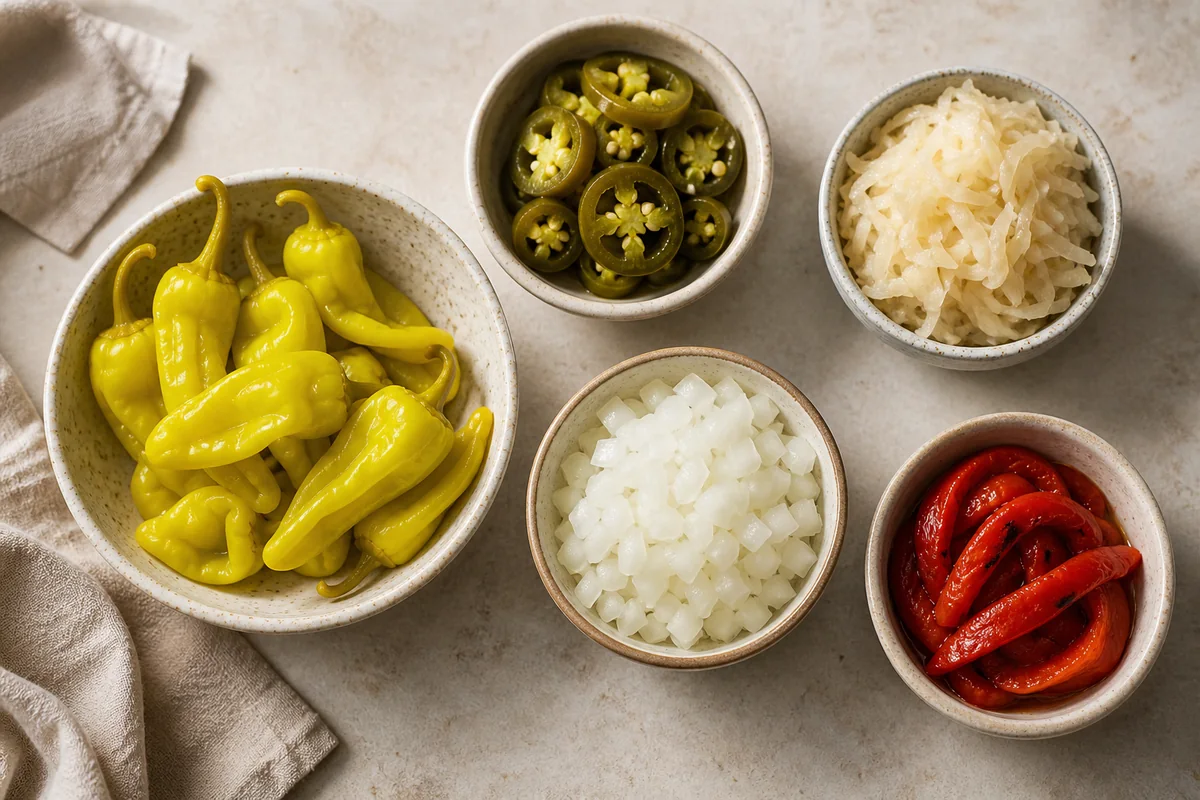
Every option below is ranked by how closely it replicates banana pepper's two core traits: mild heat and pickled tang. Pickled swaps sit at the top because that ring-style tangy topping is what most recipes actually need.
| # | Substitute | Best For | Ratio | Key Note |
|---|---|---|---|---|
| 1 | Pepperoncini (pickled) | Both | 1:1 | Closest tang + heat |
| 2 | Sweet pickled peppers / giardiniera | Both | 1:1 | Drain before using |
| 3 | Pickled jalapeño (seeded) | Cooked | ¾:1 | Seed to reduce heat |
| 4 | Roasted red pepper + vinegar | Fresh | 1:1 | Add acid for tang |
| 5 | Green bell pepper + pickle brine | Fresh | 1:1 | Brine rescues flavor |
1. Pepperoncini (Pickled)
Pickled pepperoncini is the single closest swap for banana peppers in any ring-topping context. The heat level is nearly identical, the acidity is sharp and bright, and the thin-walled texture holds up as rings on pizza or inside a sandwich.
Use them straight from the jar at a 1:1 ratio. If you're curious about the full flavor profile before committing, understanding pepperoncini helps confirm how closely it tracks banana pepper's character.
- Pizza: Slice into rings and lay on top before the final 2 minutes of baking-heat softens them perfectly.
- Sandwiches: Use whole or halved; the brine keeps them from making bread soggy if you blot lightly first.
- Salads: Chop roughly and toss in; the tang integrates well with vinaigrette-dressed greens.
Pepperoncini (Pickled)
Works for: pizza toppings, sub sandwiches, antipasto, any recipe using banana pepper rings
Skip if: your recipe needs a brighter, sweeter tang-pepperoncini runs slightly more savory and less sweet than banana pepper
2. Sweet Pickled Peppers / Giardiniera
Mild sweet pickled peppers from a jar-or mild giardiniera-give you the same crunchy, acidic topping feel as banana peppers. The texture is the real win here: firmer than pepperoncini, with a satisfying bite that doesn't go limp under heat.
If you want to know more about seasoning with banana pepper before picking your swap, that flavor breakdown makes the comparison easier. Always check the jar label-some giardiniera mixes include hot peppers.
- Texture check: Mild sweet pickled peppers stay crunchy even after 10-15 minutes under heat; giardiniera can soften faster depending on the cut.
- Before using: Drain in a strainer for 2 minutes, then blot with a paper towel to prevent sauce from going watery.
- Skip if: Your jar is mixed-hot-the extra heat will overpower the mild, sweet profile that banana peppers bring.
3. Pickled Jalapeño (Seeded)
Pickled jalapeños are sharper and hotter than banana peppers, but seeding them drops the heat significantly. You're still getting that pickled tang and the acid bite, just from a pepper with more punch in its walls.
Use about three-quarters the amount you'd normally use for banana peppers. If you're working with jalapeños in other parts of a recipe too, jalapeno pepper substitutes can help you balance the overall heat load.
- Seeding: Slice the jalapeño rings, then scrape seeds and white membrane with a spoon before using.
- Rinsing: A quick rinse under cold water after seeding reduces capsaicin on the pepper walls-it's not essential but helps.
- Amount: Start at three-quarters of what the recipe calls for, then taste and add more if the heat feels right.
- Skip if: You can't seed them-whole pickled jalapeños will be noticeably hotter than banana peppers in any direct swap.
4. Roasted Red Pepper + Vinegar
Roasted red peppers are sweet and soft, which makes them a good fresh-pepper stand-in when you have no pickled peppers at all.
The problem is sweetness: without adding acid, they'll read more like a condiment topping than the tangy punch banana peppers deliver.
The fix is simple. Add a small pinch of salt and about a teaspoon of white wine vinegar or apple cider vinegar per half cup of chopped roasted pepper.
- Adding tang: Stir in 1 teaspoon of white wine vinegar per ½ cup of roasted pepper, then taste-add another half teaspoon if it still reads too sweet.
- Keeping it from turning sweet: Use white wine or apple cider vinegar, not balsamic-balsamic adds sugar and makes the problem worse.
- Skip if: Your recipe requires distinct rings or a firm topping-roasted red pepper is softer and works better as a chopped or sliced topping.
5. Green Bell Pepper + Pickle Brine
Green bell pepper has the right mild, slightly grassy flavor and the crunch you want. What it lacks entirely is tang.
A good bell pepper blend with brine solves exactly that.
For a broader look at all the ways to work with bell peppers in a recipe, the bell pepper substitutes guide covers texture and flavor swaps in more detail.
- Brine method: Toss cut bell pepper pieces in a bowl with a generous splash of pickle brine-enough to coat-and let them sit for 10 minutes before using.
- Ratio guidance: Use 1:1 by volume with banana peppers, but taste after brining; you may want a little more brine before adding to the dish.
- Skip if: You need actual pepper flavor with some heat-bell pepper is sweeter and milder, and no amount of brine adds peppery bite.
Green Bell Pepper + Pickle Brine
Works for: recipes where crunch and mild sweetness are the main job; works well when brine is added
Skip if: you need peppery heat or distinct banana-pepper tang-brine helps but won't fully replicate it
Making Banana Pepper Substitutes Taste Right
Getting the swap right is mostly about matching two things: acid level and texture. Most substitutes cover one of those well and need a small adjustment on the other.
If you're swapping pepperoncini for banana peppers or moving in the other direction, the adjustment is minor-they're close enough that most recipes won't notice. If you're working with a fresh pepper instead of a pickled one, acid is the thing you must add.
- Match the tang: If your substitute isn't pickled, add 1-2 teaspoons of white wine vinegar or pickle brine per serving to bring the acid level up. Taste as you go.
- Match the texture: Drain jarred peppers for at least 2 minutes and blot dry; watery toppings make pizza and sandwiches soggy in minutes. Fresh peppers should be sliced thin-under ¼ inch-to stay close to the thin banana-pepper ring feel.
- Adjust heat: If your substitute runs hotter than banana peppers (jalapeño especially), reduce quantity by one-quarter first, then add back once you've tasted the dish.
Now if you're using chili flakes as a last-resort topping, note that the crush red pepper vs chili flakes difference matters-crushed red pepper is coarser and slightly milder, while chili flakes run hotter per pinch. Go lighter than you think you need.
Frequently Asked Questions
Pickled pepperoncini rings are the best match for pizza-same mild heat, nearly identical tang, and they hold up under oven heat without turning mushy. Use them at a 1:1 ratio.
Yes, but expect a flavor shift. Pickled peppers are tangier and softer than fresh; if swapping pickled for fresh, add a small splash of vinegar to the dish to compensate.
Seed the jalapeño slices and rinse briefly under cold water to reduce heat. Use about three-quarters of the amount called for and taste before adding more.
Green bell pepper soaked in pickle brine for 10 minutes is your best option. It won't be as tangy, but the crunch and mild flavor come close enough for most recipes.
Slightly, yes. Pepperoncini is close enough that most people won't notice. Bell pepper or roasted red pepper without added brine will taste noticeably sweeter and less tangy.
5 Best Banana Pepper Substitutes (Easy Swaps)
Ingredients
Equipment
Method
- Match the job: if your recipe calls for pickled banana peppers (rings on pizza/sandwiches), prioritize pickled substitutes; if it's fresh pepper flavor, use mild fresh peppers and add tang.
- Pick your swap from the table: choose the option with the closest balance of tang (acid) and mild heat (peppery bite).
- Use the listed ratio: for "use slightly less" swaps, start at the lower amount and add more only if you need more heat.
- Adjust texture: drain jarred peppers for sandwiches/pizza, or briefly blot to keep the topping from making bread/sauce watery.
- Finish with acid if needed: add a teaspoon or two of pickle brine/vinegar to bring the substitute closer to banana pepper tang.
Notes
- Use pickle brine or a quick vinegar mix to mimic banana peppers' tang.
- Seed hotter peppers for a banana-pepper-like mild heat level.
Tried this recipe?
Let us know how it was!
Carrie is a food writer and editor with more than 15 years of experience. She has worked for some of the biggest names in the food industry, including Bon Appétit, Food & Wine, and Martha Stewart Living.
As the Editor in Chief of EpicureDelight, Carrie oversees all of the content on the site. She also manages the team of contributing writers and editors, who help to create delicious recipes, helpful tips, and informative articles that you’ll find on the site.
A native of the Chicago area, Carrie is passionate about all things food. She loves trying new restaurants and experimenting with new recipes in her kitchen. She’s also a graduate of the Culinary Institute of America, so she knows a thing or two about food!



