That sharp, briny bite of pepperoncini is doing more work than most people realize. It adds tang, mild heat, and a sliceable crunch that rounds out sandwiches, pizzas, braises, and pickle boards all at once.
Finding a solid pepperoncini substitute means matching all three of those notes, not just one. Swap in something too hot and your dish tips spicy.
Swap in something too sweet and the acid disappears.
The list below covers five options that actually work, each matched to a specific use case. Draining your swap before measuring is the one step most people skip, and it matters most here.
Excess brine adds salt and shifts tang intensity in ways that are hard to correct later.
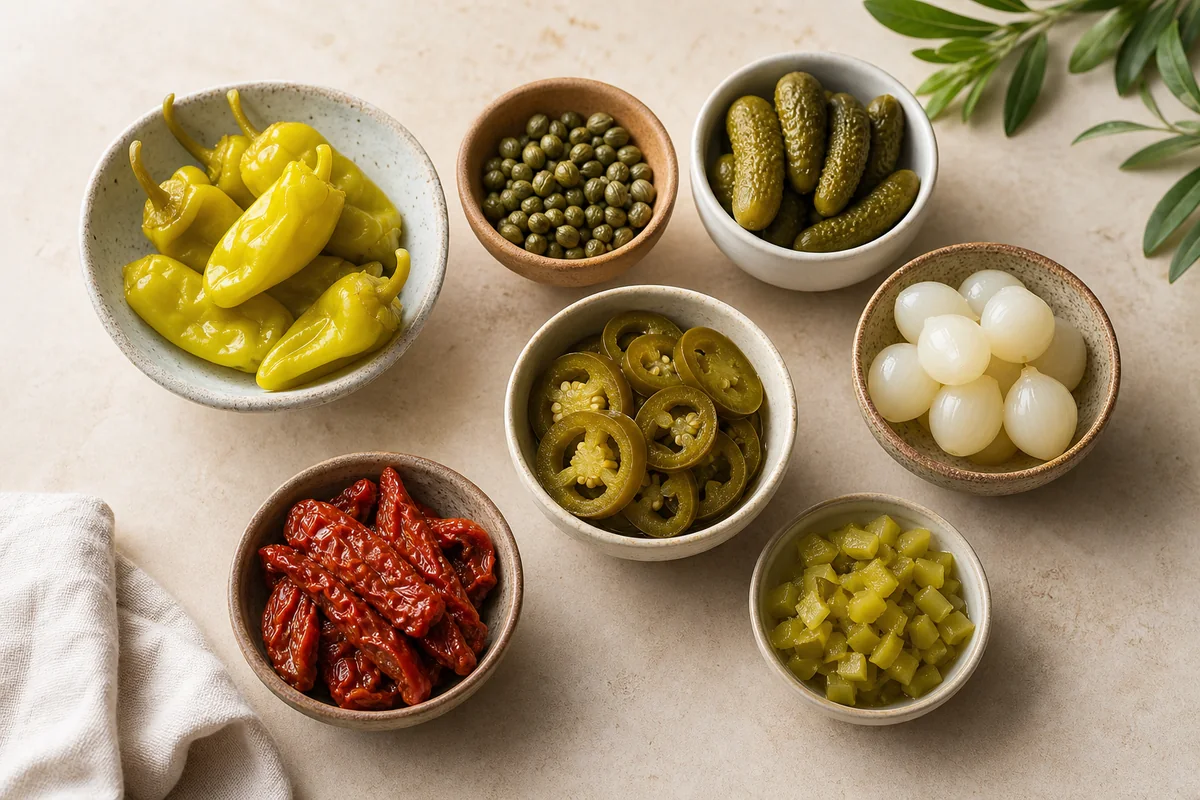
The best pepperoncini substitute is pickled banana peppers for a near 1:1 swap with similar tang and mild heat. Hot giardiniera works when you want more brine complexity. Pickled jalapeños suit heat-forward dishes if you reduce the amount. All swaps need draining before use.
5 Pepperoncini Substitutes That Actually Work
| # | Substitute | Best For | Ratio | Key Note |
|---|---|---|---|---|
| 1 | Banana Peppers (pickled) | Both | 1:1 | Closest tang and crunch |
| 2 | Hot Giardiniera | Cooking | 1:1 | Reduce if heat-sensitive |
| 3 | Pickled Jalapeños | Cooking | ¾:1 | Hotter; slice thin |
| 4 | Sweet Pickled Peppers + Chili Flakes | Both | 1:1 | Build heat gradually |
| 5 | Green Olives + Vinegar + Chili Powder | Both | 1:1 | Chop fine, pantry only |
Every swap below stays close to pepperoncini's signature profile. Start with the first option if you're unsure, then move down the list as your pantry allows.
1. Banana Peppers (Pickled, Drained)
Pickled banana peppers are the safest swap here, and they work at a 1:1 ratio without any adjustment in most recipes. The tang level is nearly identical, and the sliceable crunch holds up in sandwiches, pizzas, and slow-cooked braises alike.
We prefer them over every other option when the recipe is pickle-forward. For cold dishes like antipasto or sub sandwiches, knowing how banana peppers compare in flavor helps you decide if your specific variety needs a touch more acid.
- Ratio: Use 1:1 by volume, drained before measuring
- Heat note: Banana peppers run slightly milder, so add a small pinch of chili flakes if your dish needs that pepperoncini tingle
- Timing: Add near the end of cooking to keep the crunch intact
- Skip if: Your recipe specifically needs a hotter bite; banana peppers won't deliver that without help
2. Hot Giardiniera (Drained, Sliced)
Giardiniera gives you brine-forward punch with a mixed pepper and vegetable base, and it works well when you want more complexity than a straight pickled pepper provides. It matches pepperoncini on crunch and tang, but it usually runs hotter and carries extra flavors from carrots, celery, and cauliflower in the mix.
- Ratio: Start at 1:1, then taste and reduce if the heat spikes
- Texture: Slice or roughly chop any large vegetable pieces so the size matches pepperoncini rings
- Best for: Italian beef, pizza, grain bowls, and anything that already has bold seasoning
- Skip if: Your recipe is heat-sensitive or you need a clean single-pepper flavor without vegetable notes
3. Pickled Jalapeños (Drained, Thin-Sliced)
Pickled jalapeños bring the same vinegar brine tang as pepperoncini, but with a noticeably sharper heat. Start at ¾ the amount your recipe lists and taste before adding more.
Slice them thin so the heat distributes evenly rather than landing in one bite. If you find milder pepper swaps more practical, banana peppers are the better call for heat-sensitive recipes.
- Ratio: ¾ of the pepperoncini amount to start
- Slice thickness: Thin rings spread heat evenly across the dish
- Add timing: Stir in during the last 5 minutes of cooking to prevent heat from intensifying further
- Skip if: You can't handle medium-plus spice or your audience includes heat-averse eaters
4. Sweet Pickled Peppers + Crushed Red Pepper
This combo works because the sweet pickled peppers carry the texture and mild pepper flavor, while crushed red pepper fills in the heat that pepperoncini normally provides. The result is close to pepperoncini's profile, and you control the spice level entirely.
The one caveat is brininess. Sweet pickled peppers can run less acidic than pepperoncini, so a small splash of white vinegar added to the dish often closes that gap.
- Base ratio: Use pickled peppers at 1:1 by volume, drained
- Heat step: Add crushed red pepper in a single pinch first, then taste and increase in small steps
- Acid fix: If the tang feels flat, add 1 teaspoon of white vinegar and stir before tasting again
- Skip if: Your recipe relies on brine-forward tang specifically; this swap may read as sweeter and less sharp
5. Green Olives + Vinegar + Chili Powder
This is the pantry-emergency option, and it works better than you'd expect when you chop the olives fine. The olives provide salt and a mild fermented acid note.
White vinegar adds the sharp tang, and chili powder brings dry heat similar to pepperoncini's mild burn.
The risk here is an olive-forward flavor taking over. Chopping very fine and adding in smaller amounts than you would pepperoncini both help.
When swapping out green olives entirely is an option, a pickled pepper will always be cleaner.
Green Olive Mix vs. Pepperoncini
Works for: cold dishes, antipasto, pasta salad, braised meats where olives fit the flavor context
Skip if: you need the distinct ring shape of pepperoncini slices or a clean bright pepper crunch
- Prep: Chop olives very fine, almost mince-level, to reduce their texture mismatch
- Ratio: Start at ¾ of the pepperoncini amount and taste before adding more
- Acid: Add 1-2 teaspoons of white vinegar per ¼ cup of olives to sharpen the tang
- Heat: Mix in ¼ teaspoon of chili powder per serving, then adjust upward only if needed
- Skip if: Your dish is already salty; olives add significant sodium before you even season
Making a Pepperoncini Substitute Taste Right
Getting the swap right is mostly about two habits: draining and timing. Every pickled pepper or olive you use carries more brine than you need, and that extra liquid shifts both salt and tang in ways that throw off a dish fast.
Drain your swap in a colander for at least 2 minutes before measuring. For the heat side, picking the right heat source matters as much as the quantity you add.
And if your swap still tastes flat, exploring sharp acid options can restore the brightness pepperoncini normally contributes.
- Drain first: Measure after draining, not before; brine volume adds up quickly and skews your ratio
- Add near the end: Stir pickled peppers or olive mixes into hot dishes in the last 5-10 minutes to preserve crunch and keep the pepper flavor from turning dull
- Tune heat in steps: Add chili flakes or chili powder in single pinches, taste after each addition, and stop when you hit the mild tingle pepperoncini normally provides
Frequently Asked Questions
Pickled banana peppers are the best call for sandwiches. They match pepperoncini's tang and crunch at a 1:1 ratio and hold up well under other toppings without going soft.
Yes, but reduce the amount to ¾ and slice very thin. Jalapeños are hotter, and heat concentrates during baking, so starting smaller prevents the swap from overpowering the dish.
Drain first, then decide. Add a small splash of brine only if the dish tastes flat after the swap is in. Most recipes don't need the extra liquid.
Add crushed red pepper or chili flakes in single pinches and taste after each addition. Stopping at the first hint of warmth usually lands right where pepperoncini would.
It works, but you'll need to chop or slice it down to ring-sized pieces. The mixed vegetables in giardiniera also mean the flavor is less uniform than pepperoncini slices.
5 Best Pepperoncini Substitutes You Can Trust
Ingredients
Equipment
Method
- Decide whether you need pepperoncini for tang, for mild heat, or for crunch/sliceable texture (most recipes use all three).
- Start with a 1:1 ratio for banana peppers or hot giardiniera; if your swap is hotter (jalapeños), start at ¾ of the listed amount.
- Drain jarred pickles well to prevent overpowering brine; if your dish needs more punch, add a small splash of brine.
- Adjust heat in small steps: add crushed red pepper/chili flakes after tasting rather than upfront.
- For cooking/baking, add the slices near the end (last 5–10 minutes) to preserve crunch and keep the flavor bright.
Notes
- Drain pickles before measuring so the swap behaves like pepperoncini slices rather than extra liquid.
- If your recipe relies on mild heat, avoid full-on hot peppers unless you reduce the quantity first.
Tried this recipe?
Let us know how it was!
Carrie is a food writer and editor with more than 15 years of experience. She has worked for some of the biggest names in the food industry, including Bon Appétit, Food & Wine, and Martha Stewart Living.
As the Editor in Chief of EpicureDelight, Carrie oversees all of the content on the site. She also manages the team of contributing writers and editors, who help to create delicious recipes, helpful tips, and informative articles that you’ll find on the site.
A native of the Chicago area, Carrie is passionate about all things food. She loves trying new restaurants and experimenting with new recipes in her kitchen. She’s also a graduate of the Culinary Institute of America, so she knows a thing or two about food!