That caramelized, sticky-sweet glaze on ribs or pulled pork is doing a lot of work: sweet, tangy, a little smoky, and thick enough to stay on the meat.
When the bottle is empty, most cooks assume they're stuck. They're not.
A good bbq sauce substitute copies that balance of sweet, acid, and body rather than just adding something saucy. The options below all hit at least two of those three marks, and with the right ratio, most get close to all three.
If you're missing a smoky element, a pinch of smoked paprika or a few drops of liquid smoke closes the gap fast. (For more on smoke-free options, see best smoked paprika alternatives and replacements for liquid smoke.)
Five pantry-based swaps can stand in for BBQ sauce with minimal effort. Ketchup + apple cider vinegar + brown sugar is the closest flavor match. Worcestershire + ketchup + molasses goes deeper and darker. Tomato paste + honey + vinegar gives a thick, sticky glaze. Gochujang + ketchup adds heat. Sweet chili + soy + vinegar finishes fast.
5 BBQ Sauce Substitutes (Ratios + What They Replace Best)
Not every substitute works equally across all cooking methods. A thin, bright sauce works for finishing but will burn off during a long roast.
A thicker paste-based mix is better for slow cooking, brushing on in layers. Before you swap, think about whether the BBQ sauce was meant as a marinade, a cooking glaze, or a table condiment, and pick your ratio accordingly.
The table below gives you a fast reference. Ratios listed are substitute-to-original; so "1:1" means use the same volume your recipe calls for.
For the tomato paste swap, start at ¾ the original amount, then thin with water until it pours. If you're ever questioning whether a store-bought bottle is even still good, check our guide to bbq sauce shelf life before opening it.
| # | Substitute | Best For | Ratio | Key Note |
|---|---|---|---|---|
| 1 | Ketchup + ACV + Brown Sugar | Both | 1:1 | Add smoked paprika for depth |
| 2 | Worcestershire + Ketchup + Molasses | Both | 1:1 | Dark, savory, caramelizes well |
| 3 | Tomato Paste + Honey + Vinegar | Glaze | ¾:1 | Thin with water before use |
| 4 | Gochujang + Ketchup | Glaze | 1:1 | Spicy; balance with sugar |
| 5 | Sweet Chili + Soy + Vinegar | Finish | 1:1 | Bright, glossy, pantry-fast |
1. Ketchup + Apple Cider Vinegar + Brown Sugar
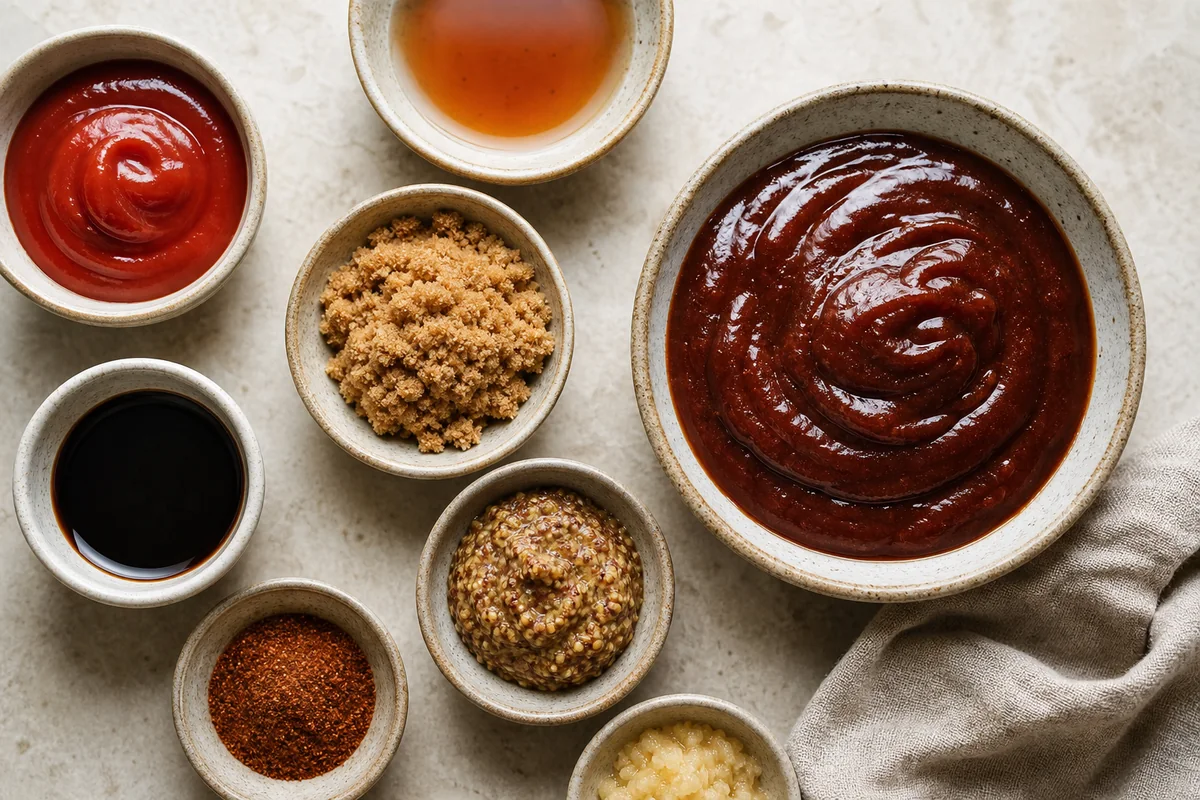
This is the pantry substitute that lands closest to classic BBQ sauce. Mix 3 tablespoons ketchup, 1 tablespoon apple cider vinegar, and 1 tablespoon brown sugar for roughly ¼ cup of sauce.
If you're curious about tasting apple cider vinegar before you commit, it brings a softer tang than white vinegar and blends well with sweetness.
- Ratio: 1:1 - use the same volume as your original BBQ sauce
- Smoke fix: Stir in ½ teaspoon smoked paprika or 2-3 drops of liquid smoke
- Consistency: If the mix is too thick, thin with water 1 teaspoon at a time until it pours easily
- Best timing: Brush on during the last 8-10 minutes of grilling to avoid burning the sugar
- Skip if: You need strong smoke flavor and have no smoked paprika or liquid smoke on hand - the sweetness will be there but the BBQ character won't fully land
2. Worcestershire + Ketchup + Molasses
This blend goes darker and meatier than the ketchup-only option. Start with 2 tablespoons ketchup, 1 tablespoon worcestershire sauce, and 1 teaspoon molasses, then adjust.
The molasses brings a slow, caramelized sweetness that makes the glaze look convincingly BBQ-like after a few minutes of heat.
- Ratio: 1:1 - equal volume to original BBQ sauce, blended to combine
- Color bonus: Molasses darkens the sauce fast; thin with 1 teaspoon water if it looks too dense
- Heat timing: Apply in two thin layers during the last 10 minutes of roasting or grilling
- Flavor note: This runs savory-forward, not sweet-forward - add an extra ½ teaspoon brown sugar if your original BBQ sauce was on the sweeter side
- Skip if: Worcestershire isn't an option for dietary reasons - the umami depth this recipe is built around won't come from anything else in the same proportion
3. Tomato Paste + Honey + Vinegar
Tomato paste is concentrated and sticky but it doesn't behave like BBQ sauce straight from the can. Start with 2 tablespoons tomato paste, 1 tablespoon honey, and 2 teaspoons white or apple cider vinegar, then thin with water a teaspoon at a time until it pours.
For baked dishes, using brown sugar alternatives like maple syrup in place of honey also works and adds a slightly different but still warm sweetness.
| Use | Ratio | Notes |
|---|---|---|
| Brush (grilling) | ¾:1 | Thin to pourable first, brush on last 8 min |
| Baked glaze | ¾:1 | Apply twice: at 10 min and 5 min before done |
| Simmer/reduce | ¾:1 | Reduce 2-4 min on medium for stickiness |
- Thinning: Add water 1 teaspoon at a time - stop when it coats the back of a spoon
- Smoke gap: A pinch of smoked paprika added before simmering closes the flavor gap considerably
- Sweetness tweak: Add a second teaspoon of honey if your original sauce was noticeably sweet
- Skip if: You need a no-cook, ready-to-spread sauce - tomato paste always needs thinning and at least a short reduction to behave properly
4. Gochujang + Ketchup
Equal parts gochujang and ketchup make a fast, glossy sauce with more heat and a slightly fermented depth that regular BBQ sauce doesn't have. It reads sweet-spicy rather than smoky-sweet, so it works best on chicken thighs, grilled tofu, or pork belly where bold flavor is welcome.
Understanding ketchup flavor helps here: its mild, sweet-acid base dials down gochujang's intensity without killing it.
- Ratio: 1:1 - start equal parts, then adjust toward more ketchup for less heat
- Sweetness fix: Add 1 teaspoon honey or brown sugar if the mix needs more BBQ-style sweetness
- Thickness: This blend is already thick; thin with 1-2 teaspoon water if you want it to brush easier
- Best use: Glaze during the last 5-8 minutes of grilling for maximum caramelization without burning
Heat-Forward (More Gochujang)
Works for: spicy chicken wings, grilled pork, bold glazes
Skip if: cooking for kids or spice-sensitive guests
BBQ-Sweet (More Ketchup + Sugar)
Works for: crowd-pleasing ribs, burgers, sandwich glazes
Skip if: you want noticeable heat or complex funk
Skip if: You need mild, family-friendly BBQ flavor - even 50/50 gochujang-ketchup has noticeable heat, and reducing the gochujang much further means you're essentially just using ketchup.
5. Sweet Chili Sauce + Soy Sauce + Vinegar
This is the fastest no-cook swap in the list and it produces a glossy, sticky finish that looks genuinely BBQ-like on the plate. Combine 3 tablespoons sweet chili sauce, 1 tablespoon soy sauce, and 1 teaspoon vinegar (apple cider or rice vinegar both work).
If you regularly cook with sweet chili sauce, you may also find good ideas for replacements for ketchup that complement this mix as a starting base.
- Ratio: 1:1 - use the same volume as your BBQ sauce
- Tang check: Taste before applying - if it needs more acid, add vinegar ½ teaspoon at a time
- Smoke note: Add a small pinch of smoked paprika if BBQ depth matters for your dish
- Use case: Works as a finishing glaze, dipping sauce, or table condiment - not ideal as a long marinade because the soy salt can overpower
- Skip if: You need authentic smoky BBQ character - this sauce is bright and tangy, which is different from the low-and-slow depth most people associate with classic BBQ
Making BBQ Sauce Substitutes Taste Like the Real Thing
Getting the flavor close is step one; getting the texture right is step two. Most homemade substitutes are either a little too thin or a little too sharp right out of the mixing bowl.
A short 2-3 minute simmer over medium heat does more to pull the flavors together than any single ingredient adjustment. When in doubt, less is more: add acid (vinegar), sweet (honey or sugar), or smoke (paprika) in small amounts and taste between each addition.
For anyone who regularly reaches for these kinds of pantry swaps, browsing our guide on best smoked paprika alternatives and thinking through what replacements for liquid smoke work best will round out your substitution toolkit considerably.
- Adjust sweetness vs. tang: Add 1 teaspoon sugar or honey to pull it sweeter, or ½ teaspoon vinegar to sharpen the acid - never both at once
- Fix thin texture: Simmer uncovered for 2-4 minutes to reduce and concentrate; stir often to prevent scorching
- Time the glaze right: Brush substitute sauces on during the final 5-10 minutes of cooking - sugar-heavy swaps burn fast at high heat
Frequently Asked Questions
Ketchup alone is too sweet and flat without the acid and smoke. Add at least a splash of vinegar and a pinch of brown sugar to get closer to BBQ sauce balance.
Add ½ teaspoon smoked paprika or 2-3 drops of liquid smoke to any of the swaps above. Either option delivers smokiness without requiring a dedicated smoky sauce.
Add water one teaspoon at a time, stirring between each addition. Stop when it coats the back of a spoon and pours in a slow, steady stream.
Most work as both, but high-sugar swaps can toughen protein during long marinating. Use them as a glaze during the final 10 minutes for the safest result.
Store it in a sealed jar in the refrigerator for up to one week. Stir or shake before each use since the ingredients may separate.
5 Best Bbq Sauce Substitutes (with Ratios)
Ingredients
Equipment
Method
- Pick your substitute based on what you need: closest flavor match (ketchup-based), deeper savory (Worcestershire + molasses), or quickest heat (gochujang).
- Use the listed ratio: for baking/grilling glaze, keep it close to 1:1; for tomato paste swaps, start at ¾:1 then thin until it pours.
- For thickness/adhesion, simmer 2-4 minutes (or bake the glaze coat for 5-8 minutes) so it coats and darkens slightly.
- Taste and correct: add vinegar for tang, brown sugar/honey for sweetness, and a pinch of smoked paprika or liquid smoke for smoky BBQ notes.
- Apply when heat is high but controlled: brush during the final 5-10 minutes of grilling/roasting for a glossy finish.
Notes
- If your substitute lacks smoke, add smoked paprika (small) or liquid smoke (few drops) to mimic BBQ depth.
- If the substitute is thicker than BBQ sauce, thin with water; if it's too thin, simmer briefly to concentrate.
Tried this recipe?
Let us know how it was!
Carrie is a food writer and editor with more than 15 years of experience. She has worked for some of the biggest names in the food industry, including Bon Appétit, Food & Wine, and Martha Stewart Living.
As the Editor in Chief of EpicureDelight, Carrie oversees all of the content on the site. She also manages the team of contributing writers and editors, who help to create delicious recipes, helpful tips, and informative articles that you’ll find on the site.
A native of the Chicago area, Carrie is passionate about all things food. She loves trying new restaurants and experimenting with new recipes in her kitchen. She’s also a graduate of the Culinary Institute of America, so she knows a thing or two about food!