
Brown mustard has a bite that yellow mustard simply doesn't. That sharp, slightly bitter heat is what makes it work in marinades, sandwich spreads, and dressings where a milder condiment would disappear.
A good brown mustard substitute keeps that balance-enough tang, enough body, enough edge to carry the dish.
Brown mustard is sharper and more bitter than yellow mustard, so the best swaps match that bite first. Dijon is the closest for smooth sauces. Stone-ground mustard wins for texture. Yellow mustard is the easiest everyday fix with a small tweak.
5 Brown Mustard Substitutes Ranked by Flavor Match
Every swap below is ranked by how closely it mirrors brown mustard's bitterness, tang, and thickness. The table gives you the ratio and key trade-off at a glance.
| # | Substitute | Best For | Ratio | Key Note |
|---|---|---|---|---|
| 1 | Yellow Mustard | Both | 1:1 | Add mustard seed for bite |
| 2 | Dijon Mustard | Both | ¾:1 | Sharper, less bitter |
| 3 | Stone-Ground Mustard | Both | 1:1 | Grainy, great texture match |
| 4 | Horseradish Sauce | Cooking | ½:1 | Hot, not bitter-use less |
| 5 | Mustard Powder + Water | Both | 1:1 | Fast DIY, rest 5 min |
Cooking heat intensifies mustard sharpness, so always taste after a short simmer rather than before. When you're deciding between these options, picking a stronger dry version often beats reaching for a milder prepared mustard.
1. Yellow Mustard
Yellow mustard is the swap most people already have, and it works well at a 1:1 ratio for most recipes. It is milder than brown mustard and slightly sweeter, which matters more in some dishes than others.
You can close that gap fast. A pinch of ground mustard seed stirred in, or a small splash of white wine vinegar, pulls the flavor back toward that familiar brown mustard edge.
If you're interested in swapping yellow mustard itself in other recipes, the flavor profile matters just as much there.
- Bitterness fix: Add ¼ teaspoon ground mustard per tablespoon of yellow mustard used
- Tang boost: Stir in ½ teaspoon white wine vinegar to sharpen the edge
- Thickness: Yellow mustard is thinner-simmer 1-2 extra minutes if the sauce needs body
- Dressings: Rest 5 minutes after mixing so the mustard flavor rounds and blooms
Skip if: the recipe depends on brown mustard's bitter depth. Yellow mustard reads too mild and sweet in heavily bitter applications.
2. Dijon Mustard
Dijon is the smoothest, sharpest prepared mustard you can reach for, and it sits close to brown mustard on the tang scale. Use about ¾ of the amount called for, then taste before adding more.
The smooth, wine-forward character of Dijon reads sharper than bitter, which is a meaningful difference.
Dijon Mustard
Works for: smooth sauces, vinaigrettes, marinades, and glazes where tang matters more than graininess
Skip if: your recipe specifically needs brown mustard's grainy texture or deeper bitterness
- Starting ratio: Use ¾ teaspoon Dijon for every 1 teaspoon brown mustard called for
- Too sharp? Stir in a small pinch of sugar or a teaspoon of cream to mellow the edge
- Too mild? Add another ¼ teaspoon and taste again after 2 minutes of simmering
- Texture note: Dijon is silky-blend in a little olive oil if your recipe needed body
3. Stone-Ground Mustard
Stone-ground mustard is the closest thing to brown mustard in texture, and for many recipes it is simply the better choice. The whole and cracked mustard seeds give it a similar bite and a slightly rustic thickness.
When you're using it in a strongly spiced mustard spread or a rub, it fits almost seamlessly at a 1:1 ratio.
The one issue is graininess. Stone-ground mustard stays visibly textured, which is great for dressings and sandwich spreads but less ideal in a smooth pan sauce.
- Best uses: Dressings, rubs, sandwich spreads, glazes where texture is welcome
- Smooth sauce fix: Whisk vigorously or blend briefly with the liquid in the recipe
- Ratio: 1:1, no adjustment needed in most cases
- Flavor edge: Slightly less bitter than brown mustard-add a small splash of apple cider vinegar if you want more bite
Skip if: your dish must be silky-smooth. Stone-ground stays grainy even after stirring hard.
4. Horseradish Sauce
Horseradish sauce is a heat substitute, not a bitterness one. That distinction matters before you reach for the jar.
The sharp sinus-clearing punch of horseradish is pungent in a different direction than mustard bitterness.
| Use | Ratio | Notes |
|---|---|---|
| Marinades | ½:1 | Mix with oil; adds heat without overpowering |
| Dipping sauces | ½:1 | Balance with a small dollop of honey or cream |
| Pan sauces | ¼:1 | Start low; heat amplifies the sharpness fast |
Start at half the amount the recipe calls for, then taste before adding more. If the sauce tastes flat after adding horseradish, a small splash of vinegar brings back the acidity that brown mustard normally provides.
- Too hot? Stir in a teaspoon of sour cream or plain yogurt to temper the heat
- Missing tang? Add ½ teaspoon white wine vinegar and stir well before tasting again
Skip if: your recipe relies on mustard's bitter note. Horseradish brings heat but not bitterness.
5. Mustard Powder
Mustard powder is the fastest emergency fix because nearly every pantry has it. It is also the most customizable option.
You control the bitterness by how long you let it rest after mixing-shorter rest means sharper, longer rest means slightly mellower. For tips on other ways to use dry mustard, mild yellow mustard flavor notes are a useful comparison point when you want to calibrate strength.
- Base mix: Combine 1 teaspoon mustard powder with 1 teaspoon water and ¼ teaspoon white wine vinegar
- Ratio: Start at 1:1 by volume, then add more in small increments if it tastes weak
- Rest time: 5 minutes develops the flavor; skip the rest and it tastes sharp and raw
- Thicker texture: Add a tiny amount of olive oil or a drop of honey to get closer to prepared mustard body
Skip if: you need the texture of prepared mustard right away. Powder needs mixing and resting time.
Making a Brown Mustard Substitute Taste Right
Getting the swap to taste right is mostly about timing and two small adjustments-acidity and thickness. If you're working with Dijon in place of a sharper mustard, start with less, not more, because sharpness blooms as it heats.
The key is to taste after cooking, never just before you add the substitute.
- Adjust acidity: If the swap tastes flat, add ½ teaspoon apple cider or white wine vinegar and taste again after 2 minutes of simmering
- Adjust thickness: If the substitute is thinner than brown mustard, reduce the sauce by simmering 2-3 extra minutes; if it's too thick, whisk in a teaspoon of water or broth
- Taste timing: Always re-taste after at least 3 minutes of heat-mustard sharpness changes significantly as it cooks down
Frequently Asked Questions
Yes, but start at ¾ of the amount and taste before adding more. Dijon is sharper and less bitter, so a pinch of sugar or a splash of cream can bring it closer to brown mustard's profile.
Stone-ground mustard or mustard powder mixed with vinegar are the closest bitterness matches. Yellow mustard and Dijon tend to be milder or sharper rather than genuinely bitter.
Mix 1 teaspoon mustard powder with 1 teaspoon water and ¼ teaspoon white wine vinegar, then rest for 5 minutes. The rest period is what develops the flavor and removes the raw sharpness.
Yes, at a 1:1 ratio. Stir in a pinch of ground mustard seed or a small splash of vinegar to replace some of the bitterness yellow mustard lacks.
Start with half the amount and taste before adding more. Horseradish is hotter and more pungent than brown mustard, so it can easily overpower a dish at full strength.
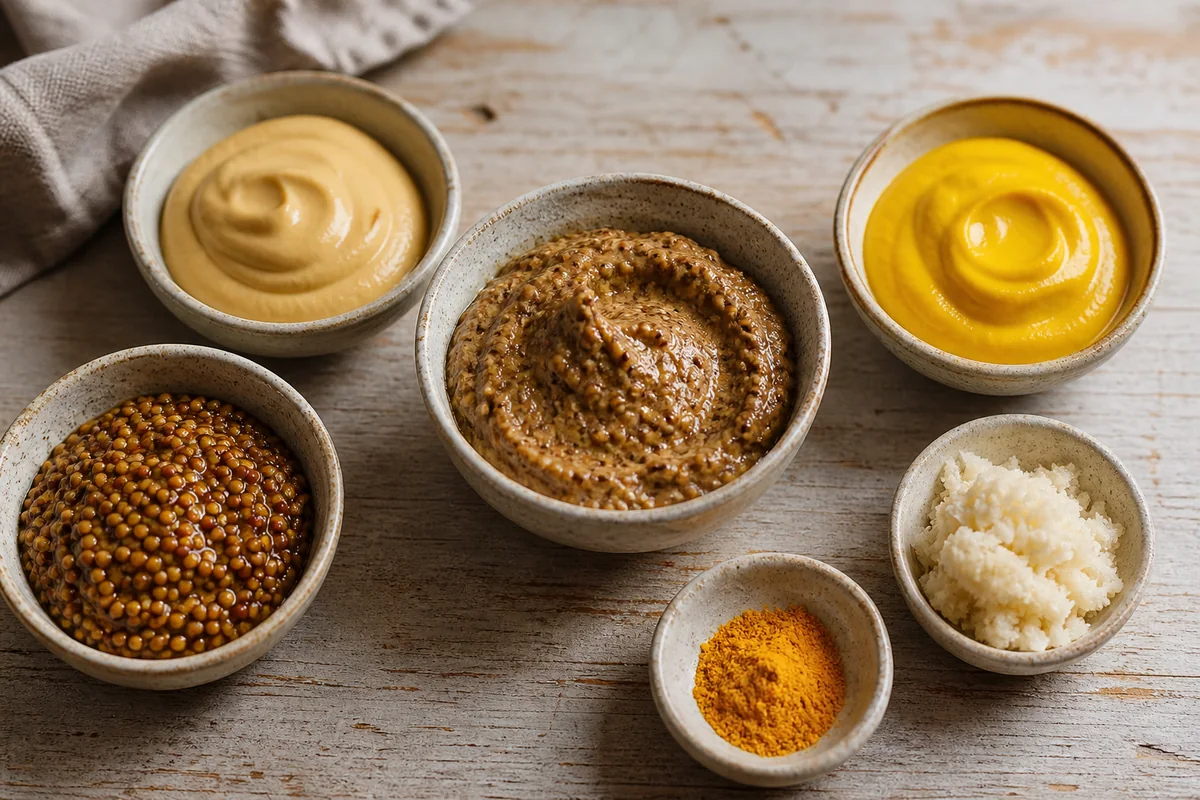
5 Best Brown Mustard Substitutes That Taste Right
Ingredients
Equipment
Method
- Decide what your recipe needs most: brown mustard’s bitterness (tangy bite) or its thickness/texture.
- Start with the swap ratio from the table, then add small adjustments (up or down) based on taste.
- If your substitute is thinner (like yellow mustard), simmer the sauce 1–3 minutes or reduce slightly.
- If your substitute is sharper (like Dijon), temper it by mixing with oil/cream or adding a pinch of sugar.
- Re-taste after 2–5 minutes of cooking to see how bitterness blooms as it heats.
Notes
- Ratios are starting points; acidity and sweetness vary by brand.
- For dressings and marinades, mix cold, rest 5 minutes, then taste again.
Tried this recipe?
Let us know how it was!
Carrie is a food writer and editor with more than 15 years of experience. She has worked for some of the biggest names in the food industry, including Bon Appétit, Food & Wine, and Martha Stewart Living.
As the Editor in Chief of EpicureDelight, Carrie oversees all of the content on the site. She also manages the team of contributing writers and editors, who help to create delicious recipes, helpful tips, and informative articles that you’ll find on the site.
A native of the Chicago area, Carrie is passionate about all things food. She loves trying new restaurants and experimenting with new recipes in her kitchen. She’s also a graduate of the Culinary Institute of America, so she knows a thing or two about food!



