
That sticky, cooked-down tomato flavor you get from a can is hard to fake. But the right swap keeps your sauce body intact and your acidity balanced, even when the pantry comes up short.
The main thing a canned tomato substitute has to replicate is thickness, not just flavor. Canned tomatoes have already been heat-processed, so they cook down fast and carry natural acidity.
Thinner swaps need a short simmer. Thicker ones need water before they go in.
This guide ranks each option by how closely it matches the can's texture, acidity, and cook-down speed.
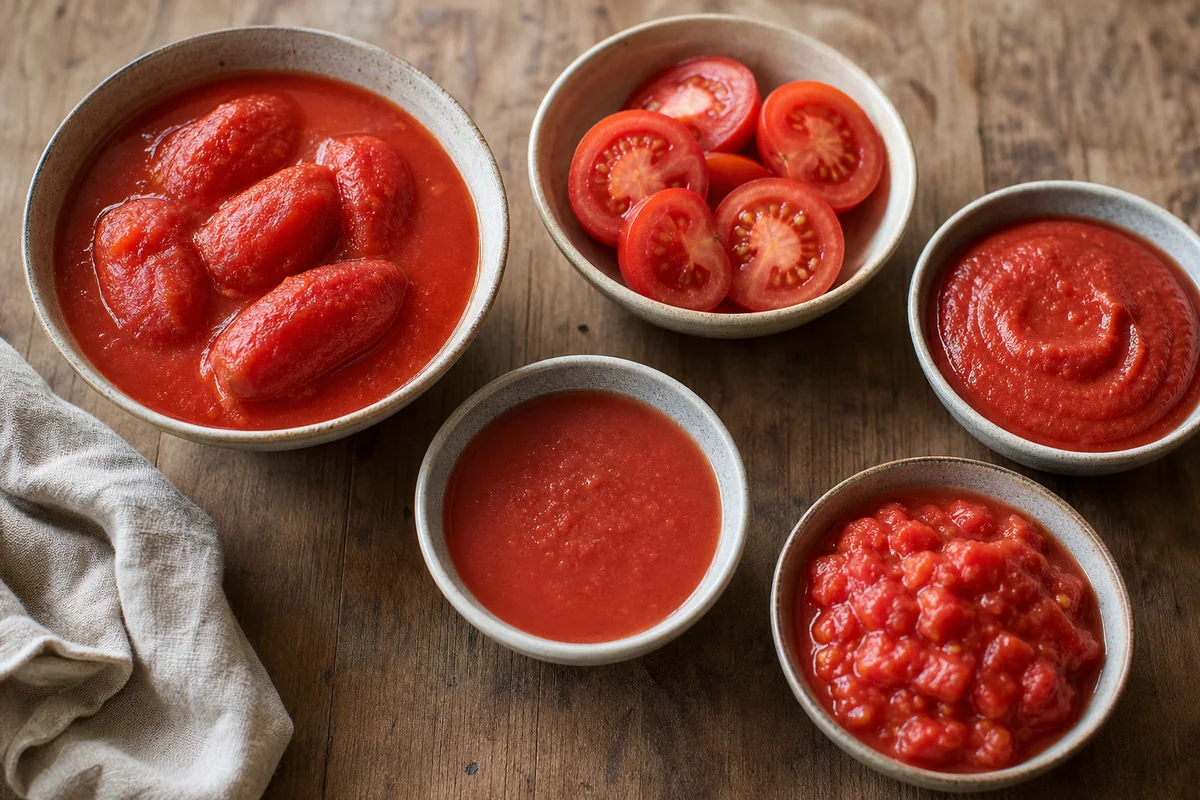
The best canned tomato substitute depends on the texture your recipe needs. Crushed tomatoes are the closest 1:1 match. Tomato passata works for smooth sauces. Tomato sauce swaps in a pinch but may be more seasoned. Tomato paste diluted with water builds body fast. Fresh tomatoes need more cook time to match.
5 Best Canned Tomato Substitutes (Ranked by Texture and Behavior)
Whether your recipe needs crushed pieces, a smooth base, or thick paste body, one of these options fits. The table below gives you the fast version; each section below it gives you the how.
| # | Substitute | Best For | Ratio | Key Note |
|---|---|---|---|---|
| 1 | Crushed Tomatoes | Both | 1:1 | Simmer 5-8 min if thin |
| 2 | Tomato Passata | Both | 1:1 | Simmer 3-6 min to thicken |
| 3 | Tomato Sauce | Sauce | 1:1 | Check salt before seasoning |
| 4 | Tomato Paste + Water | Sauce | ⅓:1 | Dilute first, then simmer |
| 5 | Fresh Tomatoes, Cooked | Both | 1:1 | Reduce 15-25 min for body |
1. Crushed Tomatoes
Crushed tomatoes are the most direct swap for canned diced or whole tomatoes. They carry the same cooked acidity, similar moisture level, and a texture that matches most sauce and braise recipes without adjustment.
Use them 1:1 by volume. If your sauce looks thinner than expected, a quick 5-8 minute simmer over medium heat will bring it back in line.
The canned vs. fresh tradeoff matters here: crushed tomatoes behave more like canned than fresh because they're already heat-processed.
Crushed Tomatoes
Works for: pasta sauces, braises, shakshuka, soups, and anything that calls for crushed or diced canned tomatoes
Skip if: your recipe needs a fully smooth sauce-use passata instead, since crushed tomatoes still have small pieces
- Ratio: 1:1 with no adjustments needed in most recipes
- Texture: Small tomato pieces intact, similar to canned crushed varieties
- Acidity: Matches canned tomatoes closely, no balancing required upfront
- Simmer tip: If the sauce feels thin at 10 minutes, keep heat on medium and reduce by 2-3 tbsp
- Label check: Buy with no added sugar; some brands include citric acid, which is fine
2. Tomato Passata
Passata is strained, uncooked tomato purée. It has the clean, bright flavor of fresh tomatoes and none of the chunk.
Most Italian-style recipes accept it without complaint.
It swaps 1:1, but it runs thinner than canned tomatoes out of the bottle. Simmer it for 3-6 minutes after adding to the pot and it catches up.
If you want to understand how it compares to other tomato products, the passata vs. paste breakdown is worth reading before you choose.
- Ratio: 1:1 by volume; expect a slightly thinner starting consistency
- Texture: Fully smooth, no pieces-ideal for smooth sauces and soups
- Simmer time: 3-6 minutes at medium heat to reach canned tomato body
- Flavor: Bright and clean; less "cooked" than canned, which some recipes benefit from
- Skip if: You need visible tomato pieces-use crushed tomatoes instead
3. Tomato Sauce
Jarred tomato sauce is convenient, but it is not a neutral swap. Many brands add salt, garlic, herbs, or a touch of sweetener.
Your finished dish will taste fine, but it may taste like the jar.
Use it 1:1, then taste before adding any salt or sugar of your own. The texture is smooth and already cooked down, so it rarely needs extra simmering.
When swapping into sauce-based dishes, pour in half first and adjust from there.
- Ratio: 1:1, but start with slightly less if the sauce already smells heavily seasoned
- Texture: Smooth and fully cooked; less body than canned whole or crushed
- Seasoning risk: Italian-style sauces often have oregano and garlic built in
- Shelf life: An opened jar needs to move fast-check storing opened sauce if you won't use it all
- Skip if: Your recipe relies on raw or barely cooked tomato bite-tomato sauce is already fully processed
4. Tomato Paste + Water
Tomato paste is thick, intensely flavored, and concentrated. On its own, it will overwhelm a recipe.
Diluted, it becomes a workable stand-in that mimics the body of canned tomatoes without the extra moisture.
The standard ratio is 1 part paste to 3 parts water (or broth) to approximate 1 part canned tomato. Stir the paste into the liquid first until fully smooth, then add it to the pot.
Those interested in paste options for other situations should look at paste-based swaps for a broader view.
| Use | Ratio | Notes |
|---|---|---|
| Pasta sauce | 1 tablespoon paste + 3 tablespoon water | Replaces ~¼ cup canned tomato; simmer 5 min |
| Soup or stew | 2 tablespoon paste + 6 tablespoon water | Replaces ~½ cup; broth adds more depth |
| Braised dishes | 3 tablespoon paste + 9 tablespoon water | Replaces ~¾ cup; simmer with lid off to concentrate |
- Mix first: Always whisk paste into liquid before it hits the pot-lumps won't dissolve easily later
- Simmer time: 3-5 minutes minimum so the raw paste taste mellows
- Flavor note: More intense and slightly sweeter than canned; go light on added sugar
- Skip if: You're short on time-paste needs heat to integrate properly
5. Fresh Tomatoes, Cooked Down
Fresh tomatoes have the most water and the least cooked flavor of any option here. They are a solid last resort, but you have to put in the time.
The best dried tomato picks work differently, but fresh is often what's already in the bowl on the counter.
Use ripe tomatoes. Chop them, add to the pan over medium heat, and let them break down.
Expect 15-25 minutes of simmering before the texture approaches canned tomato body.
- Ratio: 1:1 by weight before cooking; volume will reduce as water cooks off
- Texture goal: Cook until glossy and slightly thick-that's when the body matches canned
- Smooth vs. chunky: Blend after cooking for a smooth sauce; leave as-is for braises or shakshuka
- Acidity tip: Fresh tomatoes vary; taste and add a small splash of red wine vinegar if the sauce tastes flat
- Skip if: You need a no-cook swap-fresh tomatoes require real simmer time to replace canned body
Making Your Canned Tomato Substitute Taste Right
Every swap needs the same three adjustments: thickness, acidity, and seasoning-in that order. Fix the texture first by simmering to reduce a thin substitute or stirring in a little water to loosen a thick one.
Then check acidity-the flavor profile of canned tomatoes is mildly sharp, and some substitutes land flatter or sweeter. A small pinch of salt or a few drops of red wine vinegar usually closes that gap.
- Too thin: Simmer uncovered over medium heat; 5-8 minutes reduces most tomato swaps to canned body
- Too thick: Add water or broth in 2 tablespoon increments, stir, and taste before adding more
- Tastes flat: A few drops of red wine vinegar or a pinch of citric acid restores brightness quickly
Frequently Asked Questions
Crushed tomatoes (no added sugar) are the nearest match-same acidity and texture, same 1:1 ratio. Tomato passata is second best if you prefer a smooth result.
Simmer uncovered over medium heat for 5-10 minutes. Stir occasionally and pull off heat once the sauce coats the back of a spoon.
Yes, but dilute it first: 1 part paste to 3 parts water. Undiluted paste makes baked goods denser and more intensely flavored than canned tomatoes would.
Yes for sauces and soups-passata provides the same tomato flavor with a smooth texture. Skip it for chunky dishes like shakshuka where visible pieces matter.
Add a small splash of red wine vinegar to cut sweetness, or a pinch of salt to push back smoke. Simmer an extra 3-4 minutes to mellow either issue.
5 Best Canned Tomato Substitutes (Ranked)
Ingredients
Equipment
Method
- Match the texture first: crushed/passata/sauce are closest to canned tomato’s pour-and-simmer behavior.
- Use the ratio: if using paste, dilute before adding so the sauce doesn’t turn sticky or too intense.
- Adjust thickness after you add the substitute: simmer 3–8 minutes for thinner swaps, or add water/broth for thicker swaps.
- Taste for balance at the end: if flat, add a pinch of salt; if sharp, simmer longer to round out acidity.
Notes
- If your canned tomato was seasoned (e.g., ‘with herbs’), keep extra dried herbs light—taste and adjust at the end.
Tried this recipe?
Let us know how it was!
Carrie is a food writer and editor with more than 15 years of experience. She has worked for some of the biggest names in the food industry, including Bon Appétit, Food & Wine, and Martha Stewart Living.
As the Editor in Chief of EpicureDelight, Carrie oversees all of the content on the site. She also manages the team of contributing writers and editors, who help to create delicious recipes, helpful tips, and informative articles that you’ll find on the site.
A native of the Chicago area, Carrie is passionate about all things food. She loves trying new restaurants and experimenting with new recipes in her kitchen. She’s also a graduate of the Culinary Institute of America, so she knows a thing or two about food!



