
That mild, slightly sweet bite that makes catfish so good for frying is also what makes it tricky to replace. The texture match matters more than the flavor match here, because most mild white fish seasons up the same way once your coating and spice rub are doing their job.
The real question is how the fillet behaves in your pan or on your grill. A substitute that flakes too fast will fall apart in the oil.
One that's too firm will feel wrong in a po'boy or fish taco.
The best catfish substitute depends on your cooking method. Tilapia and cod come closest for frying. Halibut or monkfish suit grilling and baking. Chicken breast cutlets hold breading well. King oyster mushrooms work for a plant-based swap with real chew.
5 Best Catfish Substitutes, Ranked by Texture
Every swap below is rated on two things: how close the texture is to catfish, and how well it holds together during cooking. The table gives you the quick scan.
The H3 sections below it explain how to actually apply each one.
| # | Substitute | Best For | Ratio | Key Note |
|---|---|---|---|---|
| 1 | Tilapia Fillets | Both | 1:1 | Pat very dry first |
| 2 | Cod or Haddock | Both | 1:1 | Watch for dryness |
| 3 | Halibut or Monkfish | Grill/Bake | 1:1 | Lower heat needed |
| 4 | Chicken Breast Cutlets | Fry/Bake | 1:1 | Pound to even thickness |
| 5 | King Oyster Mushrooms | Fry/Sear | 1:1 | Squeeze out moisture |
1. Tilapia Fillets
Tilapia is the most practical catfish substitute for everyday cooking. It has that same mild, slightly sweet flavor and a thin, tender fillet that fries up with a good crust when you handle the moisture right.
The key step is storing and prepping fresh fish correctly before breading. Pat tilapia completely dry with paper towels, then let the fillets sit on a rack for 5 minutes before coating them.
Wet fillets cause steaming under the crust, which undoes all your breading work.
- Coating: Use the same cornmeal or seasoned flour mix you'd use for catfish - it sticks just as well.
- Oil temp: Keep oil at 350°F. Tilapia is thinner than most catfish, so it needs less time, usually 3-4 minutes per side.
- Baking: Reduce oven time by 2-3 minutes compared to catfish; check at the 10-minute mark for a ½-inch fillet.
Skip if: Your recipe requires a thick, steak-like bite - tilapia softens faster than a chunky catfish fillet and won't hold that same dense chew.
2. Cod or Haddock
Both cod and haddock are go-to picks when you want big, white flakes with clean flavor. Cod is slightly denser; haddock is a touch sweeter and a little more tender.
Either one breads well and handles a hot pan without falling apart, provided you don't overcook it.
If you're swapping in white fish for a breaded recipe, thick-cut cod is the safer pick. Haddock works better for thinner, quicker-cook preparations where you want the coating to be the star.
Cod
Works for: thick fillets, deep frying, fish sandwiches, long bakes
Skip if: you need a very delicate flake - cod can get chunky in texture
Haddock
Works for: lighter frying, thinner fillets, fish tacos, pan-searing
Skip if: oil temp is off or time runs long - haddock dries out fast
- Thickness: Cut to ¾-inch portions to match average catfish fillet size before breading.
- Dryness: Pat well and dust with a thin flour layer before the egg wash - this seals moisture in the flesh.
- Doneness: The fillet is ready when it turns opaque all the way through and flakes cleanly with a fork at the thickest point.
Skip if: You're deep-frying at high heat for a long time - both cod and haddock dry out under extended heat faster than catfish does.
3. Halibut or Monkfish
Halibut and monkfish are the firm-fish options. They hold their shape on a grill or in a hot oven better than any other swap on this list.
Halibut gives you clean, white layers with mild flavor. Monkfish, this dense, meaty fish, has almost no flake at all and behaves more like a shellfish in texture.
- Heat control: Use medium rather than high heat. Both fish toughen quickly above 400°F internal temp.
- Grill prep: Brush fillets with oil and preheat the grates - halibut sticks if the surface isn't properly oiled.
- Doneness: Pull halibut at 130°F internal; it finishes cooking off heat. Monkfish is done at 145°F and stays firm throughout.
- Baking: Wrap in parchment with a tablespoon of broth or butter to keep moisture in - both fish are leaner than catfish.
Skip if: Budget is a concern. Halibut and monkfish are among the pricier white fish options and aren't practical for large-batch frying.
4. Chicken Breast Cutlets
This is the non-fish substitute that actually works. Chicken breast, compared to other cuts, is leaner and holds breading without releasing much fat into the coating.
Pound cutlets to an even ½-inch thickness so they cook at the same rate throughout.
| Use | Ratio | Notes |
|---|---|---|
| Pan-fried breaded | 1:1 by weight | Season with Old Bay + garlic powder to bring fish-adjacent flavor |
| Baked | 1:1 by portion | Add 1 teaspoon lemon zest to breading mix to lift flavor |
| Air-fried | 1:1 by portion | Spray lightly with oil; cook at 375°F for 12-14 min, flip once |
- Thickness: Pound to exactly ½ inch - uneven cutlets cook unevenly, leaving raw centers or dry edges.
- Moisture control: A quick 15-minute brine in salted water keeps the chicken from going dry under the crust.
- Doneness: Internal temp of 165°F is the target. Use an instant-read thermometer, not a visual check alone.
- Seasoning: Add ½ teaspoon smoked paprika and a pinch of cayenne to your breading to mimic catfish's mild spice notes.
Skip if: Your recipe is seafood-only or you're feeding guests avoiding poultry. The flavor shift is significant enough to notice.
5. King Oyster Mushrooms
King oyster stems are the plant-based swap that holds up to actual cooking. Slice the thick stems lengthwise into ½-inch planks and you get something with real body.
When you're picking the best mushroom option for a breaded preparation, king oyster beats all other varieties for density and chew.
The moisture management step is non-negotiable. Press sliced stems firmly between paper towels for 5 minutes, then season and bread immediately.
Wet mushroom surfaces cause coating to slide off and steam instead of fry.
- Coating: Use the same seasoned cornmeal mix as you would for catfish - apply it right after pressing so the surface is still slightly tacky.
- Heat: Pan-sear in ¼ inch of oil at 360°F for 3 minutes per side. Don't crowd the pan.
- Doneness: Look for deep golden color and a firm press when you touch the center - mushrooms don't flake, but they firm up when fully cooked.
- Flavor: Add ½ teaspoon nori powder or a dash of Old Bay to the breading to bring a sea-adjacent flavor note.
Skip if: Your recipe is sauce-heavy or the coating won't stay exposed to direct heat. Mushrooms soften quickly once liquid hits the crust.
Making Catfish Substitutes Work
The practical rule is simple: match the thickness, control the moisture, and check doneness 2 minutes early. Every substitute on this list cooks at a different rate than catfish. Thin fillets like tilapia go faster; denser options like monkfish or chicken take slightly longer.
If you're working with a new substitute for the first time, use the air fryer approach for cod as a reference for time and temp - it transfers well to most mild white fish. Pair that with your choice from the best tilapia swap options and you have a solid baseline for any frying method.
- Start checking early: Begin testing doneness 2 minutes before your recipe says - substitutes vary and thin fillets especially overcook fast.
- Test one piece first: Fry or bake one portion before committing the full batch, so you can adjust temp or time before anything burns.
- Season after tasting: Catfish has a slightly earthier baseline than most substitutes. Add a squeeze of lemon or a pinch of Old Bay after cooking if the flavor reads flat.
Frequently Asked Questions
Tilapia is the closest match for frying. It has a similar mild flavor and thin fillet structure, and it takes a cornmeal or seasoned flour coating just as well as catfish does.
Yes, but thaw completely and pat very dry before cooking. Frozen fish releases more water, which prevents coating from crisping and can cause breading to fall off during frying.
Pat the surface completely dry, then use a flour-egg-coating sequence without skipping steps. Let breaded pieces rest on a rack for 5 minutes before they hit the oil.
Reduce cooking time by 2-3 minutes for tilapia since it's thinner than most catfish fillets. Cod at similar thickness cooks at roughly the same rate as catfish.
Chicken breast cutlets, pounded to ½ inch and seasoned with Old Bay and paprika, hold breading the best of any non-fish option. King oyster mushroom stems work for a plant-based version.
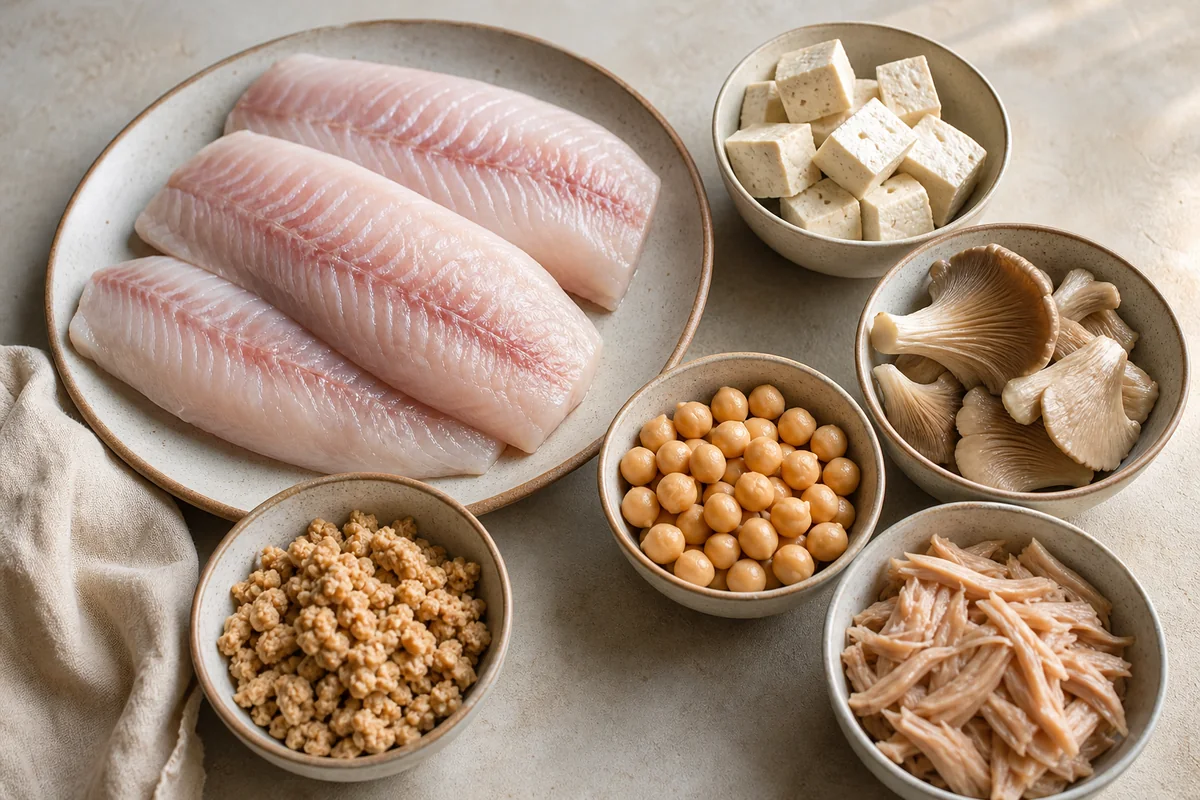
5 Best Catfish Substitutes (Closest Match)
Ingredients
Equipment
Method
- Start with the cooking method you’re using (fry, grill, or bake) and choose the substitute that matches the texture you want.
- Use the listed ratio (for example, 1:1) and cut portions to the same thickness as your original catfish fillets.
- Prep for doneness: pat seafood dry; brine/pound chicken; squeeze mushrooms after slicing.
- Season to close the flavor gap: add salt and your standard fish seasoning to the protein surface before breading or roasting.
- Adjust cook time: start checking 1–2 minutes earlier than you would for catfish so the replacement doesn’t overcook.
Notes
- For breaded recipes, dryness matters more than the exact protein—too-wet replacements cause loose coatings.
- If your dish relies on catfish’s mild flavor, avoid strongly flavored fish (like mackerel) unless you plan heavy seasoning.
Tried this recipe?
Let us know how it was!
Carrie is a food writer and editor with more than 15 years of experience. She has worked for some of the biggest names in the food industry, including Bon Appétit, Food & Wine, and Martha Stewart Living.
As the Editor in Chief of EpicureDelight, Carrie oversees all of the content on the site. She also manages the team of contributing writers and editors, who help to create delicious recipes, helpful tips, and informative articles that you’ll find on the site.
A native of the Chicago area, Carrie is passionate about all things food. She loves trying new restaurants and experimenting with new recipes in her kitchen. She’s also a graduate of the Culinary Institute of America, so she knows a thing or two about food!



