
That sharp, dry bite cayenne adds to a sauce or spice rub is hard to fake. It reads differently than smoky or sweet peppers because it delivers clean, quick heat with almost no background flavor getting in the way.
When you need a cayenne pepper substitute, the goal is matching that heat profile as closely as possible. Some swaps add smokiness or sweetness as a side effect.
Others stay close to cayenne's peppery sharpness but drop a little heat intensity.
This guide covers 5 flavor-matched alternatives. Each one comes with a starting ratio and a skip-if note so you don't accidentally change your dish's whole flavor direction.
The best cayenne pepper substitute is chili powder at a 1:1 ratio for everyday cooking, or crushed red pepper flakes (pulsed fine) for sharper heat. Smoked paprika works when color and mild warmth matter more than punch. Use Aleppo pepper for a gentler, fruitier heat.
5 Best Cayenne Pepper Substitutes (Flavor-Matched)
Here's how each swap compares at a glance before you read the details.
| # | Substitute | Best For | Ratio | Key Note |
|---|---|---|---|---|
| 1 | Chili Powder | Both | 1:1 | Blended warmth, less sharp |
| 2 | Red Pepper Flakes | Cooking | 1:1 | Pulse first for smooth texture |
| 3 | Smoked Paprika | Cooking | ¾:1 | Adds smokiness, less heat |
| 4 | Aleppo Pepper | Both | 1:1 | Fruity heat, gentler finish |
| 5 | Harissa Paste | Sauces | Start small | Thin with broth before using |
1. Chili Powder
Chili powder is the most pantry-friendly swap here. It brings warmth in the same range as cayenne, but it's a blend of cumin, garlic, oregano, and dried chiles, so the heat feels rounder and less sharp.
Start at 1:1, then taste after adding. If the dish needs more punch, add a small extra pinch at a time.
Understanding this blended spice's depth helps you decide how much compensation to make.
Chili Powder vs. Cayenne
Works for: Chili, sauces, rubs, savory baking, marinades where blended warmth is welcome
Skip if: Your recipe needs cayenne's sharp, clean bite without extra spice complexity
- Ratio: 1:1 to start; bump up by ¼ teaspoon if heat feels muted
- Color: Deeper red-brown than cayenne; adjust if color matters
- Salt check: Some chili powders include salt; taste before seasoning further
2. Crushed Red Pepper Flakes
Red pepper flakes can actually hit hotter than cayenne because most blends include seeds. The challenge is texture.
Whole flakes don't distribute evenly in sauces or batters, so pulse them briefly in a spice grinder or blender to break them down.
For smooth sauces, check swapping out flaky heat for more texture-specific guidance. A 30-second pulse gives you a rough powder that behaves almost exactly like cayenne in a recipe.
- Ratio: Start at 1:1; reduce by ¼ teaspoon if your flakes are very hot
- Texture fix: Pulse flakes 20-30 seconds before measuring for fine results
- Heat timing: Flakes bloom fast in hot oil; add them early in the cook
- Skip if: You're making a delicate batter, frosting, or any recipe where grit would ruin the texture
3. Smoked Paprika
Smoked paprika is a flavor trade, not a straight swap. You get beautiful color and a warm background heat, but you also pick up a distinctly smoky note that cayenne doesn't have.
If smokiness works in your dish, this is a great pick for BBQ-style sauces, roasted vegetables, and salsas. When you need more heat alongside the smoky paprika flavor, exploring smoky pepper-based options can point you toward blending two substitutes together.
- Ratio: Use ¾ teaspoon per 1 teaspoon cayenne, then scale up slowly
- Color payoff: Adds a deep red-orange color; great when visual appeal matters
- Heat boost: Pair with a tiny pinch of black pepper if you need more warmth
- Skip if: Your dish needs clean pepper heat without any smokiness
4. Aleppo Pepper
Aleppo pepper is milder than cayenne and has a gentle, fruity-peppery quality that feels less aggressive. It works in olive-oil-based marinades and pan sauces where you want warmth without a harsh finish.
Start at 1:1, then adjust upward if the heat feels too soft. It's about half the heat intensity of cayenne on average, so many cooks end up using 1½ teaspoon for every 1 teaspoon of cayenne.
If you're deciding between Aleppo and another mild option, picking the right mild pepper covers the tradeoffs in more detail.
The fruity undertone pairs especially well with lamb, lentils, and yogurt-based sauces. It is less suited to recipes that need the sharp, almost medicinal bite cayenne delivers in things like buffalo sauce.
Skip if: You need high, immediate heat for a punchy finish or a recipe where any fruit-forward note would clash.
5. Harissa Paste
Harissa paste is complex. It contains dried chiles, cumin, coriander, garlic, and salt, so thin it first before using it as a cayenne stand-in.
Stir a small amount into warm broth or neutral oil to loosen it before adding it to the pot.
This swap works best in soups, stews, and pan sauces where you can taste and adjust as you go. For a reference on balancing hot-sauce-style ingredients in dishes, adding liquid heat to recipes covers technique well.
| Use | Ratio | Notes |
|---|---|---|
| Soups & stews | ½ teaspoon paste per 1 teaspoon cayenne | Thin with 1 teaspoon broth first |
| Pan sauces | ½ teaspoon paste per 1 teaspoon cayenne | Stir into oil early; cook 30 sec |
| Marinades | ¾ teaspoon paste per 1 teaspoon cayenne | Mix with olive oil to emulsify |
- Salt watch: Harissa is often salted; reduce added salt in the recipe
- Taste early: Harissa heat spikes as it cooks; add more at the end if needed
- Skip if: Your recipe is a dry rub, breading, or any baked good where paste would change the texture
Making Cayenne Pepper Substitutes Work
The single biggest mistake cooks make with any of these swaps is adding too much too early. Cayenne sharp, dry heat blooms fast in warm liquid, so your substitute will too.
Start at the listed ratio, stir, and taste after 2 minutes before you add more.
- For sauces: Add the substitute early so heat can mellow and integrate into the base
- For baking: Stick to dry powders only; paste or liquid swaps will change your batter's moisture ratio
- For rubs: If your swap is less hot than cayenne, compensate with a small pinch of black pepper for bite
When choosing between warm spice blends, lean toward chili powder for everyday cooking and crushed red pepper flakes for anything that needs a sharper edge.
Frequently Asked Questions
Crushed red pepper flakes pulsed to a powder are the closest match for sauces. They deliver sharp heat similar to cayenne and distribute evenly once ground.
Yes, 1:1 is a safe starting point. Chili powder is milder and more complex, so add an extra pinch if the dish needs more heat.
Chili powder or Aleppo pepper are the safest baking swaps. Both stay mellow at oven temperatures and won't turn bitter the way some hotter spices can.
Pulse the flakes in a spice grinder for 20-30 seconds before measuring. This breaks down the texture so it behaves like a fine powder in your recipe.
It works for mild warmth but not for strong heat. Smoked paprika is much milder than cayenne and adds a smoky flavor that changes the dish's overall profile.
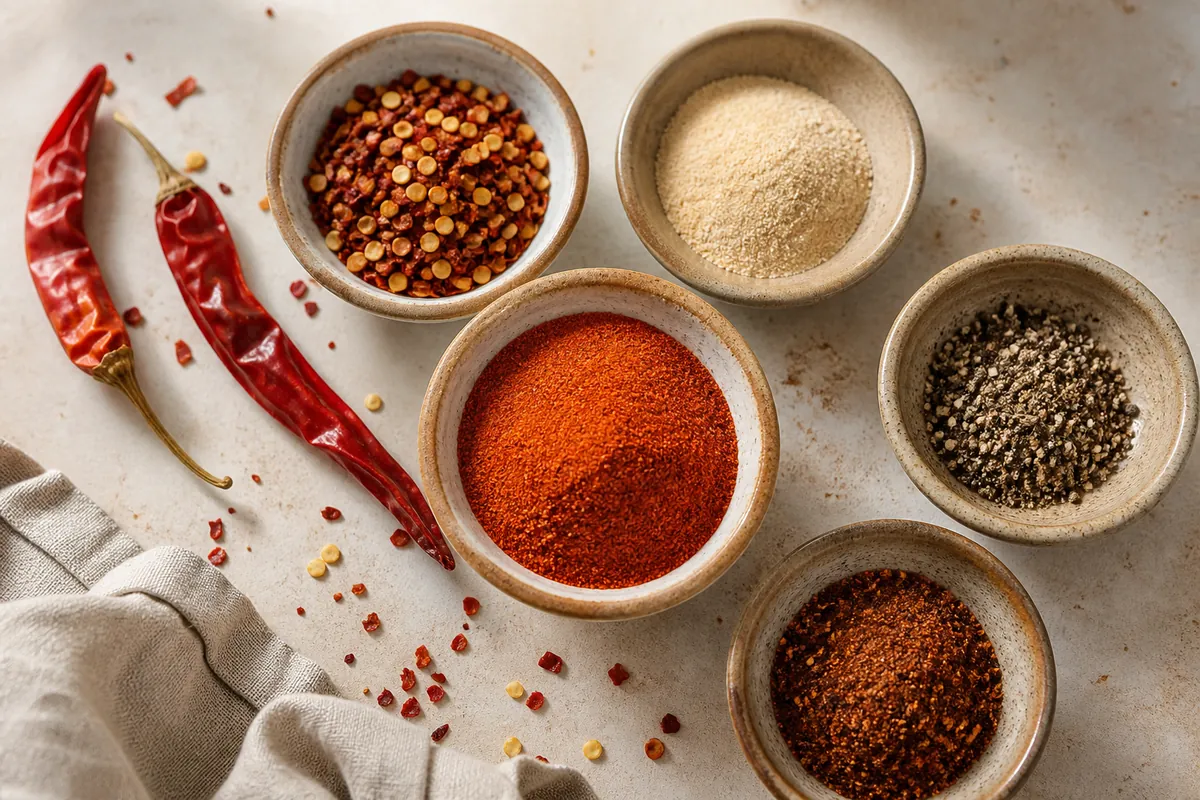
5 Best Cayenne Pepper Substitutes (Flavor-Matched)
Ingredients
Equipment
Method
- Identify whether your recipe needs “sharp heat” (cayenne-like bite) or just “warm spice.”
- Pick the substitute that matches your goal, then apply the listed substitution ratio.
- If the substitute is less hot than cayenne (like smoked paprika), increase gradually in small pinches until the heat level is right.
- If the substitute is hotter or more textured (like red pepper flakes), grind first and use a slightly smaller amount, then taste.
- Taste after cooking (or during mixing for sauces) and fine-tune with a final pinch so the flavor doesn’t turn bitter or overly smoky.
Notes
- Powders behave differently in baking vs. sauces: for baked goods, start with the lower range to avoid bitter over-spicing.
- Color matters: smoked paprika shifts red/brown undertones even if heat stays similar.
Tried this recipe?
Let us know how it was!
Carrie is a food writer and editor with more than 15 years of experience. She has worked for some of the biggest names in the food industry, including Bon Appétit, Food & Wine, and Martha Stewart Living.
As the Editor in Chief of EpicureDelight, Carrie oversees all of the content on the site. She also manages the team of contributing writers and editors, who help to create delicious recipes, helpful tips, and informative articles that you’ll find on the site.
A native of the Chicago area, Carrie is passionate about all things food. She loves trying new restaurants and experimenting with new recipes in her kitchen. She’s also a graduate of the Culinary Institute of America, so she knows a thing or two about food!



