
Coconut butter is basically whole coconut in a jar: the fat and the solids blended into one thick, spoonable paste. That texture is what makes it so useful, and also what makes it tricky to replace.
The right coconut butter substitute depends on whether your recipe needs the fat, the body, or both.
For baking, texture mismatch is the most common failure. A fat-only swap like melted coconut oil will make cookies spread thin.
A thicker swap like tahini or peanut butter adds body but changes the flavor. Knowing which part of coconut butter your recipe actually uses narrows the choice fast.
Coconut butter combines fat and coconut solids into a thick paste. For baking, use coconut manna or nut butter (¾:1) to preserve structure. For sauces and smoothies, coconut oil or a yogurt-oil blend works well. Match the texture first, then adjust flavor.
5 Best Coconut Butter Substitutes Worth Trying
These five options cover most recipes that call for coconut butter. The table below maps each substitute to its best use and ratio.
Read it as a starting point: the ratio tells you how much to measure, but the sections below tell you when to stop and when to skip.
| # | Substitute | Best For | Ratio | Key Note |
|---|---|---|---|---|
| 1 | Coconut Manna | Both | 1:1 | Warm before measuring |
| 2 | Coconut Oil | Cooking | ½:1 | Fat only, needs thickener |
| 3 | Tahini | Baking | ¾:1 | Mild sesame, stir well |
| 4 | Peanut Butter | Baking | ¾:1 | Strong flavor, reduce sugar |
| 5 | Greek Yogurt + Coconut Oil | Sauces | 1:1 | Whisk fully before using |
If your substitute is significantly less fatty than coconut butter and you're not blending or warming it first, the texture will be off. A cold, stiff nut butter stirred into a cool batter is not the same as warmed, smooth coconut butter.
Always loosen thick swaps before you measure.
1. Coconut Manna
Coconut manna is coconut butter under a different label. It's the same product: ground coconut flesh pressed into a paste, fat and solids together.
The swap is 1:1, and the texture match is as close as you'll get without using actual coconut butter.
The one adjustment worth making is temperature. Coconut manna firms up in the jar, especially in cooler kitchens.
Microwave the opened jar for 10 to 20 seconds, stir from the bottom until smooth, then measure. You'll get a consistent result every time.
- Ratio: 1:1 for any recipe calling for coconut butter
- Prep step: Warm 10-20 seconds and stir fully before measuring to avoid thick pockets
- Flavor: Mildly sweet and coconutty, almost identical to coconut butter
- Best uses: Smoothies, no-bake desserts, frosting bases, raw energy balls
If you want to understand the mildly sweet paste before committing to a jar, it's worth checking how coconut butter actually tastes in different applications.
Skip if: You need a coconut-free swap. Coconut manna still tastes like coconut.
2. Coconut Oil
Coconut oil is a fat-only swap, and that distinction matters. It has none of the coconut solids that give coconut butter its body, so it pours where coconut butter would hold.
Use it at a ½:1 ratio when the recipe mainly needs fat to carry flavor or keep things moist.
For recipes where choosing a neutral fat already feels like a stretch, coconut oil at least keeps the flavor profile in the same family. Pair it with a thickener when the recipe needs structure.
- Ratio: ½:1 coconut oil for every 1 part coconut butter
- Add body: Blend in 1-2 tablespoon nut butter or Greek yogurt per ¼ cup coconut oil to restore thickness
- Temperature note: Coconut oil solidifies below 76°F; warm it before measuring
Skip if: Your recipe relies on coconut solids for chew or structure (cookies and brownies may bake up thinner and less chewy).
3. Tahini
Tahini is ground sesame seeds: creamy, slightly bitter, and fatty enough to stand in for coconut butter in most baked goods. Use it at a ¾:1 ratio.
It won't replicate coconut flavor, but it adds the same kind of richness and moisture that coconut butter contributes to cookies, muffins, and denser cakes.
Choose hulled (light) tahini over dark tahini. Light tahini is milder and blends without adding a sharp sesame edge.
Stir the jar well before measuring because the oil separates and an unmixed scoop can be dry and grainy in your batter.
Skip if: Your recipe is coconut-forward in flavor. Tahini's sesame note will be noticeable, especially in simple no-bake desserts where nothing else masks it.
4. Peanut Butter
Smooth peanut butter has the fat, the body, and the spreadable texture that coconut butter brings to brownies and cookies. The swap is ¾:1.
It bakes well and holds moisture, but peanut butter has a strong, distinct flavor that takes over anything delicate.
Peanut Butter vs. Coconut Butter
Works for: fudgy brownies, chocolate chip cookies, energy bars, and thick sauces where peanut flavor is welcome
Skip if: the recipe is no-bake and coconut aroma is the main flavor; peanut butter will dominate completely
The roasty, savory spread varies by brand in both salt and sweetness. If you switch to peanut butter, reduce any added sugar in the recipe by about 1 tablespoon per ¼ cup used.
- Ratio: ¾:1 smooth peanut butter to coconut butter
- Prep step: Stir or warm slightly before adding so the oil is fully incorporated
- Flavor tip: Reduce added sugar slightly; most peanut butters already carry sweetness
If you need to step away from peanut butter entirely, a look at nut-free spread options covers several alternatives worth considering.
5. Greek Yogurt + Coconut Oil Blend
This swap combines the tang and body of Greek yogurt with the fat of coconut oil. Together they mimic coconut butter's thick, spoonable consistency well enough for sauces, smoothies, and lighter no-bake desserts.
Use equal parts of the blend as a 1:1 substitute, but the blending method matters.
Whisk the yogurt first until it's fully smooth. Then add warm (not hot) coconut oil in a slow stream while whisking constantly.
Hot oil will break the yogurt and leave you with a curdled, grainy mess. The result should be a creamy, pourable paste that holds together.
If you're ever unsure how picking a thicker dairy option affects the final texture, that decision is worth thinking through before you commit.
- Ratio: 1:1 blend (equal parts full-fat Greek yogurt and melted coconut oil, whisked together)
- Whisk order: Yogurt first, then stream in warm oil slowly to prevent splitting
- Best uses: Sauces, smoothie bowls, dips, and no-bake fillings at room temperature
Skip if: You're baking at high heat. Yogurt curdles above 375°F, and the blend will break in a hot oven.
Making Coconut Butter Substitutes Work
The first decision is always the same: does your recipe need fat, or does it need body? Coconut oil covers fat.
Nut butters and coconut manna cover body. The paste-like spread in a fresh jar is a clue for how thick your swap should feel before it goes into your batter.
If the yogurt-oil blend is your pick, the tangy dairy base affects the final flavor of anything delicate, so factor that in before you mix.
- Warm thick swaps first: Microwave coconut manna or nut butter for 10-15 seconds, then stir before measuring to avoid under-measuring stiff pockets
- Thicken thin swaps: If coconut oil or melted butter is too runny, blend in 1-2 tablespoon yogurt or nut butter per ¼ cup until the viscosity matches coconut butter
- Taste-correct at the end: Add a small pinch of salt if flavors seem flat, and a few drops of coconut extract if you want to push the flavor closer to the original
Frequently Asked Questions
Coconut manna is the closest match at a 1:1 ratio. It has the same fat-plus-solids composition and nearly identical flavor. Warm it briefly and stir before measuring.
Yes, but use only half as much coconut oil and expect less structure. Coconut oil has no solids, so cookies may spread more and brownies may be less chewy.
Whisk the yogurt until fully smooth first, then add warm (not hot) coconut oil in a slow stream. Hot oil breaks the yogurt and causes a grainy split.
Both are noticeable in simple, coconut-forward recipes. Paired with chocolate, vanilla, or warm spices, the sesame or peanut note blends in well enough.
Whisk in 1-2 tablespoon of full-fat Greek yogurt or smooth nut butter per ¼ cup of the thin swap. Add gradually and stir until it matches coconut butter's consistency.
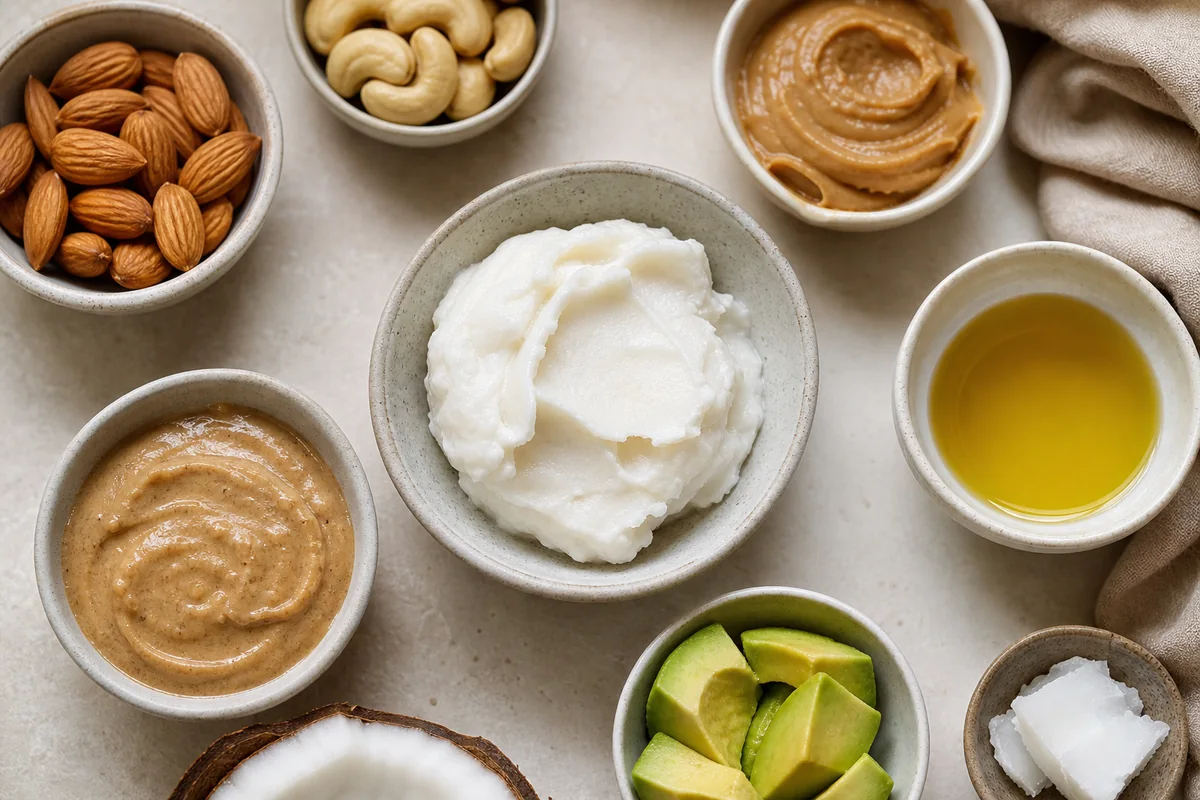
5 Best Coconut Butter Substitutes Worth Trying
Ingredients
Method
- Identify your use: baking (needs structure), sauces/smoothies (needs fat + blendability), or no-bake spreads (needs thickness).
- Choose the closest substitute by texture: coconut manna for 1:1 body, coconut oil for fat-only, or nut/seed butter for richer but different flavor.
- Measure using the listed ratio; if your substitute is much thinner (like coconut oil), combine with a thickener (yogurt or nut butter) to match viscosity.
- Warm hard substitutes for 10–20 seconds so they blend evenly; then mix until smooth and glossy.
- Taste-correct: add salt for muted flavors, and a pinch of sweetness if your swap tastes less “coconut-like.”
Notes
- If the recipe requires a spoonable/spreadable texture, prioritize coconut manna or add a thickener when using coconut oil.
- Nut/seed butter swaps work best in desserts; expect flavor drift compared with coconut butter.
Tried this recipe?
Let us know how it was!
Carrie is a food writer and editor with more than 15 years of experience. She has worked for some of the biggest names in the food industry, including Bon Appétit, Food & Wine, and Martha Stewart Living.
As the Editor in Chief of EpicureDelight, Carrie oversees all of the content on the site. She also manages the team of contributing writers and editors, who help to create delicious recipes, helpful tips, and informative articles that you’ll find on the site.
A native of the Chicago area, Carrie is passionate about all things food. She loves trying new restaurants and experimenting with new recipes in her kitchen. She’s also a graduate of the Culinary Institute of America, so she knows a thing or two about food!



