
Coconut oil is one of those ingredients that does two jobs at once. It's a fat that's also solid at room temperature, which means swapping it is trickier than just grabbing any oil from the shelf.
The right coconut oil substitute depends on what you're asking it to do. Solid texture for baking?
Neutral fat for high-heat frying? Something that melts cleanly into a batter?
The answers point to different substitutes.
Pick by use-case first, then ratio. Most swaps are 1:1 by volume, but the texture and flavor impact will vary.
The best coconut oil substitutes are refined avocado oil, unsalted butter, ghee, cocoa butter, and palm shortening. Most swap 1:1. Choose by goal: solid texture needs cocoa butter or palm shortening, high-heat cooking needs avocado oil or lard, and creamy baking calls for butter or ghee.
5 Best Coconut Oil Swaps Ranked by Texture and Heat
Every substitute below covers one specific job coconut oil does. Check the table first to match your use-case, then read the section for handling notes.
| # | Substitute | Best For | Ratio | Key Note |
|---|---|---|---|---|
| 1 | Refined Avocado Oil | High Heat | 1:1 | Neutral flavor, stays liquid |
| 2 | Unsalted Butter | Baking | 1:1 | Melt then cool 2-5 min |
| 3 | Ghee | Both | 1:1 | Richer flavor, solid when chilled |
| 4 | Cocoa Butter | Solid Texture | 1:1 | Firms well, mild cocoa note |
| 5 | Palm Shortening | Solid Texture | 1:1 | Scoopable, very neutral taste |
1. Refined Avocado Oil
Refined avocado oil is the cleanest swap when you need fat performance without any flavor interference. It handles heat well, with a smoke point around 500°F, and won't add anything detectable to the finished dish.
The long shelf life of a well-stored neutral oil like this also makes it a reliable pantry staple to keep on hand.
- Ratio: Use 1:1 by volume for all liquid-fat applications
- Best uses: Sautéing, roasting, pan-frying, and baking where flavor is secondary
- Texture impact: Stays fully liquid at room temperature, so expect no firmness
- Flavor impact: Essentially neutral when refined, unlike extra-virgin versions
Skip if: your recipe relies on coconut oil solidifying at room temperature. Avocado oil won't firm up, and that will change the structure of bars, frostings, or no-bake treats.
2. Unsalted Butter
Butter is the closest thing to coconut oil's creamy fat structure in baked goods. It has a similar fat content and behaves well in cookies, muffins, and quick breads.
The one handling step that matters: melt the butter, then let it cool for 2-5 minutes before mixing. Adding hot melted butter directly to eggs or cold batter can cause separation.
- Ratio: 1:1 by volume or weight
- Flavor note: Adds mild dairy flavor, which most sweet recipes welcome
- Melt step: Cool briefly after melting so batter stays smooth and emulsified
- Moisture: Butter has more water than coconut oil, so baked goods may be slightly softer
If you ever need to go the other direction, swapping out dairy fat covers the reverse situation well.
Skip if: your recipe needs coconut oil's distinct waxy aroma or firm room-temperature set.
3. Ghee
Ghee is clarified butter, so it behaves more like a pure fat than regular butter does. It has a higher smoke point (around 450°F) and a noticeably nutty, slightly caramel flavor that stays present in the finished dish.
- Ratio: 1:1 for both baking and cooking
- Best uses: Cookies, pie crusts, sautéed vegetables, and spice-forward savory dishes
- Flavor pairing: Works beautifully with chocolate, caramel, warm spices, or anything bold enough to carry the buttery note
- Texture: Becomes semi-solid when chilled, closer to coconut oil's room-temp behavior than butter
For a direct comparison on how these two fats handle differently in cooking, the ghee vs. oil debate is worth a look if you're splitting between them.
Skip if: you need a completely neutral-tasting fat. Ghee's buttery richness comes through clearly in mild or delicately flavored recipes.
4. Cocoa Butter
Cocoa butter is the best option when your recipe specifically needs a fat that firms up at room temperature. It's solid, stable, and melts cleanly when heated.
The tradeoff is a mild cocoa undertone that ranges from faint to noticeable depending on the brand.
Firmness Match
Works for: no-bake bars, chocolate-based desserts, body butters, and recipes where the fat must set solid
Skip if: the recipe is very lightly flavored and any cocoa note would clash
Flavor Impact
Works for: chocolate chip cookies, cocoa-spiced baked goods, and homemade confections
Skip if: you're making savory dishes or neutral-flavored frostings
If you're weighing options between two similar solid fats, the raw vs. refined butter choice can affect both flavor and workability.
- Ratio: 1:1 by weight for solid-fat applications
- Handling: Let it sit at room temperature until workable before melting or creaming
- Mixing: Grate or chop it first if adding to batter, so it melts evenly
5. Palm Shortening
Palm shortening sits at room temperature as a firm, scoopable solid, which is the quality coconut oil is hardest to replace. It has almost no flavor, so it won't push a recipe in any particular direction.
- Best uses: Cookies, pie crusts, frostings, and no-bake bars that need to hold shape
- Texture: Very similar scoopability to solid coconut oil straight from the jar
- Flavor: Essentially neutral, which makes it reliable in both sweet and mildly savory applications
- If too firm: Let it rest at room temperature for 10-20 minutes before mixing
| Use | Ratio | Notes |
|---|---|---|
| Cookies / bars | 1:1 | Cream it like solid coconut oil; chill dough if spreading occurs |
| Frostings | 1:1 | Beat at room temp for smooth, pipeable consistency |
| No-bake treats | 1:1 | Refrigerate to set; firms faster than coconut oil at fridge temp |
Skip if: you want high-heat frying performance. Palm shortening works for baking but isn't ideal for deep frying or high-temp searing.
Making Coconut Oil Substitutes Work (Fast Fixes)
Switching fats mid-recipe is usually straightforward, but the texture outcome depends on one key decision: liquid or solid. Picking the wrong category changes the entire structure of the dish.
If you're already curious about choosing a liquid oil instead, that's worth reading before you commit to a swap.
- Match the fat state first: Use solid substitutes (palm shortening, cocoa butter, ghee) when the recipe needs the fat to hold shape; use liquid oils (avocado, olive) when only the fat content matters
- Melt-and-cool timing: For butter or ghee, melt then wait 3-5 minutes before adding to eggs or cold ingredients to prevent the batter from seizing
- Texture troubleshooting: If a baked good spreads too much, the substitute is likely too liquid; chill the dough for 20-30 minutes or reduce the fat by 1-2 teaspoons per cup
When you're storing coconut oil alongside your substitutes, keep all solid fats in a cool, stable spot so they don't change state before you need them.
Frequently Asked Questions
Yes, but only in recipes where the fat stays liquid. Olive oil won't recreate the solid structure coconut oil provides in bars, frostings, or no-bake treats.
Refined avocado oil is the top pick, with a smoke point near 500°F and completely neutral flavor. Ghee or lard also perform well for high-heat frying.
Palm shortening and cocoa butter are the closest matches for solid texture. Both firm up similarly to coconut oil and swap in at a 1:1 ratio.
Both work at 1:1, but ghee spreads less because it has no water. Butter gives a softer, more tender cookie crumb overall.
Not entirely. Cocoa butter has a mild cocoa undertone that's noticeable in lightly flavored recipes. It's best in chocolate-forward or spice-rich dishes where it blends in.
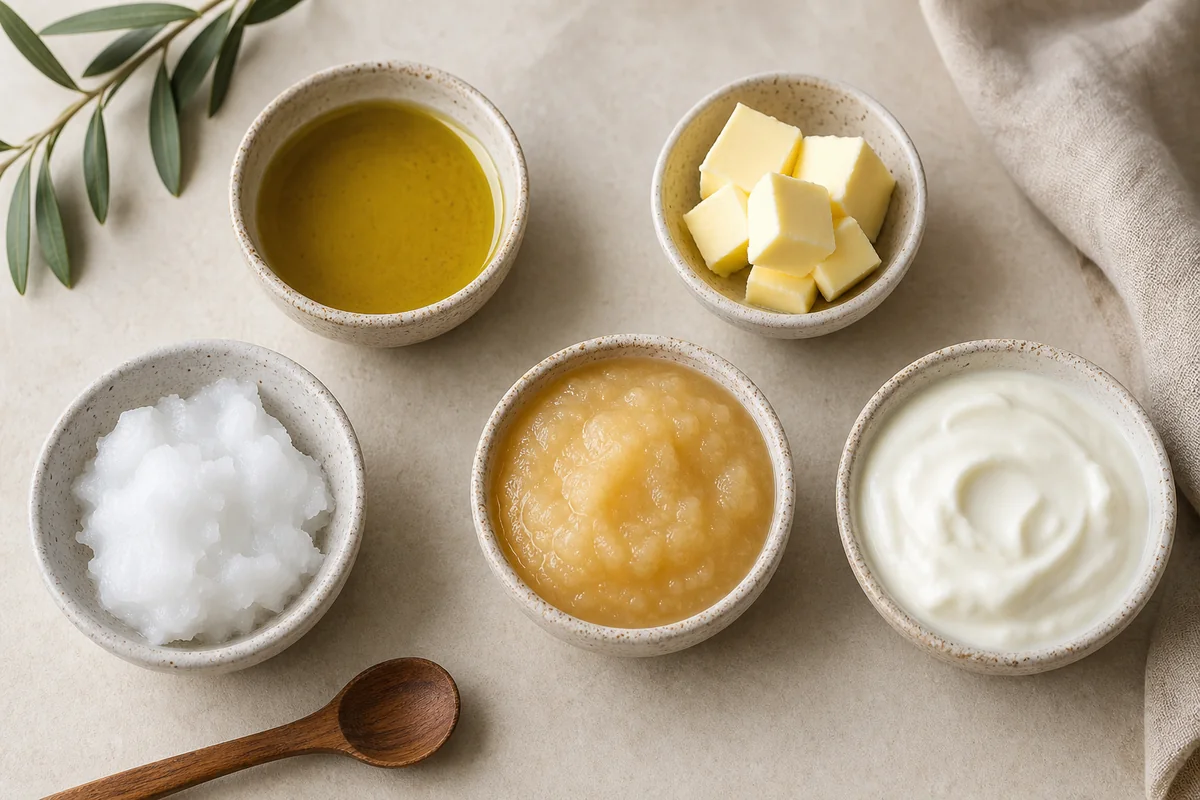
5 Best Coconut Oil Substitutes (Easy Swaps)
Ingredients
Equipment
Method
- Identify your goal: baking texture, frying/heat performance, or skin/hair conditioning—then choose the closest substitute from the table.
- Use the listed ratio (most swaps are 1:1 by weight/volume equivalence for fats in recipes).
- For butter- or ghee-based swaps, melt then cool 2–5 minutes before mixing so the fat doesn’t shock the batter.
- For solid replacements (cocoa butter or palm shortening), keep the fat at room temperature so it creams or blends smoothly.
- If the recipe texture seems off, adjust with 1–2 teaspoons per cup: add a bit more liquid for dry batter or chill longer if it won’t firm.
Notes
- Swap ratios assume you’re replacing fat in a recipe; for skin/hair uses, texture match matters more than flavor.
Tried this recipe?
Let us know how it was!
Carrie is a food writer and editor with more than 15 years of experience. She has worked for some of the biggest names in the food industry, including Bon Appétit, Food & Wine, and Martha Stewart Living.
As the Editor in Chief of EpicureDelight, Carrie oversees all of the content on the site. She also manages the team of contributing writers and editors, who help to create delicious recipes, helpful tips, and informative articles that you’ll find on the site.
A native of the Chicago area, Carrie is passionate about all things food. She loves trying new restaurants and experimenting with new recipes in her kitchen. She’s also a graduate of the Culinary Institute of America, so she knows a thing or two about food!



