
That faint, grassy lift dill weed gives to potato salad, salmon, and creamy dips is surprisingly hard to fake. But if your jar is empty or fresh dill isn't at the store, a few smart swaps get you most of the way there.
The best dill weed substitute depends on whether you're finishing a dish or cooking it through.
Some herbs handle heat better. Others only shine when added at the last minute.
Knowing which category your recipe falls into makes the difference between a close match and a flat result.
Fresh dill is the closest 1:1 swap for dill weed, especially for finishing. Dried dill works in cooked dishes when fresh isn't available. Fennel fronds match dill's brightness with a mild anise edge. Celery leaves add green herbiness in a pinch. Tarragon mimics dill's anise note but needs a lighter hand.
5 Dill Weed Substitutes Ranked by How Close They Land
The table below gives you a fast read on each option. Scan the "Best For" column first, then check the ratio before measuring.
If you want a deeper look at what makes this grassy herb tick, that context helps you pick the right match.
| # | Substitute | Best For | Ratio | Key Note |
|---|---|---|---|---|
| 1 | Fresh Dill | ★ Finishing | 1:1 | Add at end only |
| 2 | Dried Dill | ★ Cooked | 1:1 | Add early for flavor |
| 3 | Fennel Fronds | ★ Dressings | 1:1 | Mild anise edge |
| 4 | Celery Leaves | ★ Soups | 1:1 | Green, slightly bitter |
| 5 | Tarragon | ★ Sauces | ½:1 | Use half; potent herb |
1. Fresh Dill (Chopped)
Fresh dill is the obvious first choice and the one that preserves the most of dill weed's character. It has the same grassy-bright aroma with that barely-there anise note.
For salmon-friendly sides, potato dishes, and yogurt sauces, it's a seamless swap.
Use it in a 1:1 ratio by volume. Timing matters here.
- For finishing sauces: Stir in at the end, off the heat.
- For potato salad or dips: Mix in cold and let sit 10 minutes before serving.
- For fish dishes: Scatter over just before plating, not during cooking.
Skip if you don't have fresh dill either. In that case, move to dried dill or fennel fronds.
2. Dried Dill
Dried dill is the most practical cabinet swap. It's less aromatic than fresh, but it holds up to heat better.
That makes it a good fit for soups, cooked dips, and braises where the herb has time to mellow into the dish.
The key difference versus fresh dill is concentration and volatility. Fresh dill blooms fast and fades fast.
Dried dill needs longer exposure to heat to release what's left of its flavor. For a detailed look at the dried vs. fresh tradeoff, the comparison breaks down when each performs best.
- In soups and stews: Add dried dill in the first half of cooking, not the last 5 minutes.
- In dips and spreads: Mix in and refrigerate for 30 minutes so the flavor can develop.
- Start small: Use the same amount as the recipe calls for in dill weed, taste, then add more.
- Boost it: A small squeeze of lemon restores the brightness dried dill loses.
Skip if your recipe needs a fresh, finishing herb note. Dried dill won't give you that.
3. Fennel Fronds
Fennel fronds are the most underused dill substitute in a home kitchen. They have a similar feathery texture and the same green-herb brightness, just with a slightly more noticeable anise edge.
For most dishes, that difference is minor.
Fennel Fronds vs. Dill Weed
Works for: potato salads, salmon, cucumber salads, herb dressings, and finishing sauces
Skip if: your recipe already has fennel bulb, star anise, or other licorice-forward ingredients
Chop the fronds finely to match the texture of dill weed. They work best raw or added at the very end of cooking.
If the anise flavor feels too forward, pair them with a small amount of acid alternatives like lemon or white wine vinegar to pull the flavor back toward dill's profile.
- For dressings: Use 1:1, chopped fine, in place of dill weed.
- For fish: Works especially well with salmon and white fish.
- For pickling brine: Use alongside a bay leaf if you want a rounder, less sharp result.
4. Celery Leaves
Celery leaves won't fool anyone into thinking they're tasting dill. But they bring a green, slightly bitter herb flavor that fills the same structural role in a dish.
When dill weed is used more as a background herb than a star, celery leaves hold up well.
- In soups and broths: Add early with the aromatics for a subtle herby depth.
- In quick pickles: Use 1:1 by volume as a stand-in when dill is unavailable.
- Adjustment tip: Add a small splash of lemon juice or white vinegar to lift the flavor and mimic dill's brightness.
- Best applications: Coleslaw, potato soup, egg salad, or any dish where the herb is in the background.
Pair celery leaves with a little extra salt upfront. They can taste flat without it.
For dishes where you want that faint anise note dill provides, dill's flavor profile explains why fennel fronds or tarragon are the better call there.
Skip if you want an anise note in the final dish. Celery leaves don't carry that.
5. Tarragon (Use Sparingly)
Tarragon shares dill's anise-adjacent character, but it's a louder herb. Where dill is soft and grassy, tarragon is more assertive and sweet-licorice.
That makes it a workable swap, as long as you use less. This licorice-leaning herb has its own family of swaps if you find it too strong.
Use fresh tarragon at a ½:1 ratio to dill weed. Dried tarragon is even more concentrated, so drop to a ¼:1 ratio and taste as you go.
- In creamy sauces: Works well where dill would add its anise side (think mustard cream or yogurt sauces).
- In potato dishes: Tarragon and butter is a classic pairing that holds up.
- For pickling brines: Use 1 small sprig per jar instead of a full tablespoon of dill weed.
- With egg dishes: A pinch in scrambled eggs or deviled eggs mimics dill's role without overpowering.
The sweet-licorice side of this assertive herb is its defining trait. If that's not what you want in the dish, celery leaves are a safer pick.
Skip if you're already sensitive to licorice-forward herbs.
Making Dill Weed Substitutes Work in Any Recipe
The right substitute fails if the timing is off. Every herb on this list behaves differently depending on when it hits the heat.
Getting that detail right matters more than the ratio.
- Timing: Add delicate substitutes (fresh dill, fennel fronds, celery leaves) in the last 2 minutes of cooking. Add dried dill or tarragon early so they can mellow into the dish without tasting raw.
- Concentration: If your substitute is stronger than dill weed (tarragon, dried dill), reduce by 30-50% and taste before adding more. You can always increase, but you can't remove.
- Restoring brightness: If the finished dish tastes flat, a squeeze of lemon or a small splash of white vinegar pulls it back. It mimics the lift dill weed naturally provides.
If you end up with more fresh dill than you need, storing bright frozen fronds is easier than most people expect.
Frequently Asked Questions
Fresh dill is the closest match. Use it 1:1 by volume and add it at the very end so the aroma stays intact.
Yes, but add it earlier in cooking and pair with a touch of lemon to restore brightness. Dried dill is less aromatic, so it needs more time to develop.
Fennel fronds are the best option for that anise-adjacent note. Tarragon also works but needs to be used at half the amount.
Use half the amount the recipe calls for and taste before adding more. A squeeze of lemon helps balance tarragon's sweeter edge.
Yes, noticeably. Dried dill is the safest baking swap since heat mutes herb volatility anyway. Avoid tarragon in baked goods-its sweetness reads oddly without fat to balance it.
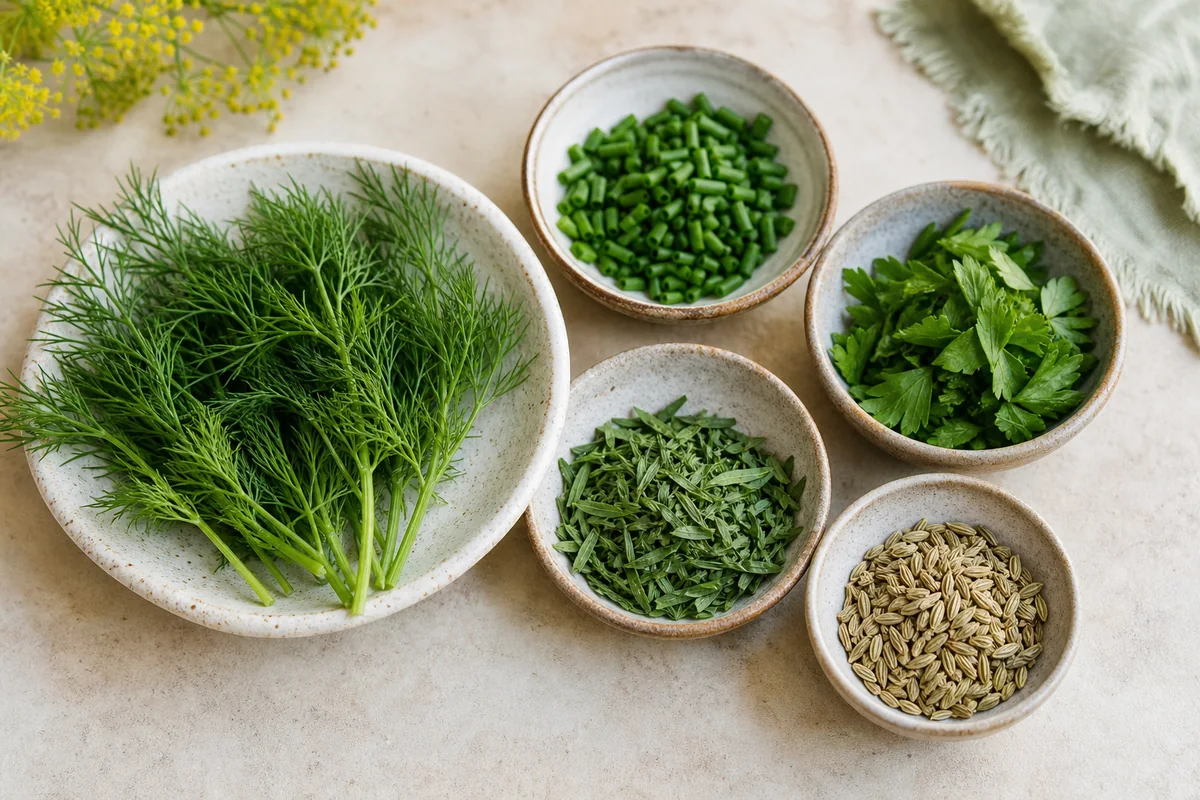
5 Best Dill Weed Substitutes in Every Recipe
Ingredients
Method
- Identify how you’re using dill weed: finishing fresh, simmering in a sauce, or baking into a batter.
- Choose the closest dill-leaning option: fresh/dried dill first, then fennel fronds for the same bright herb vibe.
- Measure using the listed ratio; if your substitute is stronger (like tarragon), use the smaller ratio to avoid overpowering.
- For cooked applications, add the substitute earlier so it can mellow; for finishing, add near the end to preserve aroma.
- Taste and adjust with salt or acid (lemon/vinegar) to recreate dill’s “lift” effect in the finished dish.
Notes
- Fresh dill is best for uncooked/finishing; dried dill works for cooking but can taste less vibrant.
- Anise-leaning swaps (fennel fronds, tarragon) work best when you want dill’s brightness without needing identical flavor.
Tried this recipe?
Let us know how it was!
Carrie is a food writer and editor with more than 15 years of experience. She has worked for some of the biggest names in the food industry, including Bon Appétit, Food & Wine, and Martha Stewart Living.
As the Editor in Chief of EpicureDelight, Carrie oversees all of the content on the site. She also manages the team of contributing writers and editors, who help to create delicious recipes, helpful tips, and informative articles that you’ll find on the site.
A native of the Chicago area, Carrie is passionate about all things food. She loves trying new restaurants and experimenting with new recipes in her kitchen. She’s also a graduate of the Culinary Institute of America, so she knows a thing or two about food!



