
That sharp, medicinal bite you're missing is actually a layered thing. Fernet Branca hits with bitter herbs up front, a distinct mint coolness on top, and a dry finish that few spirits match cleanly. The fernet branca substitute that works for your Negroni Sbagliato won't necessarily work in a bitter chocolate tart.
Most replacements trade the mint intensity for more sweetness or a different herbal weight. Know that tradeoff going in, and you'll land on the right bottle faster.
The best fernet branca substitutes are Amaro Montenegro and Cynar for cocktails, Averna and Ramazzotti for baking, and Angostura bitters when you need emergency bitterness. Most replacements skew sweeter than Fernet, so reduce the ratio and adjust upward only after tasting.
5 Best Fernet Branca Replacements for Cocktails and Baking
These five options cover the widest range of recipes where a fernet branca replacement shows up. Each one lands differently on the bitterness-sweetness scale, so the table below gives you a starting ratio and a quick note on where each one earns its place.
For drinks where that anise character matters, the absinthe vs. Jägermeister comparison explains the herbal overlap between those two bottles.
Start with the listed ratio. If the substitute reads too sweet after dilution or baking, pull back by a quarter-measure before adding more.
| # | Substitute | Best For | Ratio | Key Note |
|---|---|---|---|---|
| 1 | Amaro Montenegro | Both | 1:1 | Herbal-bitter, slightly less minty |
| 2 | Cynar | Both | 1:1 | Earthy-bitter, artichoke depth |
| 3 | Averna | Both | ¾:1 | Sweeter-bitter, reduce carefully |
| 4 | Angostura Bitters | Cocktails | 1:4 | Concentrated; mix with neutral spirit |
| 5 | Jägermeister | Both | ⅞:1 | Herb-heavy, sweeter, more licorice |
1. Amaro Montenegro
Montenegro is the closest bitter-herbal match most home bartenders will find on a standard liquor store shelf. It carries a similar bitter backbone to Fernet, though the mint coolness is dialed back and a gentle orange-peel sweetness comes through instead.
If you're working with a recipe where that sharp, resinous finish matters, Montenegro is your first call.
Use it at a 1:1 ratio and taste after dilution. For baking, taste the batter before adding more.
- Stirred cocktails: Works at 1:1; add a couple drops of bitters if you miss Fernet's sharper edge
- Digestif sipping: Serve straight or over ice - the herbal profile reads close enough for most palates
- Baking: Use full 1:1 and expect a slightly rounder, less minty finish in the final bake
- Ratio nudge: If the recipe leans heavily mint-forward, add 2-3 drops of peppermint bitters alongside Montenegro
Skip this if your recipe depends on Fernet's sharp mint top note. In that case, Cynar or a bitters-sharpened mix gets you closer.
2. Cynar
Cynar is an artichoke-based amaro that reads bitter and herbal without much sweetness up front. It's a solid fernet branca alternative in soda-forward drinks and digestifs, though its earthy depth is noticeably different from Fernet's cleaner bitter profile.
Learning more about this earthy Italian bitter helps you predict how it'll behave before you pour.
If you need more bite, bump the ratio slightly or add a few drops of Angostura.
- Soda drinks: Mix 1:1 with club soda and a citrus wedge - the artichoke bitterness holds up well against carbonation
- Digestifs: Sip straight; the herbal bitterness lingers longer than Fernet's mint-clean finish
- Cocktails with vermouth: Works well in bitter-forward stirred drinks where earthiness is welcome
Cynar vs. Fernet Branca
Works for: soda drinks, digestifs, bitter-forward cocktails where artichoke depth is acceptable
Skip if: your recipe needs a crisp, minty finish - the artichoke earthiness won't replicate that note
3. Averna
Averna is bitter-sweet rather than bitter-dry, so it's not a pure 1:1 swap. The herbal complexity is there, but the higher sugar content means your cocktail or bake can tip too sweet fast.
Among the best fernet branca substitutes for chocolate-heavy baking, Averna is genuinely useful - it adds bitter-cocoa depth that plays well with dark chocolate or coffee flavors. For other sweet-bitter amaro options, the amaro-based swap options page covers a wider range of similar bottles.
Start at ¾ of what the recipe calls for, then build up only if the bitterness feels too muted.
| Use | Ratio | Notes |
|---|---|---|
| Cocktails (bitter-sweet) | ¾:1 | Averna - reduce to avoid over-sweetening |
| Baking (chocolate/coffee) | ¾:1 | Averna - herbal-bitter depth works well here |
| Digestif sipping | 1:1 | Averna - sweetness is pleasant served over ice |
- Chocolate desserts: Averna's cocoa-adjacent bitterness pairs naturally with dark chocolate batters
- Dry cocktails: Reduce to ¾ and add a few drops of Angostura to sharpen the bitter edge
- Balancing sweetness: A small squeeze of citrus in a cocktail cuts Averna's sweetness without masking the herbal notes
Skip this if you're making a dry, bitter-forward drink where any added sweetness would throw the whole recipe off.
4. Angostura Bitters
When you can't find amaro, Angostura bitters are the most controllable fernet branca substitute in baking and cocktails because you add in drops, not pours. Mix 1 part bitters with 4 parts neutral spirit or soda to approximate a working amaro-style base, then taste as you go.
Small adjustments land big here, so stop before you think you're done. For situations where even Angostura isn't on hand, picking a comparable bitter covers what else works in a pinch.
- Cocktail base: Combine 1 teaspoon Angostura with 4 teaspoon neutral spirit; shake and taste before adding to the full build
- Baking: Start with ¼ teaspoon per 1 tablespoon Fernet called for; stir into wet ingredients and taste the batter
- Sharpening other substitutes: A few drops of Angostura alongside Montenegro or Cynar adds the extra bitter edge Fernet has
Skip this if the recipe depends on Fernet's layered herbal complexity. Bitters add bitterness, but they won't replicate the full aromatic range of a well-made amaro.
5. Jägermeister
Jägermeister is herb-heavy in a way that does approximate Fernet's general character. It has over 56 botanicals and the bitterness is real.
The gap is sweetness: Jägermeister runs noticeably sweeter than Fernet, and the anise-licorice note is stronger and more upfront.
Use it at ⅞ of what the recipe calls for and taste before you add more. In baking, the sweetness bakes down a bit, which actually makes Jägermeister more forgiving in dense cakes or glazes than in cocktails.
If you find the result reads too licorice-forward, a small citrus addition pulls it back into balance.
Jägermeister vs. Fernet Branca
Works for: herb-forward baking, bitter glazes, stirred cocktails where some sweetness is welcome
Skip if: you dislike anise or licorice flavors, or need a clean minty finish rather than a sweet-herbal one
- Dense baked goods: Use at ⅞ ratio; sweetness tempers in the oven and herbal notes carry through
- Stirred cocktails: Reduce slightly and balance with a dry vermouth or citrus juice
- Glazes and sauces: Reduce by 2 tablespoon compared to Fernet; Jägermeister's sugar caramelizes faster
Making a Fernet Branca Substitute Actually Taste Right
Getting a substitute to land correctly is a two-pass process. First, match bitterness intensity - if your replacement reads too sweet (Averna, Jägermeister), pull the ratio back.
Then check herbal depth, which is where most swaps fall short of Fernet's complexity. A few drops of Angostura alongside choosing a lighter amaro option gets you most of the way there for cocktails.
For baking, taste the batter or glaze before it goes into the oven, then make your call.
- Cocktails: Build with ice, stir or shake as the recipe requires, then taste after 30-60 seconds of dilution before adding more substitute
- Baking: Mix the substitute into wet ingredients first, taste the batter, and only increase if the herbal note feels absent after a full mix
- Sharpening any substitute: Add 2-3 drops of Angostura bitters to close the gap between a sweet-bitter amaro and Fernet's dry, herb-sharp finish
Frequently Asked Questions
Amaro Montenegro is the closest match for stirred and soda-forward cocktails. It holds a similar bitter-herbal profile at a 1:1 ratio, though the mint note is softer than Fernet's.
Yes. Averna and Ramazzotti work well in baked goods because their sweeter-bitter profiles mellow in the oven. Start at ¾ of the original amount and taste before baking.
Reduce the substitute to ¾ of the original measure and add 2-3 drops of Angostura bitters to sharpen the bitter edge without adding more liquid volume.
It works in a pinch for bitterness, but not for full herbal complexity. Mix 1 part Angostura with 4 parts neutral spirit and taste carefully before adding to any recipe.
Skip Jägermeister. Its anise-licorice note is stronger than Fernet's. Choose Cynar or Amaro Montenegro instead for a cleaner, less anise-forward bitter profile.
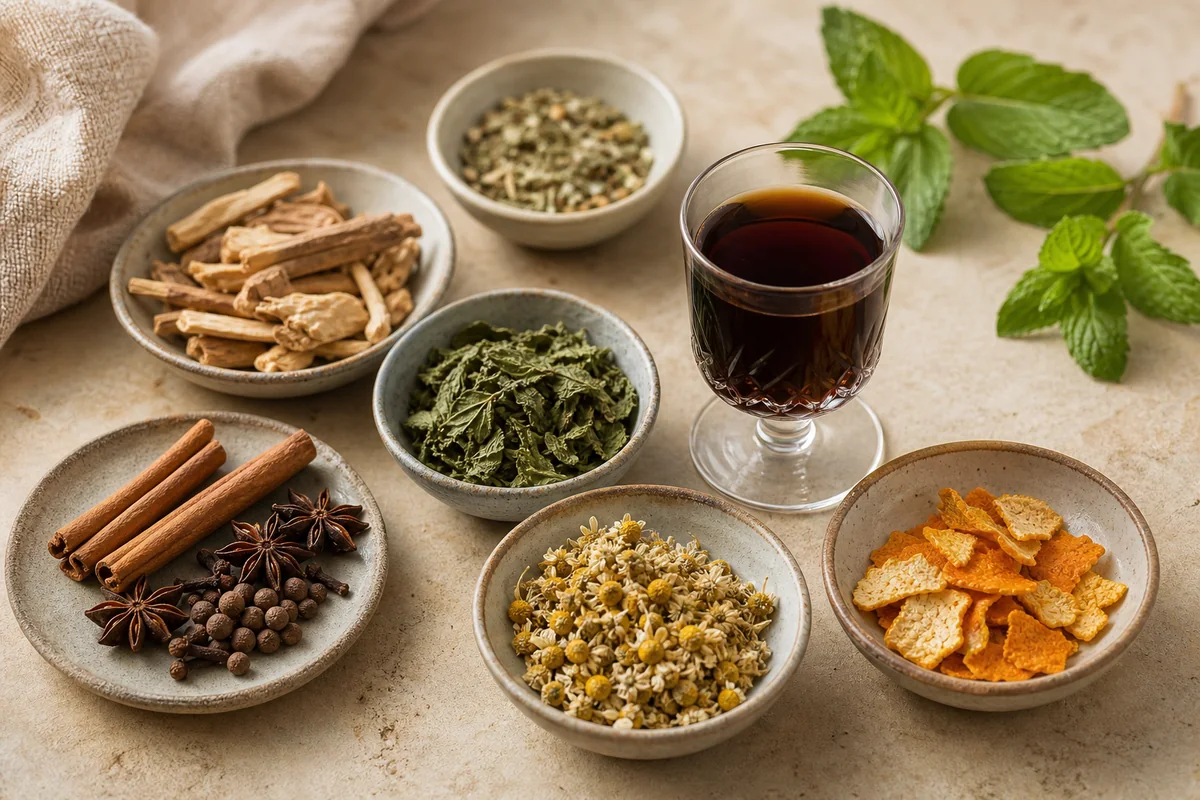
5 Best Fernet Branca Substitutes for Any Recipe
Ingredients
Method
- Identify your use: cocktail, digestif sip, or baking (where bitterness needs to be tempered).
- Start with the listed ratio for your target: match bitterness first, then adjust for mint/herbal intensity.
- If your substitute is sweeter than Fernet Branca (Averna/Jägermeister/Ramazzotti), use the reduced ratio or add a few drops of Angostura-style bitterness.
- For cocktails, build the drink with ice and dilution, then taste after 30–60 seconds; for baking, mix thoroughly and bake before final judgment.
- Taste and fine-tune: shorten sweetness with additional bitters, or soften aggressive herbal notes by slightly diluting with soda/water.
Notes
- Ratios are starting points—Fernet Branca varies by proof and recipe context, so taste-based adjustment matters.
- If the recipe relies on Fernet’s mint-herbal top note, prioritize Montenegro/Cynar first and tune with bitters.
Tried this recipe?
Let us know how it was!
Carrie is a food writer and editor with more than 15 years of experience. She has worked for some of the biggest names in the food industry, including Bon Appétit, Food & Wine, and Martha Stewart Living.
As the Editor in Chief of EpicureDelight, Carrie oversees all of the content on the site. She also manages the team of contributing writers and editors, who help to create delicious recipes, helpful tips, and informative articles that you’ll find on the site.
A native of the Chicago area, Carrie is passionate about all things food. She loves trying new restaurants and experimenting with new recipes in her kitchen. She’s also a graduate of the Culinary Institute of America, so she knows a thing or two about food!



