
That single small bottle does a lot of heavy lifting. Angostura bitters adds the bitter backbone, the spice warmth, and the aromatic complexity that keeps a cocktail from tasting like sweetened liquor.
Knowing how long angostura bitters keeps is worth checking if your bottle is old, but when it's simply missing from your shelf, you need a fast answer.
The right angostura bitters substitute depends on what job the bitters is doing. Is it adding bitterness and spice?
Brightness and balance? Or just a touch of herbal depth?
Each swap below targets a specific flavor role, so you'll know exactly how to apply it.
The best angostura bitters alternatives are other aromatic or orange bitters at an equal drop ratio. When those aren't available, a small amount of bitter lemon soda, Coca-Cola, or strong espresso can fill the bitterness gap. Always start with less than you think you need and taste as you go.
5 Best Angostura Bitters Substitutes (Quick Swaps)
Every drink that calls for bitters is relying on a specific flavor contract: bitterness cuts sweetness, spice adds depth, and the two together keep the cocktail feeling alive. The five options below cover that contract from closest match to furthest backup.
| # | Substitute | Best For | Ratio | Key Note |
|---|---|---|---|---|
| 1 | Aromatic Bitters | Both | 1:1 | Closest all-purpose match |
| 2 | Orange Bitters | Both | 1:1 | Brighter, citrus-led flavor |
| 3 | Bitter Lemon Soda | Dilution risk | 1:6 | Watch carbonation and water |
| 4 | Coca-Cola | Dark spirits | 1:4 | Adds sugar, use carefully |
| 5 | Strong Espresso | Emergency only | 1:12 | Tiny drops, dark drinks only |
1. Aromatic Bitters
Most craft cocktail bitters are aromatic-style: built on a base of alcohol, bittering botanicals, and warm spice. Understanding the full angostura bitters flavor profile makes it easy to see why another aromatic bitters steps in so cleanly.
The spice and herbal notes carry over, and your old fashioned or Manhattan won't know the difference.
Use equal drops. That's the entire ratio guidance here.
Aromatic Bitters
Works for: Old fashioneds, Manhattans, whiskey sours, any cocktail needing spice-bitter depth
Skip if: Your aromatic bitters leans heavily citrus or sweet-reduce by 1-2 drops and rebalance
- Best role: Direct 1:1 drop replacement in nearly any spirit-forward cocktail
- Start with: Equal dashes or drops to the original angostura quantity
- Adjustment cue: If it tastes more intense, pull back by 1 drop and add ¼ teaspoon simple syrup to soften
2. Orange Bitters
Orange bitters trades some of angostura's earthy spice warmth for a clean, citrus-forward bite. For cocktails that already have a citrus component - a whiskey sour, a Negroni variation - this swap keeps the drink lively instead of flat.
If you're curious how orange bitters in cooking behaves beyond the bar cart, the flavor is brighter and less rooty than you'd expect.
- Start ratio: Equal drops - no reduction needed unless citrus notes are already high
- Replaces spice edge? Partially - it covers brightness well but lacks the deep clove-cinnamon warmth of angostura
- Sweetness adjustment: If your drink tastes brighter but thinner, add a small bar spoon of honey syrup to compensate
- Skip if: Your cocktail already has lemon or lime juice doing heavy lifting - too much citrus from two directions turns sharp fast
3. Bitter Lemon Soda
Bitter lemon soda and quinine-style sodas carry a real bitter compound, which means they aren't just sweetened water - they contribute actual bitterness. The problem is volume.
You need much more liquid to match even two dashes of angostura, and that liquid brings carbonation and dilution with it.
If you're making a drink that already has a sparkling component, like a highball or spritz, bitter lemon soda works well as a substitute for orange bitters-style brightness alongside it.
- Start ratio: Use roughly 1 tablespoon bitter lemon soda per 2 dashes of angostura called for
- Stir early: Let it sit 20 seconds after stirring so carbonation settles slightly before you taste
- Dilution watch: Reduce another liquid in the recipe by about 1 tablespoon to keep the balance tight
- Skip if: You're making a stirred spirit-forward cocktail where carbonation feels out of place
4. Coca-Cola
Coca-Cola has more bitterness in it than most people realize - kola nut, quinine traces, and a concentrated caramel depth that reads as "dark and complex" in the right glass. It is not a precise sub.
But in a rum and coke-adjacent situation, or a dark whiskey drink where you just need a hint of bitterness-adjacent backbone, a small pour earns its place.
Start with 1 teaspoon per 2 dashes of angostura and taste before adding more. The sugar is real and it will push your drink sweet if you're not careful.
If you're already using simple syrup, reduce it by half when adding Coca-Cola - otherwise the whole drink tilts toward dessert. For drinks built on lighter spirits or already carrying a sweetener, this swap gets unwieldy fast, so skip it there.
5. Strong Espresso
A drop or two of very strong espresso gives dark cocktails a bitterness that reads almost medicinal - in a good way. It is nothing like angostura bitters in flavor, but it performs the same structural job: cutting sweetness, adding complexity, giving the drink a reason to keep you sipping.
If you're in a situation where swapping espresso powder feels familiar, the logic here is the same - micro-dose it.
- Best for: Rum cocktails, dark whiskey drinks, espresso martini riffs
- Measuring tip: Use a dropper or the tip of a small spoon - even 5 drops is a detectable amount
- Avoid in: Gin drinks, citrus-heavy cocktails, anything light or floral where coffee reads as mud
| Bitters Dashes Called For | Espresso Amount | Notes |
|---|---|---|
| 1 dash | 3-4 drops | Start here; taste before adding more |
| 2 dashes | ½ teaspoon (approx. 8 drops) | Good for old fashioned-style dark builds |
| 3+ dashes | 1 teaspoon max | Beyond this, coffee flavor dominates |
Skip if: You're making anything with gin, elderflower, or fresh citrus as the lead flavor.
Making Angostura Bitters Substitutes Work
The most common mistake is matching the volume first and tasting second. Bitters are measured in dashes for a reason - even a small change in amount shifts the whole drink.
Start at the listed ratio, stir and taste, then move in small increments. If you want more on the flavor mechanics before choosing, the guide on angostura bitters flavor is worth a quick read before you pour.
- Start conservative: Use the listed start ratio, stir fully, and wait 10 seconds before tasting - flavors integrate as you stir
- Rebalance sweetness or acid: If a substitute adds sweetness (Coca-Cola, bitter lemon soda), reduce simple syrup by 25-50% to keep the drink from going flat-sweet
- Match the substitute to the spirit: Aromatic and orange bitters work across the board; coffee and soda swaps are best reserved for dark, spirit-forward builds where their extra weight doesn't clash
Frequently Asked Questions
Aromatic bitters from another brand is the closest match - use an equal number of drops and the flavor role stays nearly identical. Orange bitters is a good second choice.
Yes, the drop ratio is the same. Expect a brighter, more citrus-forward result with less of the deep spice warmth angostura normally brings.
Reduce another liquid in the recipe by roughly the same volume you're adding. Stir early so carbonation settles before you combine it with the other ingredients.
It works in dark spirit cocktails only. Start with 3-4 drops of strong espresso per dash of bitters and don't exceed 1 teaspoon total.
If the drink tastes too sweet, add a small squeeze of citrus or reduce any syrup by half. If it tastes sharp, a bar spoon of honey syrup smooths it out.
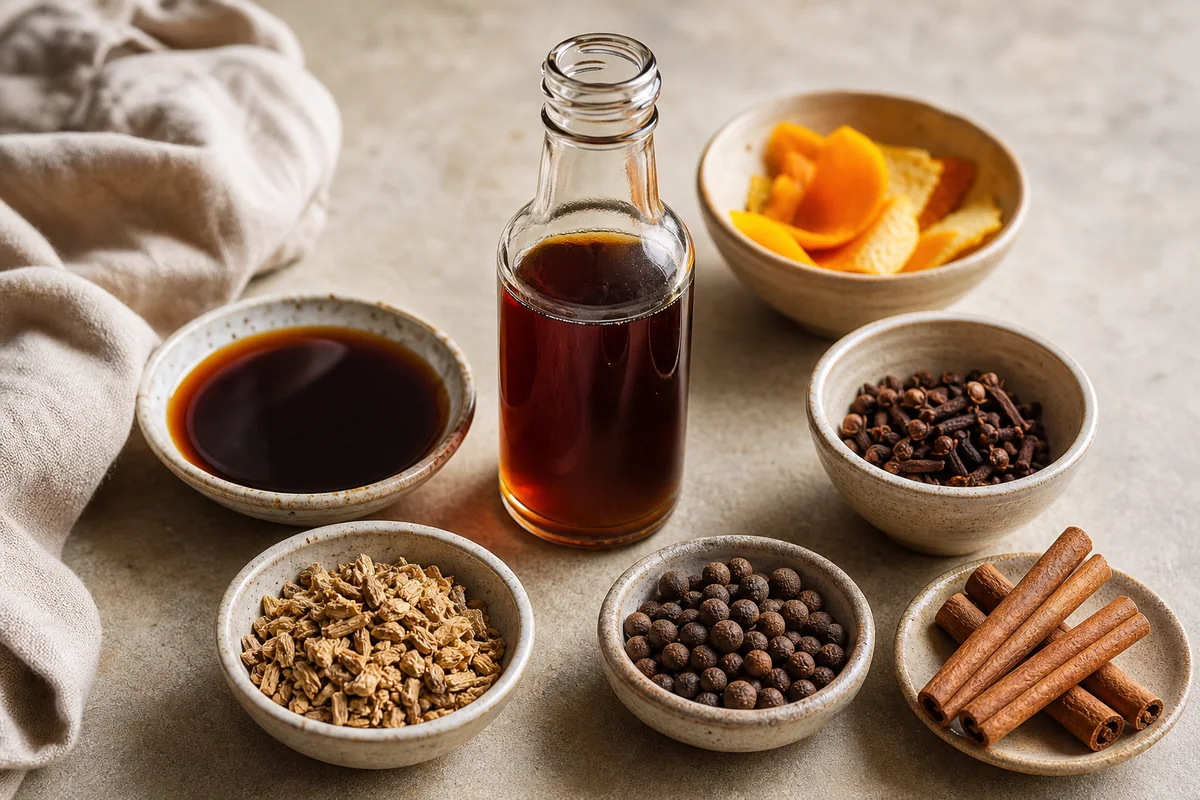
5 Best Angostura Bitters Substitutes (Quick Swaps)
Ingredients
Equipment
Method
- Identify the role you need: mainly bitterness/spice (aromatic/orange bitters) or mainly bitter-sweet flavor (syrup/soda/coffee).
- Start with the listed ratio: use equal drops for bitters-to-bitters swaps; for syrups/sodas/coffee, use less because they change sweetness and body.
- Stir, taste, and adjust: if the drink lacks "edge," add 1-2 more drops; if it tastes too sweet or heavy, reduce the substitute and rebalance with the original mixer.
- For citrus-forward drinks, favor aromatic/orange-style substitutes; for darker spirits, a tiny amount of coffee can add "bitters-like" depth.
Notes
- Bitters are usually added in drops-when substituting with syrups/sodas/coffee, use a smaller ratio to prevent sweetness or dilution.
- Taste after mixing; many cocktails have enough sweetness that the substitute's sugar level matters.
Tried this recipe?
Let us know how it was!
Carrie is a food writer and editor with more than 15 years of experience. She has worked for some of the biggest names in the food industry, including Bon Appétit, Food & Wine, and Martha Stewart Living.
As the Editor in Chief of EpicureDelight, Carrie oversees all of the content on the site. She also manages the team of contributing writers and editors, who help to create delicious recipes, helpful tips, and informative articles that you’ll find on the site.
A native of the Chicago area, Carrie is passionate about all things food. She loves trying new restaurants and experimenting with new recipes in her kitchen. She’s also a graduate of the Culinary Institute of America, so she knows a thing or two about food!



