
Garlic powder does two jobs at once: it seasons and it stays dry. That second part matters more than most cooks realize, because the right garlic powder substitute depends not just on flavor but on how your recipe actually uses it.
The best swap depends on how your dish uses garlic powder. Garlic granules are the closest dry 1:1 match. Fresh minced garlic works in cooked sauces at half the amount. Roasted garlic paste blends smoothly into wet dishes. Garlic salt works only if you cut other salt. Garlic-infused oil is best for finishing.
For dry rubs and dredges, stick with dry swaps like garlic granules or garlic salt. For sauces, marinades, and spreads, fresh garlic or roasted garlic paste will disperse better.
One quick rule: if you only need garlic aroma at the finish of a sauce, skip the dry swaps entirely. A drizzle of garlic-infused oil stirred in off the heat does the job cleanly.
The salt question trips people up most often. Garlic salt and even some seasoning blends carry enough sodium to oversalt a dish if you use them at a straight 1:1 swap. Always taste before you add more.
Garlic Powder Alternatives: 5 Quick Swaps
Here's how the five main substitutes compare at a glance. The ratio column shows how much substitute to use per 1 teaspoon of garlic powder called for.
| # | Substitute | Best For | Ratio | Key Note |
|---|---|---|---|---|
| 1 | Garlic Granules | Both | 1:1 | Closest dry texture match |
| 2 | Fresh Minced Garlic | Both | ½:1 | Sauté briefly to reduce harshness |
| 3 | Roasted Garlic Paste | Both | 1:1 | Sweeter, blends into wet dishes |
| 4 | Garlic Salt | Both | 1:1 | Reduce other salt by half |
| 5 | Garlic-Infused Oil | Both | ¼:1 | Finishing and aroma only |
Read the ratios as "substitute amount : garlic powder amount called for." A ½:1 means use half as much substitute as the original measurement.
Adjust after tasting, not before.
1. Garlic Granules
Garlic granules are just coarser garlic powder. The flavor is nearly identical, and for coarse garlic swap ideas, they're the go-to starting point most cooks already have in the pantry.
Use them 1:1 in dry rubs, breading mixes, and roasted vegetable seasonings. They perform exactly as garlic powder does in any recipe that calls for a dry sprinkle.
- Ratio: 1 teaspoon granules for every 1 teaspoon garlic powder
- Texture note: Granules are slightly coarser, so whisk them into dry mixes well
- Marinades: Dissolve them in liquid first; they take 10-15 minutes longer to hydrate
- Blending: If you need ultra-fine coating, pulse granules briefly in a spice grinder
Skip if your recipe needs a perfectly smooth, uniform powder coating on delicate fish or light batters. The coarser grind can leave small visible specks.
2. Fresh Minced Garlic
Fresh garlic is sharper and more pungent than the dried version. Start at about half the amount you'd use of garlic powder, then taste and nudge up from there.
The key is cooking it. Raw fresh garlic has a bite that stays harsh in finished dishes.
For swapping whole garlic cloves or minced fresh garlic into a sauce, a 60-second sauté in a little oil or butter before adding other ingredients smooths the edge considerably.
- Ratio: ½ teaspoon minced fresh garlic per 1 teaspoon garlic powder
- Conversion: About 1 small clove equals roughly ¼ teaspoon garlic powder
- Technique: Sauté in fat for 60 seconds before adding liquids or other ingredients
- Intensity check: Add half, cook, then taste before adding more
Skip if your dish bakes uncovered at high heat for over 30 minutes without added moisture. Fresh garlic burns easily and turns bitter.
Use garlic granules or roasted garlic paste instead.
3. Roasted Garlic Paste
Roasted garlic tastes sweeter and gentler than raw or dried garlic. It loses that sharp bite and develops a mellow, almost buttery note that works beautifully in sauces, mashed potatoes, and salad dressings.
For choosing a smooth garlic paste option, roasted garlic is our top pick when you want something that blends without chunks. Start at 1:1, but go slightly under if the dish needs a clean, assertive garlic flavor.
| Use | Ratio | Notes |
|---|---|---|
| Pasta sauces | 1:1 | Roasted paste; stir in off heat for full flavor |
| Mashed potatoes | 1:1 | Roasted paste blends invisibly; add at the end |
| Salad dressing | ¾:1 | Slightly less to keep the acid bright |
| Dry rub | Not recommended | Adds moisture; use granules instead |
- Texture: Always mash smooth before adding so it disperses evenly
- Flavor: Sweeter and less pungent; expect a rounder garlic note
- Storage: Make a batch, store in olive oil in the fridge, use within 5 days
Skip if your dish needs a sharp, classic garlic-powder punch like ranch-style seasoning or a bold spice rub. The sweetness of roasted garlic will change the profile noticeably.
4. Garlic Salt
Garlic salt is a simple blend: roughly 1 part garlic powder to 3 parts salt. That means you get the garlic flavor you need, but you're also adding a significant amount of sodium to your dish.
Garlic Flavor
Works for: most recipes that call for garlic powder, used at a 1:1 ratio
Skip if: you need pure garlic flavor without any salt influence
Salt Impact
Works for: bland dishes that need both garlic and a bit of extra seasoning
Skip if: the recipe already has soy sauce, brined ingredients, or added table salt
The adjustment math is straightforward. Use 1 teaspoon garlic salt for every 1 teaspoon garlic powder, then reduce other added salt in the recipe by about ½ teaspoon.
This keeps the overall dry savory note balanced without overshooting.
- Ratio: 1:1 for garlic salt, then cut other salt by half
- Best for: Flexible recipes, roasted meats, and spice blends where you control all the salt
- Taste check: Always re-taste after cooking starts; salt concentrates as liquid reduces
Skip if your recipe is low-sodium or uses salt-forward ingredients like soy sauce, cured meats, or hard cheese. The sodium will stack fast and the dish will taste oversalted before you can fix it.
5. Garlic-Infused Oil
Garlic-infused oil is an aroma swap, not a coating swap. Use it where you want garlic fragrance to come through at the finish, not where you need a dry seasoning to coat a surface or adhere to food.
The ratio difference is significant. Where you'd use 1 teaspoon of garlic powder, start with about ¼ teaspoon of garlic-infused oil and taste before adding more.
For spicy garlic-based swaps, a chili garlic oil can double as both the heat and the garlic note in one ingredient.
- Ratio: ¼ teaspoon oil per 1 teaspoon garlic powder; adjust by taste only
- Best uses: Drizzle over roasted vegetables, stir into warm pasta off heat, brush on bread before toasting
- Texture effect: Adds a light oily sheen; factor that into the dish's fat balance
- DIY version: Warm ¼ cup neutral oil with 2 smashed cloves for 10 minutes on low, then cool and strain
Skip if you need a dry rub, a thick coating, or any recipe where added fat changes the structure. Choose garlic granules or roasted garlic paste for those.
Making Garlic Powder Substitutes Work
The decision comes down to two questions: is your recipe wet or dry, and does the garlic cook or stay raw? Dry recipes need dry swaps.
Wet recipes tolerate fresh or paste forms. If you're working with picking a bold paste option for a stir-fry or curry base, a fresh or roasted garlic paste will integrate far better than granules ever will.
For long, slow braises, skip fresh garlic entirely, as it can turn bitter, and lean on granules or roasted paste instead.
- Match the form first: Dry recipes get dry substitutes (granules, garlic salt). Wet recipes get wet ones (fresh garlic, roasted paste, infused oil).
- Adjust salt last: If you used garlic salt, simmer 2-3 minutes before re-tasting. Salt concentrates as liquid reduces, so add more only after the dish has cooked down.
- Fix harshness fast: If fresh garlic tastes raw or biting in a finished dish, stir in a small knob of butter or a splash of cream. Fat softens the sharpness immediately.
The mellow, smooth quality of roasted garlic paste makes it the safest pick if you're genuinely unsure which direction to go. It blends into almost any cooked dish without overpowering.
Frequently Asked Questions
Garlic granules are the closest match at a 1:1 ratio. They behave almost identically in dry rubs, though they're slightly coarser, so whisk them thoroughly into the blend.
Use about ½ teaspoon of fresh minced garlic per 1 teaspoon of garlic powder. Fresh garlic is more intense, so starting at half keeps the flavor from overpowering the dish.
Yes, but reduce other added salt in the recipe by about half the garlic-salt amount. Garlic salt is roughly 75% salt, so the sodium adds up fast.
It works well but tastes sweeter and gentler than garlic powder. Expect a rounder flavor profile, which suits most cream or tomato sauces but may fall short in sharp, assertive seasoning blends.
Stir in a small amount of butter, olive oil, or cream to soften the sharpness. If the bitterness comes from burned fresh garlic, remove it and start over with granules or paste.
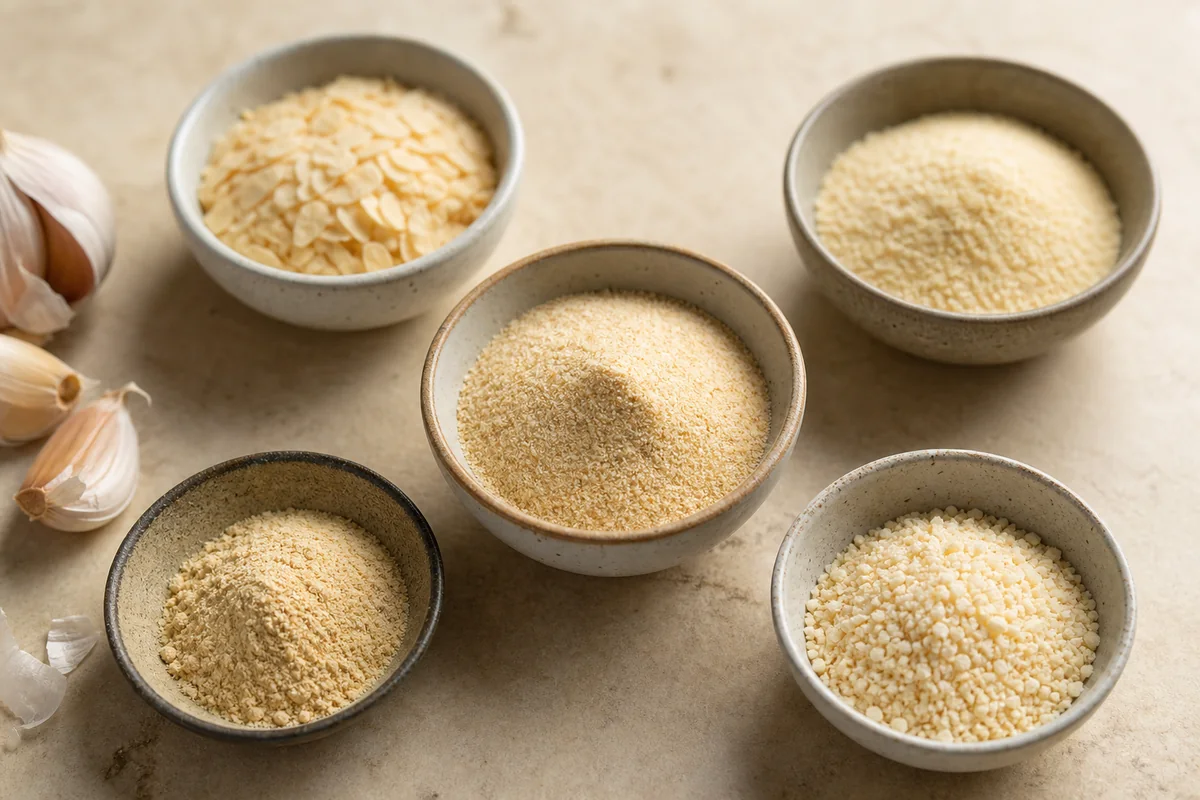
5 Best Garlic Powder Substitutes (Quick Swaps)
Ingredients
Equipment
Method
- Identify how your recipe uses garlic powder: dry rub/dredge (needs dry granularity), sauce/marinade (can handle moisture), or finishing (focus on aroma).
- Pick the closest substitute from the table: garlic granules for a dry 1:1 swap, or fresh minced/roasted paste when moisture is already in the dish.
- Apply the listed ratio, then adjust for salt (garlic salt) or intensity (fresh garlic is typically stronger).
- If using fresh garlic, sauté briefly in fat or cook it briefly before the dish to avoid raw harsh notes.
- Taste after the recipe’s key cooking step (or after simmering 2–5 minutes) and fine-tune with an extra pinch of the chosen substitute.
Notes
- For best results, match the substitute’s physical form (dry vs wet) to the recipe’s texture requirement.
- If your dish is already salty, choose a non-salt substitute (granules, fresh garlic, roasted garlic) over garlic salt.
Tried this recipe?
Let us know how it was!
Carrie is a food writer and editor with more than 15 years of experience. She has worked for some of the biggest names in the food industry, including Bon Appétit, Food & Wine, and Martha Stewart Living.
As the Editor in Chief of EpicureDelight, Carrie oversees all of the content on the site. She also manages the team of contributing writers and editors, who help to create delicious recipes, helpful tips, and informative articles that you’ll find on the site.
A native of the Chicago area, Carrie is passionate about all things food. She loves trying new restaurants and experimenting with new recipes in her kitchen. She’s also a graduate of the Culinary Institute of America, so she knows a thing or two about food!



